
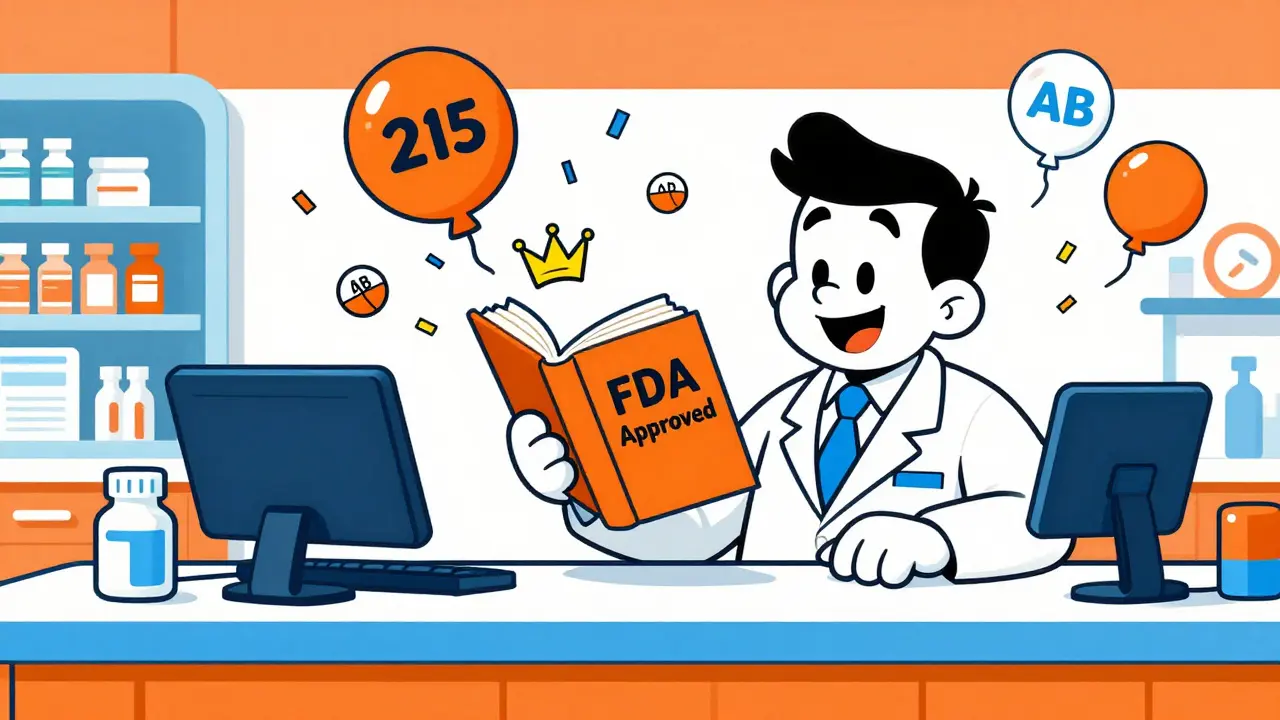
The Orange Book database isn’t just a government document-it’s the backbone of how generic drugs enter the U.S. market and how patients get affordable medications. Officially called Approved Drug Products With Therapeutic Equivalence Evaluations, it’s the U.S. Food and Drug Administration’s (FDA) public record of every small-molecule drug approved since 1979. Think of it as the rulebook that tells generic manufacturers when they can legally copy a brand-name drug, and tells pharmacists which substitutions are safe to make.
What’s Actually in the Orange Book?
The Orange Book doesn’t just list drug names. It connects the dots between the medicine you take, the patents protecting it, and the legal barriers keeping generics off the shelf. Each entry includes:
- The brand name and generic name of the drug
- The dosage form (tablet, injection, capsule, etc.)
- The strength and route of administration
- The NDA or ANDA number-the official application ID
- Therapeutic equivalence ratings (like AB, BX)
- Patent numbers and their expiration dates
- Regulatory exclusivity periods (like 5-year new chemical entity protection)
- Patent use codes that specify which medical conditions the drug is approved for
For example, if you’re looking up metformin, you’ll see it listed under both the brand name Glucophage and its generic version. You’ll also see that the patents on Glucophage expired years ago, and that every generic version has an AB rating-meaning it’s considered bioequivalent and interchangeable by the FDA.
Therapeutic Equivalence Ratings: What AB and BX Mean
Not all generic drugs are treated the same in the Orange Book. The FDA assigns each multisource drug a therapeutic equivalence code:
- AB means the generic is therapeutically equivalent to the brand. Pharmacists can substitute it without a doctor’s approval in most states.
- BX means it’s not rated equivalent-either because there’s not enough data, or the drug has complex delivery systems (like inhalers or patches) that make substitution risky.
This matters because if your prescription says "do not substitute," it’s often because the drug has a BX rating. You can check this yourself using the FDA’s Electronic Orange Book. A hospital pharmacist in Ohio told me last year: "I check the Orange Book before I even pick up the bottle. If it’s AB, I know I can swap it without calling the doctor. If it’s BX, I leave it alone."
How the Hatch-Waxman Act Changed Everything
The Orange Book didn’t become this powerful on its own. It was built by the Hatch-Waxman Act of 1984, a law designed to balance two goals: rewarding innovation and speeding up generic access. Before this law, generic companies had to run full clinical trials just to prove their drug worked-costing millions and taking years. Hatch-Waxman let them prove bioequivalence instead, cutting approval time and cost dramatically.
But here’s the trade-off: brand-name companies had to list every patent related to the drug in the Orange Book within 30 days of approval. Generic companies then had to certify against those patents when filing their applications. If they said the patent was invalid or wouldn’t be infringed, they could launch before the patent expired-risking a lawsuit. This created a legal chess game that still plays out today.
Between 1984 and 2022, this system enabled 11,200 generic drugs to enter the market. The result? Generic drugs now make up 90% of all prescriptions filled in the U.S., but only 23% of total drug spending.
What’s Not in the Orange Book-and Why It Matters
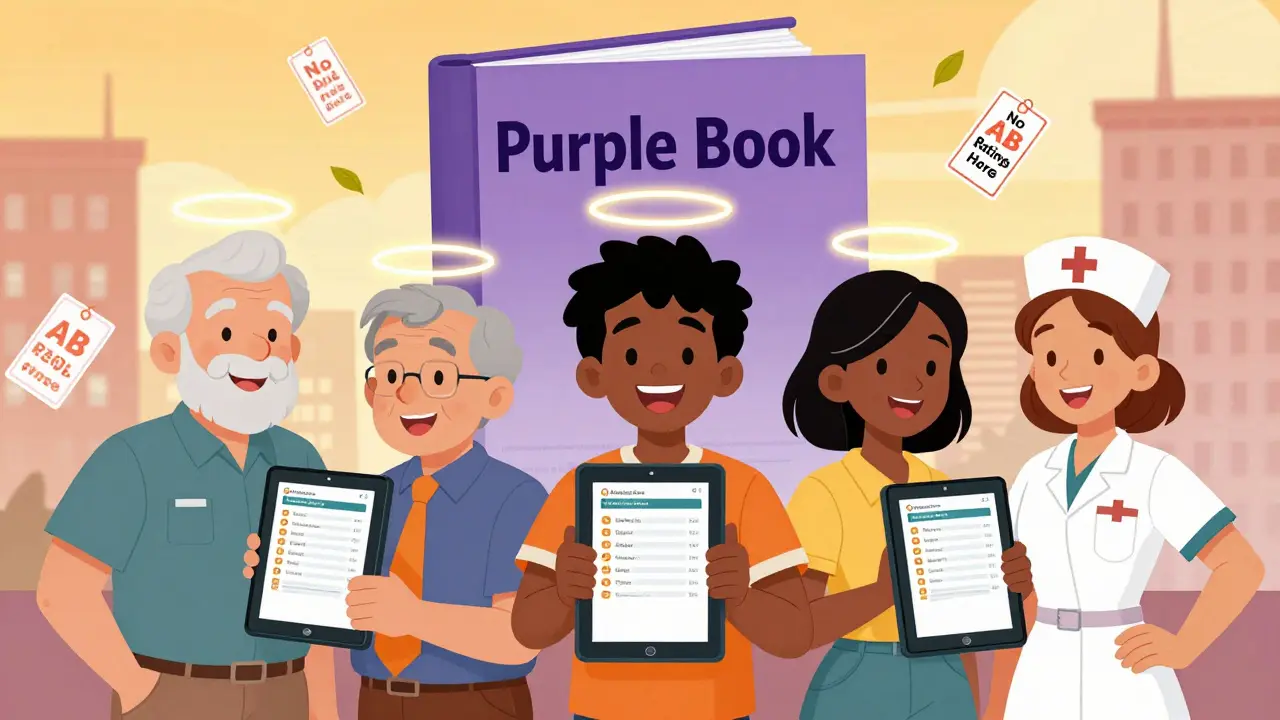
The Orange Book only covers small-molecule drugs. That means no biologics-like insulin, Humira, or Enbrel. Those are tracked in the Purple Book, which doesn’t have the same level of patent detail. That’s a big gap. Biologics are expensive, and their patents are harder to challenge. The Orange Book’s structure simply doesn’t fit them.
It also doesn’t list manufacturing process patents. So even if a company patents a unique way to make a drug, that won’t show up here. That’s why some brand-name companies file patents on minor changes-like a new pill shape or coating-to extend protection. Critics call this "evergreening." The FDA says it’s allowed, but Congress is pushing for reforms to stop abuse.
And here’s another blind spot: patent litigation outcomes aren’t updated in real time. If a court invalidates a patent, it can take weeks or months for that change to appear in the database. Generic manufacturers have to monitor court filings separately.
Who Uses the Orange Book-and How
It’s not just for lawyers and regulators. Here’s who relies on it daily:
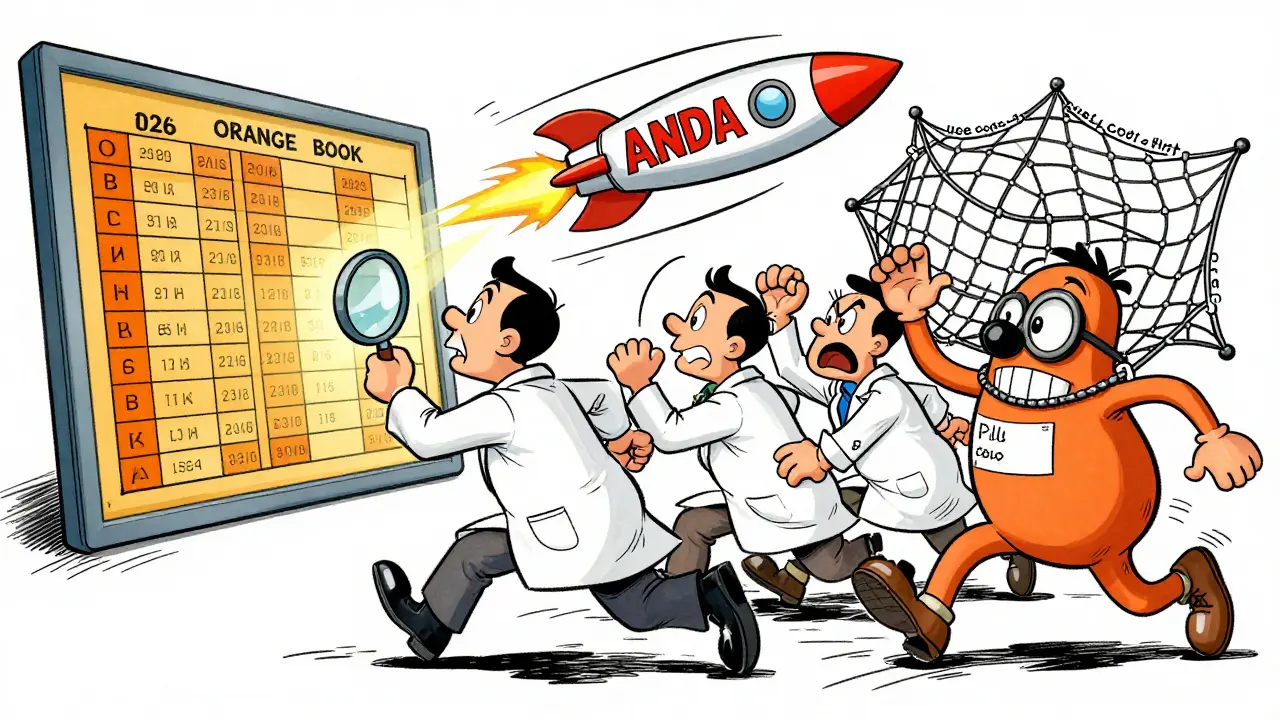
- Generic drug companies use it to plan when to file ANDAs. One patent attorney told me his team checks the database every morning. "If a patent expires tomorrow, we’re ready to submit by noon."
- Pharmacists use it to verify substitution rules. If a doctor writes "brand only," the pharmacist checks the Orange Book to see if that’s really necessary.
- Researchers use the NBER’s digitized version to study how patent strategies affect drug prices. Over 78% of pharmaceutical economics papers since 2020 used this data.
- Patients and insurers are starting to use it too. The FDA reports 1.2 million unique visitors monthly. People want to know why their generic isn’t available yet-or if they can save money by switching.
A real-world example: apixaban (Eliquis). Generic makers used the Orange Book to track patent expirations. They prepared years in advance. When the last patent expired in 2026, they were ready. IQVIA estimates that will save the U.S. healthcare system $12 billion a year.
How to Use the Electronic Orange Book
The FDA’s Electronic Orange Book is free and updated daily. Here’s how to use it:
- Go to accessdata.fda.gov/scripts/cder/ob/
- Search by brand name, generic name, or NDA number
- Click on the drug to see all listings
- Check the "Therapeutic Equivalence" column for AB or BX
- Expand "Patents" to see expiration dates and use codes
- Expand "Exclusivity" to see if any protections are still active
Use codes (like A, B, C) can be confusing. The FDA has a guide that explains them. Type "Orange Book use codes" into Google-there’s a PDF from the FDA that breaks them down clearly. It’s worth reading if you’re looking at multiple drugs.
What’s Changing in 2025?
The FDA announced major updates in January 2024. Starting in late 2025, companies will have to:
- List patents with more specific details-no vague claims anymore
- Update the database within 14 days of patent changes, not 30
- Stop listing patents that don’t directly relate to the drug’s approved use
These changes aim to stop "patent thickets"-where companies file dozens of weak patents to block generics. The goal? Get cheaper drugs to market faster. The Congressional Budget Office estimates these reforms could save $125 billion between 2024 and 2034.
The FDA also launched a beta API in March 2023. Developers are now building tools that pull Orange Book data into pharmacy systems, insurance portals, and even smartphone apps. By late 2025, you might see a "Generic Availability" badge on your pharmacy app.
Why This Matters for You
If you’re on a prescription drug, the Orange Book affects your wallet. If you’re a pharmacist, it affects your daily decisions. If you’re a student, researcher, or investor in healthcare, it’s a goldmine of data.
It’s not perfect. It’s not easy to use. But it’s the most transparent system we have for balancing innovation and access. Without it, generic drugs would take years longer to arrive-and millions of Americans would pay more for their medicine.
The Orange Book doesn’t make drugs cheaper by itself. But it creates the conditions for competition to do that work. And in a system where drug prices often feel arbitrary, that’s something real.
What is the Orange Book database used for?
The Orange Book database lists FDA-approved small-molecule drugs along with their patents and regulatory exclusivity periods. It helps generic drug manufacturers know when they can legally enter the market, helps pharmacists determine if a generic is interchangeable with a brand-name drug, and gives researchers data to study drug pricing and competition.
Is the Orange Book the same as the Purple Book?
No. The Orange Book covers small-molecule drugs like aspirin or metformin. The Purple Book covers biologics-complex drugs made from living cells, like insulin or Humira. The Purple Book has less patent detail and doesn’t use the same therapeutic equivalence ratings.
What does an AB rating mean in the Orange Book?
An AB rating means the generic drug is therapeutically equivalent to the brand-name version. Pharmacists can substitute it without a doctor’s permission in most states. It’s the gold standard for interchangeability.
Can I trust the patent expiration dates in the Orange Book?
Mostly, yes-but with a caveat. The dates are accurate when published. But if a patent is challenged in court and invalidated, it can take weeks for that update to appear. For legal or business decisions, always cross-check with court records or legal databases.
Why are some drugs not in the Orange Book?
The Orange Book only includes drugs approved by the FDA under the New Drug Application (NDA) or Abbreviated New Drug Application (ANDA) process. It excludes biologics, compounded drugs, unapproved drugs, and over-the-counter medications not covered under an NDA.
How often is the Orange Book updated?
The Electronic Orange Book is updated daily. New drug approvals, patent listings, and exclusivity changes are added the same day they’re finalized by the FDA. Monthly Cumulative Supplements are still published for archival purposes, but the daily updates are the official source.
Is the Orange Book free to use?
Yes. The FDA provides free public access to the Electronic Orange Book through accessdata.fda.gov. There are no login requirements or fees. Commercial services like DrugPatentWatch.com offer enhanced analytics, but they pull their data from the same FDA source.
Do I need special training to use the Orange Book?
Basic use-like checking if a generic is available-takes less than 10 minutes. But interpreting patent use codes, exclusivity types, and legal implications requires deeper knowledge. Pharmacists typically learn it in pharmacy school. Legal and regulatory professionals need 40-60 hours of training to use it effectively for strategic decisions.


Russell Thomas
Oh great, another government document that’s basically a legal minefield disguised as a ‘helpful guide.’ I spent three hours last week trying to decode why my generic metformin got swapped out for a BX-rated version-only to find out the patent use code was written in hieroglyphics. And don’t even get me started on how the FDA updates things slower than my grandma’s dial-up internet. 🤦♂️