
Think your generic pill is the same no matter where you buy it? Think again. A metformin tablet made in India and sold in the U.S. might be chemically identical to the one bought in Germany - but the side effects, price, and even how often your doctor prescribes it can be wildly different. This isn’t a glitch. It’s the global reality of generic drugs.
Same Drug, Different World
Generic drugs are supposed to be affordable copies of brand-name medicines. They contain the same active ingredient, work the same way, and are held to strict standards. But how many are available, how cheap they are, and how often they’re used? That depends entirely on where you live.In the United Kingdom, 83% of all prescriptions are filled with generics. In Switzerland? Just 17%. That’s not because British doctors are more progressive or Swiss patients are more loyal to brands. It’s because of policy, pricing, and history.
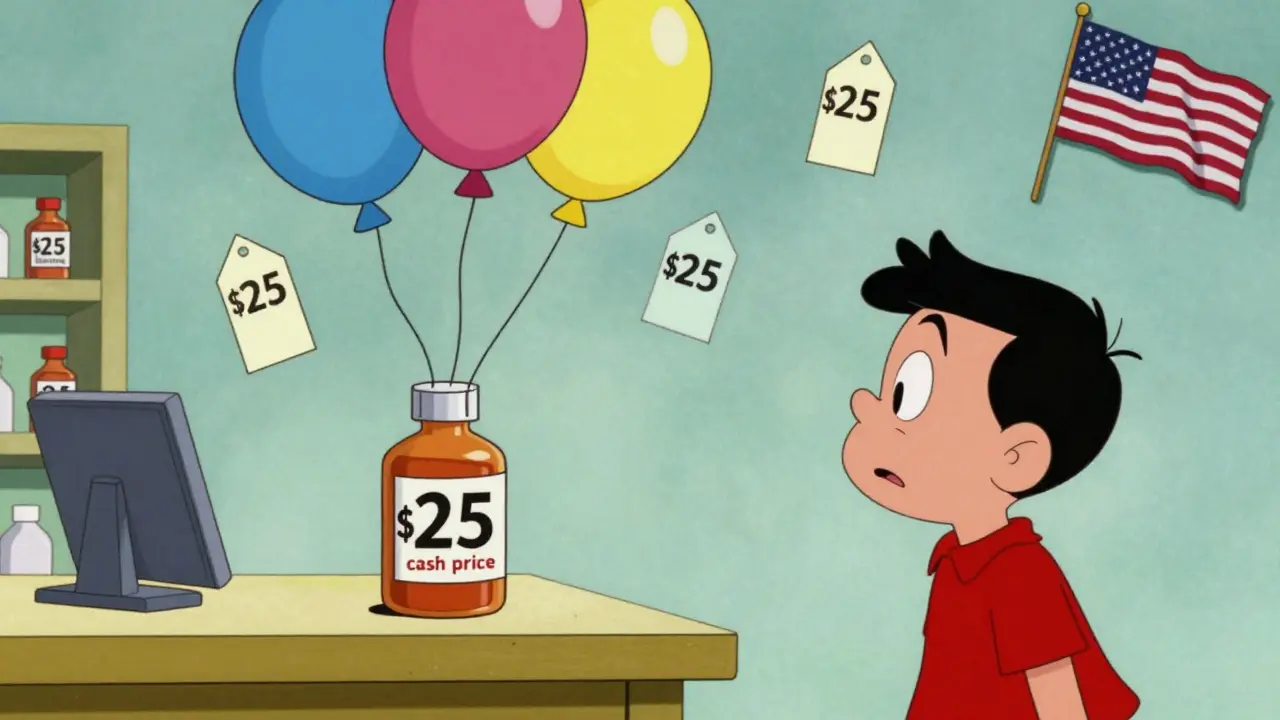
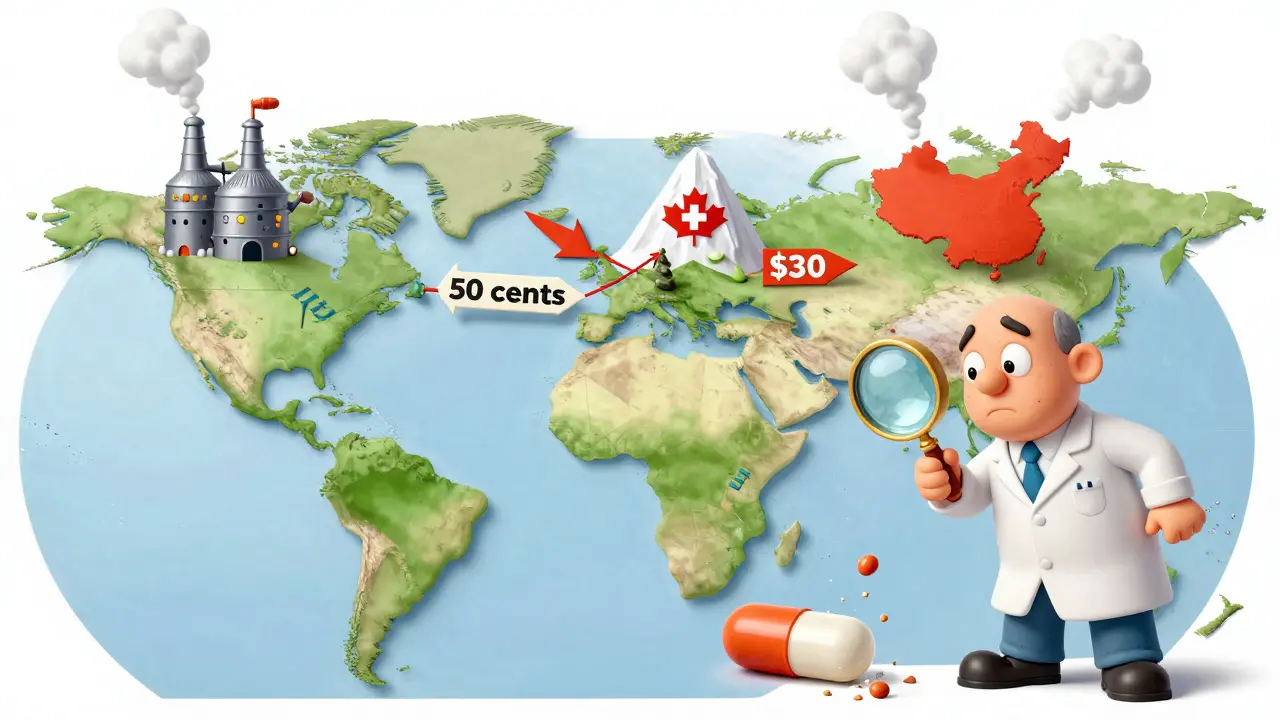
The U.S. leads in volume - over 90% of prescriptions are generics. But here’s the twist: Americans pay the highest prices in the world for those same pills. A 30-day supply of lisinopril, a common blood pressure generic, costs $4 in the U.S. with insurance. In Canada, it’s $1. In India, it’s 50 cents. Yet, in the U.S., that same drug might be priced at $25 if you pay cash - because the market doesn’t force competition the way other countries do.
Why Do Prices Vary So Much?
It’s not about manufacturing cost. A generic pill doesn’t cost more to make in the U.S. than in India. The difference comes down to three things: regulation, competition, and reimbursement.Europe has fragmented markets. The European Medicines Agency (EMA) approves a generic, but each country sets its own price. Germany negotiates bulk prices. Switzerland lets manufacturers set prices with little oversight. That’s why identical drugs can cost six times more in Switzerland than in the U.K.
In the U.S., the system is broken in a different way. There are dozens of generic manufacturers - 66% of off-patent drugs have two or more makers. But instead of driving prices down, competition often collapses. When only one company makes a drug, they can raise prices overnight. In 2021, a generic version of the antibiotic doxycycline jumped from $20 to $1,800 per bottle in less than a year. No new patents. No new science. Just market manipulation.
India makes 40% of all generic drugs consumed in the U.S. and 20% of the world’s total. But quality isn’t guaranteed. A 2023 study from Ohio State University found Indian-made generics were linked to 54% more severe side effects - hospitalizations, disabilities, even deaths - compared to U.S.-made versions of the same drug. Why? Cost-cutting. When profit margins shrink to pennies per pill, corners get cut. Excipients change. Manufacturing environments slip. The FDA inspects foreign factories - but often gives advance notice. That’s like checking a restaurant’s kitchen after they’ve cleaned up.
Who Gets the Best Access?
Countries with mandatory generic substitution win. In the Netherlands and the U.K., pharmacists can swap a brand-name drug for a generic without asking the doctor. Patients get the cheaper option unless they specifically refuse. Result? Within 12 months of a patent expiring, 70% of prescriptions shift to generics.In countries without that rule - like Italy, Greece, or Switzerland - it takes 3 to 5 years to get anywhere near that level. Doctors are used to prescribing brands. Patients trust names they’ve seen on TV. Insurance doesn’t push them to switch. So even if a generic exists, it sits on the shelf.
South Korea is a puzzle. Generic prices are 40% lower than in other G20 countries, yet usage is among the lowest. Why? Cultural distrust. Patients believe cheaper means worse. Doctors don’t challenge that. The system doesn’t incentivize change. So people pay more - for the same drug.
The Supply Chain Is a Global Tightrope
When the pandemic hit, India halted exports of 26 key active ingredients. Antibiotics, heart meds, antifungals - gone. Hospitals in the U.S., Canada, and across Europe scrambled. Why? Because nearly every country now relies on a few factories in India and China.In 2023, the FDA recorded 147 generic drug shortages. Two-thirds were due to manufacturing quality failures - mostly at single-source plants. One bad batch. One shutdown. And patients go without.
Parallel trade - buying drugs from cheaper countries and reselling them - is booming. Americans are ordering metformin from Canadian pharmacies. Germans are buying insulin from Poland. But here’s the catch: these aren’t always the same pills. A generic made for the Indian market might use different fillers. A patient switching from a U.S. version to a Canadian one might get headaches, nausea, or worse. No one warns them. No one tracks it.
Who’s Fixing This?
The WHO is pushing for global quality benchmarks. The U.S. Inflation Reduction Act now funds faster FDA reviews and more unannounced inspections. The European Union wants 80% generic use by 2030.But change is slow. Patent evergreening - making tiny changes to a drug to extend its monopoly - still works. Between 2015 and 2022, 1,247 new patents were filed on just 12 top-selling drugs to delay generics. That’s not innovation. That’s legal blocking.
And while AI could cut generic development time from five years to two, regulators aren’t ready. Bioequivalence standards still vary. The U.S. requires 80-125% similarity in blood absorption. The EMA uses a similar range - but different testing methods. A drug approved in Europe might fail in the U.S. - not because it’s unsafe, but because the math doesn’t match.
What This Means for You
If you’re traveling, don’t assume your generic prescription will work the same abroad. A pill labeled “metformin 500mg” might have different inactive ingredients. Ask your pharmacist: Is this the same formulation? What’s the manufacturer?If you’re in the U.S. and prices are high, check if your drug is available through Canadian or Indian online pharmacies - but verify the site’s legitimacy. PharmacyChecker and LegitScript can help. Still, know the risk: you’re gambling on quality.
If you’re in Europe and your doctor won’t switch you to a generic, ask why. Is it cost? Or just habit? In many places, you’re paying more because no one’s pushing for change.
And if you’re in a low-income country - where generics are the only option - understand that the system is stacked against you. Cheap doesn’t always mean safe. But it’s all you’ve got.
The Bigger Picture
Generic drugs were meant to save lives by making medicine affordable. Instead, they’ve become a global patchwork - part lifesaver, part lottery.One country has volume but sky-high prices. Another has low prices but low trust. A third has perfect access but fragile supply chains. No one has it all.
Until regulators align, inspections are random, and competition is forced, your medicine won’t be the same no matter where you buy it. And that’s not just a policy issue. It’s a health crisis.
Why are generic drugs cheaper in some countries than others?
Generic drugs cost less in countries with strong price controls, bulk purchasing, and mandatory substitution policies. The U.K. and Germany negotiate prices for entire populations, driving costs down. The U.S. has no such system - manufacturers set prices freely, and insurers often don’t push for the cheapest option. India and China produce generics at lower labor and regulatory costs, but that doesn’t always mean lower prices for consumers - because those pills are often exported to markets with higher margins.
Are generic drugs from India safe?
Many Indian-made generics are safe and meet international standards. Over 750 Indian factories are FDA-approved. But quality varies. A 2023 study found Indian-made generics had 54% higher rates of severe side effects compared to U.S.-made versions of the same drug. This is often tied to cost-cutting - cheaper excipients, inconsistent manufacturing, or poor storage. Always check the manufacturer and consider buying from reputable pharmacies that verify sources.
Can I buy generic drugs from another country to save money?
Yes, but with caution. Many Americans buy drugs from Canada or online Indian pharmacies and save 60-80%. But the pills may have different inactive ingredients, which can affect how your body reacts. Some patients report new side effects after switching. Only use verified pharmacies like those on PharmacyChecker or LegitScript. Never buy from unknown websites - counterfeit drugs are common.
Why don’t all countries use generics more often?
It’s not about availability - it’s about culture and policy. In Switzerland and Italy, doctors and patients trust brand names. Insurance systems don’t incentivize switching. In places like the U.K. and Netherlands, pharmacists are legally allowed to substitute generics automatically. That drives usage. Without that system, even if generics exist, people keep buying the original - even if it costs 10 times more.
Do generic drugs take longer to work than brand-name ones?
No. By law, generics must be bioequivalent - meaning they enter your bloodstream at the same rate and amount as the brand-name drug. The FDA and EMA require this. If a generic doesn’t meet those standards, it can’t be sold. Any difference in how fast you feel better is likely due to inactive ingredients, your body’s reaction, or placebo effect - not the active drug.


Chloe Hadland
ive been buying my metformin from canada for years and never had an issue
my doctor doesnt even ask if i switch
just glad i dont have to pay 25 bucks for a month supply