
Getting Evaluated for a Kidney Transplant
When your kidneys are failing and dialysis isn’t enough, a transplant becomes the best long-term option. But before you can get on the waitlist, you need to go through a thorough medical and psychological evaluation. This isn’t just a checkup-it’s a full review of your health, lifestyle, and ability to handle life after a transplant. Transplant centers across the U.S. follow strict guidelines set by the Organ Procurement and Transplantation Network (OPTN), and they don’t move forward until every box is checked.
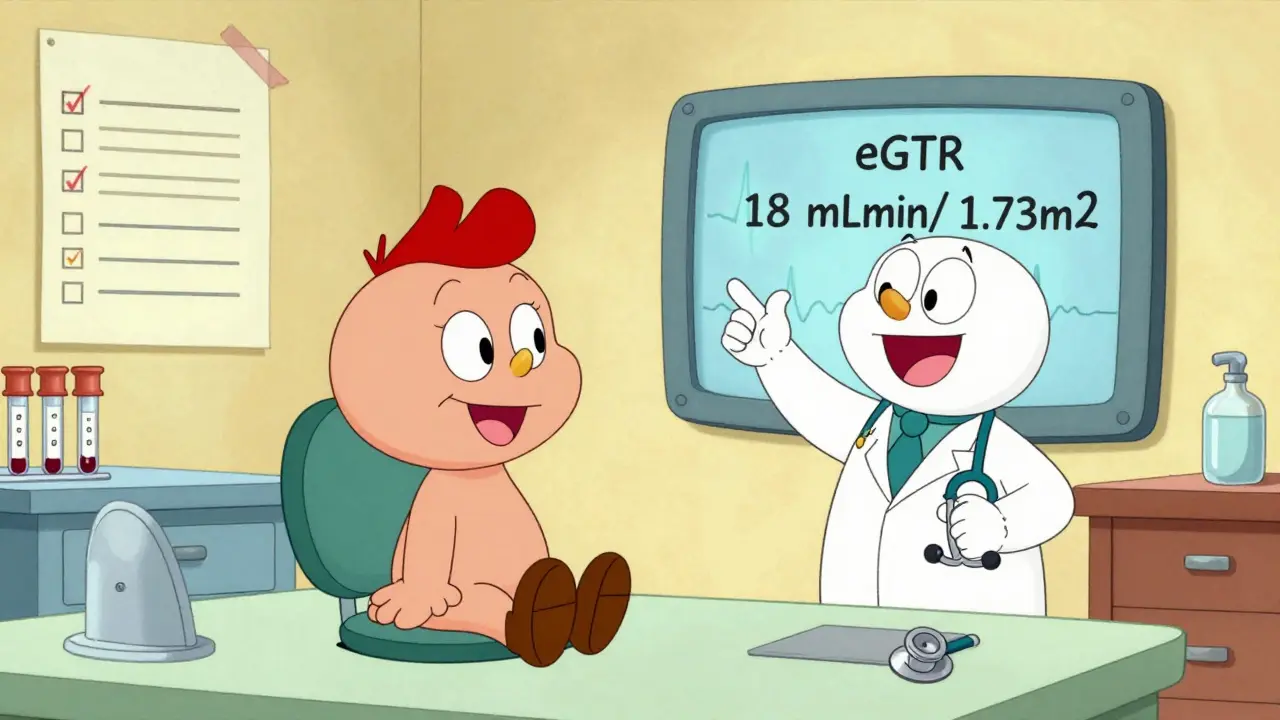
The process usually starts when your nephrologist notices your eGFR (a measure of kidney function) has dropped below 20 mL/min/1.73m². At that point, they refer you to a transplant center. The first step? Education. You’ll sit through sessions explaining what transplant surgery involves, the lifelong need for anti-rejection meds, and the risks of infection and side effects. You have to sign paperwork showing you understand all of this-no exceptions.
Then comes the testing. Expect 15 to 25 appointments over 8 to 16 weeks. Blood tests check your type, liver function, and viral status-HIV, hepatitis A, B, and C. You’ll get HLA typing to match you with potential donors and monthly PRA tests to see how likely your body is to reject a kidney. Your heart gets checked too: an echocardiogram, EKG, chest X-ray, and a stress test where you walk on a treadmill to see if your heart can handle surgery. Men over 50 need a PSA test; women need mammograms and Pap smears. If your hemoglobin is below 10 g/dL, your platelets are under 100,000/μL, or your albumin is below 3.5 g/dL, you’ll need to fix those before moving forward.
It’s not just about your body. A transplant social worker will sit down with you to ask hard questions: Who will help you after surgery? Can you get to appointments? Do you have enough money saved for the first year of meds? Northwestern Medicine requires proof of at least $3,500 in liquid assets just for co-pays. If you’ve missed dialysis appointments or skipped meds in the past, that’s a red flag. About 32% of people who don’t get listed fail because of psychosocial reasons-not medical ones.
What Gets You on the Waitlist
Once all your tests are done, your case goes to a transplant selection committee. This group includes a surgeon, nephrologist, social worker, psychiatrist, and coordinator. They meet weekly. You won’t be in the room, but they’ll review every detail: your lab results, your mental health, your support system, your insurance status. They decide if you’re a good candidate-not just medically, but ethically. The OPTN says organs must be allocated fairly, and they’re watching to make sure every center applies the same rules.
Insurance is a huge part of this. Medicare covers 80% of transplant costs under Part B, and your Part D plan should cover your anti-rejection drugs. But private insurers often require you to hit a $4,550 deductible first. Medicaid patients wait 37 days longer on average just to get approved. And if your insurance denies one test-say, a cardiac stress test-you’re stuck until it’s approved. About 28.7% of delays come from insurance issues. Don’t wait for them to respond. Call your coordinator, get the denial letter, and fight it.
Some people get turned down. The top five medical reasons? Active cancer (14.2%), severe heart disease (11.8%), uncontrolled infection (9.3%), BMI over 40 (8.7%), and a history of not taking meds (7.9%). If you’re told no, ask why. Sometimes, you can fix it. Lose weight. Quit smoking. Treat the infection. Come back later.
But here’s the truth: timing matters. People who finish their evaluation within 90 days of their first referral are 11.3% more likely to survive five years after transplant. And they’re 22.7% more likely to get a kidney within two years. Delays cost lives.
Living Donors: The Faster Path
While most people wait years for a kidney from a deceased donor, a living donor can cut that time dramatically. In 2023, nearly 40% of all kidney transplants came from living donors. Why? Because kidneys can be donated by healthy people without harming their own health. One kidney is enough to live a full, normal life.
But finding a donor isn’t easy. It has to be someone who’s willing, healthy, and compatible. Blood type matters-you can’t get a Type A kidney if you’re Type B. HLA matching helps reduce rejection, but it’s not always required. Many centers now use a process called “rapid crossmatch,” which cuts donor evaluation from 6-8 weeks down to 2-3. That’s a game-changer.
Living donors go through their own evaluation. They need to be free of diabetes, high blood pressure, cancer, and kidney disease. They get the same blood tests, heart checks, and psychological screening as recipients. They’re not just giving an organ-they’re giving their time, their health, and their peace of mind. And they need to know what they’re signing up for.
There’s another option: paired donation. If your friend or family member wants to donate but isn’t a match, they can give to someone else-and you get a kidney from their donor’s match. In 2023, this program helped 1,872 people get transplants. It’s like a swap meet for kidneys.
Don’t assume only family can donate. Spouses, friends, coworkers-even strangers-can be living donors. And if you’re a candidate, talk to everyone you know. One Reddit user said, “I asked 12 people. One said yes. That’s all it took.”
What Happens After You’re Listed
Once you’re on the waitlist, you’re not done. You still need to stay healthy. Keep your blood pressure down. Don’t gain weight. Keep taking your meds. Show up for dialysis. If you get sick or miss appointments, you can be taken off the list.
Your transplant coordinator will call you when a kidney becomes available. It could be from a deceased donor or a living donor who’s ready. For deceased donors, the wait is long-on average, 3.6 years. But if you’re highly sensitized (meaning your immune system is likely to reject most kidneys), you get priority. The OPTN now uses cPRA scores to give these patients a better shot.
And if you’re HIV-positive? That used to mean no transplant. But since the HOPE Act passed in 2013, HIV+ patients can now receive kidneys from other HIV+ donors. In 2023, 217 such transplants happened. It’s a new chapter in transplant medicine.
Common Pitfalls and How to Avoid Them
Many people think getting on the waitlist is the finish line. It’s not. It’s the starting line. Here’s what trips people up:
- Missed appointments: One missed test can delay your evaluation by weeks. Northwestern Medicine says 18.3% of delays come from no-shows.
- Insurance fights: Don’t wait for them to approve things. Call your coordinator, get the denial letter, and appeal. Medicaid patients get denied more often-don’t let that stop you.
- Not preparing your support system: You’ll need help with rides, meals, and meds for months after surgery. If you live alone and have no one to call, the committee will notice.
- Ignoring mental health: Anxiety is normal. But if you’re overwhelmed, ask for help. 63.4% of candidates report high stress during evaluation. You’re not alone.
- Not tracking your results: Use your patient portal. Know your numbers. If your albumin drops or your platelets fall, tell your team before your next appointment.
One patient on Reddit said, “My coordinator scheduled all my tests back-to-back in one week. It felt like a marathon, but I was done in six weeks instead of 17.” That’s the power of a good coordinator. Find one who listens. Stick with them. Ask questions. Push back when you need to.
What You Can Do Right Now
If you’re thinking about a transplant, here’s your action plan:
- Get your medical records together-5 years’ worth, including dialysis logs.
- Call your nephrologist and ask for a referral to a transplant center.
- Write down your questions: What tests will I need? How long will it take? What if I can’t afford the meds?
- Bring someone with you to every appointment. A second set of ears helps.
- Start saving now. Even $50 a month adds up. You’ll need $3,500 minimum for your first year of meds.
- Talk to friends and family. Don’t be shy. Someone might be willing to donate.
The system isn’t perfect. Black patients still wait longer. Low-volume centers take more time. Insurance battles drag on. But you can still win. Stay organized. Stay persistent. And don’t give up.
Can I get on the transplant waitlist if I have diabetes?
Yes, but only if your diabetes is well-controlled. Uncontrolled diabetes increases the risk of transplant failure. You’ll need to show stable blood sugar levels for at least 3 months, with HbA1c below 8%. Some centers also require you to be off insulin for a period before listing. Your care team will assess your kidney damage, heart health, and circulation before deciding.
How long does the transplant evaluation take?
It typically takes 8 to 16 weeks, depending on your health, how quickly you complete tests, and your insurance approval time. High-volume centers finish in 8-12 weeks; low-volume ones can take 16 weeks or more. If you’re working with a living donor, the process can be faster-sometimes under 6 weeks. The key is staying on top of appointments and paperwork.
Can I be too old for a kidney transplant?
There’s no strict age limit. Transplants are performed on patients over 70 every year. What matters is your overall health-not your age. If your heart is strong, your lungs are clear, and you don’t have cancer or severe dementia, you’re still a candidate. In fact, older patients often have better outcomes because they’re more likely to follow their medication schedule.
What if I can’t afford the medications after transplant?
Anti-rejection drugs cost about $32,000 a year. Medicare covers them for 3 years after transplant, but after that, you’ll need other coverage. Many centers have financial counselors who help you apply for patient assistance programs from drug companies. Some states offer special transplant medication programs. The American Kidney Fund also gives grants to cover co-pays. Don’t wait until you can’t pay-start asking for help during evaluation.
Do I need to stop smoking or drinking before transplant?
Yes. Smoking increases your risk of heart disease and transplant rejection. Most centers require you to quit at least 3-6 months before listing. Alcohol use must also be stopped or strictly limited. If you have a history of alcohol abuse, you’ll need to show 6 months of sobriety and attend counseling. These aren’t punishments-they’re survival rules.


Nick Flake
This post is everything. 🥹 I had no idea how much goes into this process-like, I thought it was just a test and you’re in. But the psych eval? The insurance battles? The $3,500 just to *start*? I’m crying. If you’re reading this and you’re going through it, you’re already a warrior. Don’t give up. I’m rooting for you. 💪❤️