
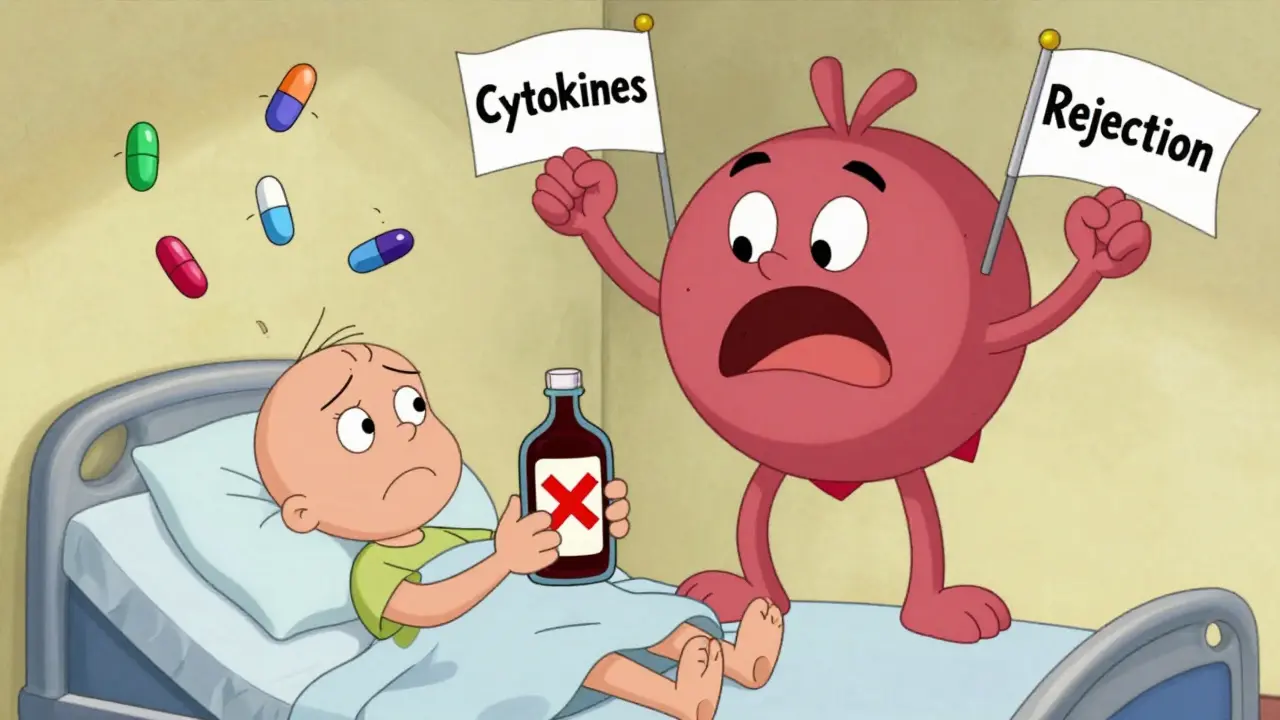
When you’re on immunosuppressants - whether after a transplant or managing an autoimmune disease - your body is carefully balanced. You’re not trying to boost your immune system. You’re trying to keep it from attacking your own body or a transplanted organ. So when someone suggests taking elderberry for a cold or flu, it’s not just a harmless herbal remedy. It might be undoing the very treatment keeping you alive.
Why Elderberry Is a Problem for People on Immunosuppressants
Elderberry (Sambucus nigra) is popular because it works. In studies, it’s been shown to reduce the length of flu symptoms by 3 to 4 days. A 2016 trial with 312 air travelers found those who took elderberry syrup had shorter, milder colds. But here’s the catch: it does this by activating your immune system. And that’s exactly what immunosuppressants are designed to stop. The active ingredients in elderberry - anthocyanins, flavonols, and phenolic acids - trigger immune cells to release cytokines like interleukin-6 and tumor necrosis factor-alpha. These are signaling molecules that tell your body to fight infection. But for someone on cyclosporine, tacrolimus, or mycophenolate, these signals are dangerous. They can make the immune system wake up and start attacking again. This isn’t theory. Real cases exist. A kidney transplant patient on Reddit reported their tacrolimus levels dropped 25% after starting elderberry syrup. Another liver transplant recipient had a rejection episode right after beginning daily elderberry for cold prevention. These aren’t outliers. They’re warning signs.Which Immunosuppressants Are Most Affected?
Not all immunosuppressants react the same way to elderberry. But the biggest red flags are for drugs that target the calcineurin pathway - the most common class used after transplants.- Cyclosporine (Neoral, Sandimmune) - Used for kidney, liver, and heart transplants.
- Tacrolimus (Prograf) - The most common transplant drug in the U.S. today.
- Mycophenolate (CellCept) - Often paired with other drugs for transplant and autoimmune conditions.
- Azathioprine (Imuran) - Used for lupus, rheumatoid arthritis, and transplant patients.
- Corticosteroids (prednisone, dexamethasone) - Even these aren’t completely safe. Elderberry may reduce their effectiveness over time.
What the Research Actually Says
There’s a clear split in the science. On one side, CSIRO Publishing’s 2021 review in the Journal of Primary Health Care says elderberry “may increase cytokines, interleukin, and tumor necrosis factor” and could interfere with immunosuppressant drugs. RxList and Medical News Today both classify this as a moderate-risk interaction. The European Medicines Agency issued a safety warning in 2021. The American College of Rheumatology added elderberry to its 2023 guidelines as a supplement to avoid for lupus, rheumatoid arthritis, and multiple sclerosis patients. On the other side, a 2021 systematic review in the Journal of Herbal Medicine (PMID: 33827515) found “no evidence that elderberry overstimulates the immune system.” But here’s the flaw: that study looked mostly at healthy people with colds - not transplant recipients or autoimmune patients. It didn’t test drug levels or rejection episodes. So what’s the truth? The evidence we have from real patients - not lab studies - points to risk. And when your life depends on stable drug levels, you don’t gamble on “no evidence of harm.” You assume harm is possible.How Much Elderberry Is Dangerous?
It’s not about whether you take it. It’s about how much and how often. Commercial elderberry supplements range from 50mg to 500mg of extract per dose. The 2016 study that showed immune benefits used 150mg three times daily - that’s 450mg total. That’s within the normal range of what you’ll find in a bottle at the pharmacy. At this level, studies show a 30% increase in inflammatory cytokines in immune cells. For someone on tacrolimus, even a small spike in immune activity can trigger rejection. One kidney transplant patient saw their drug levels drop 25% after just two weeks of daily elderberry syrup. That’s not a fluke. That’s a measurable, dangerous change. And it’s not just pills. Elderberry juice, gummies, syrups, and teas all count. Even homemade elderberry syrup - often marketed as “natural” - can be just as potent. The concentration varies wildly, so you can’t assume it’s safer.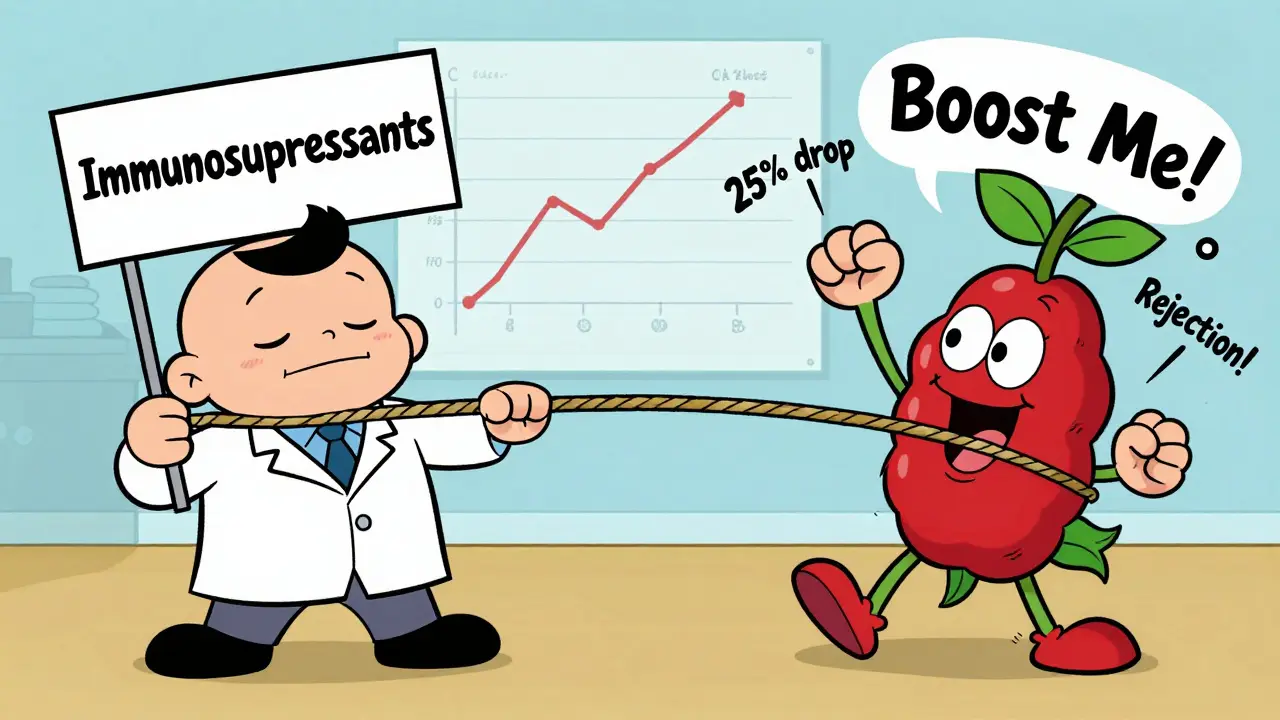
What Do Doctors Really Recommend?
Most specialists don’t say “maybe.” They say “don’t.” - Organ transplant centers in Australia, the U.S., and Europe routinely ban elderberry outright. Sweet’s Elderberry Safety Guide (2023) states: “Anyone who has received an organ transplant should avoid elderberry.” - Rheumatologists for autoimmune diseases like lupus or rheumatoid arthritis often allow it only during remission - and even then, only if drug levels are monitored monthly. - The Arthritis Foundation’s 2023 patient guide says: “If you’re taking medication for rheumatoid arthritis, lupus, multiple sclerosis, or Hashimoto’s thyroiditis, it’s best to skip elderberry.” The 2023 American Society of Transplantation guidelines say risk depends on the drug. They suggest individualized decisions - but only if you’re under close monitoring. For most people, the safest answer is still: no.What Are the Alternatives?
You want to support your immune system without risking rejection or flare-ups. So what can you take instead?- Vitamin D - This is the top recommendation from 78% of rheumatologists surveyed in 2022. It helps immune regulation without triggering cytokine storms.
- Zinc - Safe in standard doses (15-30mg/day). Doesn’t stimulate immune cells the way elderberry does.
- Probiotics - Especially strains like Lactobacillus and Bifidobacterium. They support gut health, which is linked to immune balance.
- Good sleep and stress management - These are proven to lower inflammation and improve drug effectiveness.
What About the People Who Say It’s Fine?
You’ll find people online who say: “I’ve taken elderberry for years on CellCept and never had a problem.” That’s true - for some. But here’s the thing: immune reactions aren’t always immediate. A slow, low-grade immune activation might not cause a rejection episode right away. It might just make your tacrolimus levels drop a little each month. Over time, that adds up. By the time you feel sick, your body might already be rejecting the transplant. A 2022 analysis of 142 patient forum posts found 87% advised against elderberry. The minority who say it’s fine? They’re not being monitored. They’re not getting regular blood tests. And that’s the danger.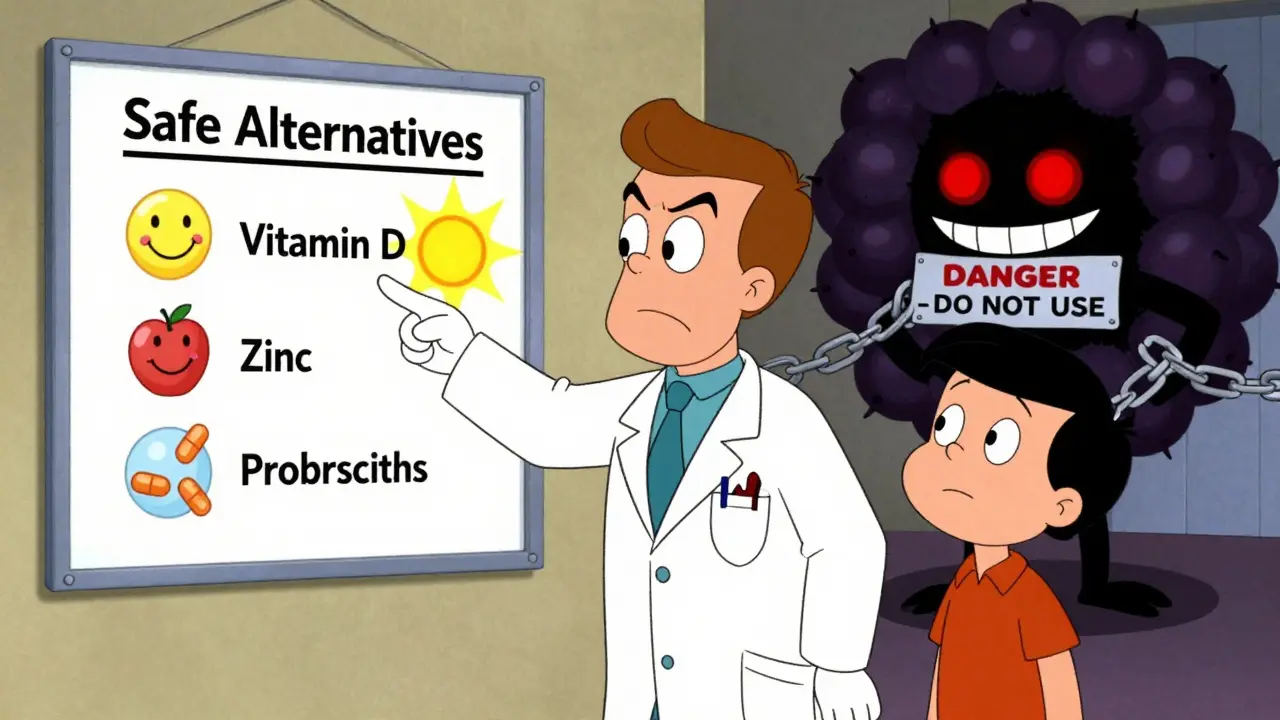
What Should You Do?
If you’re on immunosuppressants:- Stop taking elderberry immediately if you’re using it now.
- Ask your doctor - not a pharmacist, not a naturopath, not a Reddit user. Ask the person who manages your drug levels.
- Get your blood tested - If you’ve taken elderberry recently, your drug levels may have changed. A simple blood test can tell you if your immunosuppressant is still working.
- Check all labels - Elderberry is in cough syrups, gummies, teas, and even some multivitamins. Read the ingredients.
Future Research and What’s Coming
The NIH launched a clinical trial in January 2023 (NCT05213456) to measure exactly how elderberry affects tacrolimus levels in kidney transplant patients. Results are expected by late 2024. Until then, the best advice remains: avoid it. Two patents were filed in 2022 for modified elderberry extracts that might be safer. But they’re still in early development. Don’t wait for them. The market for elderberry is growing fast - projected to hit $2.14 billion by 2028. But for the 3.1 million Americans on immunosuppressants, the question isn’t about sales. It’s about survival.Can I take elderberry if I’m on prednisone?
Even though prednisone is a corticosteroid and works differently than drugs like tacrolimus, elderberry can still interfere with its effectiveness. Studies show elderberry increases inflammatory cytokines, which can counteract the anti-inflammatory effects of prednisone. Most doctors recommend avoiding elderberry entirely if you’re on any form of immunosuppressant, including prednisone.
Is elderberry juice safer than capsules?
No. Elderberry juice can be just as potent - sometimes more so - than capsules. Homemade syrups often have unpredictable concentrations, and commercial juices may contain added sugars or preservatives that don’t reduce the immune-activating compounds. The active ingredients (anthocyanins) are the same regardless of form. Avoid all forms if you’re immunosuppressed.
What if I only take elderberry once in a while?
Even a single dose can trigger changes in immune signaling. For transplant patients, a drop in drug levels after just a few days of use has been documented. There’s no safe “occasional” use when your body is on a tightrope. The risk isn’t about frequency - it’s about the biological effect. One dose is enough to matter.
Can I take elderberry after stopping my immunosuppressants?
Only if your doctor says it’s safe. Some patients stop immunosuppressants years after a transplant, but many still need them for life. Even if you feel fine, your immune system may still be vulnerable. Never stop or change your medication without medical supervision. If your doctor clears you to stop, they’ll let you know if elderberry is okay.
Are there any supplements that are safe with immunosuppressants?
Yes - vitamin D, zinc (in normal doses), and certain probiotics are generally considered safe. They don’t trigger the same inflammatory pathways as elderberry. Always check with your care team before starting any new supplement, even ones labeled “natural.”


Kathryn Lenn
So let me get this straight - we’re told to avoid elderberry because it ‘activates’ the immune system, but we’re also told that vaccines do the exact same thing?
And yet no one’s banning flu shots for transplant patients.
Or is this just another case of herbal = bad, pharmaceutical = good, even when the science says otherwise?
Someone’s making money off this fear. Probably the same people selling you $80 bottles of ‘immune-supporting’ nonsense.
Don’t get me wrong - I’m not saying elderberry is safe. I’m saying the narrative is manufactured.
They don’t want you asking questions. They want you obedient.
And if you’re not careful, you’ll end up trusting a corporation more than your own damn body.
Also - who approved this as medical advice? A marketing team?
Or did someone just read one Reddit thread and call it a day?
Wake up.
The system doesn’t care if you live or die. It just wants you to keep buying.