
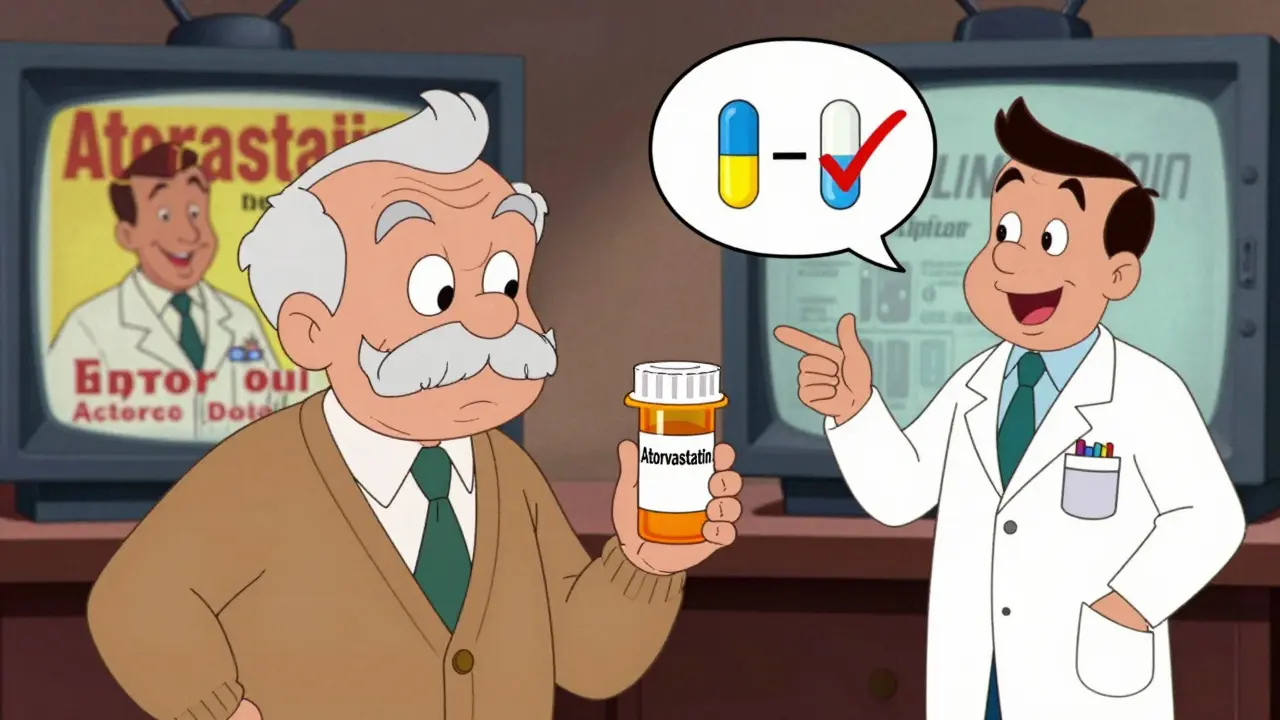
Why do some people refuse to take generic pills even when their doctor says they’re just as good as the brand-name version? It’s not about science. It’s about trust. And that trust changes with age.
Generations See Generic Drugs Differently
If you’re over 60, you probably remember the first time you saw a prescription bottle with a different label. Maybe it was your dad switching from Lipitor to atorvastatin. He stared at it. Asked the pharmacist twice if it was the same. Took it reluctantly. That moment? It’s not rare. It’s generational. Baby Boomers grew up in an era where brand names meant quality. Pfizer, Merck, Glaxo - these weren’t just companies. They were guarantees. TV ads, doctor endorsements, and decades of marketing built a psychological bond between name and effectiveness. When a pill says "Lipitor," it feels like it works. When it says "atorvastatin," it feels like a compromise. Millennials and Gen Z? They grew up with online reviews, price comparison apps, and influencer health advice. They don’t care about the brand on the bottle. They care about the cost. And if a generic saves them $40 a month on their blood pressure med? They’ll take it without a second thought. To them, brand loyalty is a relic. A marketing trick. It’s not that older people are dumb. They’re just conditioned differently. A 2023 FDA report found that 90% of prescriptions in the U.S. are filled with generics - by volume. But those same generics make up only 23% of total drug spending. Why? Because older patients often stick with brand-name drugs, even when they can’t afford them. They pay more because they believe they’re getting something better.The Trust Gap Isn’t About Science - It’s About Perception
Here’s the thing: generics aren’t cheap knockoffs. They’re exact copies. Same active ingredient. Same dosage. Same FDA approval process. They have to prove they work the same way as the brand-name drug before they’re even allowed on the shelf. But perception doesn’t care about proof. A 2015 study found that 35.6% of people in the U.S. and Europe still believe generics are less effective - even when they know they’re bioequivalent. That’s not ignorance. That’s psychology. Older adults often have more experience with medications. They’ve taken pills for decades. They’ve seen side effects. They’ve had bad experiences. And if one generic made them feel off years ago, they’ll remember that. They won’t remember the ten other generics that worked fine. Memory is selective. Brand names feel safe. Generics feel risky. Younger people? They’ve never known a world without generics. They’ve seen their parents switch to generics to save money. They’ve watched YouTube videos explaining how the FDA approves them. They’ve used apps that compare prices in real time. For them, generics aren’t a fallback. They’re the default.Health Literacy Is the Hidden Divide
There’s a big difference between knowing something and believing it. That’s where health literacy comes in. Studies show that people who understand how drugs are tested - how bioequivalence works, how the FDA regulates generics - are more likely to trust them. But here’s the catch: older generations were never taught this. Their health education came from doctors saying, "Take this pill," not from infographics explaining drug approval processes. Meanwhile, younger people grew up with Google, TikTok, and patient forums. They can look up the chemical structure of their medication. They can read the FDA’s own data on generic approval. They don’t need a doctor to tell them it’s safe - they’ve already checked. This isn’t about intelligence. It’s about exposure. A 70-year-old might have taken 20 different medications in their life. But if they never learned how generics are made, they’ll assume the brand-name version is superior. A 25-year-old might have taken two. But they’ve watched a 10-minute video explaining the process. They’re more informed - not because they’re smarter, but because they learned differently.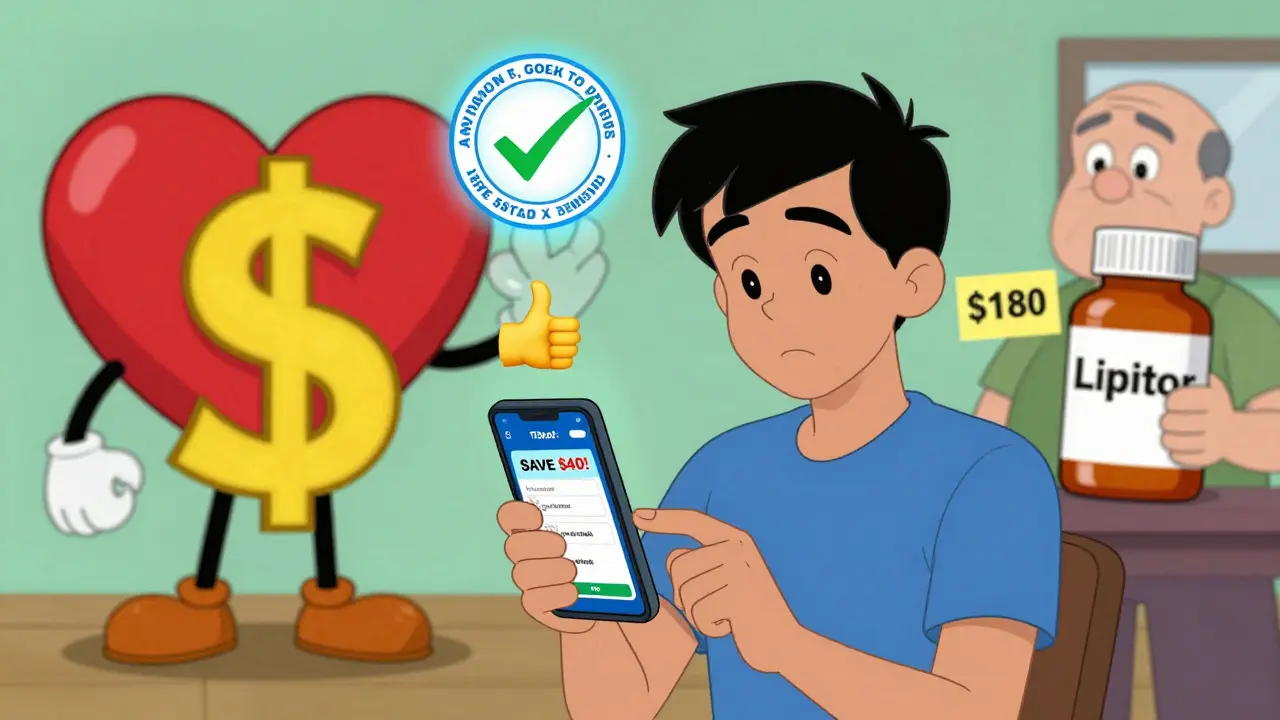
Pharmacists Know This Better Than Doctors
Here’s something most patients don’t realize: pharmacists are the frontline in the battle over generic perception. A 2021 survey of healthcare professionals found that pharmacists were significantly more likely than physicians to support generics. Why? Because pharmacists see the financial impact every day. They see patients skipping doses because they can’t afford brand-name drugs. They see people choosing between insulin and groceries. They know what happens when people don’t take their meds - and they know generics save lives. But here’s the problem: pharmacists aren’t always the ones giving the advice. Doctors still write the script. And many doctors - especially older ones - still default to brand names out of habit. They don’t think about cost. They think about the name they’ve trusted for 30 years. It’s not that doctors are wrong. They’re just working with the same mental models they learned decades ago. Meanwhile, younger doctors are being trained to consider cost-effectiveness. They’re taught to ask: "Is there a generic?" before writing a prescription.How to Bridge the Gap - Without Condescension
You can’t shame someone for trusting a brand. You can’t tell a 65-year-old they’re irrational. That won’t work. What does work? Framing. A 2013 study found that when pharmacists said, "This generic is the exact same medicine as your brand, just without the marketing cost," patients were more likely to accept it. But when they said, "It’s cheaper," patients hesitated. Why? Because "cheaper" sounds like lower quality. The right message isn’t about price. It’s about equivalence. "This pill has the same active ingredient, same dosage, same FDA approval as your brand. The only difference? You’ll save $50 this month." For older patients, use stories. "Your neighbor took this generic for her cholesterol. Same results. Saved her $600 a year. She’s still hiking every weekend." For younger patients, use data. "The FDA requires generics to be within 98-102% of the brand’s effectiveness. That’s tighter than the variation between two batches of the same brand-name drug."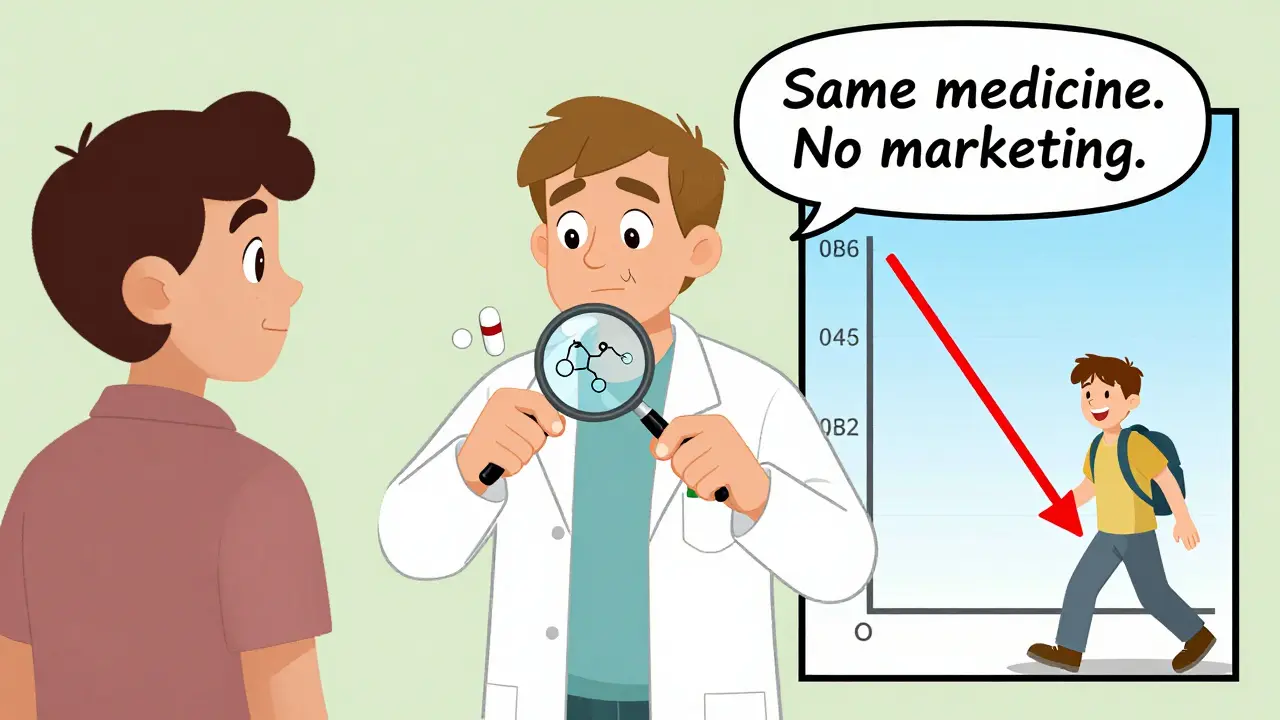
The Real Cost of Not Switching
Let’s talk numbers. In 2022, the U.S. generic drug market was worth $130 billion. That’s billions saved by people who chose generics over brands. But millions still pay more than they have to. One woman in Ohio told a researcher she was skipping her diabetes meds because the brand cost $180 a month. She switched to the generic - $12. Same results. No side effects. She’s alive today because she finally took it. This isn’t just about money. It’s about access. When people avoid generics because they think they’re inferior, they delay treatment. They skip doses. They end up in the ER. That’s not just a personal cost. It’s a system cost. China saw a 17% drop in brand-name drug use after implementing a national policy to push generics. The result? Lower hospitalizations. Lower costs. Better outcomes. The U.S. could do the same. But only if we fix the perception problem - one generation at a time.What’s Next? It’s Not About Changing Minds - It’s About Changing Messages
The science is settled. Generics work. The challenge now is communication. And communication must be age-specific. - For Baby Boomers: Focus on safety, equivalence, and real-life success stories. Avoid jargon. Use trusted voices - their doctor, their pharmacist, their neighbor. - For Gen X: Highlight cost savings and convenience. Show them how to use pharmacy apps to compare prices. They’re practical. They’ll act if the math makes sense. - For Millennials and Gen Z: Give them data. Show them FDA reports. Link them to open-access studies. They’ll trust evidence more than authority. We don’t need more ads. We need better conversations. And we need to stop assuming that everyone sees pills the same way. The truth? A pill doesn’t care if it’s called "Lipitor" or "atorvastatin." It only cares if you take it.Are generic medications really as effective as brand-name drugs?
Yes. By law, generic medications must contain the same active ingredient, strength, dosage form, and route of administration as the brand-name version. The FDA requires them to prove they work the same way in the body - within 98-102% effectiveness. That’s a tighter standard than the variation allowed between two batches of the same brand-name drug. Generics are not inferior. They’re identical in function.
Why do older people distrust generics more than younger people?
Older generations grew up in an era where brand names were heavily marketed as symbols of quality and reliability. TV ads, doctor endorsements, and decades of exposure created strong psychological associations between brand names and effectiveness. Many also had negative experiences with early generics - which were less regulated - and carry that memory forward. Younger people, raised with digital access to information and price transparency, see generics as the practical default. Their trust is based on data, not branding.
Can switching to generics cause side effects?
The active ingredient is the same, so side effects should be identical. But some people report feeling different after switching - usually because of inactive ingredients (fillers, dyes, coatings). These don’t affect how the drug works, but they can cause minor reactions in sensitive individuals. If you notice a change after switching, talk to your pharmacist. They can help you find a generic with a different filler or suggest sticking with the brand if needed.
Why do some doctors still prescribe brand-name drugs?
Many doctors were trained decades ago when generics were less common or less reliable. Habit, brand loyalty, and lack of updated education on current generic standards play a role. Some also worry about patient complaints or assume patients expect the brand. But younger doctors are being trained to prioritize cost-effective care, and most now default to generics unless there’s a specific medical reason not to.
How can I convince a family member to switch to a generic?
Don’t argue about science. Share a story. Say: "Your cousin took the generic for her blood pressure - same results, saved $50 a month. She’s still gardening every day." Or ask your pharmacist to explain the FDA’s equivalence standards in simple terms. Sometimes hearing it from a trusted professional - not a family member - makes the difference.
Do generics have the same quality control as brand-name drugs?
Yes. The same FDA inspectors who check brand-name drug factories also inspect generic drug factories. In fact, many brand-name companies make their own generics once the patent expires. The manufacturing standards are identical. The only difference is the label.
Is it true that generics take longer to work?
No. Generics must meet the same bioequivalence standards as brand-name drugs, meaning they enter the bloodstream at the same rate and in the same amount. Any perceived delay is usually psychological - not physical. If a generic feels slower, it’s likely because you expect it to. The science says otherwise.


Caitlin Foster
So let me get this straight: we’re still having this conversation in 2025?!! People are still paying $200 for a pill that’s literally the same chemical as the $12 version?? I mean, if your car had a "brand-name" engine and a "generic" engine that performed identically, you’d buy the generic-unless you were also paying for the logo on the hood. And yet, we treat medicine like it’s a luxury handbag. 😅