
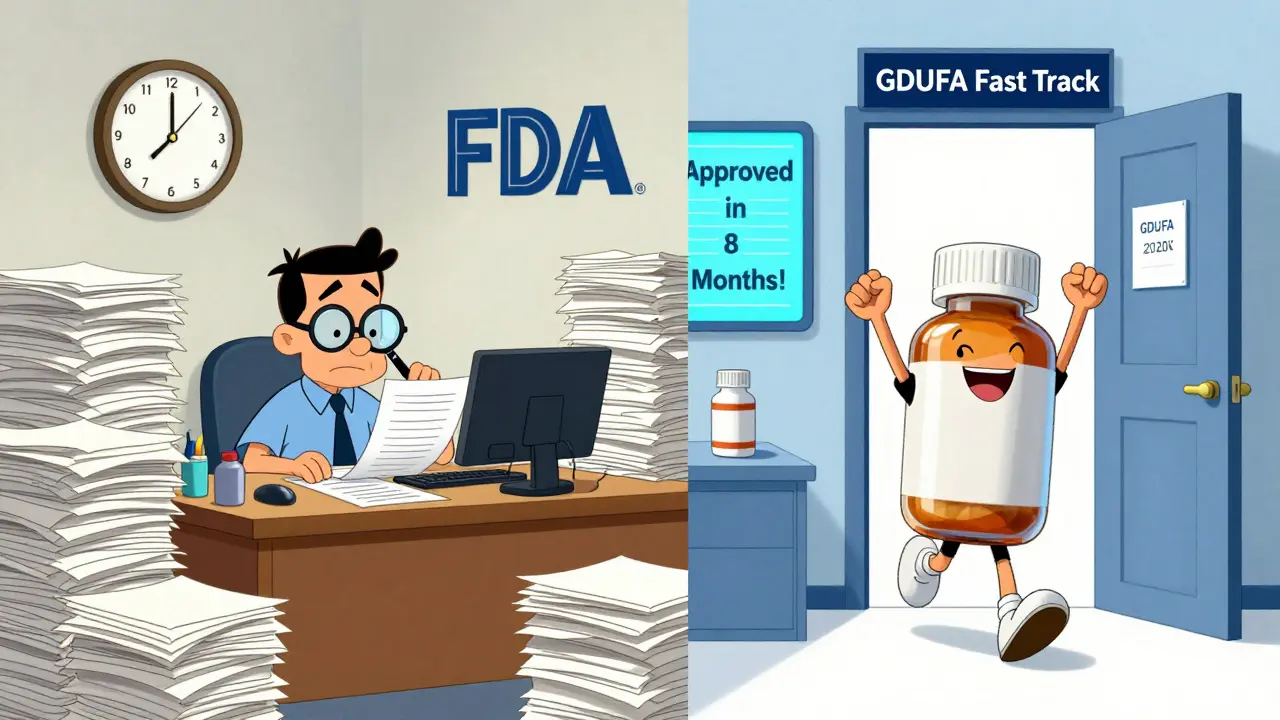
Before 2012, if you wanted a generic version of a popular prescription drug in the U.S., you might wait over two years for approval. Backlogs piled up. The FDA was drowning in paperwork. Patients paid more than they should. Then came GDUFA - the Generic Drug User Fee Amendments - and everything changed.
What GDUFA Actually Does
GDUFA isn’t just another law. It’s a deal. The U.S. Food and Drug Administration (FDA) needed more money to review generic drug applications. Generic drug makers needed faster, more predictable approvals. So they agreed: manufacturers pay fees, and in return, the FDA promises to review applications within strict timeframes.
This isn’t taxpayer money. It’s fees paid directly by companies that make generic drugs. Every time a company submits an Abbreviated New Drug Application (ANDA), they pay a fee. They also pay annual fees for each manufacturing site - whether it’s in Ohio or India. In exchange, the FDA commits to reviewing 90% of ANDAs within 10 months and inspecting facilities on a risk-based schedule.
The law, signed in 2012 as part of the Food and Drug Administration Safety and Innovation Act, was designed to fix a broken system. Before GDUFA, the FDA had over 3,000 pending generic drug applications. Today, that backlog is gone. Review times have dropped by more than half.
How the Fees Work - And Why They’re Different for Foreign Plants
The fee structure is detailed, but it’s not random. Under GDUFA III (2023-2027), here’s what manufacturers pay:
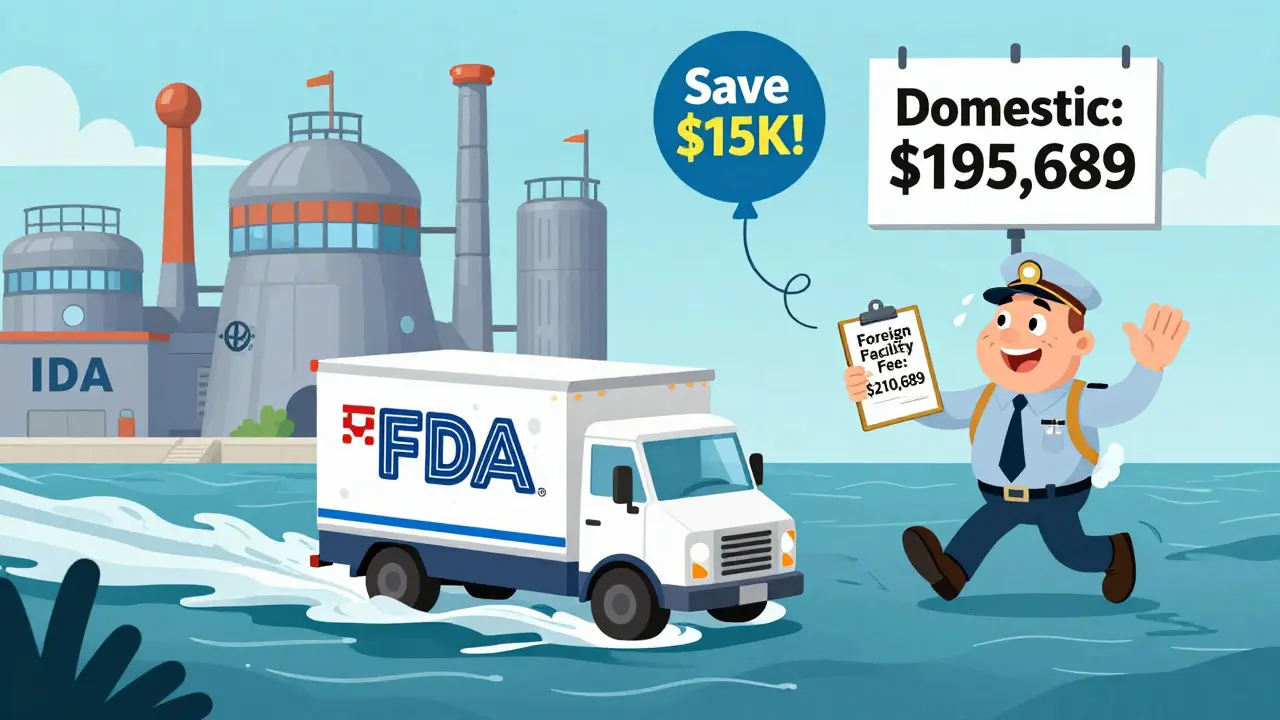
- Domestic finished drug facility: $195,689
- Foreign finished drug facility: $210,689
- Domestic active ingredient (API) facility: $32,958
- Foreign API facility: $47,958
Foreign facilities pay $15,000 more for both types of sites. Why? Because inspecting plants overseas costs more. The FDA sends teams across oceans, deals with language barriers, and often needs translators and travel logistics. That extra fee covers those real costs.
There are also one-time fees for submitting an ANDA ($122,480), for a Drug Master File (DMF), or for changes to an existing application. These fees add up - but they’re predictable. Companies know exactly what they’ll owe when they file.
Since 2013, these fees have generated over $1.5 billion for the FDA’s generic drug program. By law, that money can only be used for reviewing applications, inspecting factories, and training staff - nothing else.
Why GDUFA Changed the Game
Before GDUFA, the FDA had no clear deadlines. Applications sat for years. Companies didn’t know if they’d get feedback in 6 months or 24. That uncertainty hurt innovation and kept prices high.
After GDUFA I launched in 2013, the FDA hit its targets. By 2016, 88% of ANDAs were reviewed within 10 months. Inspections of foreign facilities jumped from 25% to over 70%. The backlog vanished.
But it wasn’t perfect. Big companies with dozens of products could absorb the annual facility fees. Small startups? Not so much. A single fee of nearly $200,000 for a foreign plant was a massive hurdle. Many couldn’t enter the market at all.
That’s why GDUFA II (2018-2022) made changes. It introduced fee reductions for small businesses and first-time filers. It also created the Pre-ANDA Program - a way for companies to meet with FDA scientists before submitting a formal application. This saved months of back-and-forth.
GDUFA III: Transparency, Complexity, and the Future
The current version, GDUFA III (2023-2027), went even further. It added:
- ANDA Assessment Program - a faster track for complex generics like inhalers or injectables
- Controlled Correspondence - a formal way to ask FDA questions and get timely answers
- Monthly and quarterly public reports on review progress
Now, anyone can check the FDA’s website and see how many applications are pending, how long each one has been under review, and how many inspections were completed last month. That kind of transparency was unheard of before.
Complex generics - drugs that are hard to copy because of their delivery system or formulation - now get special attention. These used to take years to approve. Now, with the Pre-ANDA Program and targeted review timelines, companies can get approval in under 18 months.
Who Benefits - And Who Still Struggles
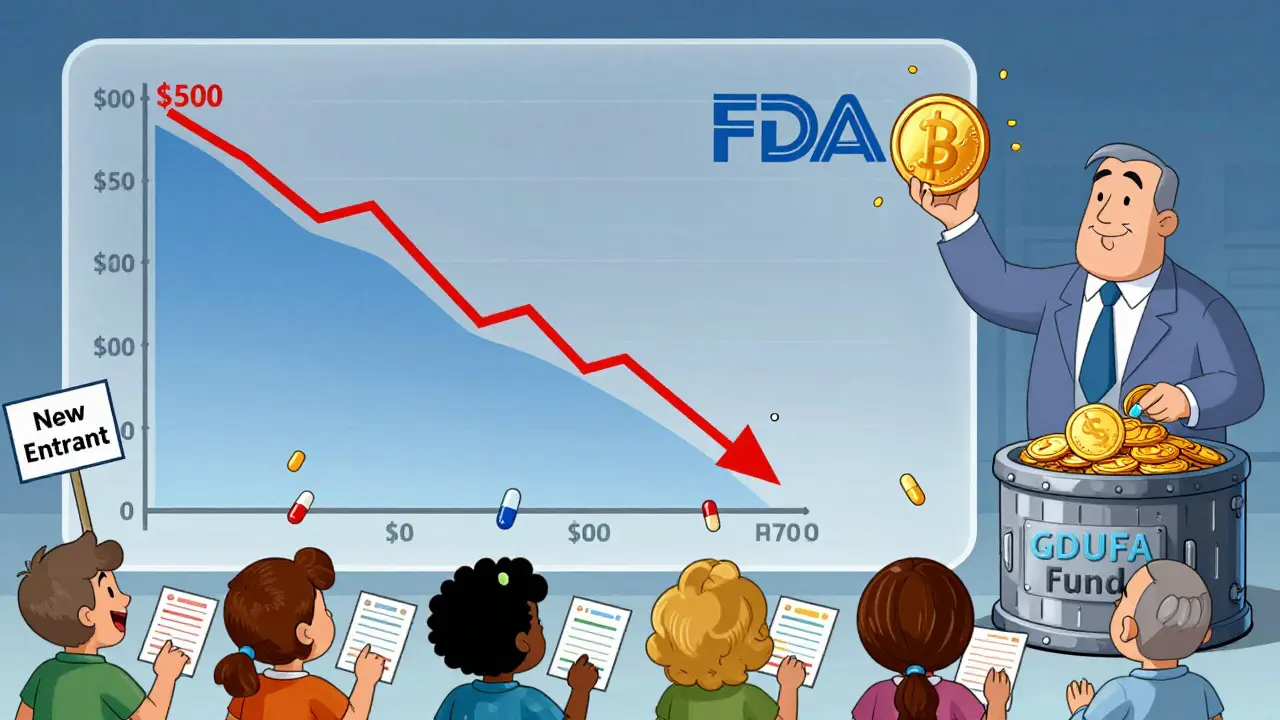
Patients benefit the most. Over 90% of prescriptions in the U.S. are filled with generics. GDUFA has helped bring down prices by speeding up competition. A drug that once cost $500 a month can drop to $10 within months of a generic hitting the market.
Manufacturers benefit from predictability. They can plan product launches, hire staff, and invest in production knowing the timeline. The FDA’s performance targets are public, so companies know what to expect.
But challenges remain. Smaller companies still complain about fees. A startup with one product and a single foreign plant might pay over $250,000 just to get started. That’s more than many small firms can afford.
Foreign manufacturers - especially from India and China - argue the $15,000 premium isn’t fair. They say the FDA’s actual inspection costs are lower than the fee suggests. The FDA counters that travel, visas, and logistics make it more expensive than it looks.
There’s also consolidation. The top 10 generic drug makers now control over half the U.S. market. That’s partly because only big players can afford the fees and compliance costs. New entrants are rare.
What’s Next? GDUFA IV and Beyond
GDUFA III expires in September 2027. Talks about GDUFA IV are already starting. Stakeholders are pushing for:
- Further fee discounts for small businesses
- More digital submission options
- Clearer guidelines for complex generics
- Adjustments to foreign facility fees based on actual inspection costs
The FDA has signaled it’s open to change. They’ve published their goals for the next cycle and invited public input. The goal isn’t to eliminate fees - it’s to make them fairer and more effective.
One thing is certain: without GDUFA, the U.S. generic drug system would still be stuck in the past. The law didn’t just fix a backlog. It created a system where speed, transparency, and accountability are built in.
How to Stay Compliant
If you’re a manufacturer applying for an ANDA, here’s what you need to do:
- Register all domestic and foreign facilities with the FDA
- Pay the correct user fees before submitting your application
- Use the FDA’s fee calculator tool to avoid mistakes
- Consider the Pre-ANDA Program if your drug is complex
- Monitor the FDA’s quarterly reports to track your application’s status
The FDA offers free webinars, recorded training sessions, and a dedicated email ([email protected]) for applicants. Ignoring these resources can cost you months of delays.
Why This Matters to Everyone
Generic drugs save Americans over $300 billion a year. That’s money back in people’s pockets - for insulin, blood pressure pills, antibiotics, and cancer treatments. GDUFA makes those savings possible.
It’s not glamorous. No one posts about it on social media. But without this law, millions would pay more for life-saving medicines. The system isn’t perfect, but it’s working. And every year, it gets a little better.
What is GDUFA?
GDUFA stands for Generic Drug User Fee Amendments. It’s a U.S. law that lets the FDA collect fees from generic drug manufacturers to fund the review of generic drug applications and facility inspections. In return, the FDA commits to specific review timelines and transparency standards.
When did GDUFA start?
GDUFA was first signed into law on July 9, 2012, as part of the Food and Drug Administration Safety and Innovation Act (FDASIA). It has been reauthorized twice since then: GDUFA II (2018-2022) and GDUFA III (2023-2027).
Do all generic drug makers pay the same fees?
No. Fees vary based on facility location (domestic vs. foreign), type of facility (finished drug vs. active ingredient), and whether the company qualifies as a small business. Foreign facilities pay $15,000 more than domestic ones to cover higher inspection costs.
How has GDUFA affected drug prices?
By speeding up approval of generic drugs, GDUFA has increased competition in the market. This has led to faster price drops - often bringing brand-name drugs down to 10-20% of their original cost within months of a generic launch. The FDA estimates generic drugs save Americans over $300 billion annually.
Are GDUFA fees used for anything else?
No. By law, GDUFA fees can only be used for activities directly related to the generic drug review process - including reviewing applications, inspecting manufacturing facilities, and hiring staff for the Generic Drugs Program. They cannot be diverted to other FDA programs.
What happens after GDUFA III expires in 2027?
Congress must pass new legislation to renew the program. Talks for GDUFA IV are already underway, with industry and the FDA discussing potential changes to fees, small business support, and digital submission requirements. Without reauthorization, the FDA will lose its legal authority to collect these fees.


Eli Kiseop
So basically the FDA just turned into a收费机构 and called it reform? I mean, I get it but also... why does it cost more to inspect a factory in India than Ohio? Are they flying first class now? 🤔