
Managing multiple medications is one of the biggest challenges for people with chronic conditions. If you’re taking five different pills for diabetes, high blood pressure, cholesterol, and arthritis, keeping track of when each one needs refilling can feel overwhelming. That’s where refill synchronization comes in - a simple but powerful tool that’s helping millions stay on track with their meds.
What Is Refill Synchronization?
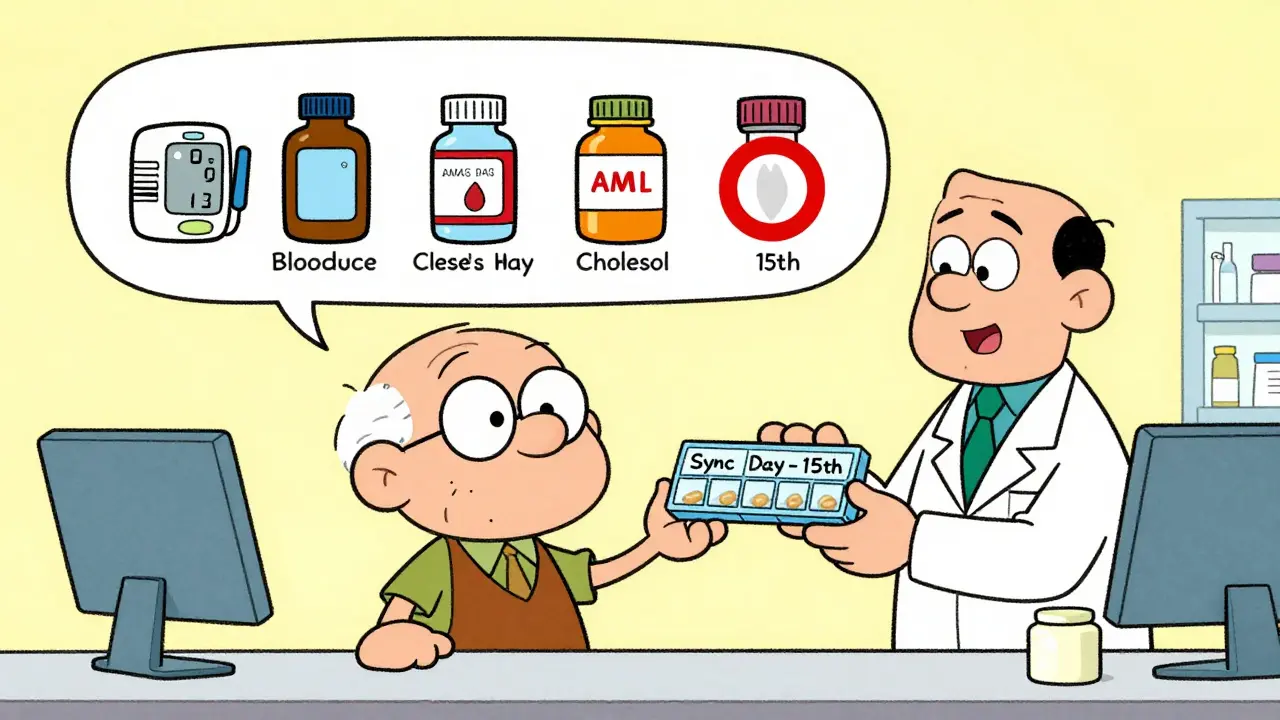
Refill synchronization, also known as med sync, is a pharmacy service that aligns all your maintenance medications to one monthly refill date. Instead of having to pick up your blood pressure pills on the 5th, your diabetes meds on the 12th, and your cholesterol pill on the 20th, everything gets synced to a single day - say, the 15th. This means one trip to the pharmacy each month, one reminder to remember, and one less thing to worry about.
The idea isn’t new. It started gaining traction in the early 2010s when pharmacists noticed that patients with multiple prescriptions were missing doses simply because the timing was too complicated. By 2014, over 355,000 people in the U.S. were already enrolled in med sync programs. Today, that number has grown to an estimated 12-15 million, with major chains like CVS and Walgreens leading the way.
It’s not magic. It’s logistics - and it works. Studies show that patients using med sync improve their medication adherence by 3-5 percentage points on average. That might sound small, but in real terms, it means fewer hospital visits, lower healthcare costs, and better health outcomes. For someone with diabetes or heart disease, that extra 5% adherence can mean the difference between stable blood sugar and an emergency room trip.
How It Works: The Four-Step Process
Getting started with refill synchronization is straightforward. Here’s how it typically works:
- Initial consultation - Your pharmacist sits down with you (in person or over the phone) and reviews every medication you’re taking. They look at dosing schedules, refill dates, and insurance rules. The goal? To find a single day each month that works for everything.
- Synchronization plan - The pharmacist adjusts your refill quantities. For example, if your blood pressure pill was due in two weeks but your cholesterol pill isn’t due for six weeks, they might give you an extra supply so both can be refilled on the same day. This is legal and safe - pharmacists are trained to do this under specific guidelines.
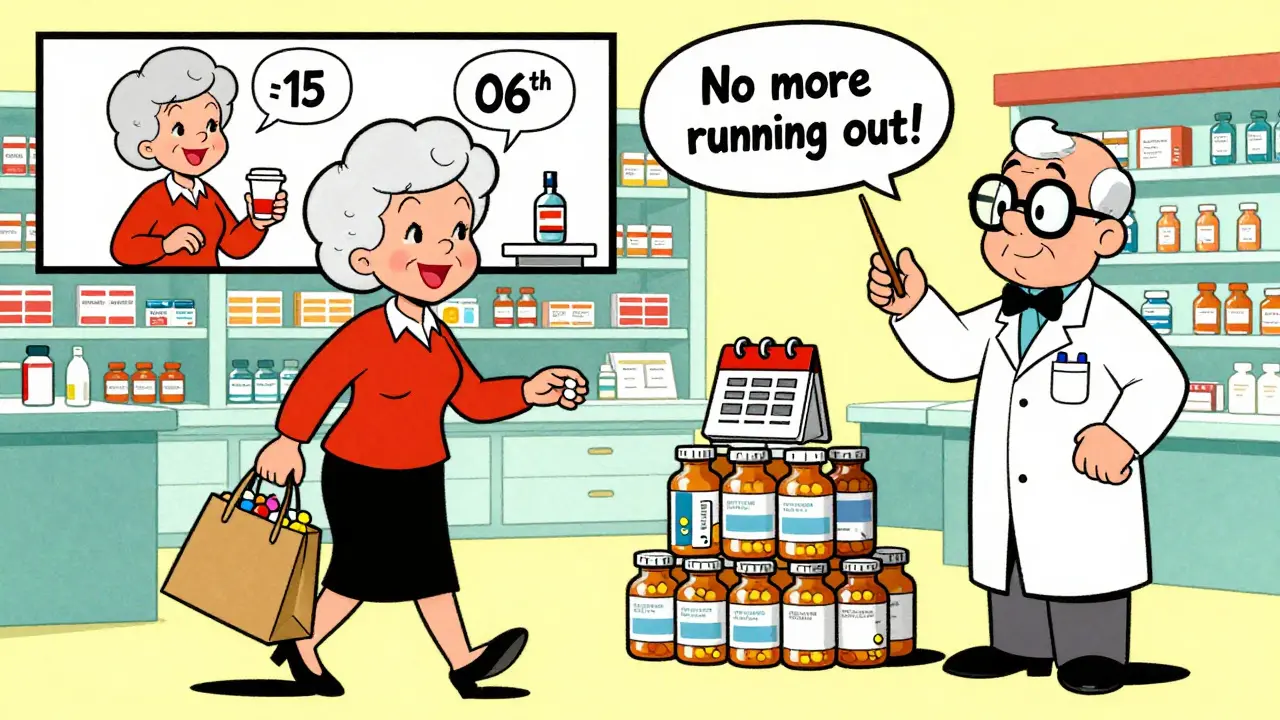
- Monthly refill - On your sync date, your pharmacy prepares all your medications in advance. You can pick them up in one visit, or many pharmacies now offer home delivery. No more calling in refills, no more running out.
- Monthly check-in - Your pharmacist reviews your meds each month. If you started a new drug or stopped one, they update your sync schedule. They also catch potential interactions or side effects you might not have mentioned.
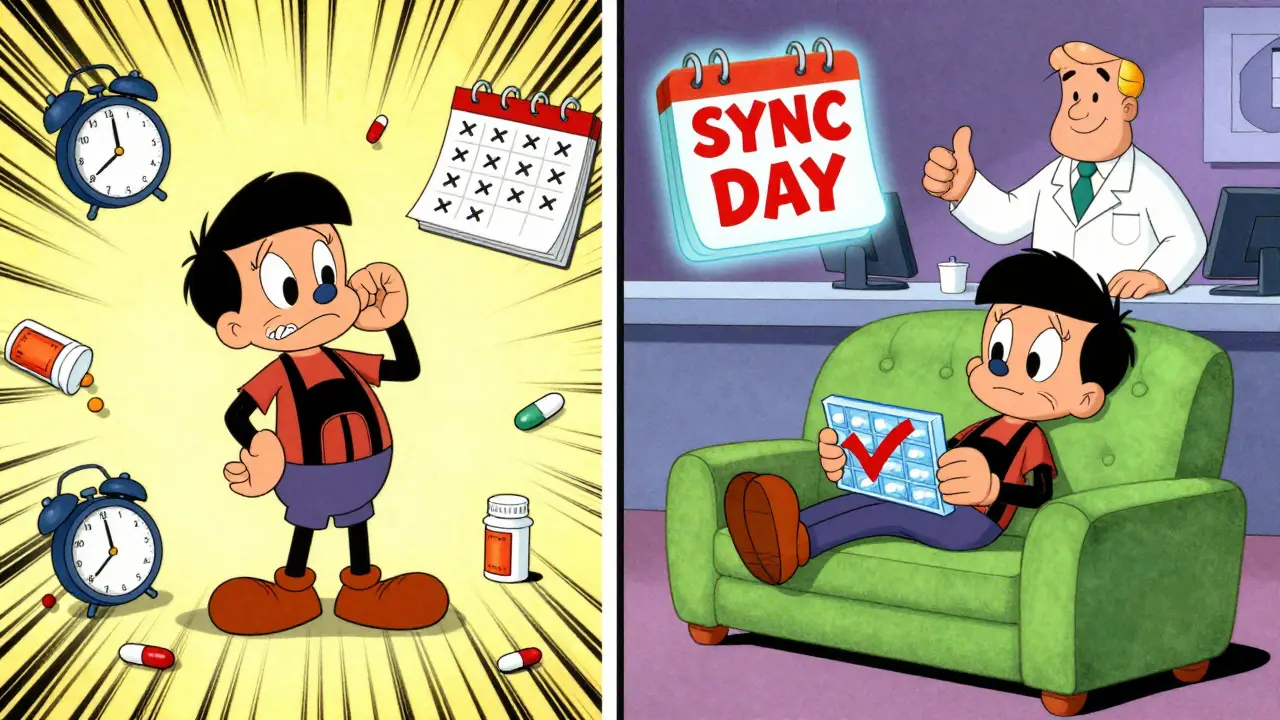
This isn’t just about convenience. It’s about building a habit. When your meds are ready on the same day every month, you start to associate that day with taking your pills - not just picking them up. That routine makes adherence automatic.
Who Benefits Most?
Not everyone needs med sync. But if you fit any of these profiles, you’re a prime candidate:
- You take three or more maintenance medications daily (like for hypertension, diabetes, or high cholesterol).
- You’ve run out of medication before, or missed doses because you forgot.
- You’re on Medicare Advantage - over 22% of these patients are enrolled in med sync, and they see the biggest adherence gains.
- You’re over 65 or manage multiple chronic conditions.
One case study from Farmington Drugs in 2022 showed a 72-year-old patient with hypertension, diabetes, and high cholesterol go from 65% adherence to 92% after enrolling. Their blood pressure dropped from 152/90 to 128/82. Their A1C (a diabetes marker) improved from 8.1% to 6.9%. That’s not luck - that’s synchronization.
On the flip side, med sync doesn’t help much for short-term meds. If you’re only taking antibiotics or painkillers occasionally, syncing won’t make sense. It’s built for daily, long-term medicines - the kind that keep you out of the hospital.
Why It Works Better Than Mail Order
You might think, “Why not just use mail-order pharmacy?” It’s cheaper, right? Not always - and not for adherence.
A 2017 study in the American Journal of Managed Care found that patients who used retail pharmacies with synchronization had much bigger adherence gains than those using mail-order services. Why? Because mail-order delivers everything at once - often in large, hard-to-manage packages. There’s no monthly check-in. No pharmacist asking, “How are you feeling?” No one catching that you’ve stopped taking your statin because of muscle pain.
With med sync, you’re interacting with your pharmacist every month. That personal touch matters. One Reddit user, u/MedicationMama, wrote: “Since my pharmacist synced my 5 medications to the 15th of each month, I haven’t missed a single dose in 18 months - this has literally changed my diabetes management.”
Challenges You Might Face
It’s not perfect. Here are the most common hurdles:
- Insurance restrictions - Some plans won’t allow early refills. If your pill was due in three weeks but the sync date is in two, your insurer might deny the refill. Pharmacists can often work around this by contacting your doctor for an early authorization - but it takes effort.
- Complex dosing - If you take one pill twice a day and another once a week, syncing everything to one date gets tricky. Pharmacists can still help, but it requires more customization.
- Initial confusion - Some patients don’t understand why their refill dates are being changed. One pharmacy intern noted: “It takes significant counseling time to explain the synchronization concept.”
Still, the data is clear: 68% of patients using med sync say they never run out of meds - compared to just 42% of those who don’t. And 87% of surveyed patients reported being “very satisfied” with the service.
How to Get Started
If you think med sync could help you or a loved one, here’s how to begin:
- Ask your pharmacy - Don’t wait for them to offer it. Walk in or call and say, “I’m taking several medications. Can you help me sync my refills to one day a month?”
- Bring your list - Write down every pill you take, including over-the-counter ones. Include dosages and how often you take them.
- Be patient - The first sync can take 20-30 minutes. But after that, monthly visits are quick - usually 5-10 minutes.
- Ask about extras - Many pharmacies now offer text reminders, home delivery, or even apps that track your adherence. CVS and Walgreens have integrated sync with digital tools that send alerts when your meds are ready.
Independent pharmacies often offer more personalized service, while chains have more automation. Either way, the core benefit is the same: one date, one trip, one less thing to forget.
The Bigger Picture
Med sync isn’t just a pharmacy trick. It’s part of a larger shift in healthcare - from treating illness to preventing it. The World Health Organization says half of all patients with chronic conditions don’t take their meds as prescribed. That’s why med sync is growing so fast. By 2025, the American Society of Health-System Pharmacists predicts 75% of U.S. pharmacies will offer it.
And it’s not just about pills. Better adherence means fewer ER visits, fewer hospital stays, and lower costs. One study estimated that a 1% improvement in adherence for heart meds could save Medicare $206 million a year.
As telehealth and digital tools grow, med sync is evolving too. Kroger Health is testing virtual pharmacist visits tied to sync dates. Walgreens launched “Sync & Save” in 2023, offering copay help for synced meds. These aren’t just marketing gimmicks - they’re smart, practical tools built on solid evidence.
Final Thoughts
If you’re juggling multiple prescriptions, you’re not alone. And you don’t have to manage it alone, either. Refill synchronization is one of the most underrated tools in modern healthcare. It doesn’t require a doctor’s order. It doesn’t cost extra. It just asks you to show up once a month - and in return, it gives you peace of mind.
Ask your pharmacist today. It could be the simplest thing you do to take control of your health.
Can I sync my medications if I use mail-order pharmacy?
Most mail-order pharmacies don’t offer true synchronization. They typically ship all your meds in one large package every 90 days, which can make it harder to track doses or notice side effects. While this reduces the number of shipments, it removes the monthly check-in with a pharmacist - a key part of why med sync works. For better adherence and personalized care, retail pharmacy sync is more effective.
What if my insurance won’t let me refill early?
This is a common issue. Insurance plans often have rules that prevent refills before a certain number of days have passed. Your pharmacist can request an early refill authorization from your doctor, which most prescribers are willing to provide for chronic condition meds. If your doctor is hesitant, ask them to write a note explaining that the refill is for adherence management - this often helps.
Does med sync work for all types of medications?
It works best for maintenance medications - those you take daily for chronic conditions like high blood pressure, diabetes, or cholesterol. It’s not ideal for short-term meds like antibiotics, painkillers, or rescue inhalers, since those don’t follow a regular schedule. Pharmacists can still include some of these in the sync if they’re taken daily, but it’s not always practical.
How long does it take to set up?
The first setup usually takes 20-30 minutes. Your pharmacist will review all your medications, check insurance rules, and adjust refill amounts. After that, monthly visits are quick - about 5-10 minutes. Most patients complete the process in one visit, though some may need a follow-up if there are complex drug interactions or insurance issues.
Can my family member help me with med sync?
Yes - and many people do. You can authorize your pharmacist to speak with a family member or caregiver about your refill schedule. They can even pick up your meds on your behalf if needed. Some pharmacies offer family portals or shared text alerts to help caregivers stay informed. Just make sure to give written permission to your pharmacy so they can share information legally.
