
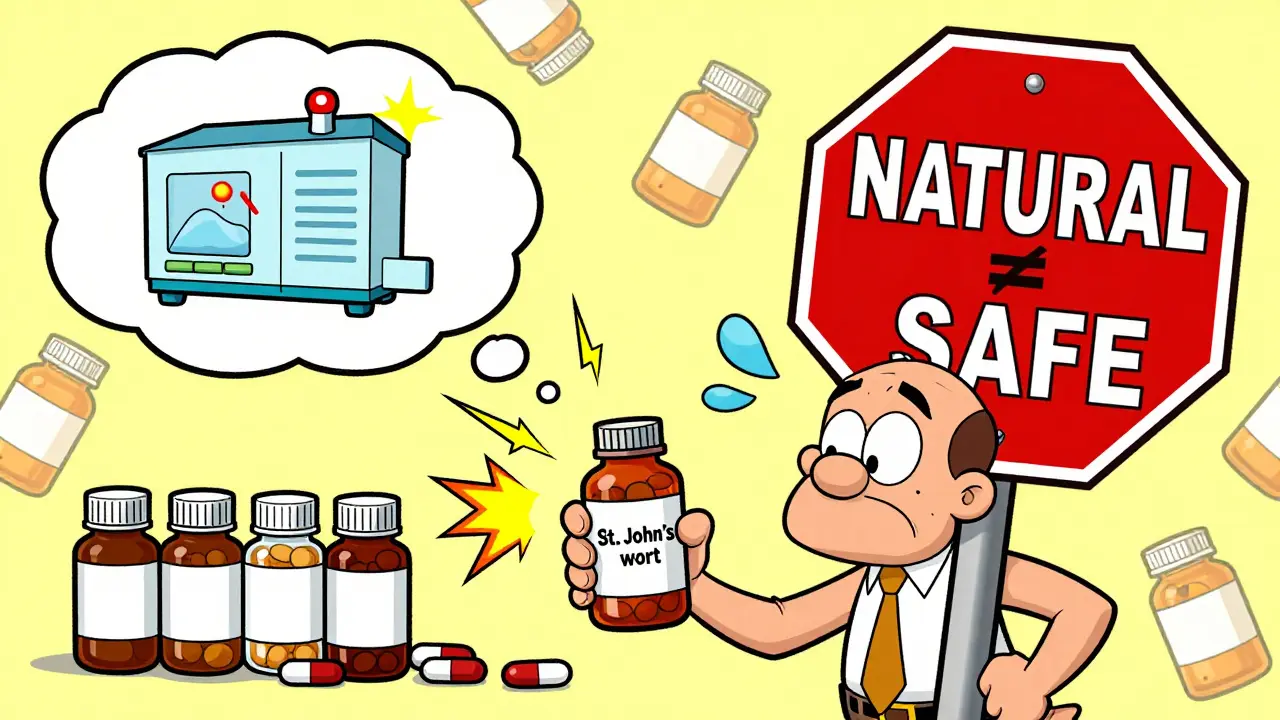
Every year, over 23,000 people in the U.S. end up in the emergency room because a supplement they took messed with their prescription meds. And here’s the scary part: most of them had no idea it could happen. You might think, It’s natural, so it’s harmless. But supplement and medication interactions aren’t theoretical-they’re life-threatening, and they’re happening right now, often without warning.
Why Your ‘Natural’ Supplement Isn’t Always Safe
The idea that supplements are harmless because they’re plant-based or vitamins is a dangerous myth. The FDA has been clear: natural doesn’t mean safe. St. John’s wort, for example, is a popular herb for mood support. But it can slash the effectiveness of birth control pills by up to 50%, raise your risk of serotonin syndrome when mixed with antidepressants, and make your transplant drug (like cyclosporine) useless. That’s not a side effect-it’s a medical emergency waiting to happen.It doesn’t stop there. Vitamin E at doses of 400 IU or higher can spike your INR levels by 15-20% if you’re on warfarin. That means your blood thins too much. One study found people taking both had a 2.3 times higher chance of major bleeding. Ginkgo biloba? Safe for most people. But if you’re on Eliquis or Plavix, it can trigger internal bleeding. There are documented cases of people ending up in the hospital after combining ginkgo with blood thinners.
Even minerals can cause trouble. Calcium, magnesium, zinc, and iron all fight for the same spot in your gut to be absorbed. Take them together with your thyroid medication or antibiotics like ciprofloxacin, and your body just ignores the drug. It passes right through you-wasting your prescription and leaving your condition untreated.
The High-Risk Supplements You Need to Avoid
Not all supplements are created equal when it comes to drug interactions. Some are low-risk. Others? They’re ticking time bombs. The American Academy of Family Physicians breaks them down into three categories:- High-risk (Category 3): St. John’s wort, goldenseal
- Moderate-risk (Category 2): Ginkgo biloba, garlic, ginger, fish oil
- Low-risk (Category 1): Milk thistle, cranberry, American ginseng, saw palmetto
St. John’s wort is the worst offender. It interferes with over 57 medications by forcing your liver to break them down too fast. That includes:
- Birth control pills
- Antidepressants (SSRIs, SNRIs)
- Heart meds like amiodarone
- Transplant drugs like cyclosporine
- Chemo drugs and HIV medications
One 2021 study showed St. John’s wort cut cyclosporine levels by half. For someone who just had a kidney transplant, that’s a death sentence. And yet, people still buy it off the shelf without asking a single question.
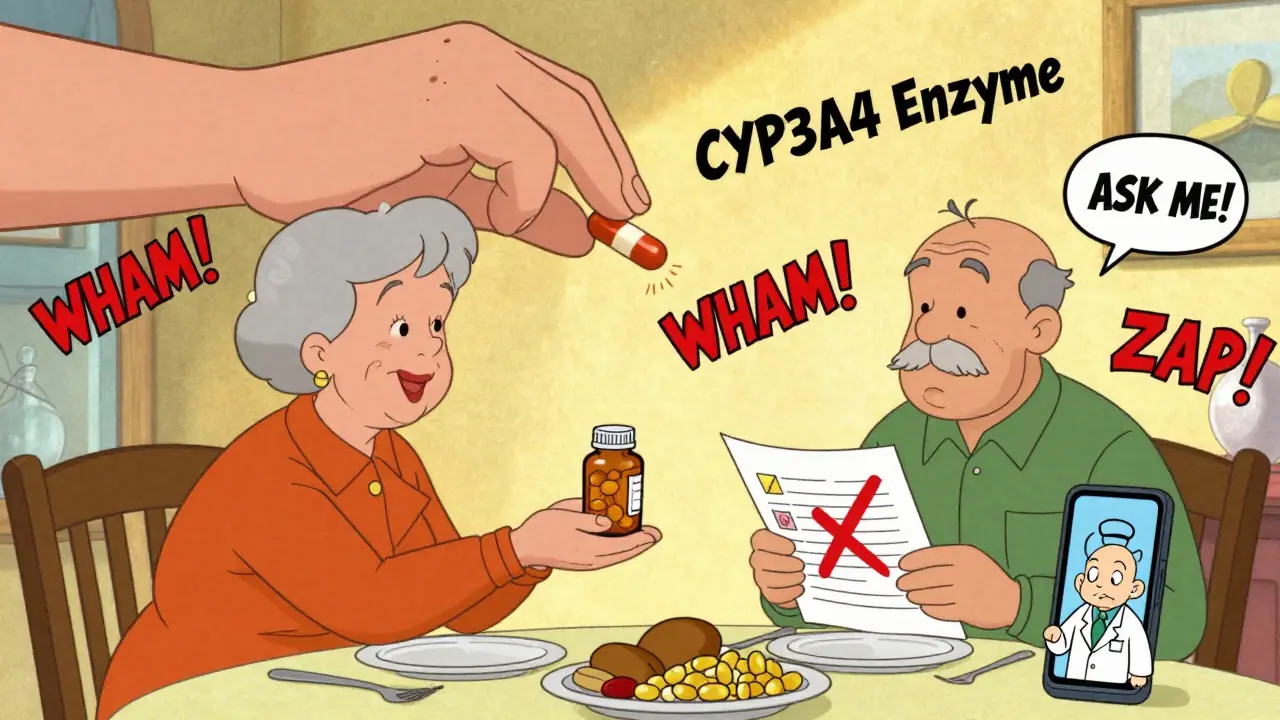
Goldenseal is another silent killer. It blocks a key liver enzyme (CYP3A4) that breaks down dozens of drugs. That means your blood pressure meds, statins, or even painkillers build up to toxic levels. You don’t feel it until it’s too late.
What About the ‘Safe’ Ones?
Yes, some supplements rarely cause problems. Milk thistle, for instance, has only three documented interactions in the last decade-both with drugs processed by CYP2C9, which is rare. Cranberry juice? It’s fine unless you’re on warfarin in massive amounts. But even ‘safe’ supplements can turn risky if you’re on multiple drugs or have liver or kidney disease.Here’s the catch: supplements aren’t tested like drugs. Under the 1994 Dietary Supplement Health and Education Act, companies don’t have to prove safety before selling. That means a bottle labeled ‘pure ginkgo’ could contain contaminants, wrong doses, or even hidden prescription drugs. The FDA issued 142 warning letters in 2023 to supplement brands making illegal drug claims. Some products marketed as ‘natural testosterone boosters’ were found to contain sildenafil-the active ingredient in Viagra-without listing it.

How to Check for Interactions (Without Guessing)
You don’t need to memorize 100 drug interactions. Here’s what actually works:- Make a full list. Write down every pill, capsule, powder, tincture, and tea you take daily-including vitamins, herbal extracts, and CBD. Don’t forget the ones you only take occasionally.
- Bring it all in. The brown bag method works. Every time you see your doctor or pharmacist, bring your entire medicine cabinet. A 2022 Johns Hopkins study showed this reduces medication errors by 37%.
- Ask the pharmacist. Pharmacists are your best line of defense. Walgreens started mandatory supplement interaction screenings in 2021. In 18% of cases, they caught a dangerous combo before the patient even left the store.
- Check the label. Look for three things: active ingredients, amount per serving, and any warning about medications. If it says “consult your doctor if taking blood thinners,” don’t ignore it.
There’s also a new FDA tool coming in late 2024: a mobile app that scans supplement labels and instantly flags interactions. Until then, use free tools like Drugs.com’s interaction checker or MedlinePlus’s database. But don’t rely on apps alone. Talk to a human.
Who’s at the Highest Risk?
If you’re over 50, you’re in the danger zone. Nearly 80% of adults in this group take both prescription meds and supplements. Yet only 32% tell their doctor about the supplements. Why? Because they think it’s not important. Or they’re embarrassed. Or they believe their doctor doesn’t care.Here’s the truth: doctors are now required by the American Medical Association to ask about supplement use during every medication review. If you’re on warfarin, digoxin, cyclosporine, or any drug with a narrow therapeutic index, your doctor needs to know everything you’re taking. These drugs have a tiny window between helping you and poisoning you. A single supplement can push you over the edge.
Women on birth control, transplant recipients, cancer patients, and people with heart disease are especially vulnerable. If you’re preparing for surgery, stop ginkgo, garlic, fish oil, and vitamin E at least 7-10 days before. Many hospitals now require this. Your surgeon won’t ask-you have to tell them.
What to Do If You’ve Already Mixed Them
If you’ve been taking a supplement with your medication and you’re feeling off-dizziness, unusual bruising, rapid heartbeat, nausea, or confusion-stop the supplement immediately and call your doctor. Don’t wait. Don’t Google it. Don’t assume it’s just a side effect.One Reddit user, ‘PharmaTech87,’ shared how he ended up in the hospital for seven days after combining ginkgo with Eliquis. He didn’t know it could cause bleeding. He thought it was just for memory. Now he’s on a strict no-supplement list and carries a card in his wallet listing every drug he takes.
That’s the kind of awareness that saves lives.
The Bottom Line
You don’t have to quit supplements. But you do need to treat them like real medicine. If you’re taking any prescription drug, assume your supplement could interfere with it-until proven otherwise. Talk to your pharmacist. Bring your brown bag. Ask the hard questions. Don’t trust marketing. Don’t assume safety. And never, ever assume your doctor already knows what you’re taking.Supplements aren’t harmless. They’re powerful. And when mixed with drugs, they can turn your treatment into a hazard. The best way to stay safe isn’t to avoid supplements-it’s to know exactly what you’re putting in your body, and who to ask when you’re not sure.
Can I take vitamin D with my blood pressure medication?
Yes, vitamin D is generally safe with most blood pressure medications. Unlike some supplements, it doesn’t interfere with liver enzymes or absorption pathways. But if you’re taking calcitriol (a form of vitamin D used for kidney disease) or have a condition like sarcoidosis, your doctor may need to monitor your calcium levels. Always check with your pharmacist if you’re on multiple meds.
Is it safe to take magnesium with my heart medication?
It depends. Magnesium can lower blood pressure and slow heart rate. If you’re on beta-blockers, calcium channel blockers, or digoxin, taking extra magnesium could make those effects stronger-leading to dizziness, low heart rate, or even heart block. People with kidney disease should avoid magnesium supplements entirely. Always get your levels checked before starting.
What should I do if my supplement label doesn’t mention drug interactions?
Don’t assume it’s safe. The FDA doesn’t require supplement labels to list drug interactions. Many companies leave them out because they’re not legally required to prove safety. If the label doesn’t warn you, it’s a red flag. Look up the active ingredient on MedlinePlus or Drugs.com. Then talk to your pharmacist. If they can’t find info, assume it’s risky.
Can I just space out my supplement and medication to avoid interactions?
Sometimes, but not always. For things like calcium and antibiotics, spacing them by 2-4 hours helps. But for supplements like St. John’s wort or goldenseal, which change how your liver processes drugs, timing won’t help. Those interactions happen system-wide. Spacing won’t stop them. If a supplement is high-risk, avoid it entirely while on those meds.
Why don’t doctors always warn me about supplement interactions?
Many doctors aren’t trained in supplement interactions. Medical schools barely cover them. And since supplements aren’t regulated like drugs, there’s less data. But that’s changing. As of 2023, the American Medical Association requires physicians to ask about supplements during medication reviews. If your doctor doesn’t ask, bring it up. Your life could depend on it.
Are there any supplements that are safe with everything?
There’s no such thing as ‘safe with everything.’ Even something as simple as vitamin C can interfere with certain cancer drugs. But some, like milk thistle or cranberry, have very few documented interactions. Still, if you’re on warfarin, digoxin, or immunosuppressants, even these can become risky. The only way to know is to check each one individually with your pharmacist.


Michael Marchio
Look, I get it-you think because it’s herbal, it’s like sipping chamomile tea and watching sunsets. But St. John’s wort? That’s not a tea. That’s a chemical grenade in your liver. I’ve seen people on antidepressants go full serotonin storm because they ‘felt good’ taking it. No one warns you. No one labels it. And then you’re in the ER wondering why your brain feels like it’s melting. It’s not natural. It’s pharmacological. And we’re all just guessing.
And don’t even get me started on goldenseal. That stuff blocks enzymes like a bouncer at a VIP club. Your blood pressure med? Gone. Your statin? Useless. Your painkiller? Overdose waiting to happen. And the FDA? They’re asleep at the wheel. This isn’t conspiracy-it’s negligence.
People think supplements are ‘free’ because they’re not prescription. But your body doesn’t care about the label. It cares about the molecules. And those molecules don’t ask permission.
I used to take turmeric with my blood thinner. Thought it was ‘anti-inflammatory.’ Turned out my INR was through the roof. One minor fall and I could’ve bled out in my driveway. Now I carry a laminated card with every supplement I’ve ever taken. And I show it to every pharmacist. No exceptions.
Stop romanticizing ‘natural.’ It’s not a virtue. It’s a liability.
And yes, I’m that guy who brings his entire medicine cabinet to every appointment. You should too.