
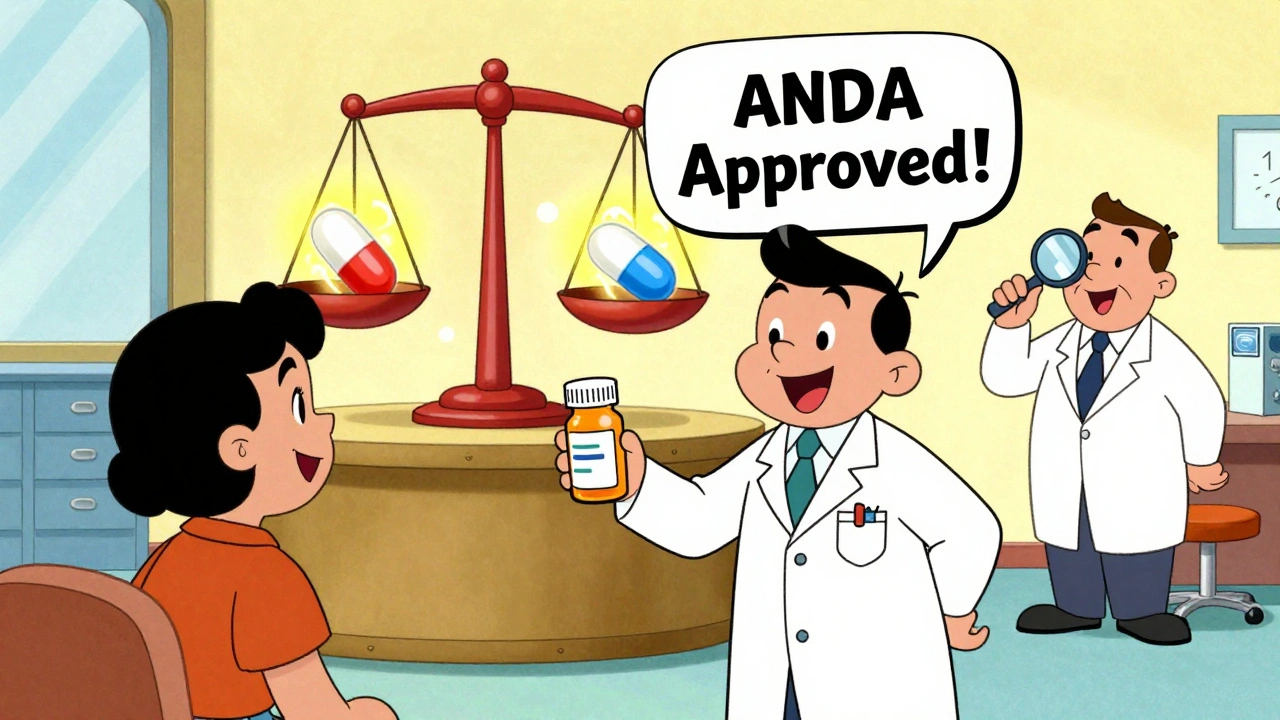
When you pick up a prescription at the pharmacy and see a cheaper version of your brand-name drug, you’re holding a product that went through one of the most tightly regulated processes in U.S. healthcare: the FDA’s authorization of generic drugs. It’s not just a label swap. It’s a legally defined, science-backed pathway that saves Americans billions every year. But how does it actually work? And why does the FDA trust a generic pill to work just like the expensive brand-name version?
The Legal Foundation: The Hatch-Waxman Act
The entire system rests on one law: the Drug Price Competition and Patent Term Restoration Act of 1984, better known as the Hatch-Waxman Act. Before this law, generic manufacturers had to run full clinical trials to prove their drugs were safe and effective-just like the original brand-name company. That meant spending hundreds of millions of dollars and waiting over a decade to bring a copy to market. Most couldn’t afford it. The Hatch-Waxman Act changed everything. It created the Abbreviated New Drug Application (a streamlined regulatory pathway for generic drugs that allows manufacturers to rely on the FDA’s prior findings of safety and effectiveness for the brand-name drug, ANDA). Under Section 505(j) of the Federal Food, Drug, and Cosmetic Act, generic companies no longer had to repeat costly clinical trials. Instead, they could prove their version was the same in key ways-without starting from scratch. This wasn’t a loophole. It was a deliberate trade-off. Brand-name companies got extended patent protection to recover R&D costs. In return, generic manufacturers got a faster, cheaper route to market. The goal? More competition. Lower prices. Better access.What the FDA Actually Requires
The FDA doesn’t approve generics based on trust. They require proof-hard, measurable, scientific proof. Here’s what every generic drug must show to get the green light:- Same active ingredient: The exact chemical compound, in the same amount, as the brand-name drug. No exceptions.
- Same strength, dosage form, and route: If the brand is a 20mg tablet taken orally, the generic must be identical. No liquid versions unless the brand is liquid.
- Same use indications: It must treat the same conditions. No adding or removing approved uses.
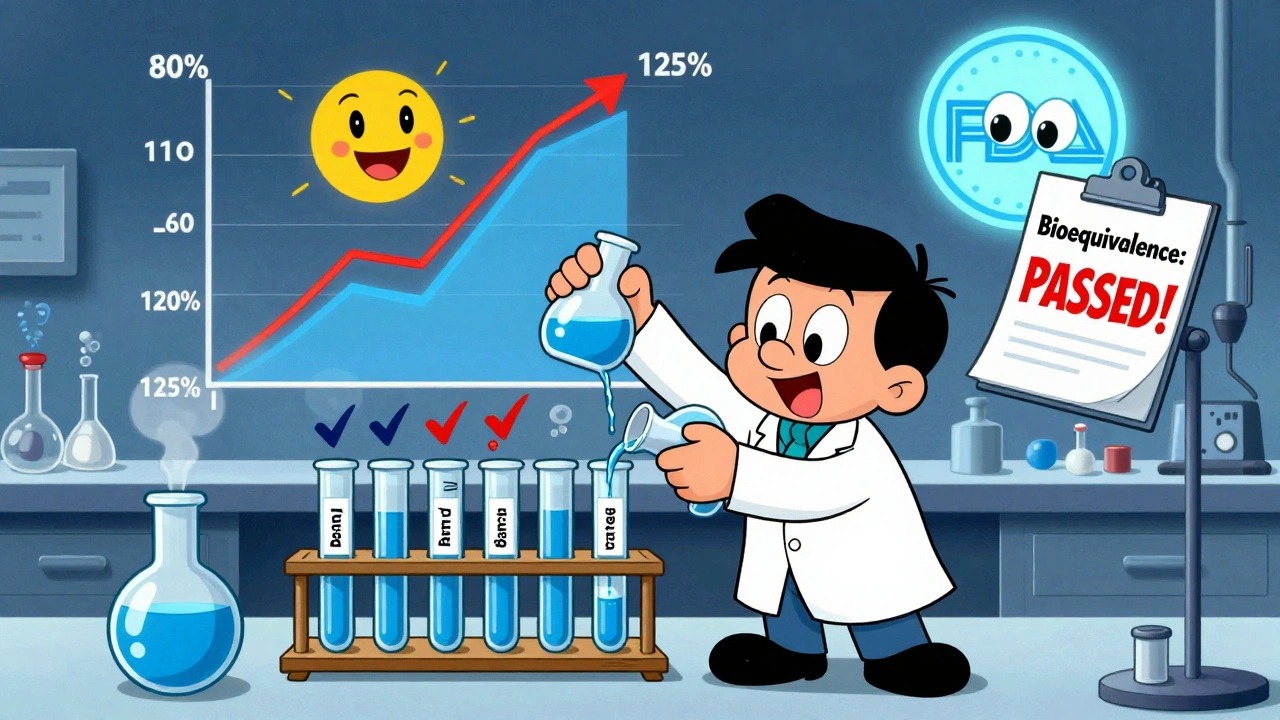
- Bioequivalence: This is the core. The generic must deliver the same amount of active ingredient into the bloodstream at the same rate as the brand. The FDA requires pharmacokinetic studies in 24-36 healthy volunteers. Blood samples are taken over hours to map how the drug is absorbed and cleared. The generic’s rate and extent of absorption must fall within 80-125% of the brand’s. That’s not a guess-it’s a strict statistical range.
- Same quality standards: The manufacturing site must meet the same FDA Good Manufacturing Practice (GMP) rules as the brand. Inspections are unannounced and frequent. A generic plant can’t cut corners just because the drug is cheaper.
- Same labeling: The package insert must match the brand’s in content and format. No misleading claims.
The Approval Process: From Submission to Shelf
Getting an ANDA approved isn’t quick, and it’s not easy. Here’s how it unfolds:- Filing Review: The FDA checks if the application is complete. Missing data? A Refuse-to-Receive (RTR) letter comes back. No review. No refund. You pay again to resubmit.
- Scientific Review: The Office of Generic Drugs (OGD) dives into Chemistry, Manufacturing, and Controls (CMC) data, bioequivalence studies, and proposed labeling. This phase can take months.
- Patent Certification: The applicant must certify each patent listed in the FDA’s Orange Book. If they claim a patent is invalid or won’t be infringed (a Paragraph IV certification), the brand-name company can sue. That triggers a 30-month stay-blocking FDA approval until the court decides.
- Inspection: The FDA inspects the manufacturing facility. No inspection? No approval. Even if the science is perfect.
- Approval or Deficiency Letter: If everything checks out, the drug is approved. If not, the FDA sends a letter listing every issue. The applicant must fix and resubmit.
Why This System Works-And Where It Stumbles
The results speak for themselves. In 2023, the FDA approved 90 new generic drugs. By 2023, 9 out of 10 prescriptions filled in the U.S. were for generics. They save patients and insurers an estimated $370 billion a year. But not all generics are created equal. Simple pills? Easy. Complex products? Not so much. Inhalers, topical creams, injectables with complex release mechanisms-these require more than just bioequivalence. The FDA calls them “complex generics.” For these, standard blood tests aren’t enough. The drug’s physical structure, how it’s absorbed through skin or lung tissue, and how it releases over time matter. The FDA launched its Complex Generic Drug Product Development Resources initiative to help manufacturers navigate this. Still, many struggle. Approval times are longer. Failure rates are higher. And then there’s patent games. Some brand-name companies file dozens of patents-on packaging, dosing schedules, even inactive ingredients-to delay generic entry. The FDA’s Drug Competition Action Plan tries to crack down on this, but it’s a slow fight.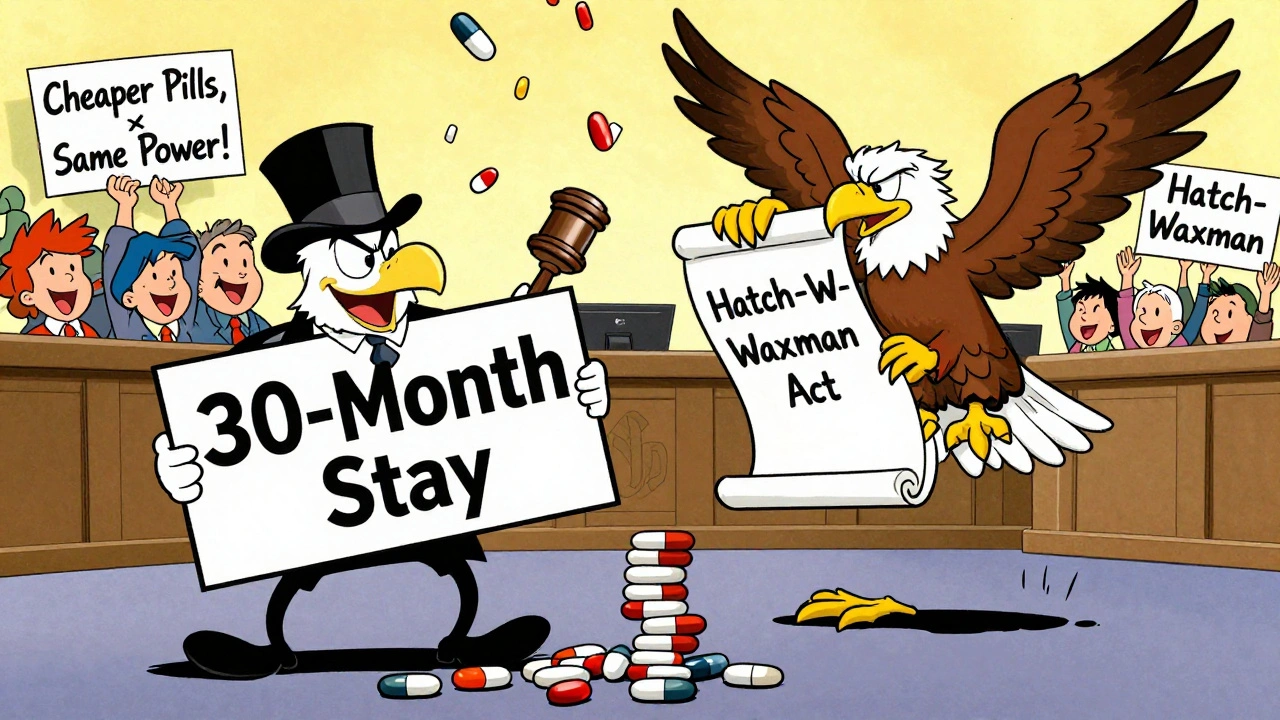
Who’s Winning? Who’s Losing?
Major players like Teva, Sandoz, Viatris, and Amneal dominate the market. But smaller companies are carving out niches in complex generics and drugs in shortage. The FDA’s 2025 pilot program-offering faster reviews to companies that manufacture in the U.S.-is a direct push to bring production home. It’s a response to supply chain fears exposed during the pandemic. Patients win. Insurers win. The healthcare system wins. But the system isn’t perfect. Some generics still take years to reach market. Some patients still face confusion when switching brands. And while the science is solid, perception lags. Some still believe generics are “lesser.” They’re not.What’s Next?
The future of generics isn’t just about copying old pills. It’s about making better ones. The FDA is investing in tools to evaluate complex products. It’s working with manufacturers to standardize testing for inhalers and transdermal patches. Biosimilars-generic versions of biologic drugs-are a separate but growing path under the BPCIA. And with drug prices still rising, pressure to expand generic access will only grow. The system works because it’s grounded in science, not speculation. It’s not about cutting corners. It’s about cutting costs-without cutting quality.Are generic drugs as safe as brand-name drugs?
Yes. The FDA requires that every approved generic drug meet the same rigorous standards for identity, strength, purity, quality, and performance as the brand-name drug. They must be bioequivalent, meaning they deliver the same amount of active ingredient into the bloodstream at the same rate. The FDA inspects manufacturing facilities for both brand and generic drugs using the same standards. There is no evidence that generics are less safe.
Why do some people say generics don’t work as well?
Most often, it’s not the active ingredient. Differences in inactive ingredients-like dyes, fillers, or coatings-can affect how quickly a pill dissolves or how it’s absorbed in some sensitive individuals. This is rare and usually minor. If someone notices a change after switching, they should talk to their doctor or pharmacist. In some cases, switching back to the brand or trying a different generic manufacturer helps.
How long does it take for a generic drug to be approved?
Under current FDA guidelines, a standard ANDA application takes about 10 months to review. Priority applications-like first generics or drugs in shortage-are reviewed in 8 months. But if the brand-name company files a patent lawsuit, the approval can be delayed by up to 30 months due to the Hatch-Waxman Act’s 30-month stay provision.
What’s the difference between an ANDA and an NDA?
An NDA (New Drug Application) is submitted by the original brand-name manufacturer and requires full clinical trials to prove safety and effectiveness. An ANDA (Abbreviated New Drug Application) is for generics and relies on the FDA’s previous approval of the brand drug. Generic applicants don’t repeat clinical trials-they prove bioequivalence instead. This cuts development costs from over $2 billion to around $1-5 million.
Can a generic drug be approved before the brand’s patent expires?
Yes, but only if the generic manufacturer files a Paragraph IV certification, claiming the patent is invalid or won’t be infringed. If the brand company sues, the FDA cannot approve the generic for up to 30 months. If no lawsuit is filed, or if the generic wins the legal challenge, approval can happen before patent expiration. This is how many first generics enter the market.
Are all generic drugs made in the U.S.?
No. Many generic drugs are manufactured overseas, particularly in India and China. But the FDA inspects all facilities-domestic and foreign-using the same standards. In 2025, the FDA launched a pilot program to speed up reviews for companies that test and manufacture their generics in the U.S., aiming to strengthen domestic supply chains.
How does the FDA ensure quality across different manufacturers?
The FDA conducts regular, unannounced inspections of every manufacturing site-whether for brand or generic drugs. Each batch must meet strict specifications for identity, strength, purity, and potency. The agency also monitors adverse events and can pull a drug from the market if quality issues arise. Generic manufacturers are held to the same GMP standards as brand companies.
Why are some generic drugs cheaper than others?
Price differences come from competition. When multiple manufacturers make the same generic, prices drop. If only one or two companies produce it, prices stay higher. Market demand, manufacturing efficiency, and whether the drug is complex or simple also affect pricing. The FDA doesn’t set prices-market forces do.


Rich Paul
so like, generics are just brand name drugs but cheaper? lol i thought they were like knockoffs, turns out the fda is way more on it than i thought. cool.