
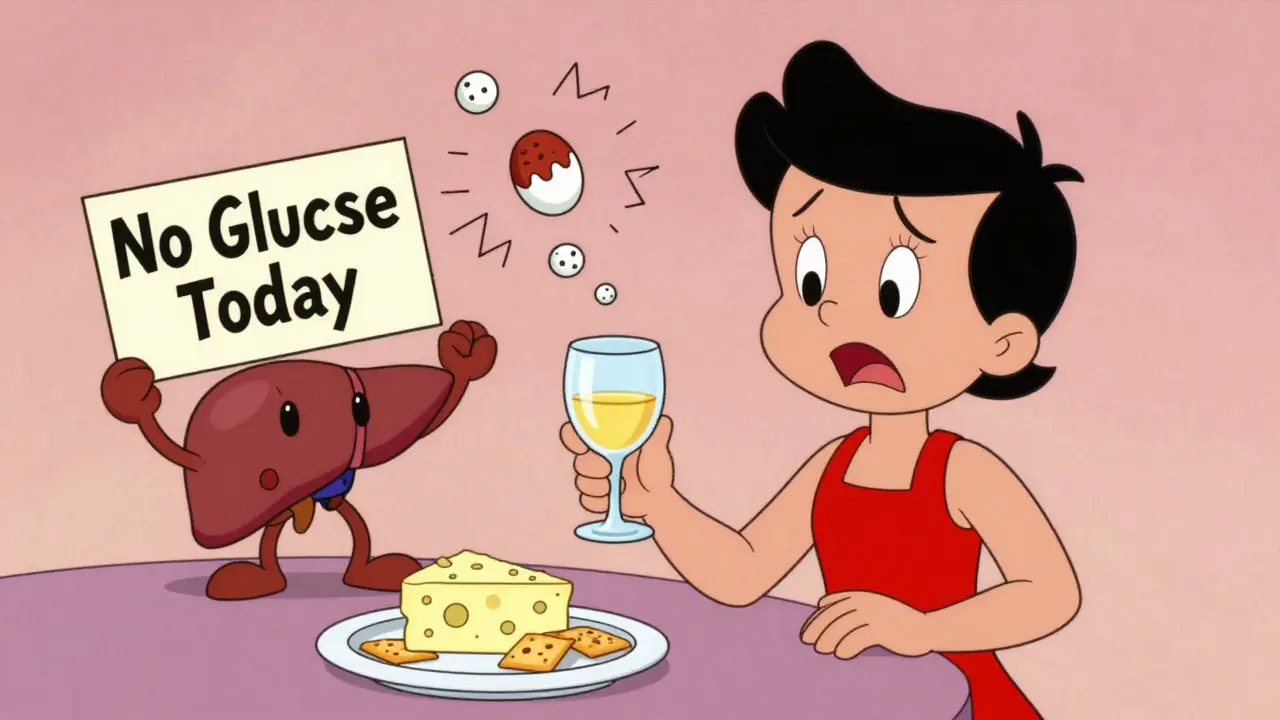
Drinking alcohol with diabetes isn’t off-limits-but it’s not harmless either. For many people with type 1 or type 2 diabetes, alcohol can trigger a dangerous drop in blood sugar, sometimes hours after the last sip. The symptoms-dizziness, sweating, confusion-look just like being drunk. That’s a problem because if you pass out, no one might realize you’re having a medical emergency. The good news? With clear rules and smart choices, you can drink safely. The bad news? Skipping those rules can land you in the hospital.
How Alcohol Messes With Your Blood Sugar
Your liver normally keeps your blood sugar steady by releasing glucose when levels dip. But when alcohol enters your system, your liver prioritizes breaking it down. That means it stops releasing glucose for up to 12 hours. If you’re on insulin or sulfonylureas, your body is already pushing glucose down-and now your liver isn’t helping to bring it back up. That’s the perfect storm for hypoglycemia.
It’s not just about the alcohol. Many drinks, like sweet wines, cocktails, and craft beers, are loaded with sugar. A single margarita can pack 25 grams of carbs. That might spike your blood sugar at first, but then the alcohol kicks in and crashes it hard. The result? A rollercoaster that’s hard to control.
What Counts as One Drink?
Not all drinks are created equal. Medical guidelines define one standard drink as:
- 12 ounces (360 mL) of regular beer (5% alcohol)
- 5 ounces (150 mL) of wine (12% alcohol)
- 1.5 ounces (45 mL) of 80-proof hard liquor (40% alcohol)
That’s it. No more than one per day for women, two for men. Diabetes UK also recommends no more than 14 units per week, spread across at least three days, with alcohol-free days in between. These limits aren’t suggestions-they’re safety thresholds backed by decades of clinical data.
Watch out for "diabetic" beers or ciders. They’re marketed as safe, but they often have higher alcohol content-2-3% more than regular versions. That increases your hypoglycemia risk, not decreases it.
Best and Worst Drinks for Diabetes
Some drinks are far safer than others. Here’s what works:
- Best choices: Dry red or white wine, light beer, hard seltzers (under 5g carbs), spirits (vodka, gin, whiskey) mixed with soda water or diet tonic.
- Avoid: Sweet wines, liqueurs, cocktails with juice or syrup, regular soda mixers, craft beers with high sugar content.
Hard seltzers get high marks from the diabetes community-4.5 out of 5 in over 1,200 Reddit reviews. Why? They’re low in carbs and predictable. Margaritas and sugary cocktails? Rated 1.8 out of 5. People report "unpredictable glucose rollercoasters"-exactly what you want to avoid.
Even if you choose a low-carb drink, the alcohol itself still blocks your liver from releasing glucose. So the drink isn’t the only problem-the alcohol is.
When Not to Drink at All
There are times when drinking is simply too risky:
- Your blood sugar is below 100 mg/dL or above 300 mg/dL.
- You’ve exercised in the last 2 hours-alcohol and exercise together can spike hypoglycemia risk by 40%.
- You have diabetic neuropathy, pancreatitis, or liver disease.
- You’re pregnant-no alcohol is safe during pregnancy, even with diabetes.
- You’re taking metformin and plan to drink heavily (more than 4 drinks in 2 hours)-this raises your risk of lactic acidosis.
People on sulfonylureas (like glipizide or glyburide) are at 50% higher risk of severe hypoglycemia when drinking. If you’re on one of these meds, talk to your doctor before even thinking about having a drink.
The Safety Checklist: What to Do Before, During, and After
Here’s the non-negotiable routine:
- Check your blood sugar before drinking. If it’s under 100 mg/dL, eat a snack with 15-30g of carbs first.
- Always drink with food. A meal with protein and complex carbs slows alcohol absorption and gives your liver something to work with.
- Drink slowly. Sip over an hour or more-not chugging.
- Use only sugar-free mixers. Club soda, diet tonic, or plain water. No soda, juice, or syrup.
- Check your blood sugar every 2 hours while drinking. Alcohol can cause drops even while you’re still drinking.
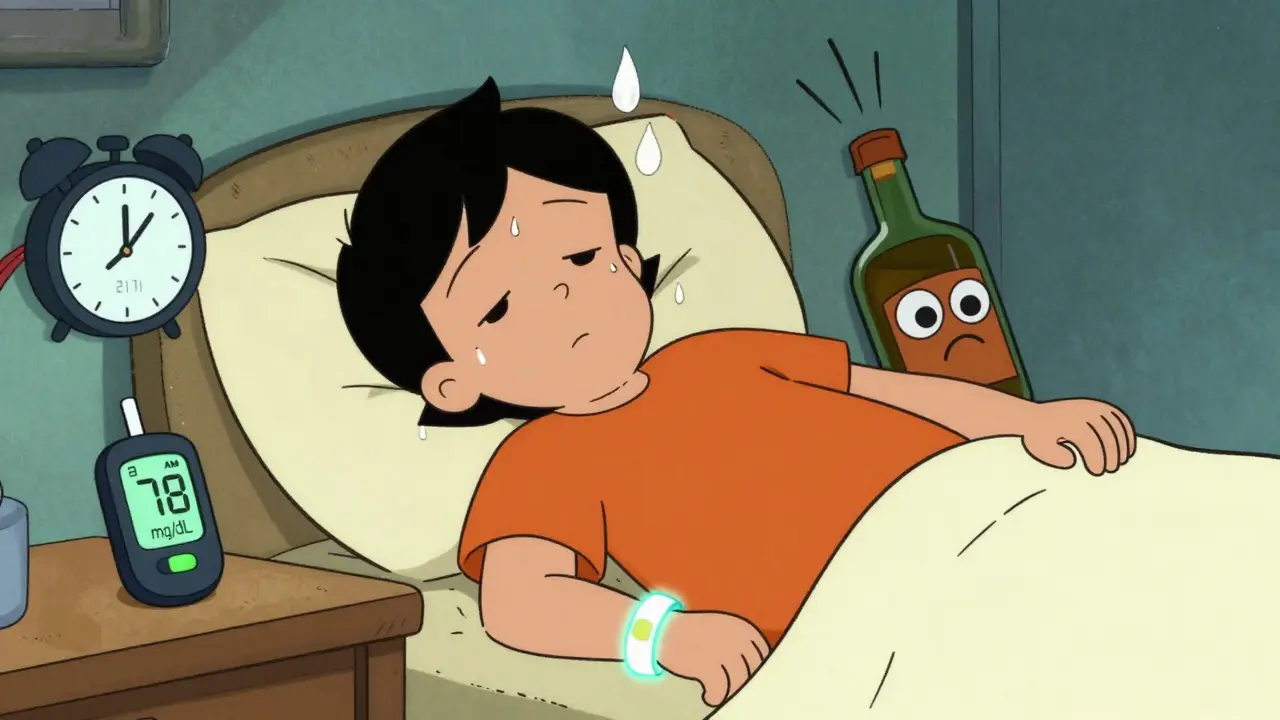
- Check before bed. If your blood sugar is below 140 mg/dL, eat a small carb snack. Nighttime hypos are the most dangerous-you can’t wake yourself up.
- Carry fast-acting glucose. Glucose tablets or gel. 15g is the standard dose to treat a hypo.
- Wear medical alert jewelry. 92% of endocrinologists recommend it. If you pass out, someone needs to know you have diabetes.
People who follow this full routine report 82% fewer hypoglycemic episodes, according to community data from Breakthrough T1D forums.
Why Hypoglycemia Is Hard to Spot
Shakiness, sweating, confusion, dizziness-these are signs of low blood sugar. But they’re also signs of being drunk. If you’re at a party and you’re slurring your words or stumbling, people will assume you’ve had too much to drink. They won’t realize you’re having a medical emergency.
That’s why so many people with type 1 diabetes end up needing emergency help after drinking. In a 2023 analysis of 472 online forum posts, 68% reported at least one severe hypo requiring someone else to intervene. Most happened 3-5 hours after drinking, when people thought they were fine and stopped checking their levels.
Alcohol doesn’t just lower blood sugar-it hides the warning signs. That’s the silent danger.
New Tech Is Helping, But It’s Not a Cure
Technology is stepping in. The Dexcom G7 continuous glucose monitor now has an FDA-cleared algorithm that detects alcohol-induced hypoglycemia risk in real time. In trials, it reduced severe events by 37%. That’s huge.
The American Diabetes Association is also moving toward personalized thresholds. Instead of saying "don’t drink if your sugar is under 100," future guidelines might say, "your personal low-risk threshold is 115 mg/dL based on your CGM history." That’s more precise.
But tech doesn’t replace behavior. You still need to check your levels, eat food, and know your limits. No app can stop you from chugging a vodka soda on an empty stomach.
Red Wine and Heart Health: The Myth
You’ve probably heard red wine is good for your heart. Some studies do show moderate consumption (one glass a day) might improve insulin sensitivity by 12% in people with type 2 diabetes. But here’s the catch: the American Diabetes Association says this doesn’t mean you should start drinking.
There’s no net health benefit that outweighs the risks. If you don’t drink, don’t start. If you do drink, stick to the rules. Don’t use heart health as an excuse to bypass safety.
What If You’ve Already Had Too Much?
If you’ve drunk too much and you’re not sure if your blood sugar is low:
- Check it. Now.
- If it’s under 100 mg/dL, treat it with 15g of glucose.
- Don’t wait for symptoms.
- Tell someone you’re diabetic.
- Stay awake. Don’t go to sleep without checking your levels again.
It’s better to treat a hypo you don’t need to than to ignore one you do.
Final Reality Check
Every year, 25% of people with type 1 diabetes and 15% with type 2 diabetes have at least one alcohol-related hypoglycemic emergency. That’s not rare. That’s common enough to be predictable-and preventable.
Alcohol isn’t the enemy. But it’s a powerful tool that can turn against you if you don’t control how you use it. The same rules apply whether you’re in Perth, London, or New York: know your limits, check your numbers, eat with your drink, and never drink alone without someone who knows you have diabetes.
You don’t have to give up alcohol to manage your diabetes well. But you do have to manage alcohol carefully.
Can I drink alcohol if I have type 1 diabetes?
Yes, but with strict precautions. Alcohol increases your risk of dangerous hypoglycemia, especially if you use insulin. Always check your blood sugar before, during, and after drinking. Eat food with alcohol, avoid sugary mixers, and never drink without telling someone you have diabetes. Carry glucose tablets and wear medical alert jewelry.
Why does alcohol cause low blood sugar hours later?
Your liver stops releasing glucose to focus on breaking down alcohol. This effect can last 8-12 hours. If you’re on insulin or sulfonylureas, your body keeps pushing glucose down while your liver isn’t replacing it. That’s why hypos often happen at night or the next morning-long after you’ve stopped drinking.
Is red wine better than beer for diabetes?
Dry red wine is generally safer than beer because it has fewer carbs-usually 0-4g per 5-ounce glass. Most beers, even light ones, have 10-15g carbs. But the alcohol content still blocks glucose production. So while red wine may cause less of a sugar spike, it still carries the same hypoglycemia risk as other drinks. Quantity and timing matter more than type.
Can I drink alcohol while taking metformin?
Moderate drinking (1-2 drinks) is usually safe with metformin. But heavy drinking-more than 4 drinks in 2 hours-raises your risk of lactic acidosis, a rare but life-threatening condition. If you drink, stick to the limits, eat food, and avoid binge drinking.
What should I do if I feel dizzy after drinking?
Check your blood sugar immediately. Don’t assume it’s just being drunk. If it’s under 100 mg/dL, take 15g of fast-acting glucose. Wait 15 minutes and check again. If you’re unsure, treat it anyway. It’s safer to treat a false hypo than to ignore a real one.
Are "sugar-free" alcoholic drinks safe?
Sugar-free doesn’t mean safe. Many "diabetic" beers or ciders have higher alcohol content than regular versions, which increases hypoglycemia risk. Hard seltzers with zero sugar and low alcohol (under 5%) are fine. But avoid anything marketed as "diabetic-friendly"-it’s often a misleading label.
Should I avoid alcohol if I have nerve damage from diabetes?
Yes. If you have diabetic neuropathy, alcohol can make nerve damage worse. It also masks symptoms like tingling or numbness, making it harder to tell if your blood sugar is dropping. For your nerve health and safety, it’s best to avoid alcohol entirely.
Can I drink alcohol after exercising?
No. Exercise already lowers blood sugar. Alcohol blocks your liver from making more. Together, they increase hypoglycemia risk by 40%. Wait at least 2 hours after exercise before drinking-and check your blood sugar before you do.


Vicky Zhang
Y’all need to hear this: I used to think alcohol was my enemy until I learned how to drink smart. I’m type 1, and I used to pass out at parties. Now? I check my sugar before I even pour. I eat a peanut butter sandwich first. I sip water between drinks. I carry glucose gummies in my purse like they’re lip gloss. And guess what? I still go out. I still have fun. I just don’t gamble with my life anymore. You can too. It’s not about giving up-it’s about showing up for yourself.