
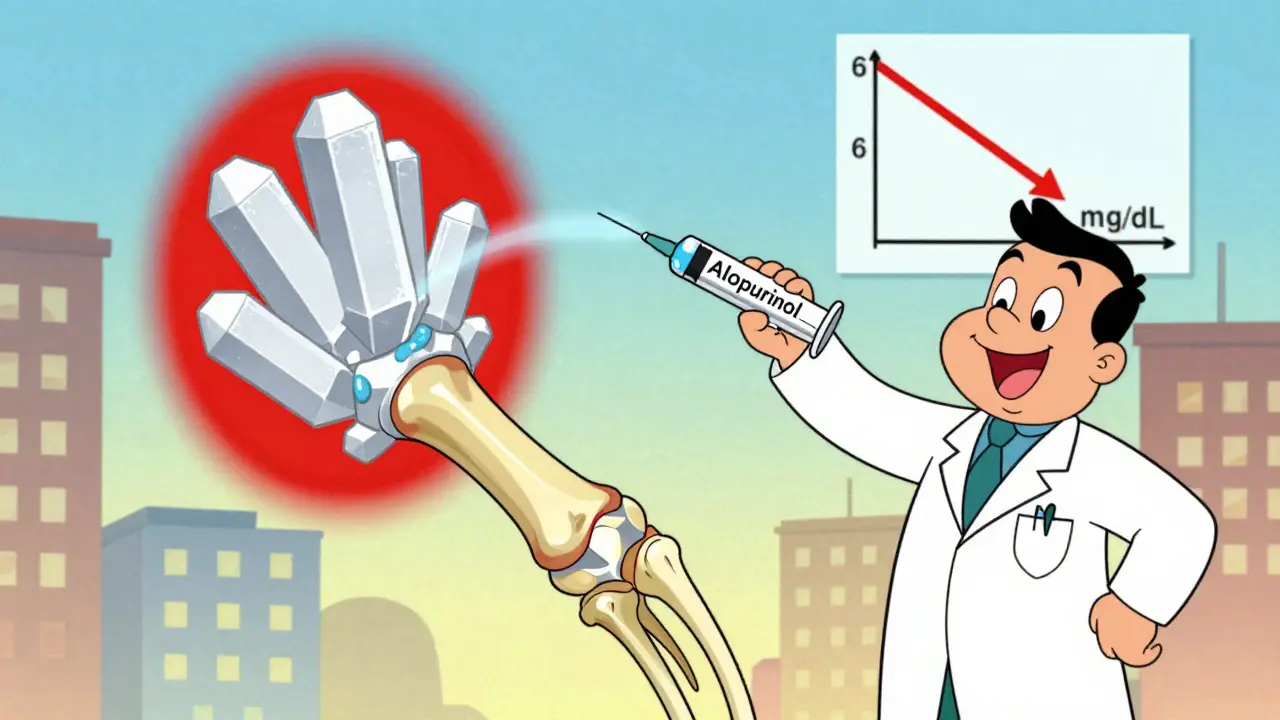
For decades, gout was seen as a painful but inevitable condition-something you just had to live with. You’d get a flare, take some pills, wait it out, and hope it didn’t come back for months or years. But that’s not how gout works anymore. Today, we know gout is a urate targets disease. The goal isn’t just to calm a flare-it’s to lower your blood uric acid levels enough to stop crystals from forming, dissolve the ones already there, and prevent joint damage for good.
What Are Urate Targets, and Why Do They Matter?
Urate targets are the specific levels of uric acid in your blood that doctors aim for when treating gout. These aren’t arbitrary numbers. They’re based on science: uric acid becomes dangerous when it hits 6.8 mg/dL-the point where crystals start forming in your joints. To stop that, you need to go below it. The standard target is below 6 mg/dL (or 360 micromol/L). That’s the sweet spot where crystals stop forming and, over time, start dissolving. For people with severe gout-those with visible lumps under the skin (tophi), joint damage on X-rays, or flares that won’t quit-the target drops even lower: below 5 mg/dL (300 micromol/L). That’s because those crystals are stubborn. You need to dissolve them completely to stop the damage. And here’s the catch: you can’t go too low. Below 3 mg/dL, there’s no extra benefit, and it might even cause problems. So the goal isn’t to crush your uric acid-it’s to hit the right zone and stay there.Allopurinol: The First-Line Workhorse
Allopurinol has been the go-to drug for gout for over 50 years. It’s cheap, widely available, and works by blocking the enzyme that makes uric acid. But here’s the thing most people don’t realize: most patients don’t get enough of it. Doctors often start patients on 100 mg a day-sometimes even 50 mg if they have kidney issues. That’s fine for mild cases. But for most people with gout, that dose is too low. Studies show that 30 to 50% of patients need doses above 300 mg a day to reach their target. Some need 600 mg, 800 mg, even more. And that’s okay. The 2020 American College of Rheumatology guidelines say: start low, go slow, but go all the way. The problem? Many patients stop taking it because they don’t feel better right away. Or their doctor doesn’t check their uric acid levels. Or they’re scared of side effects. But here’s the truth: allopurinol works best when you take it every day, and you adjust the dose based on blood tests-not how your joints feel.Febuxostat: The Alternative for Tough Cases
Febuxostat is the newer option. It works the same way as allopurinol-blocks uric acid production-but it’s stronger and doesn’t rely on kidney function to clear it from your body. That makes it a better choice for people with moderate to severe kidney disease. Studies show febuxostat is slightly more effective at hitting urate targets, especially in patients who can’t tolerate or don’t respond to allopurinol. One 2023 meta-analysis found it helped 15% more people reach their target compared to allopurinol in those with kidney problems. But it’s not perfect. Febuxostat costs about 5 to 10 times more than generic allopurinol. In the U.S., you’re looking at $30-$50 a month versus $4-$12. And while it’s safer for kidneys, it carries a slightly higher risk of heart-related issues in people with existing heart disease. That’s why guidelines don’t push it as the first choice for everyone-just for those who need it.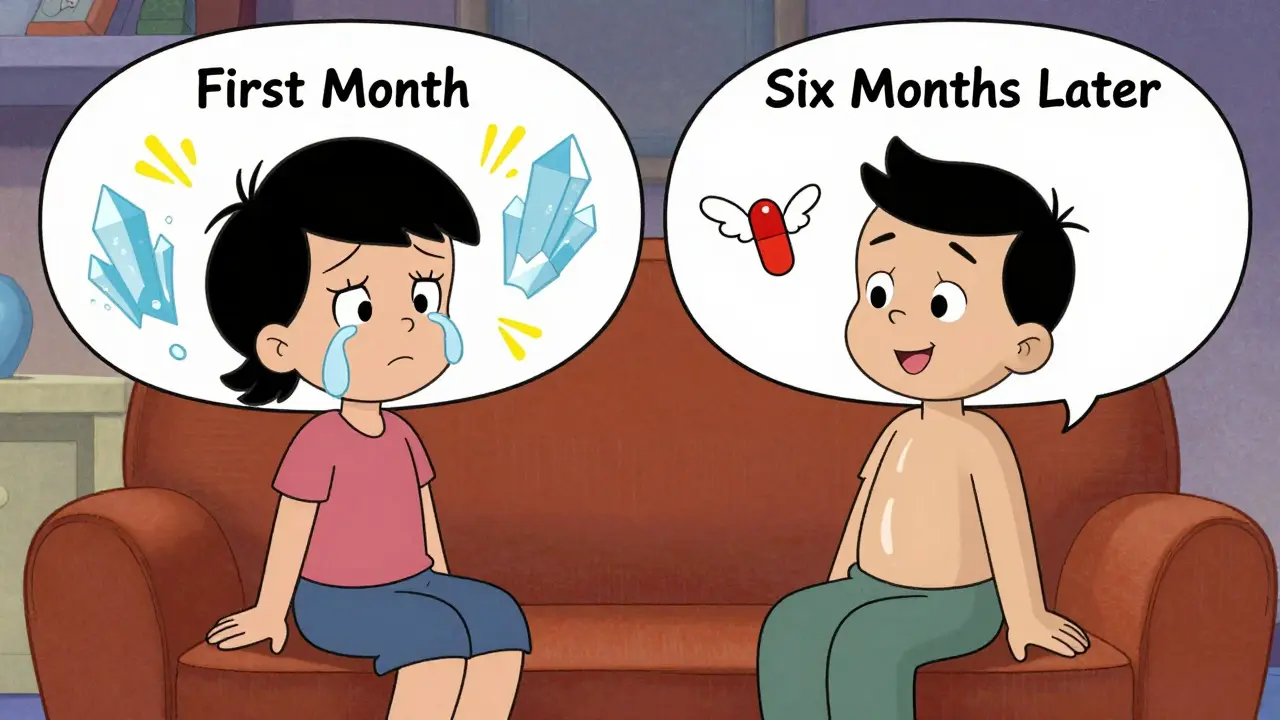
How Often Should You Check Your Urate Levels?
This is where most treatment plans fail. You can’t manage gout by guesswork. You need to know your uric acid level. The guidelines are clear: check your blood uric acid every 2 to 4 weeks during dose adjustments. Once you hit your target, check it every 6 months. But here’s what happens in real life: only about half of patients get even one follow-up test in the first year. Why does this matter? Because if you’re on 300 mg of allopurinol and your uric acid is still at 7 mg/dL, you’re not being treated-you’re just being given a placebo. You need to increase the dose. And you need to do it in a controlled way. Missing these tests is like driving with your eyes closed. A 2023 study showed that patients who had monthly blood tests were 31% more likely to reach their target than those who didn’t. That’s not a small difference. That’s the difference between living with constant pain and being free of flares.The Flare Paradox: Why Treatment Can Make Things Worse at First
One of the biggest surprises for patients is this: when you start lowering your uric acid, you might get more flares-not fewer-at first. That’s because dissolving crystals irritates your joints. It’s like stirring up sediment in a muddy pond. The crystals break loose, your immune system reacts, and boom-you get a flare. This isn’t a sign the drug isn’t working. It’s a sign it is. The solution? Start with a low dose of colchicine or an NSAID for the first 6 months. Most guidelines recommend this. But many doctors forget to mention it. Patients stop the urate-lowering drug because they think it’s making things worse. Then they go back to suffering.Who Should Be Treated-and Who Shouldn’t?
Not everyone with high uric acid needs treatment. If you’ve never had a gout flare, and you have no tophi or joint damage, guidelines say: don’t start drugs yet. Just watch it. Lifestyle changes-cutting back on beer, red meat, sugary drinks-can help. But if you’ve had even one flare, or if you have tophi, kidney stones, or joint damage, you need to start treatment. The 2020 ACR guidelines say this strongly: all patients with tophaceous gout should get urate-lowering therapy. No exceptions. And here’s a big one: if you’ve had two or more flares in a year, you’re in the high-risk group. Waiting for the third flare is a mistake. Treatment now prevents arthritis, kidney damage, and even heart disease linked to chronic inflammation.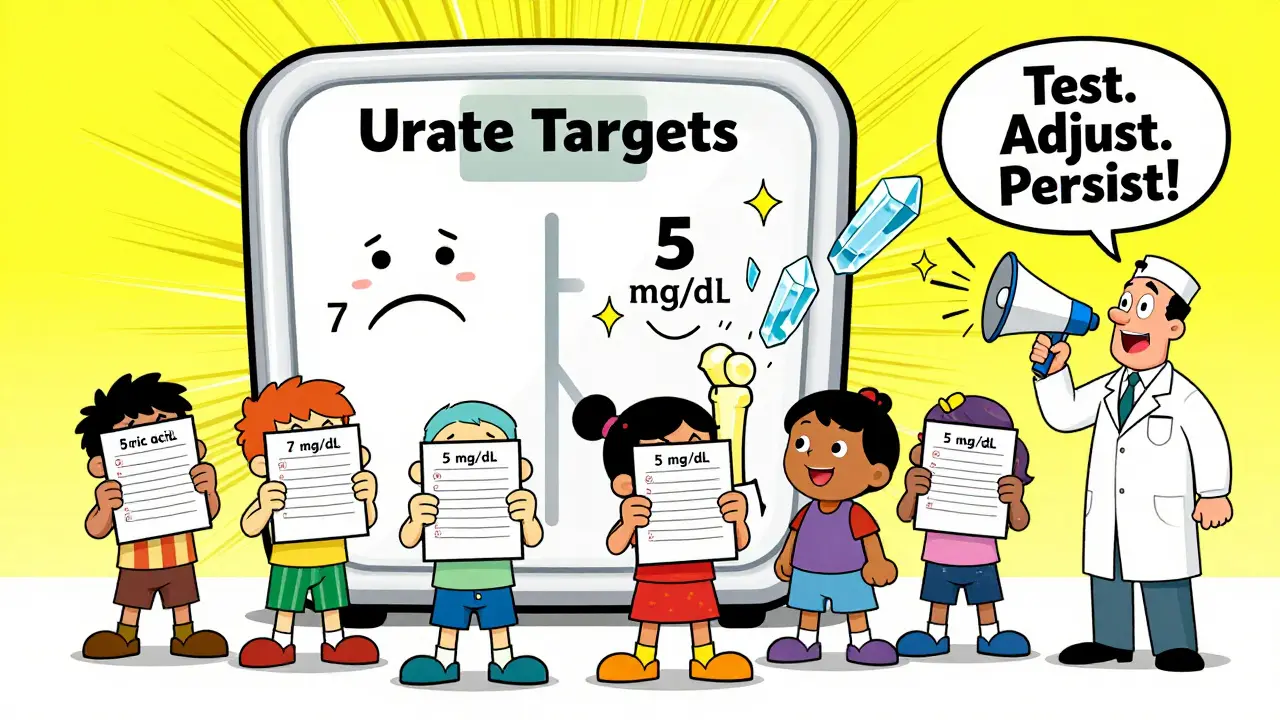
Why So Many People Still Fail to Reach Targets
Despite all the science, only about 42% of patients reach their urate target within a year. Why? First, patients don’t understand the goal. They think gout treatment is about pain relief. It’s not. It’s about long-term crystal control. Second, doctors don’t monitor enough. Primary care providers often prescribe the drug and never check levels again. Third, fear of side effects. Allopurinol can cause a rare but serious skin reaction, especially in people with the HLA-B*5801 gene. That’s why some doctors avoid it-but testing for that gene is simple, cheap, and prevents the reaction entirely. Fourth, access. In New Zealand, Māori and Pacific patients get the drug more often but are less likely to reach targets because of systemic barriers-language, transportation, trust in the system. This isn’t just a medical problem. It’s a social one.What’s Next? Precision Dosing and New Drugs
The future of gout treatment is getting smarter. A 2024 study called GOUT-PRO showed that using genetic testing to guide allopurinol dosing boosted target achievement from 61% to 83% in just six months. That’s huge. New drugs are coming too. Verinurad, a uricosuric that helps your kidneys flush out more uric acid, is in late-stage trials. It might work better than allopurinol for some people, with fewer dose adjustments. And soon, we’ll know more from the ULTRA-GOUT trial, which is comparing fixed-dose treatment versus the current treat-to-target approach. Results are expected by late 2025.What You Can Do Today
If you have gout, here’s your action plan:- Ask your doctor for a serum uric acid test-right now. Don’t wait.
- If your level is above 6 mg/dL, ask if you’re on the right dose of allopurinol or febuxostat.
- If you’re on allopurinol and not feeling better, don’t stop it. Ask about increasing the dose.
- Ask for colchicine or an NSAID to prevent flares during the first 6 months.
- Request a blood test every 2-4 weeks until your level is below 6 mg/dL.
- If you have kidney disease, ask if febuxostat is right for you.
- If you’re of Asian or African descent, ask about HLA-B*5801 testing before starting allopurinol.


Katelyn Slack
i just started allopurinol last month and my doc said 100mg is fine... but my uric acid is still at 7.2. i feel like i’m being gaslit by my own body. why does it feel worse now? i thought this was supposed to help??