
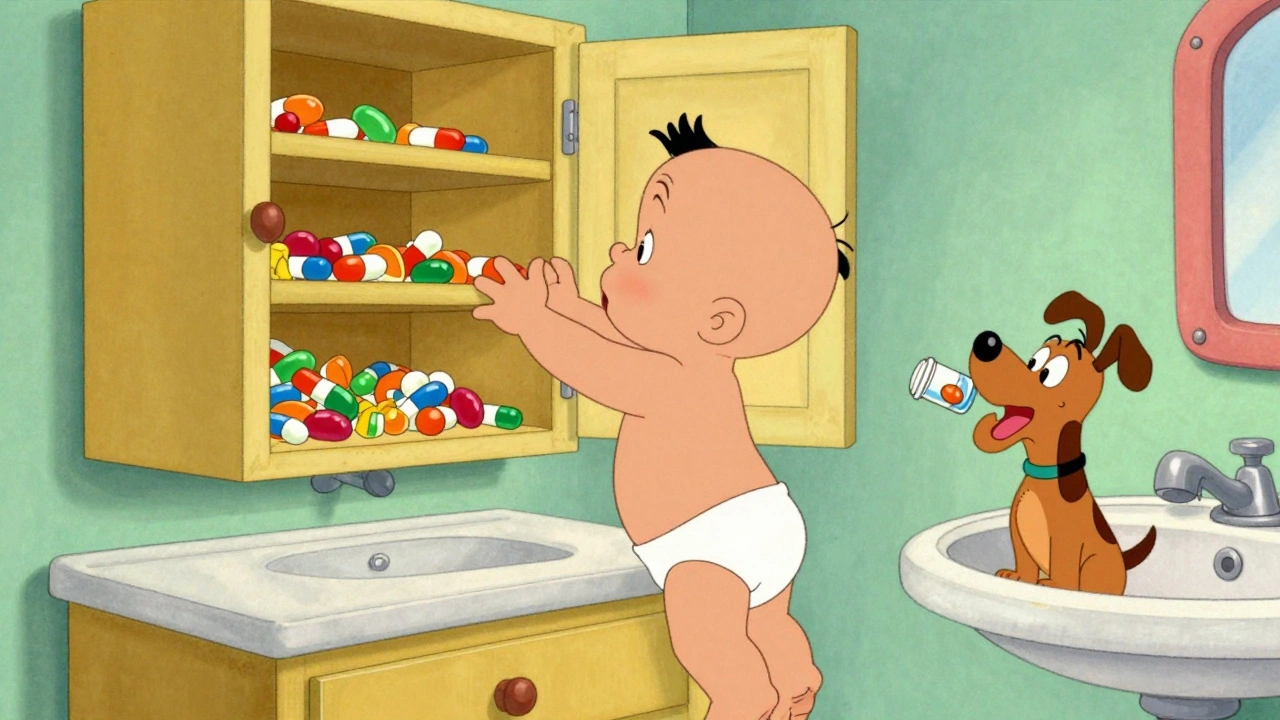
Every year, 60,000 children under five end up in emergency rooms after swallowing medications they found at home. And it’s not just kids-dogs, cats, and even ferrets are getting into pills, patches, and gummies left within reach. In Perth, where homes are often open-plan and curious pets roam freely, this isn’t a remote risk. It’s a daily reality. The good news? Almost all of these incidents are preventable with simple, practical steps.
Why Your Medicine Cabinet Isn’t Safe
Most people think their bathroom cabinet is fine. After all, it’s closed, right? But here’s the truth: bathrooms are the worst place to store medicine. Humidity from showers and sinks degrades pills and liquids, making them less effective. More importantly, children can reach up to 4 feet high-and many bathroom cabinets are installed at exactly that height. Pets? They jump. They climb. They sniff out anything that smells like food. A 2023 study from Seattle Children’s Hospital found that 78% of childhood poisoning cases happened because someone left medicine on the counter, in a purse, or in an unlocked cabinet during use. And it’s not just prescription drugs. Over-the-counter painkillers, children’s vitamins, and even gummy supplements are common culprits. In fact, gummy vitamins make up 30% of all childhood supplement ingestions-even though they’re only 15% of the market. Why? Because they look like candy. Pets are just as vulnerable. A single ibuprofen tablet can cause kidney failure in a cat. A dog that eats a human heart medication could suffer a dangerous drop in blood pressure. And here’s something many don’t realize: pet medications are often flavored to make them easier to give. That means they smell and taste like chicken, beef, or peanut butter to animals. Your dog doesn’t know it’s medicine-it thinks it’s a treat.Where to Store Medications (And Where Not To)
Forget the bathroom. Forget the kitchen counter. Forget the coffee table where you left your morning pills. The safest place for all medications-human and pet-is a locked box, high up, and away from everyday traffic. Start by walking through your home. Get down on your hands and knees. Look at eye level for a 3-year-old. Now imagine your dog jumping onto the couch. Where could they reach? That’s where you shouldn’t store anything. The best spots are:- High kitchen cabinets with childproof locks
- A locked bedroom closet
- A dedicated biometric or combination lock box (like the VADIC Safe Storage Bag, 11" x 6")
- A drawer in a dresser that’s too high for kids to climb to
Separate Human and Pet Medications
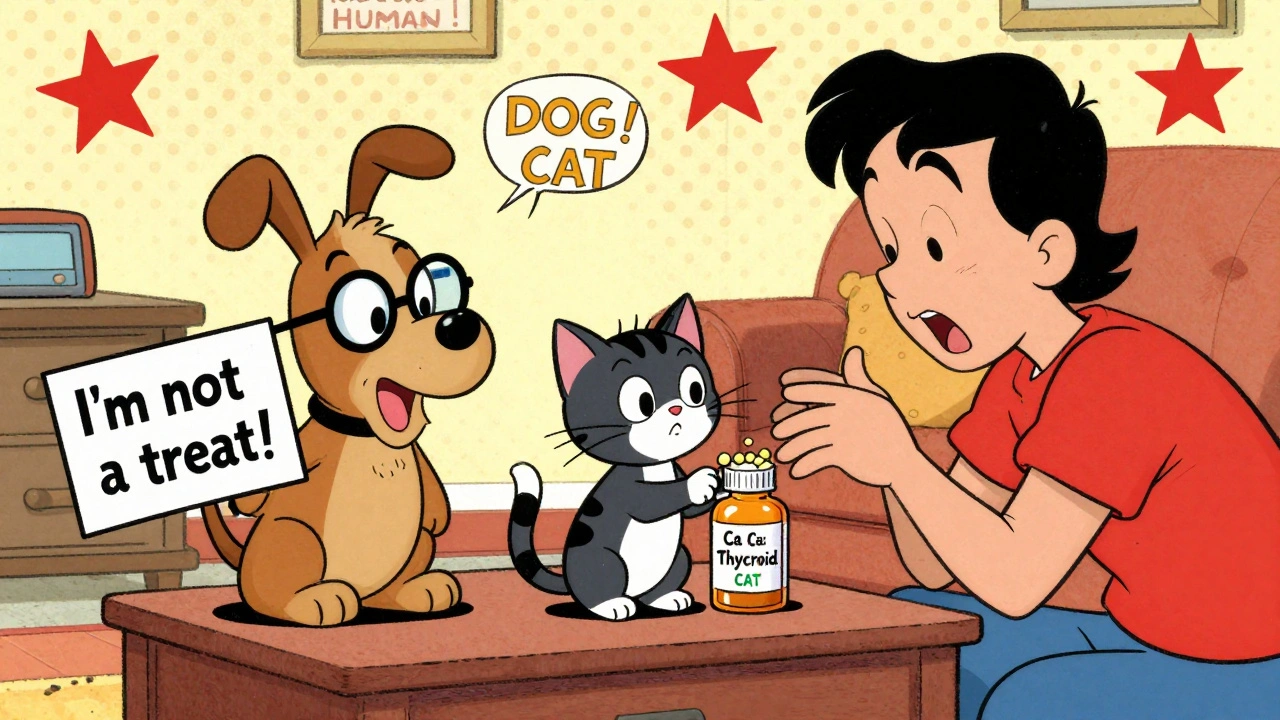
This is critical-and often ignored. Never store your pills next to your dog’s arthritis medicine or your cat’s thyroid tablets. They’re not interchangeable. A medication safe for your pet can be deadly for you, and vice versa. The FDA warns that 25% of pet medication incidents involve owners accidentally taking their pet’s medicine. That’s not just a mistake-it’s a medical emergency. Pet NSAIDs (like carprofen) can cause stomach ulcers and kidney damage in humans. Human antidepressants can trigger seizures in dogs. Create three zones:- Zone 1: Immediate Use - Only keep today’s dose on a flat surface (like the kitchen table) while giving it. Never leave it unattended. Put it away immediately after.
- Zone 2: Short-Term Storage - All other medications go into a locked container, at least 5 feet high.
- Zone 3: Long-Term Storage - Keep human meds, dog meds, and cat meds in separate locked boxes or drawers. Label them clearly. Cats and dogs have different sensitivities. Don’t risk mixing them.

How to Handle Gummies and Liquid Meds
Gummy vitamins, chewable antibiotics, and liquid pain relievers are the most dangerous because they’re designed to taste good. They’re candy in disguise. Here’s what to do:- Store gummy supplements in the same locked box as your prescription pills. Don’t make an exception.
- Use opaque containers. Clear bottles let kids and pets see what’s inside-and they’ll try harder to get it.
- Never leave a dropper or syringe out after giving liquid medicine. Pets can lick it up. Kids can drink it.
- Consider switching to non-gummy forms when possible. If your child needs a vitamin, ask your doctor about tablets or drops that don’t look like candy.
The Two-Minute Rule
The most common mistake? Leaving medicine out while you’re distracted. You take your pill, set the bottle down to answer the door, grab a glass of water, check your phone-and forget. Five minutes later, your toddler is chewing on it. Adopt the two-minute rule: After every single use, put the medication away-no exceptions. Even if you’re just waiting for the next dose in 12 hours. Even if you’re tired. Even if you’re in your own home. Children’s Mercy Hospital found that 52% of childhood ingestions happen during these brief moments of inattention. That’s not negligence-it’s human. But it’s preventable. Make it a habit. Say it out loud: “I’m putting this away now.” Train yourself like you would brush your teeth. No skipping.Safe Disposal: Don’t Flush or Toss
Expired meds, leftover antibiotics, empty bottles-what do you do with them? Throwing them in the trash or flushing them down the toilet is dangerous and bad for the environment. The EPA recommends this method:- Take the pills out of their bottles.
- Mix them with something unappetizing-used coffee grounds, cat litter, or dirt. Use at least a 1:1 ratio.
- Put the mixture in a sealed plastic bag.
- Throw it in the outside trash.
What Works: Real Solutions from Real Homes
One parent on Reddit, u/FamilySafetyFirst, bought a biometric safe after their 3-year-old opened a “childproof” cabinet. “It adds 10 seconds to my morning,” they said. “But I sleep better.” Another user on the American Kennel Club forum shared a near-miss: their Labrador pulled a pill from between the couch cushions. The fix? Always give meds on the kitchen floor-not the couch, not the bed. Flat, open surfaces mean you see every pill drop. Weekly pill organizers with lockable compartments are popular-and effective. But if you’re juggling meds for kids, adults, and pets, keep them separate. One box for human meds. One for dogs. One for cats. Label them. Color-code them. Make it impossible to mix them up.What’s Changing in 2025
New rules are coming. By the end of 2024, the FDA required all pet medication labels to include clear warnings about keeping them away from humans. That means you’ll see new labels on your dog’s heartworm pill: “Keep out of reach of children.” There’s also growing use of smart safes-Bluetooth-enabled boxes that alert your phone if someone opens them. Adoption is still low (around 18% in high-risk homes), but they’re becoming more affordable. The American Academy of Pediatrics is pushing for mandatory secure storage in new homes. Imagine a built-in locked medicine drawer in every bedroom. It’s not here yet-but it’s coming.Final Checklist: Your Home, Your Safety
Use this simple list to make sure your home is safe:- ✅ All medications (prescription, OTC, vitamins) are stored in a locked container.
- ✅ Locked container is at least 5 feet high and out of sight.
- ✅ Human and pet meds are stored separately.
- ✅ Gummy supplements are locked up like prescription drugs.
- ✅ You follow the two-minute rule: put it away after every use.
- ✅ Expired meds are mixed with coffee grounds or cat litter before disposal.
- ✅ You never give medicine on the couch, bed, or floor near pets.
Can child-resistant caps alone keep my child safe?
No. Child-resistant caps are designed to slow down a child for a few minutes-not stop them completely. Many toddlers can open them with practice, and pets can smell through them. Locked storage at height is the only reliable method.
What should I do if my child swallows medicine?
Call Poison Control immediately at 13 11 26 (Australia). Do not wait for symptoms. Do not try to make them vomit. Have the medicine bottle ready to show the healthcare provider. Time matters.
Can my pet get sick from licking a pill off the floor?
Yes. Even a single pill can be toxic. Dogs and cats metabolize human drugs differently. A small dose for a person can be lethal for a pet. Always clean up dropped pills immediately and give meds on a flat, controlled surface.
Are there free or low-cost medication lock boxes available?
Some local health clinics and pharmacies in Perth offer free lock boxes through public safety programs. Check with your GP, local council, or the WA Poisons Information Centre. The VADIC Safe Storage Bag is available through the Vermont Department of Health and can be ordered online for under $20.
Should I store insulin or other refrigerated meds differently?
Yes. Refrigerated medications should be kept in a locked container inside the fridge, away from food. Use a small plastic bin with a lid labeled “Medications Only.” This prevents accidental consumption by kids or pets who might open the fridge.


Tommy Watson
lol who even stores meds in the bathroom anymore? my 2yo opened a childproof bottle like it was a snack pack. now everything’s in a locked toolbox on top of the fridge. pets don’t even jump that high… unless they’re cheetahs. then we’re all doomed. 🤡