

Titration Schedule Calculator
How Slow Titration Works
Slow up-titration isn't just a precaution—it's a science-backed strategy to help your body adjust to medication before it's hit with its full force. Instead of jumping from zero to full dose, you start low and move up slowly, usually over weeks or even months. This gives your body time to adapt, reducing the chance that side effects will derail your treatment.
Important Safety Reminder
Always follow your healthcare provider's specific instructions. This tool provides general guidelines based on clinical evidence. If you experience severe side effects or have concerns, contact your doctor immediately.
The 2-Week Rule
If side effects last more than two weeks at the same dose, don't push forward. Call your provider. You might need to stay at your current dose longer or adjust the schedule.
Starting a new medication can feel overwhelming. You’ve been told it will help, but you’ve also heard about the side effects-nausea, dizziness, fatigue, or worse. What if you didn’t have to endure those symptoms right away? What if there was a smarter way to get to the dose that works-without the crash? That’s where slow up-titration comes in.
Why Slow Up-Titration Works
Slow up-titration isn’t just a precaution. It’s a science-backed strategy to help your body adjust to medication before it’s hit with its full force. Instead of jumping from zero to full dose, you start low and move up slowly, usually over weeks or even months. This gives your body time to adapt, reducing the chance that side effects will derail your treatment. Take GLP-1 receptor agonists like semaglutide, used for type 2 diabetes and weight loss. At full dose, up to 65% of people experience nausea, vomiting, or diarrhea. But when patients follow the FDA-approved titration schedule-starting at 0.25mg once a week for four weeks, then slowly increasing over 16 to 20 weeks-those side effects drop to around 18%. That’s not luck. It’s physiology. Your body doesn’t react well to sudden changes. Beta-blockers, ACE inhibitors, and other heart medications work by altering how your nerves and receptors respond to signals. If you give them too much too fast, your system goes into shock. Slow titration lets receptors downregulate gradually, blood pressure stabilize, and kidneys adjust without triggering dangerous drops in heart rate or kidney function.How It Works Across Different Medications
Not all medications need the same pace. The schedule depends on how the drug works and how harsh its side effects are.- GLP-1 agonists (semaglutide, liraglutide): 16-24 weeks to reach full dose. Nausea is the main barrier, so the climb is gentle.
- Beta-blockers (metoprolol, carvedilol): 6-12 weeks. Used for heart failure and high blood pressure. Starting at 6.25mg twice daily, then doubling every 2-4 weeks, reduces dizziness and fatigue by over 50% compared to starting at 100mg.
- ACE inhibitors (lisinopril, enalapril): 4-8 weeks. Slow increases prevent sudden drops in blood pressure and protect kidney function.
- SSRIs (sertraline, fluoxetine): 4-8 weeks. Anxiety and insomnia often fade as the brain adjusts to increased serotonin.
The Real Cost of Skipping Titration
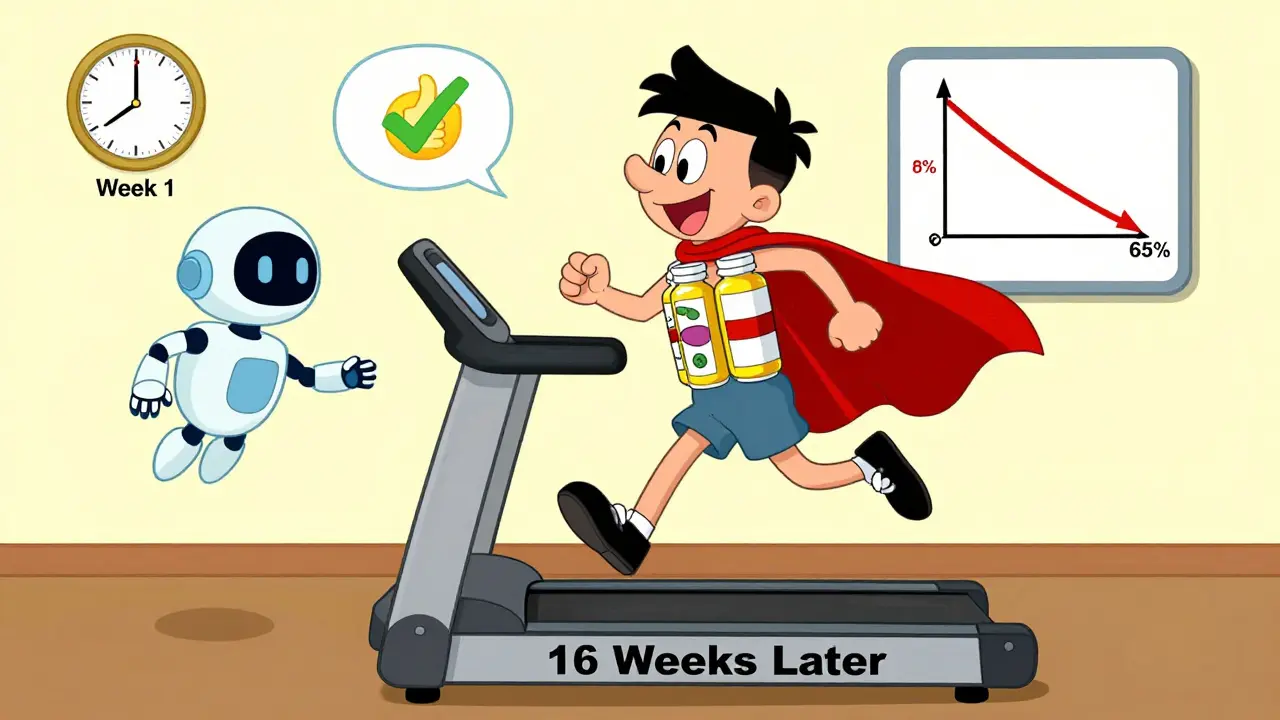
Some people think, “I’ll just start at the full dose to get results faster.” But that’s like trying to run a marathon before you’ve walked a mile. One patient on Reddit shared how skipping the titration on semaglutide led to three days of vomiting and quitting treatment entirely. Another, who followed the schedule, said, “The nausea was there, but it was manageable. I felt like I was in control.” Studies show that patients who rush their doses are twice as likely to stop treatment. And when they do, their condition worsens. Heart failure patients who don’t titrate beta-blockers properly have higher hospital readmission rates. Diabetics who skip titration on GLP-1 drugs often end up with worse blood sugar control because they never reach the effective dose. The SUSTAIN FORTE trial showed that proper titration cut gastrointestinal side effects in GLP-1 users from 45% to 18%. That’s not just comfort-it’s survival.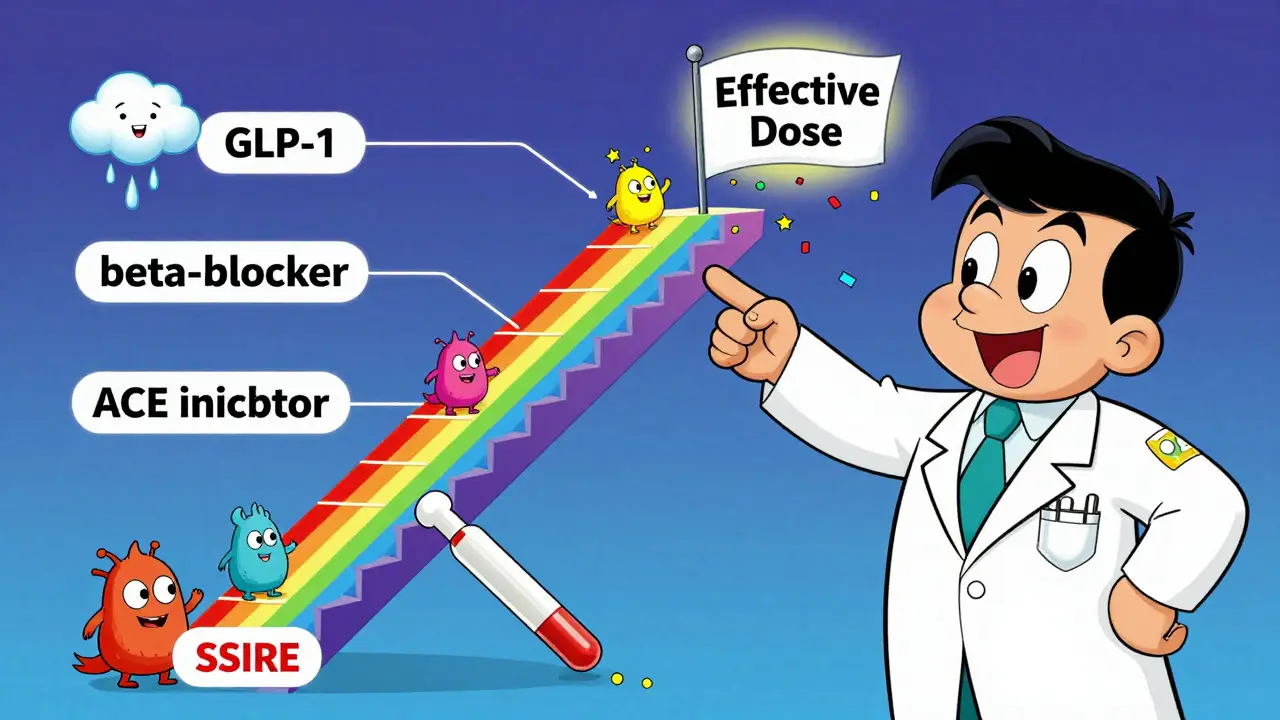
What You Need to Know Before Starting
Slow titration sounds simple, but it’s easy to mess up. Here’s what actually matters:- Stick to the timeline. Don’t jump ahead because you “feel fine.” Side effects can be delayed. Wait the full 4 weeks before increasing.
- Track your symptoms. Keep a simple log: nausea? Dizziness? Fatigue? Note the day and dose. This helps your doctor decide if you’re ready to move up.
- Use the 2-week rule. If side effects last more than two weeks at the same dose, don’t push forward. Call your provider. You might need to stay put longer or adjust.
- Use reminders. Apps like Medisafe or even calendar alerts help you remember when to switch doses. One study found 18% higher adherence with digital reminders.
- Ask for a written schedule. Manufacturer guides vary in clarity. Ask your doctor or pharmacist to write out your exact schedule: “Weeks 1-4: 0.25mg weekly. Weeks 5-8: 0.5mg weekly.”
Who Should Avoid Slow Titration
It’s not for everyone. If you need immediate results, slow titration isn’t the answer. For example:- Emergency high blood pressure: You need labetalol or nitroglycerin now, not in 8 weeks.
- Severe, uncontrolled diabetes (HbA1c >9%): Experts like Dr. Robert Lash argue that for metformin, starting at full dose is safe and faster. Delaying control can damage organs.
- Patients with cognitive decline or memory issues: If keeping track of weekly dose changes is too confusing, a fixed-dose option may be better-even if it’s less ideal.
Why Doctors Don’t Always Follow It
You’d think everyone would use slow titration. But data shows only 63% of primary care doctors follow structured schedules, compared to 89% of heart failure specialists. Why? Time. Explaining titration takes an average of 12.7 minutes per visit. Many clinics are stretched thin. Patients don’t always show up for follow-ups. Insurance doesn’t always cover frequent check-ins. That’s why digital tools are growing fast. Omada Health’s GLP-1 titration program reduced discontinuation by 41% in a 2023 pilot. The American College of Cardiology’s new TARGET-HF protocol now requires biweekly telehealth visits during titration. These aren’t luxuries-they’re necessities.What’s Next for Titration
The future is personal. Verily and Novo Nordisk are testing AI models that predict how you’ll react to a drug based on your genetics, weight, and past reactions. Early results show 28% better accuracy in spotting who’ll tolerate a faster climb. But the core principle won’t change: start low, go slow. That’s not outdated advice. It’s the foundation of safe, effective medicine. For most people, slow titration isn’t a delay-it’s a doorway. It’s how you get to the dose that helps without the side effects that hurt. It’s how you stay on your medication long enough to feel better.Frequently Asked Questions
How long does slow up-titration usually take?
It depends on the medication. For GLP-1 agonists like semaglutide, it can take 16 to 24 weeks to reach the highest dose. For beta-blockers in heart failure, it’s usually 6 to 12 weeks. Some drugs, like certain antidepressants, may take 4 to 8 weeks. Always follow your provider’s schedule-don’t guess.
Can I skip a dose increase if I feel fine?
No. Feeling fine doesn’t mean your body is ready. Side effects often appear after a few days at a new dose, not immediately. Skipping steps can lead to sudden side effects later or prevent your body from adapting properly. Stick to the timeline.
What if my side effects get worse during titration?
If side effects become severe-like vomiting, fainting, chest pain, or extreme fatigue-stop the dose increase and contact your provider immediately. Don’t wait. You may need to stay at your current dose longer, reduce temporarily, or switch medications. Your safety comes first.
Why do some medications not need titration?
Some drugs, like SGLT2 inhibitors (e.g., Jardiance) or metformin, have wide safety margins and mild side effects that don’t worsen with higher doses. For these, starting at full dose is safe and effective. Titration isn’t needed when the risk is low and the benefit is immediate.
Is slow titration worth the wait?
Yes-if your goal is long-term health. Studies show people who stick with slow titration are more likely to reach the right dose, keep taking their medication, and avoid hospital visits. The wait isn’t about delay-it’s about durability. You’re not just taking a pill. You’re building a sustainable treatment plan.


Matthew Miller
This article is basically a glorified drug company pamphlet. Slow titration? Please. I’ve been on semaglutide for 6 months and I started at the full dose because I don’t have time to baby my body. Nausea? Yeah, I threw up once. Then I drank ginger tea and moved on. If you can’t handle a little discomfort, maybe you shouldn’t be taking meds meant to fix serious problems. This whole ‘go slow’ thing is just fearmongering dressed up as science.