
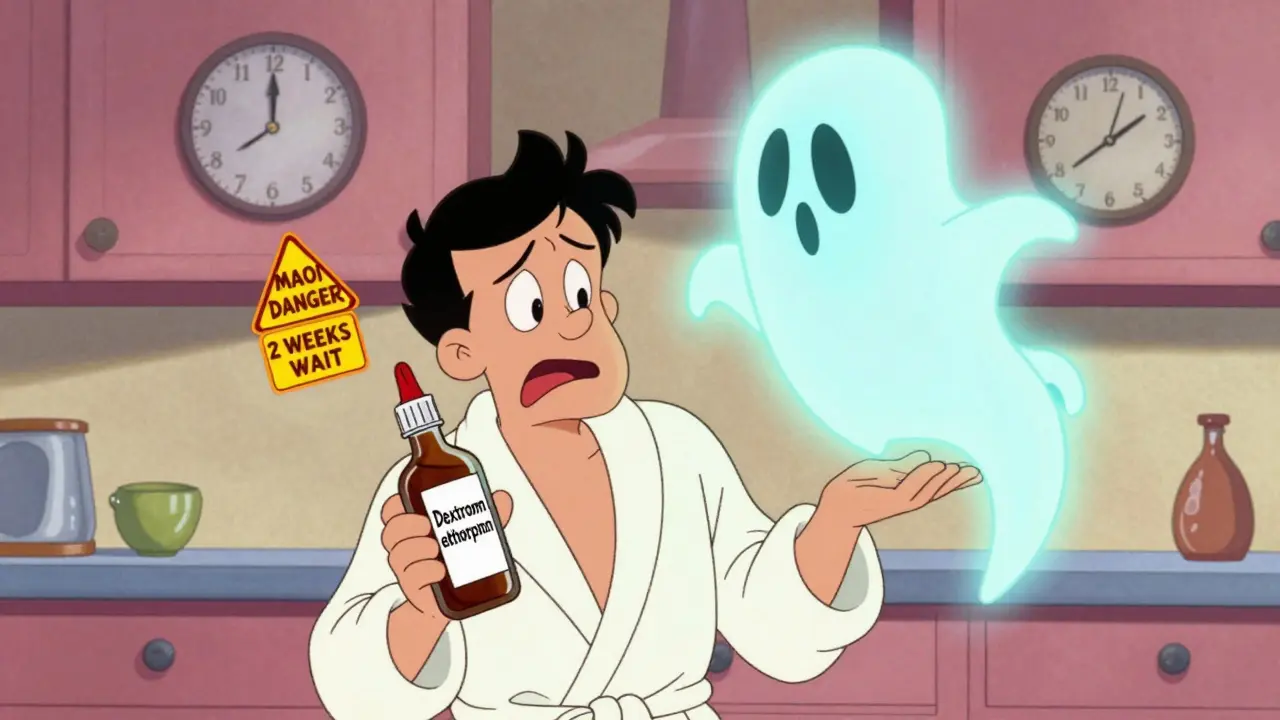
MAOI & Dextromethorphan Safety Checker
This tool helps you determine if you can safely use cough medicines containing dextromethorphan while taking MAOI medications. The interaction can cause life-threatening serotonin syndrome.
Most people grab a bottle of cough syrup without thinking twice. It’s cold season, your throat is raw, and you just want to sleep. But if you’re taking an MAOI for depression or Parkinson’s, that little bottle could be a ticking time bomb. The active ingredient in many over-the-counter cough medicines - dextromethorphan - can trigger a life-threatening reaction when mixed with MAOIs. This isn’t a theoretical risk. It’s happened. People have ended up in emergency rooms. Some didn’t survive.
What’s Really in Your Cough Syrup?
Dextromethorphan is everywhere. Robitussin, Delsym, NyQuil, TheraFlu, even some generic store brands. It’s the go-to cough suppressant because it works - it calms the cough reflex without making you drowsy like codeine. But here’s the catch: it’s also a weak serotonin reuptake inhibitor. That means it stops your brain from clearing out serotonin, the mood-regulating chemical. When you’re on an MAOI, your body can’t break down serotonin at all. Combine the two, and serotonin piles up like traffic on a highway with no exits.What Are MAOIs?
MAOIs - monoamine oxidase inhibitors - are antidepressants that have been around since the 1950s. Drugs like phenelzine (Nardil), tranylcypromine (Parnate), rasagiline (Azilect), and selegiline (Zelapar) are still used today, especially for treatment-resistant depression or Parkinson’s disease. They work by blocking an enzyme that breaks down serotonin, norepinephrine, and dopamine. That’s why they help with mood. But that same mechanism makes them dangerously incompatible with dextromethorphan.Serotonin Syndrome: The Silent Killer
The result of mixing these two? Serotonin syndrome. It doesn’t always show up right away. Symptoms can start within six hours, sometimes up to 24. You might feel agitated, confused, or have a racing heart. Your muscles could lock up. You might develop a fever over 104°F. Tremors, sweating, dilated pupils - these aren’t just side effects. They’re warning signs your body is drowning in serotonin. A 2022 review in the PMC journal found that severe cases of serotonin syndrome carry a 2% to 12% mortality rate. That’s not a small risk. And it’s not rare. Between 2010 and 2022, the FDA recorded 237 reported cases linked to dextromethorphan and MAOIs. Over 40% of those cases required hospitalization. One Reddit user described extreme muscle rigidity and a 104°F fever after taking cough syrup while on selegiline. Another patient on PatientsLikeMe said they couldn’t speak clearly after four hours - doctors told them they were lucky to survive.
Why This Interaction Is So Dangerous
It’s not just serotonin. Dextromethorphan is broken down by an enzyme called CYP2D6. MAOIs don’t directly block this enzyme, but many of them - and other common drugs like fluoxetine, paroxetine, and even some heart medications - do. When CYP2D6 is inhibited, dextromethorphan builds up in your bloodstream by 300% to 400%. That’s not a little extra. That’s enough to push you over the edge into toxicity. Even worse, many people don’t know what’s in their cough medicine. A 2019 survey by the American Society of Health-System Pharmacists found that 78% of patients on MAOIs didn’t realize common OTC cough syrups contained dextromethorphan. Labels exist, but they’re often buried in fine print. A 2021 analysis showed only 38% of products displayed the MAOI warning prominently.What You Should Do
If you’re on an MAOI, avoid dextromethorphan completely. Not just while you’re taking it. Not just for a few days. You need to wait at least two weeks after your last dose before using any cough medicine with dextromethorphan. That’s the standard recommendation from the Therapeutic Goods Administration of Australia, the FDA, and major medical guidelines. That two-week window isn’t arbitrary. MAOIs stick around in your system longer than most drugs. Even after you stop taking them, the enzyme inhibition lasts. Taking dextromethorphan too soon can still trigger serotonin syndrome.What Can You Use Instead?
You don’t have to suffer through a cough. Safe alternatives exist. Guaifenesin - the expectorant in Mucinex - is generally considered safe with MAOIs because it doesn’t affect serotonin. Honey (especially in warm tea) has been shown in studies to be as effective as dextromethorphan for nighttime coughs in adults. But even honey isn’t risk-free: some raw or unprocessed honey can contain tyramine, which can interact with MAOIs. Stick to pasteurized, store-bought honey if you’re unsure. Steam inhalation, saltwater gargles, and staying hydrated are simple, effective, and completely safe. If your cough is persistent, talk to your doctor. Don’t guess. Don’t assume. Ask.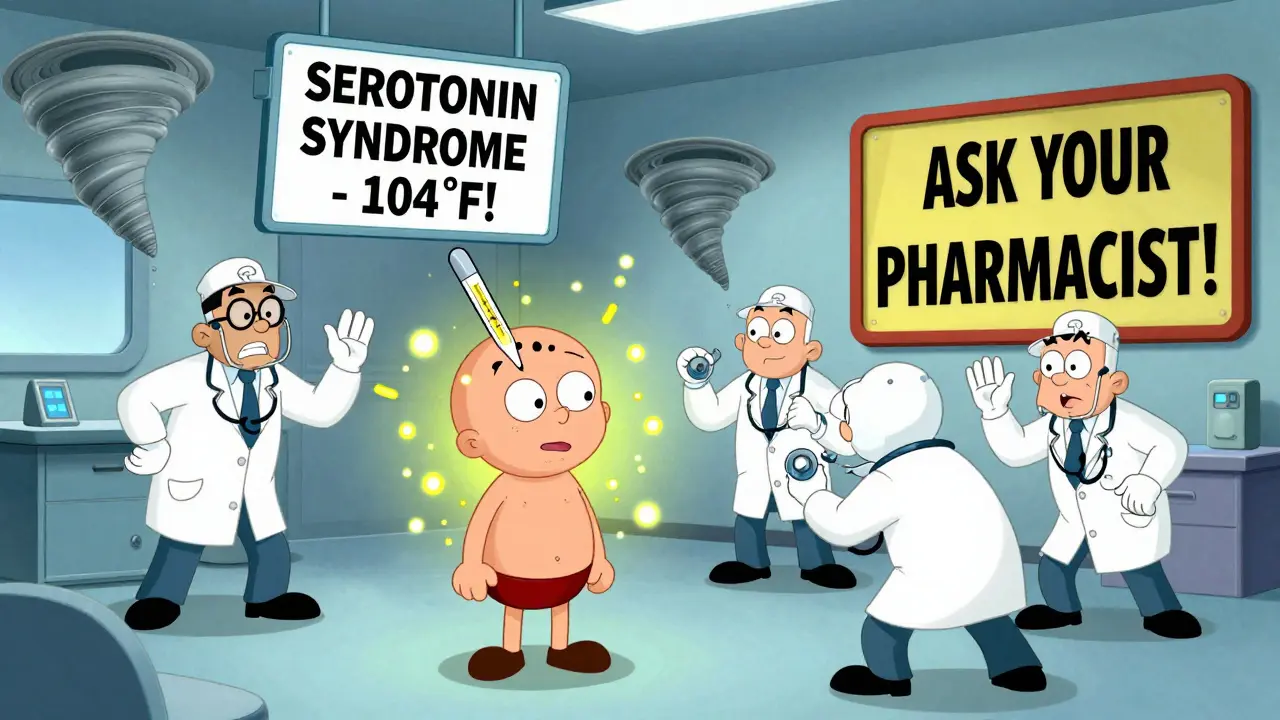
Pharmacists Are Your Lifeline
Don’t rely on memory or labels alone. When you pick up a cough medicine, ask the pharmacist: “Is this safe if I’m on an MAOI?” Pharmacists are trained to catch these interactions. A 2021 study showed pharmacist counseling reduced accidental dextromethorphan-MAOI combinations by 67% in a group of over 1,200 patients. That’s a huge difference. Even if you’ve been on your MAOI for years, this interaction doesn’t get safer over time. It stays dangerous. Always check.What’s Changing?
There’s hope. The FDA proposed new labeling rules in 2022 requiring larger, bolder warnings on all dextromethorphan products. Those changes are expected to roll out by late 2024. The European Medicines Agency now requires printed patient guides listing exact brand names of products to avoid. And research is showing that newer MAOIs like moclobemide - a reversible inhibitor - carry a much lower risk. Only one case of serotonin syndrome has been reported with moclobemide and dextromethorphan, compared to nearly 200 with older MAOIs. But until those changes are fully in place, the risk remains. And it’s real.Why This Matters Now
MAOI use is rising. Since 2020, prescriptions for these drugs have increased by 22% as doctors turn to them for treatment-resistant depression. More people are on them. More people are reaching for cough medicine. The gap between awareness and action is widening. Only 43% of patients starting MAOI therapy get proper counseling about OTC risks, according to the National Alliance on Mental Illness. This isn’t just about avoiding a bad reaction. It’s about survival. One sip of cough syrup can change everything.If you’re on an MAOI, check every medicine you take - even the ones you’ve used before. Look for dextromethorphan on the label. Ask your pharmacist. Wait two weeks after your last dose. Your life depends on it.


Uju Megafu
This is why I stopped trusting Big Pharma and their sneaky little labels. I had a friend on Nardil who took NyQuil for a cold and ended up in ICU with muscle spasms so bad they broke a rib. And guess what? The pharmacist didn’t even blink when she asked. Just handed it over like it was candy. We need mandatory warning stickers on every bottle. Like cigarette packs. But louder. And in neon.
And don’t even get me started on how pharmacies are understaffed and overworked. They’re not your safety net-they’re just cashiers with stethoscopes.
Someone’s gonna die because a label says ‘may contain’ and someone thought ‘maybe it’s fine.’