
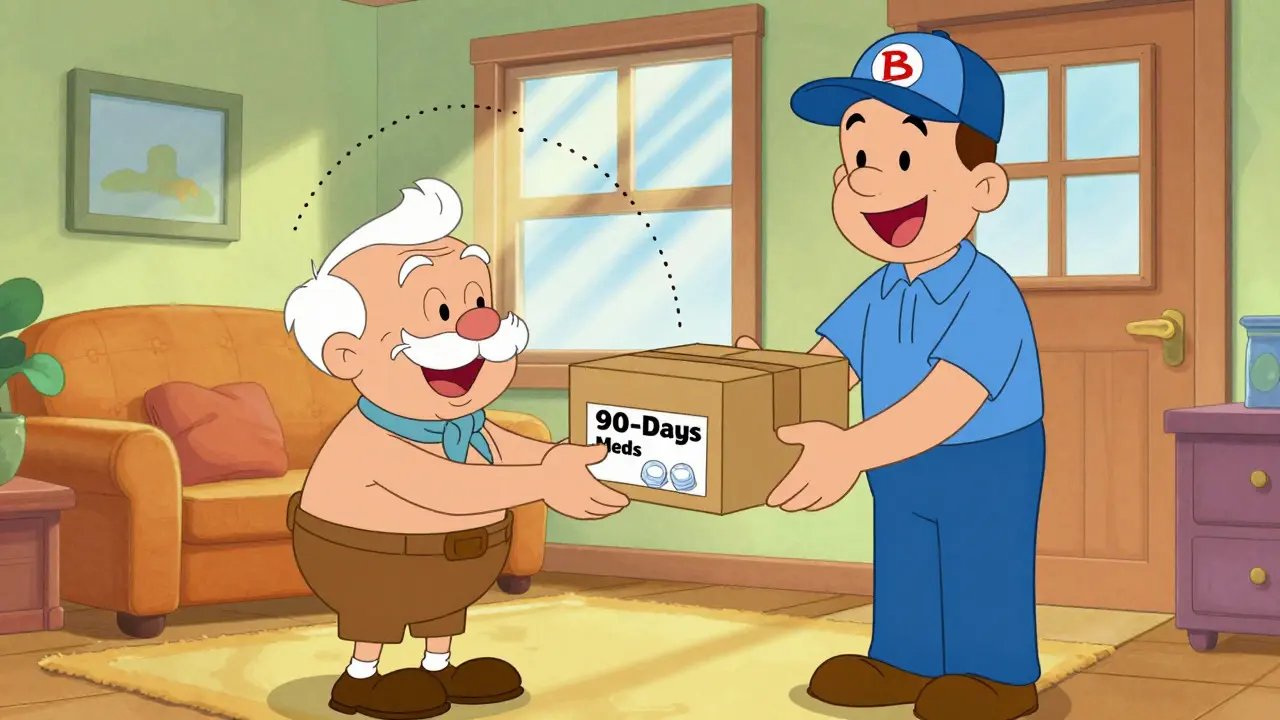
Running out of your blood pressure or diabetes meds shouldn’t mean a trip across town in the rain, waiting in line, or calling your doctor just to get a refill. If you’re taking the same medications every day - especially for a chronic condition - pharmacy delivery and mail-order services aren’t just convenient. They’re one of the simplest ways to stay on track with your treatment plan.
Here’s the truth: most people who use mail-order pharmacies take their meds more consistently. Studies show 82% of people on 90-day mail-order prescriptions stick to their schedule, compared to just 52% who refill every 30 days at a local pharmacy. That’s not a small difference. It’s the difference between staying out of the hospital and ending up there.
How Mail-Order Pharmacy Works
Mail-order pharmacies are licensed, regulated, and operate just like your local drugstore - except they ship your meds straight to your door. You don’t need to visit them in person. Most are tied to your health insurance or pharmacy benefit manager (PBM), like Express Scripts, CVS Caremark, or OptumRx. Some even work directly with patients who pay out-of-pocket.
Here’s how it typically works:
- You or your doctor sends a prescription to the mail-order pharmacy (usually electronically).
- You sign up online or call their customer service to set up your account.
- You choose a 90-day supply (not 30-day), which usually costs less than three separate 30-day fills.
- Your meds are packed in secure, temperature-controlled packaging and shipped via standard or expedited delivery.
- You get a reminder when it’s time to reorder - often automatically.
Most services let you track your package like you would an Amazon order. And if you have questions, you can talk to a pharmacist 24/7 - no waiting for business hours.
Why It’s Better for Chronic Conditions
If you take meds for diabetes, high cholesterol, thyroid issues, or asthma, mail-order isn’t just a perk - it’s a tool for better health.
Why? Because consistency matters. Missing even one dose of your blood thinner or blood pressure pill can raise your risk of stroke or heart attack. A 90-day supply means fewer chances to forget, run out, or skip a refill because you’re busy or tired.
Cost savings add up too. A 90-day supply typically costs 25-35% less than buying three 30-day bottles. For someone on a $120/month medication, that’s $360 saved per year - just by switching delivery methods. Many insurance plans charge only two copays for a 90-day supply instead of three.
And it’s not just about money. For people with mobility issues, no car, or long commutes, getting meds delivered removes a major barrier. One Reddit user with MS said: “Mail-order has been life-changing. I don’t have to struggle to get to the pharmacy anymore.”
What Medications Can You Get?
Not every prescription qualifies for mail-order. Here’s what works:
- Chronic condition meds: blood pressure, cholesterol, diabetes, thyroid, antidepressants, asthma inhalers, acid reflux pills.
- Most maintenance drugs taken daily or weekly.
- Some specialty medications (like injectables for rheumatoid arthritis) - shipped with cold packs.
Here’s what you can’t get by mail:
- Controlled substances: opioids, stimulants (like Adderall), benzodiazepines (like Xanax).
- Antibiotics or acute meds you need right away - like for an infection.
- Medications requiring in-person counseling, like some chemotherapy drugs.
If you’re unsure, ask your pharmacist. Most mail-order services list eligible drugs on their website. If your med isn’t listed, you can still get it at a local pharmacy.
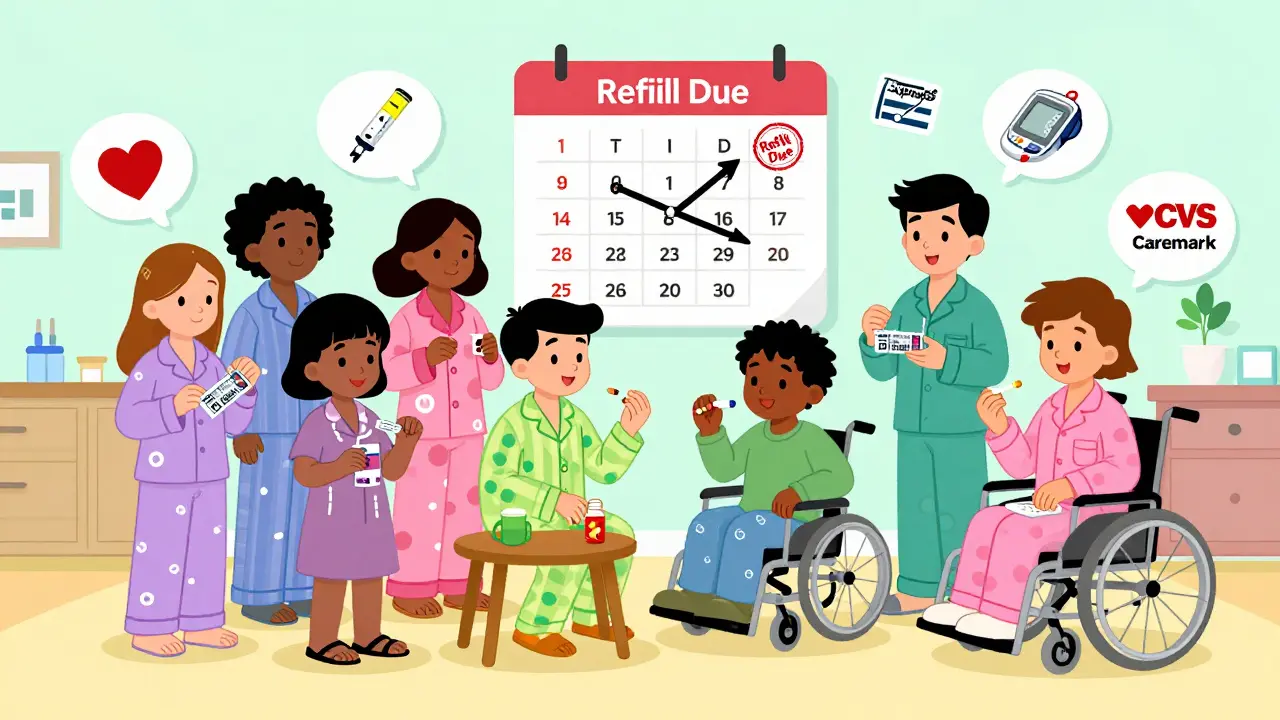
How to Get Started
Getting set up takes less than 15 minutes. Here’s the step-by-step:
- Check your insurance. Log into your health plan’s website or call member services. Ask: “Do I have mail-order pharmacy coverage?” Most plans include it at no extra cost.
- Find your mail-order provider. Your insurer will tell you which pharmacy they use - it’s usually one of the big three: Express Scripts, CVS Caremark, or OptumRx.
- Transfer your prescriptions. You can do this online, over the phone, or even ask your current pharmacy to send them. It takes 3-5 business days.
- Order your first 90-day supply. Fill out the form with your address, payment info (copay or cash), and delivery preferences.
- Set up automatic refills. Most services let you turn on auto-renewal. You’ll get a reminder when your meds are about to ship.
Pro tip: Order your refill at least 10 days before you run out. Shipping can take 3-5 days, and processing adds another day or two. Running out is the #1 reason people miss doses.
What to Watch Out For
Mail-order isn’t perfect. Here are the real issues people run into - and how to avoid them.
- Delivery delays. About 8% of users report packages taking longer than promised. If your meds are late, call customer service immediately. Many offer expedited shipping for emergencies.
- Lost or damaged packages. Less than 1.2% of shipments are affected, but it happens. Always check your package when it arrives. If something’s wrong, snap a photo and contact the pharmacy right away.
- Hard to change doses. If your doctor changes your dosage, it can take time to update your mail-order order. Keep your local pharmacy as a backup for urgent changes.
- Temperature-sensitive meds. If you’re on insulin, biologics, or other cold-chain meds, make sure the package has ice packs. Don’t leave it on your porch in summer heat.
Also, don’t forget: mail-order pharmacies don’t replace your local pharmacist. Keep a relationship with someone nearby for quick questions, flu shots, or if you need a new prescription filled immediately.

Real People, Real Results
People who use mail-order consistently say the same things:
- “I save hours every month.”
- “I never run out anymore.”
- “My copay is half what it used to be.”
- “The pharmacists call me to check in.”
One user on Trustpilot gave Patient Direct Pharmacy 5 stars, writing: “Next-day delivery saved me when I ran out of my heart meds.” Another from the University of Michigan plan said: “Fast, convenient, and the staff actually remembers my name.”
These aren’t just happy customers. They’re people who stayed healthy because they didn’t have to fight to get their meds.
What’s Next for Pharmacy Delivery
The industry is growing fast. In 2022, mail-order pharmacies handled 25% of all U.S. prescriptions. By 2028, that number could hit 35%. New tech is making it even better:
- AI systems now predict when you’re likely to miss a dose and send you a nudge.
- Some pharmacies are testing drone deliveries in rural areas.
- Smart packaging with temperature sensors is being rolled out for expensive biologic drugs.
- Many services now bundle telehealth visits with your prescription refill.
For now, the biggest win is simple: fewer trips, lower costs, and better adherence. And that’s what matters most when you’re managing a long-term health condition.
Final Tips
- Always order refills 10 days before you run out.
- Keep a 7-day supply of your meds at home as a backup.
- Use your local pharmacy for acute needs - antibiotics, new prescriptions, or if you need advice right away.
- Call your mail-order pharmacy if you have questions. Pharmacists are there to help - not just to ship pills.
- Check your insurance plan’s website every year. Benefits can change.
If you’re on daily meds for a chronic condition, pharmacy delivery isn’t a luxury. It’s a smart health strategy. It takes the stress out of refill cycles, saves you money, and - most importantly - helps you stay on track. And that’s the whole point.


Christina Weber
Mail-order pharmacies are regulated by the FDA and state boards of pharmacy-same as brick-and-mortar stores. The idea that they’re somehow less safe is a myth perpetuated by people who don’t understand how prescription logistics work. Every pill is tracked, every shipment logged, and every pharmacist is licensed. If you’re worried about quality, check the pharmacy’s accreditation (VIPPS or NABP). If it’s not there, don’t use it. Simple.