
Forgetting to take your pills isn’t just a minor annoyance-it can land you in the hospital. About 89% of seniors over 65 take at least one prescription medication, and more than half take four or more. With that many pills, schedules, and times, it’s no surprise that nearly half of them miss doses. The result? Higher risk of complications, emergency visits, and even death. But there’s a better way than sticky notes or phone alarms. Smart pill caps and dispensers are quietly changing how people manage their meds-especially those who forget, get confused, or live alone.
Why Forgetfulness Is a Silent Health Crisis
It’s easy to think, “I’ll remember.” But the brain doesn’t work that way under stress, fatigue, or cognitive decline. A 2022 study in the Journal of Medical Systems found that people using simple reminders-like alarms or apps-still missed doses 32% of the time. That’s not laziness. It’s human. And when you’re taking blood pressure meds, diabetes drugs, or anticoagulants, missing even one dose can spike your risk of stroke, heart attack, or kidney failure. The problem isn’t just personal. In the U.S. alone, medication non-adherence costs the healthcare system between $100 billion and $300 billion every year. That’s not just money-it’s lives. And the people most affected? Older adults, people with dementia, and those managing multiple chronic conditions. They’re not failing. The system is.How Smart Pill Caps Work (No App Required)
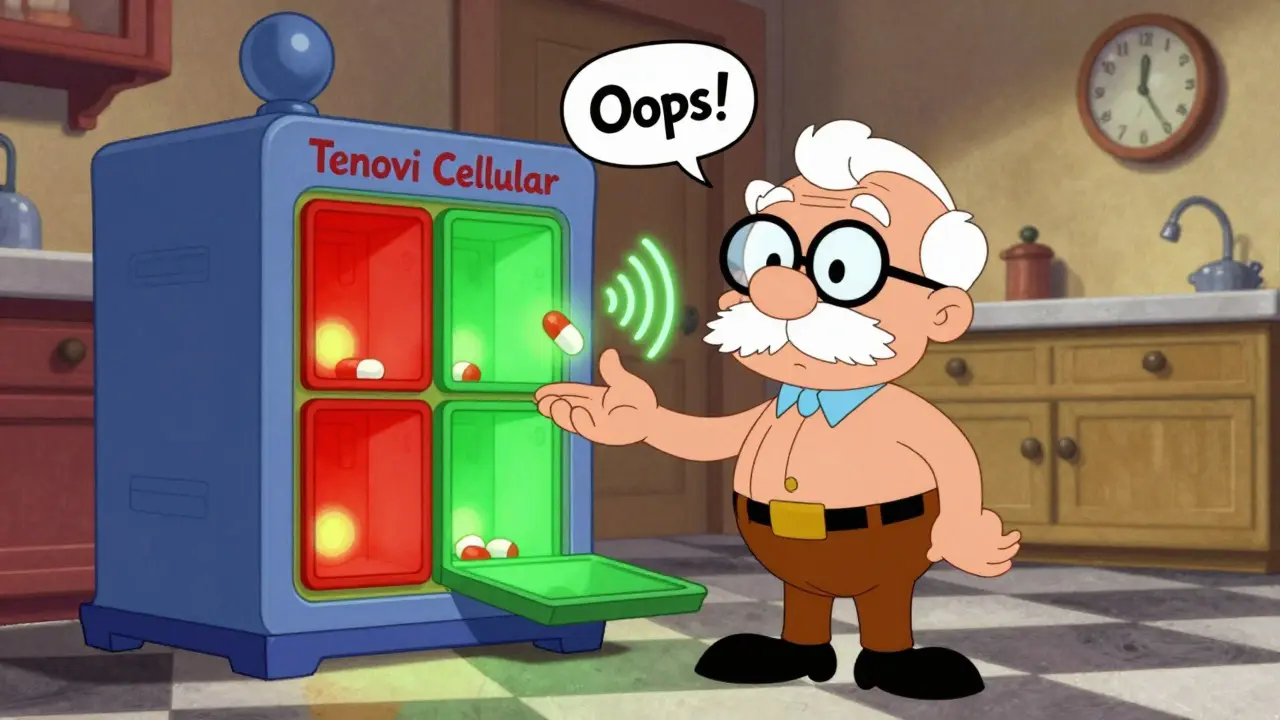
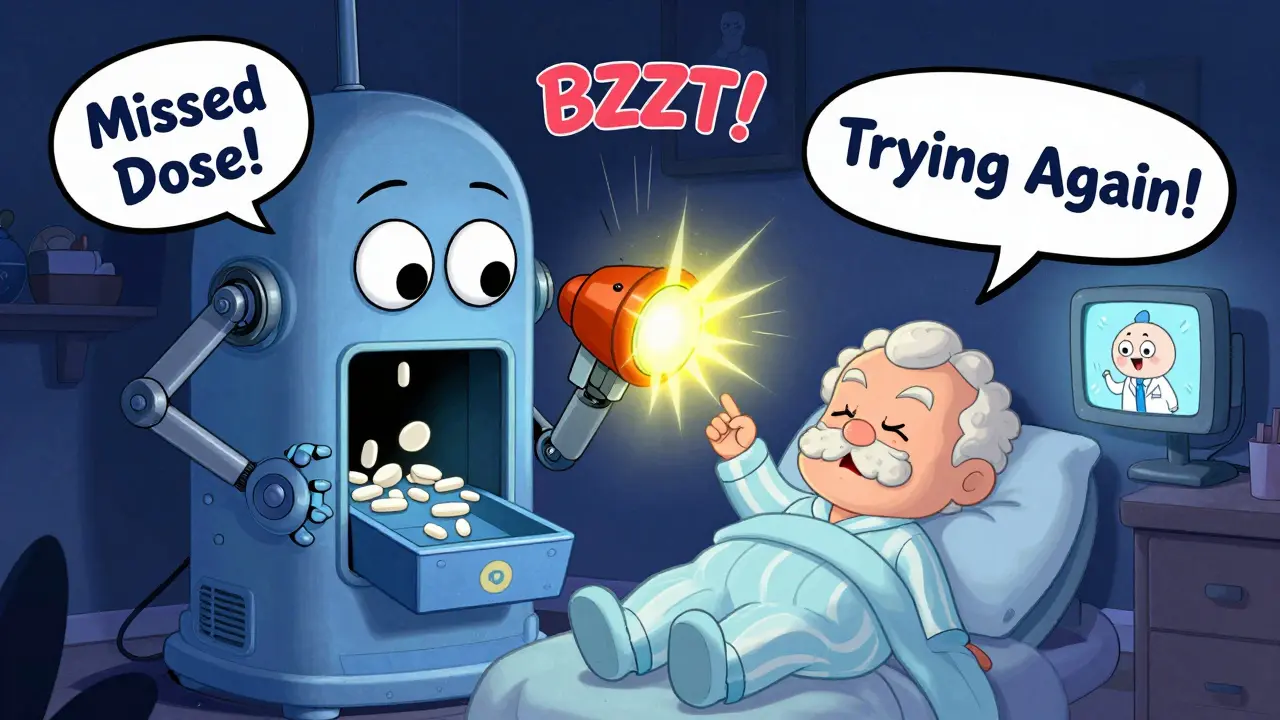
Not all smart pill devices are the same. Some are fancy boxes with touchscreens. Others are simple caps that snap onto your existing pill bottles. The best ones don’t ask you to learn new tech-they fit into your life like a coffee mug. Take Tenovi’s Cellular Pillbox. It’s a plastic container with compartments for morning, afternoon, evening, and night. When it’s time for your pill, a red light turns on. You open the compartment. The light turns green. That’s it. No phone. No app. No passwords. The device uses built-in cellular tech to send a report to your caregiver or doctor if you miss a dose. It works even if you don’t own a smartphone. AdhereTech’s Aidia Smart Bottle works differently. It fits right over your prescription bottle. A sensor inside detects when you open it-and if you don’t open it at the right time, it sends a text, email, or even a phone call. It also asks you why you missed it: “Was it too expensive?” “Did you feel sick?” That feedback helps doctors adjust your treatment, not just nag you. Hero Health’s automatic dispenser is a full system. It holds up to 28 doses, opens the right compartment at the right time, flashes bright lights, and sounds a loud alarm. If you don’t take your pill within 30 minutes, it tries again. And again. And again. One user on Reddit said it saved their mother’s life during a UTI scare because she finally started taking her antibiotics on time.Key Features That Actually Matter
When you’re choosing a device, don’t get distracted by bells and whistles. Focus on what keeps you or your loved one safe:- Visual alerts-bright, flashing lights help people with hearing loss or dementia.
- Repeating alarms-a single beep won’t cut it. The MedQ dispenser repeats every 30 minutes until you take the pill.
- No app needed-if the person doesn’t use smartphones, an app-based system will fail.
- Cellular connectivity-Wi-Fi can go down. Cellular stays up, even during power outages.
- Remote monitoring-caregivers should get alerts if a dose is missed, so they can step in before it becomes a crisis.
- Physical locks-for people with dementia or impulse issues, locked dispensers prevent accidental overdoses.
Comparing Top Devices for Real-World Use
| Device | Cost (Device) | Monthly Fee | Automatic Dispensing | Remote Alerts | Best For |
|---|---|---|---|---|---|
| Tenovi Cellular Pillbox | $199 | $29 | No | Yes (cellular) | Seniors who hate apps |
| AdhereTech Aidia Smart Bottle | $149 | $39 | No | Yes (text, call, email) | People on standard prescriptions |
| Hero Health Dispenser | $499 | $0 | Yes | Yes (calls, texts) | Complex regimens, dementia |
| MedQ Electronic Dispenser | $129-$249 | $0 | Yes | No | Low-budget, high-security needs |
| AARDEX Pill Connect | $299 | $49 | No | Yes (clinical-grade analytics) | Clinical trials, research settings |
Notice something? The cheapest devices often lack remote alerts. The most expensive ones are overkill for most homes. Hero Health’s $499 unit is powerful-but if you only take three pills a day, you don’t need a robot that opens your meds. Tenovi’s $199 box is often the sweet spot: simple, reliable, and works without a smartphone.
What No One Tells You About Subscription Costs
Many of these devices need monthly service fees to send alerts or store data. That’s fine-if you can afford it. But here’s the hard truth: 32% of low-income seniors stop using smart dispensers within six months because they can’t pay the subscription. AdhereTech and AARDEX charge $39-$49 a month. That’s more than some people pay for their phone plan. Hero Health doesn’t charge monthly, but the upfront cost is nearly $500. Tenovi’s $29 fee is lower, but still adds up over time. The good news? Medicare Advantage plans are starting to cover these devices if they reduce hospital visits. In a 2023 pilot with UnitedHealthcare, patients using Tenovi’s system had 18.7% fewer ER trips. That’s why CMS (Centers for Medicare & Medicaid Services) announced in early 2024 that they’ll expand coverage for any device that proves it cuts hospitalizations by 15% or more. If you’re on Medicare, ask your doctor or pharmacist: “Is this covered?”Real Stories: When Tech Actually Saved Lives
On Reddit, a caregiver in Massachusetts wrote: “My mom’s adherence jumped from 60% to 98% after we got the Hero dispenser. The 30-minute repeating alarms literally saved her life during a UTI scare.” She’d been skipping her antibiotics because she forgot. The dispenser didn’t just remind her-it forced her to take them. Another user, daughterofdottie on Tenovi’s Trustpilot page, said: “Mom with early dementia finally takes her pills consistently. The red light system is genius.” She didn’t need to remember anything. She just saw the light, opened the compartment, and moved on. But it’s not perfect. One user on Amazon complained their MedQ alarm was too quiet for their hearing loss. Another on Reddit admitted they “gamed” their Pill Connect by opening the cap without taking the pill. No device can force ingestion. That’s why the best systems combine tech with human support-like a nurse calling to check in after a missed dose.
What to Do Before You Buy
Don’t just pick the first device you see. Ask yourself:- Does the person use a smartphone? If not, avoid app-based systems.
- How many pills do they take per day? More than four? Consider a dispenser with multiple compartments.
- Are they hard of hearing or visually impaired? Look for bright lights and loud alarms.
- Do they have dementia or memory loss? Locked dispensers like MedQ may be safer than open ones.
- Can you afford the monthly fee? If not, look for devices with no subscription-like Hero Health or MedQ.
- Will a caregiver or family member get alerts? Remote monitoring is the safety net.
Try to borrow one first. Some pharmacies or senior centers lend out devices for trial. If your doctor has a partnership with a vendor, ask if they offer a 30-day demo.
The Future: What’s Coming Next
The next wave of smart pill tech won’t just remind you-it will know you. MIT’s AgeLab is testing edible sensors that confirm you swallowed your pill. Hero Health is adding voice-activated emergency calls. AARDEX’s new AI system predicts when you’re likely to miss a dose before it happens-and sends a preemptive call. But the real breakthrough? When these devices stop feeling like tech. When the red light is just part of your morning routine-like brushing your teeth. That’s what Tenovi and AdhereTech are doing. They’re not selling gadgets. They’re selling peace of mind.Forgetfulness isn’t a character flaw. It’s a biological reality. And the right tool doesn’t make you dependent on technology-it makes you independent again. You can live at home. You can travel. You can sleep through the night without worrying you missed your pills. That’s not just convenience. That’s dignity.
Can smart pill dispensers really improve medication adherence?
Yes. Studies show users of smart pill dispensers achieve 90%+ adherence rates, compared to 60-70% with traditional methods. Devices like AdhereTech’s Aidia Smart Bottle increased adherence from 67.8% to 92.3% in clinical trials. The key is combining visual, auditory, and remote alerts to create multiple reminders.
Do I need a smartphone to use a smart pill dispenser?
No. Devices like Tenovi’s Cellular Pillbox and Hero Health’s dispenser work without any phone or app. They use built-in cellular networks to send alerts to caregivers. You only need a smartphone if you want to check your own data online-most users don’t need to.
Are smart pill dispensers covered by Medicare?
Traditional Medicare (Part A/B) doesn’t cover them yet. But many Medicare Advantage plans now do-if the device has been proven to reduce hospital visits. As of 2024, CMS is expanding coverage for any device that cuts hospitalizations by 15% or more. Ask your plan or doctor for details.
What’s the difference between a smart pill cap and a dispenser?
A smart pill cap (like AdhereTech’s) fits over your existing bottle and tracks when you open it. A dispenser (like Hero Health’s) holds your pills and automatically releases them at set times. Caps are cheaper and simpler; dispensers are better for complex regimens and people who need help opening bottles.
Can these devices prevent overdoses?
Only if they’re locked. Devices like MedQ’s dispenser have physical locks that prevent access until the scheduled time. This is critical for people with dementia or those at risk of accidental overdose. Simple reminder caps don’t prevent overdosing-they only remind you.
How long do the batteries last?
Battery life varies. Tenovi’s device lasts up to 90 days on a single charge. AdhereTech’s cap lasts about 30 days. Hero Health’s dispenser uses replaceable batteries that last 6-8 months. Always check the specs and consider backup power if you live in an area with frequent outages.
What if I miss a dose? Will someone know?
Yes-if the device is set up for remote alerts. Tenovi, Hero Health, and AdhereTech all notify caregivers via text, email, or phone call when a dose is missed. Some even call the user directly. This is what makes these systems lifesaving: they turn isolation into accountability.
Next Steps: What to Do Today
1. Count the pills. How many medications does the person take each day? Write them down with times. 2. Check coverage. Call your Medicare Advantage plan or pharmacy and ask: “Do you cover smart pill dispensers?” 3. Try a demo. Ask your doctor if they have a device you can borrow for a week. 4. Choose simplicity. If the person doesn’t use tech, pick a no-app system like Tenovi or Hero Health. 5. Set up alerts. Make sure a family member or caregiver gets notifications if a dose is missed.Forgetting your pills doesn’t mean you’re failing. It means you need better support. The right smart pill dispenser doesn’t just track your meds-it gives you back your freedom.


James Nicoll
So we’re paying $500 for a robot that yells at your grandma to take her pills? Next they’ll sell us AI therapists that sigh and say, ‘You know you should’ve taken it, Karen.’ At least sticky notes didn’t charge a subscription fee. I miss the days when forgetting your meds meant a trip to the ER, not a monthly bill from Hero Health.