
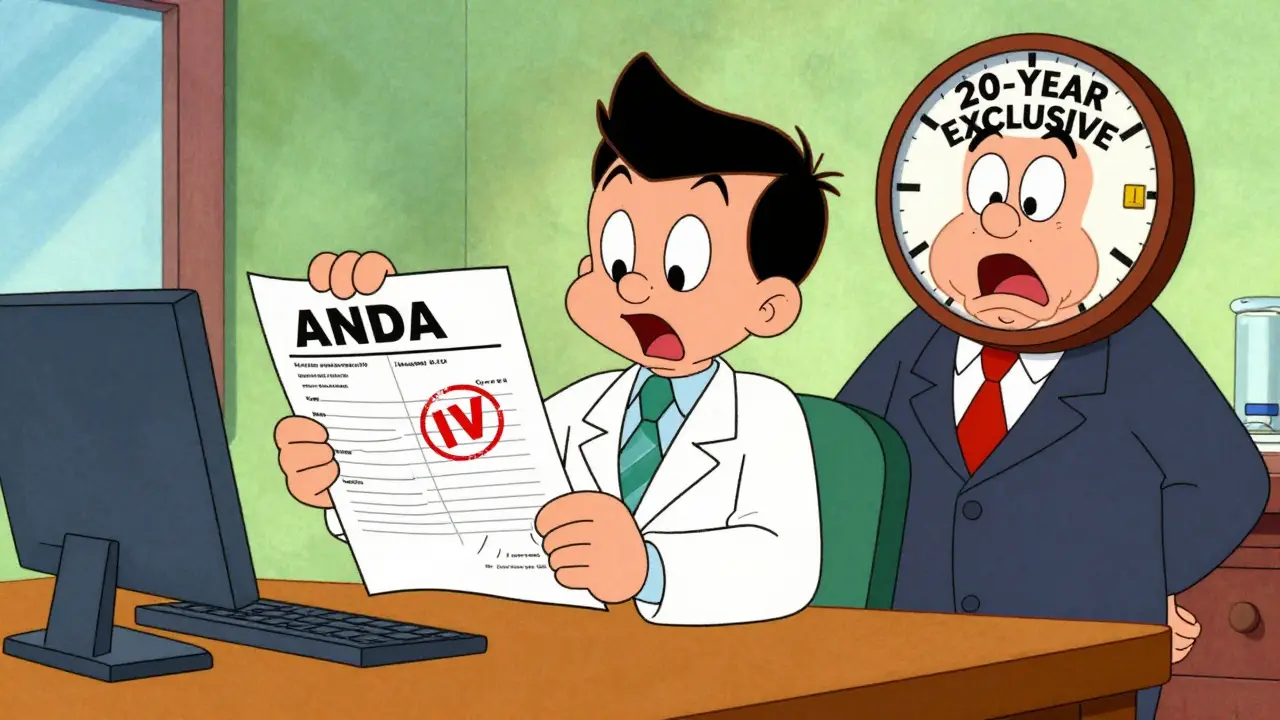
When a brand-name drug company holds a patent, it has exclusive rights to sell that drug for a set number of years-usually 20 from the date of filing. But what happens when a generic version is ready to hit the market before that patent expires? That’s where Paragraph IV certification comes in. It’s not a loophole. It’s a legal tool built into U.S. drug law to let generic manufacturers challenge weak or questionable patents before they even start selling their product. And it’s one of the biggest reasons generic drugs are so cheap today.
What Is a Paragraph IV Certification?
A Paragraph IV certification is a formal statement made by a generic drug company when it files an Abbreviated New Drug Application (ANDA) with the FDA. In this statement, the company says one of three things: the patent is invalid, the patent can’t be enforced, or their drug won’t actually infringe on it. This isn’t just a claim-it’s a legal trigger. Once submitted, it gives the brand-name company the right to sue the generic maker for patent infringement before the generic drug is sold.
This whole system was created by the Hatch-Waxman Act of 1984. Before that, generic companies had to wait until every single patent expired, even if those patents were obvious or poorly written. The law was designed to balance two things: rewarding innovation and making drugs affordable. The Paragraph IV certification became the key mechanism to make that balance work.
How It Works: The Legal Sequence
Here’s the step-by-step process, plain and simple:
- A generic company finishes developing its version of a drug and submits an ANDA to the FDA.
- In that application, it includes a Paragraph IV certification against one or more patents listed in the FDA’s Orange Book-the official list of patents for brand-name drugs.
- Within 20 days, the generic company must send a legal notice to the brand-name company and the patent holder, explaining why they believe the patent is invalid or won’t be infringed.
- If the brand company sues within 45 days, the FDA is automatically blocked from approving the generic for 30 months. This is called a “30-month stay.”
- If the court rules the patent is invalid or not infringed, the generic can launch immediately. If the brand company wins, the generic can’t sell until the patent expires.
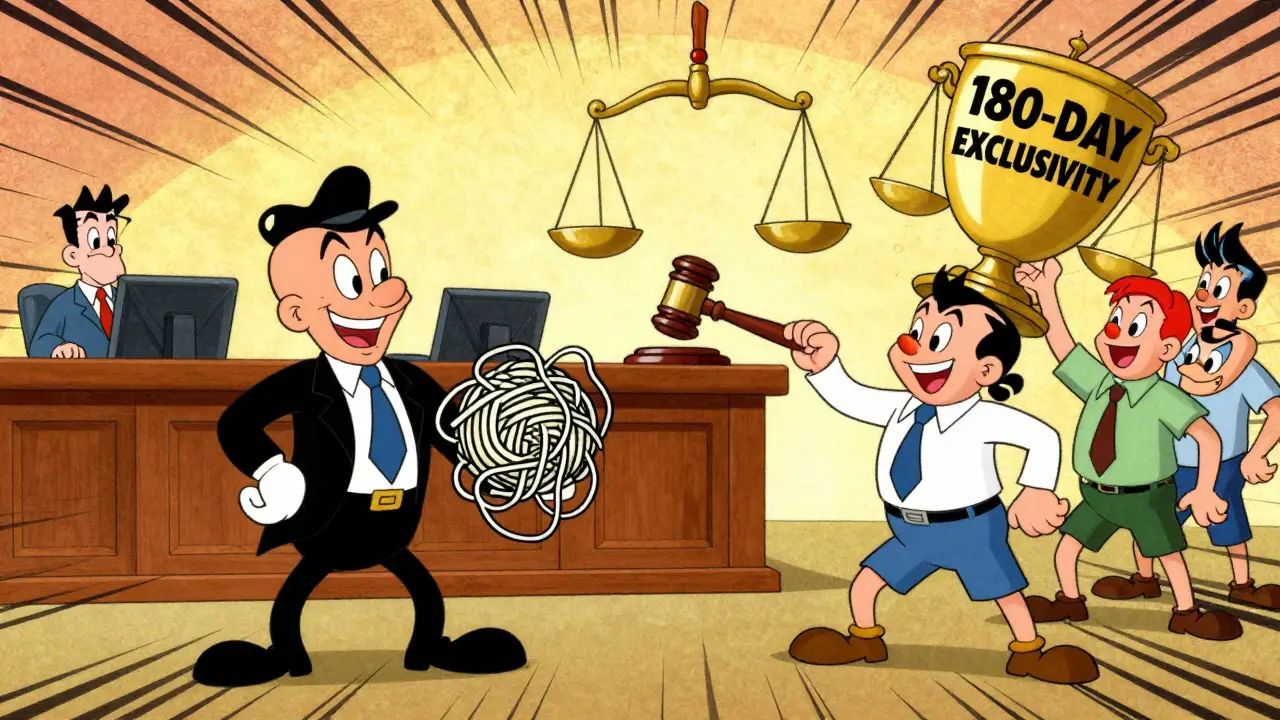
- The first company to file a successful Paragraph IV challenge gets 180 days of exclusive rights to sell the generic version-no other generics can enter the market during that time.
This 180-day exclusivity is huge. It’s why companies risk millions in legal fees. If you’re the first to challenge a $2 billion drug and win, that 180-day window can bring in over $500 million in sales before anyone else even gets a shot.
Why It’s a High-Stakes Game
Paragraph IV challenges aren’t for the faint of heart. They’re expensive, complex, and risky.
On average, each lawsuit costs around $12.7 million, according to a 2022 report from Fish & Richardson. Some cases go over $15 million. The process can take 4 to 5 years. But the payoff? It’s worth it. In 2004, Apotex challenged GlaxoSmithKline’s patent on Paxil and won. During its 180-day exclusivity period, it made over $1.2 billion.
But here’s the catch: you have to get the paperwork right. The FDA will reject your application if your notice letter doesn’t contain a “detailed statement” of why you believe the patent is invalid. Courts have said it needs a “rational, reasonable basis”-but they don’t spell out exactly what that means. That’s why companies hire top patent lawyers who charge $750 to $1,200 an hour just to draft this one document.
And it’s not just about one patent anymore. Brand companies now use “patent thickets”-a bunch of overlapping patents on minor changes like dosage, packaging, or delivery methods-to slow down generics. In 2022, 63% of generic manufacturers said these thickets made challenges harder than they were five years ago.
What Happens When You Lose-or Win
If the brand company wins the lawsuit, the generic can’t sell until the patent expires. But if the generic wins? Big win. The drug opens up to competition, and prices drop fast. Since 1984, Paragraph IV challenges have saved U.S. consumers over $1.7 trillion in drug costs.
But even winning doesn’t always mean smooth sailing. In 2017, Teva challenged a patent for Copaxone and got approval-but it lost its 180-day exclusivity because it didn’t get tentative approval from the FDA within 30 months. By the time it could launch, five other generics were already in the market. No exclusivity. No monopoly. Just competition-and much smaller profits.
There’s also the risk of “pay-for-delay.” Sometimes, brand companies pay the generic maker to delay its entry. The FTC has called this anticompetitive. In 2013, the Supreme Court ruled in FTC v. Actavis that these deals can violate antitrust laws. Since then, fewer of these deals have happened-but they still exist.
Paragraph IV vs. Other Certification Types
Not all ANDAs include a Paragraph IV certification. There are three other types:
- Paragraph I: The drug isn’t patented. Only about 5% of applications use this. No risk. No reward.
- Paragraph II: The patent is about to expire. You wait until it runs out. About 15% of applications. Low risk, low reward.
- Paragraph III: You agree to wait until the patent expires. About 20% of applications. Safe, but no early entry.
- Paragraph IV: You challenge the patent. 60-70% of applications. High risk, high reward.
Paragraph IV is the only one that creates a legal battle before launch. It’s the only one that offers 180 days of exclusivity. And it’s the only one that’s responsible for the majority of generic drug entries before patent expiry.
Recent Changes and Future Trends
The rules aren’t static. In 2023, the Supreme Court ruled in Amgen v. Sanofi that patent claims must be “enabled”-meaning the patent must clearly teach how to make and use the full scope of the invention. This raised the bar for generic companies trying to prove a patent is invalid, especially for complex biologic drugs.
At the same time, the FDA has started cracking down on “patent thicketing.” Its 2023 Orange Book Modernization Act made it harder for brand companies to list weak or irrelevant patents. That’s a win for generics.
Another trend? More companies are using Inter Partes Review (IPR) at the Patent Trial and Appeal Board alongside Paragraph IV challenges. In 2022-2023, 42% of Paragraph IV cases included parallel IPR filings. It’s a second front in the legal battle.
Looking ahead, experts predict a big increase in challenges to complex generics-like inhalers, injectables, and topical products. These are harder to copy than pills, so the patent battles are getting more technical. Evaluate Pharma expects a 78% rise in these types of challenges by 2028.
Why This Matters to You
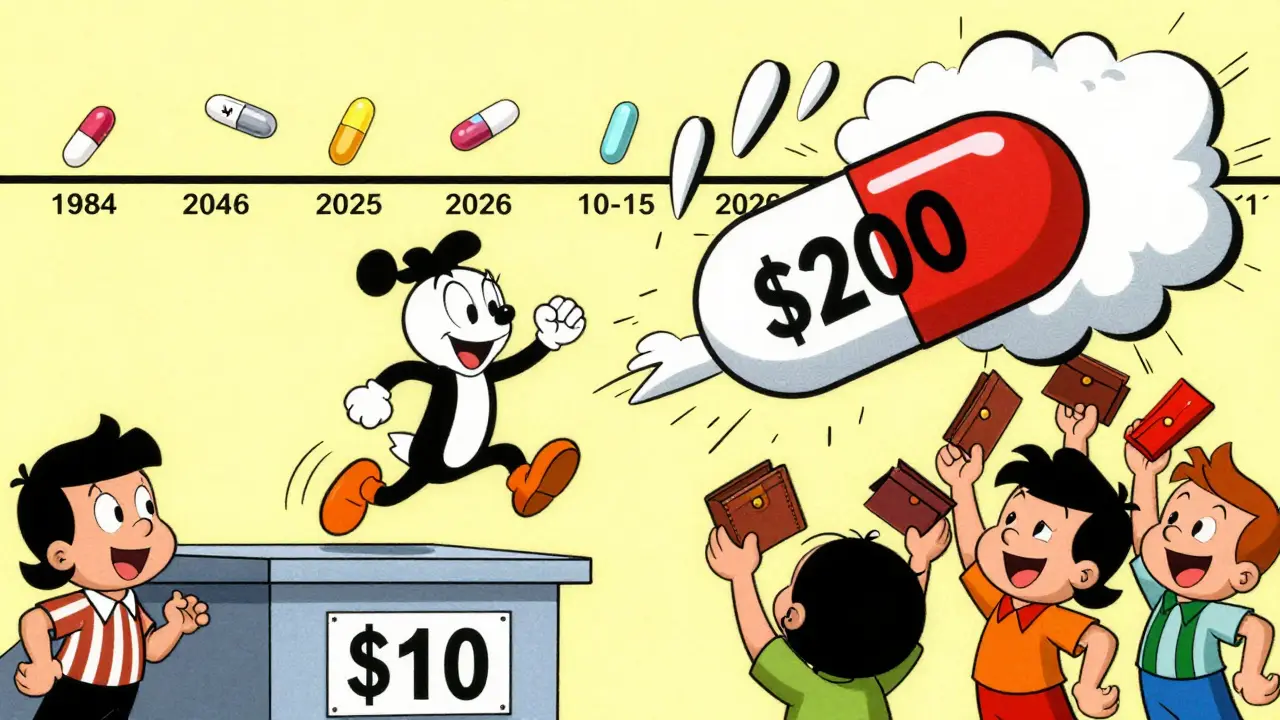
If you’ve ever bought a generic drug and paid less than $10 for a month’s supply, you’re seeing the result of Paragraph IV certifications in action. Without this legal tool, brand companies could hold onto monopolies for years-even when their patents are weak, obvious, or just plain lazy.
It’s not perfect. The system is expensive. It’s slow. And sometimes, big companies game it. But overall, it works. It keeps competition alive. It lowers prices. And it forces innovation to be real-not just paperwork.
As of 2026, over 90% of the top-selling branded drugs in the U.S. have faced at least one Paragraph IV challenge. That’s not luck. That’s design. And it’s still the most powerful tool we have to bring down drug prices before they hurt patients.
What happens if a generic company files a Paragraph IV certification but doesn’t get sued?
If the brand company doesn’t file a lawsuit within 45 days of receiving the notice, the FDA can approve the generic drug immediately. No 30-month stay kicks in. The generic can launch right away, and the patent holder loses the chance to block it through litigation. This is rare-over 90% of brand companies file suit-but it does happen, especially if the patent looks weak or the drug isn’t profitable enough to fight over.
Can a generic company lose its 180-day exclusivity?
Yes. There are several ways. The most common: failing to market the drug within 75 days of FDA approval, withdrawing the ANDA, or changing the Paragraph IV certification after submission. The 2003 Medicare Modernization Act added more rules to prevent abuse. Teva lost its exclusivity in 2017 because it didn’t get tentative approval within 30 months. That’s a costly mistake-once you lose it, you can’t get it back.
Do all patents listed in the Orange Book qualify for Paragraph IV challenges?
No. Only patents that claim the active ingredient, formulation, or method of use can be challenged under Paragraph IV. Patents for manufacturing processes, packaging, or unrelated uses don’t count. The FDA requires brand companies to list only patents that meet specific criteria. Since 2023, the Orange Book Modernization Act has made it harder to list weak or irrelevant patents, reducing the number of “patent thickets” used to delay generics.
How does the FDA know if a Paragraph IV certification is valid?
The FDA doesn’t judge the legal strength of the certification. It only checks that the application is complete and that the notice letter includes a detailed statement. The legal validity is decided entirely in court. The FDA’s role is administrative: it accepts the filing, sends the notice, and then waits to see if a lawsuit is filed. If no lawsuit comes, approval moves forward. If there is one, the 30-month stay begins.
Are Paragraph IV challenges only for pills?
No. While most challenges are for oral drugs, they’re increasingly common for complex products like inhalers, injectables, and topical creams. These are harder to copy, so patent disputes are more common. Between 2023 and 2028, challenges to these types of drugs are projected to grow by 78%. The same legal framework applies-just more technical science and more expensive litigation.
