
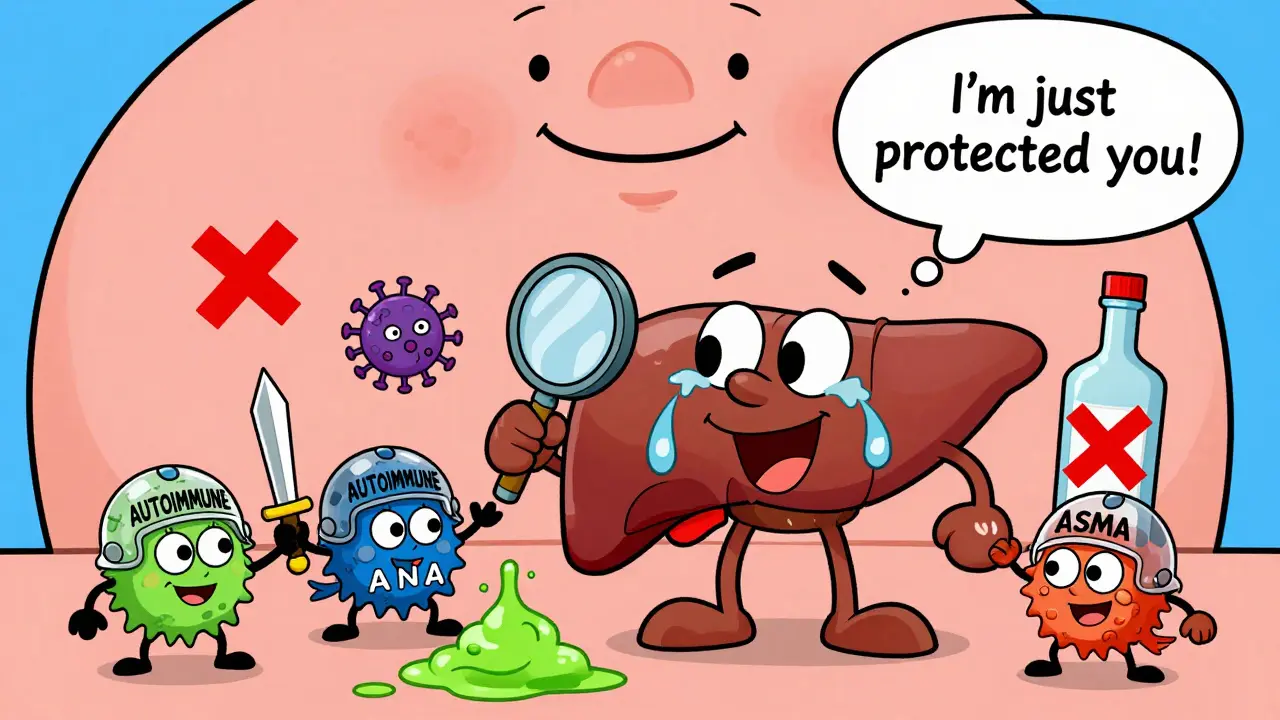
Autoimmune hepatitis isn't caused by a virus, alcohol, or fatty foods. It happens when your immune system - the very thing meant to protect you - turns on your liver. Instead of fighting off germs, it starts attacking healthy liver cells. This triggers inflammation, which, over time, can scar the liver and lead to cirrhosis or even liver failure. Unlike hepatitis B or C, this isn't something you catch. It’s an internal mistake. And if left untreated, it can be deadly.
How Autoimmune Hepatitis Works
Your liver does over 500 jobs - filtering toxins, making proteins, storing energy. When autoimmune hepatitis strikes, immune cells invade the liver, targeting hepatocytes (the main liver cells). This attack causes interface hepatitis - a telltale pattern where inflammation creeps between liver tissue and blood vessels. Over months or years, this leads to fibrosis, then cirrhosis. The damage isn’t always obvious. Some people feel fine for years. Others wake up with jaundice, extreme fatigue, or joint pain.
There are two main types. Type 1 is the most common, making up 80-90% of cases in North America and Europe. It often shows up in teens and young adults, and women are three times more likely to get it than men. Type 2 is rarer, mostly found in children aged 2 to 14. The difference isn’t just age - it’s the antibodies your body makes. Type 1 usually has antinuclear antibodies (ANA) or anti-smooth muscle antibodies (ASMA). Type 2 shows anti-LKM-1 or anti-LC-1 antibodies. These aren’t just lab curiosities. They’re diagnostic clues.
Diagnosing the Invisible Enemy
There’s no single test for autoimmune hepatitis. Doctors piece it together like a puzzle. First, blood tests. Elevated ALT and AST - liver enzymes - are often 5 to 10 times higher than normal. IgG levels, a type of antibody, are usually over 1.5 times the upper limit. Bilirubin rises if the liver is struggling. Then come antibody tests: ANA, ASMA, LKM-1. If those match the pattern, the odds climb.
A liver biopsy is the gold standard. It shows the signature damage: lymphoplasmacytic infiltrates, rosette formation, and piecemeal necrosis. These aren’t random. They’re the fingerprints of an immune attack. The Revised International AIH Group Scoring System, updated in 2022, combines these factors into a reliable diagnostic tool. With experienced hepatologists, it’s 92% sensitive and 97% specific. That’s nearly perfect.
But here’s the catch: it’s easy to miss. About 15-20% of cases are mistaken for drug-induced liver injury (DILI). A patient takes a new medication, liver enzymes spike, and doctors assume it’s the pill. But if you stop the drug and the enzymes don’t drop, autoimmune hepatitis is likely hiding in plain sight.
Treatment: Suppressing the Self-Attack
The goal isn’t to cure - it’s to stop the attack. The standard treatment is a one-two punch: prednisone and azathioprine. Prednisone, a corticosteroid, quickly calms the immune system. Azathioprine, an immunosuppressant, helps maintain control. Together, they work in 65-80% of patients.
Typical dosing starts with prednisone at 0.5 to 1 mg per kg of body weight (up to 60 mg daily) and azathioprine at 50 mg daily. After 2-4 weeks, liver enzymes begin to fall. By 3 to 6 months, most patients see major improvement. The prednisone dose is then slowly lowered over 6 to 12 months. Azathioprine continues, often for life.
Remission means liver enzymes and IgG levels stay normal for at least two years. About 60-65% of patients reach this within 18 to 24 months. But 25% need low-dose maintenance forever. And 10%? They don’t respond. Even with the best treatment, their disease keeps creeping forward. For them, liver transplant becomes the only option.
The Hidden Costs of Treatment
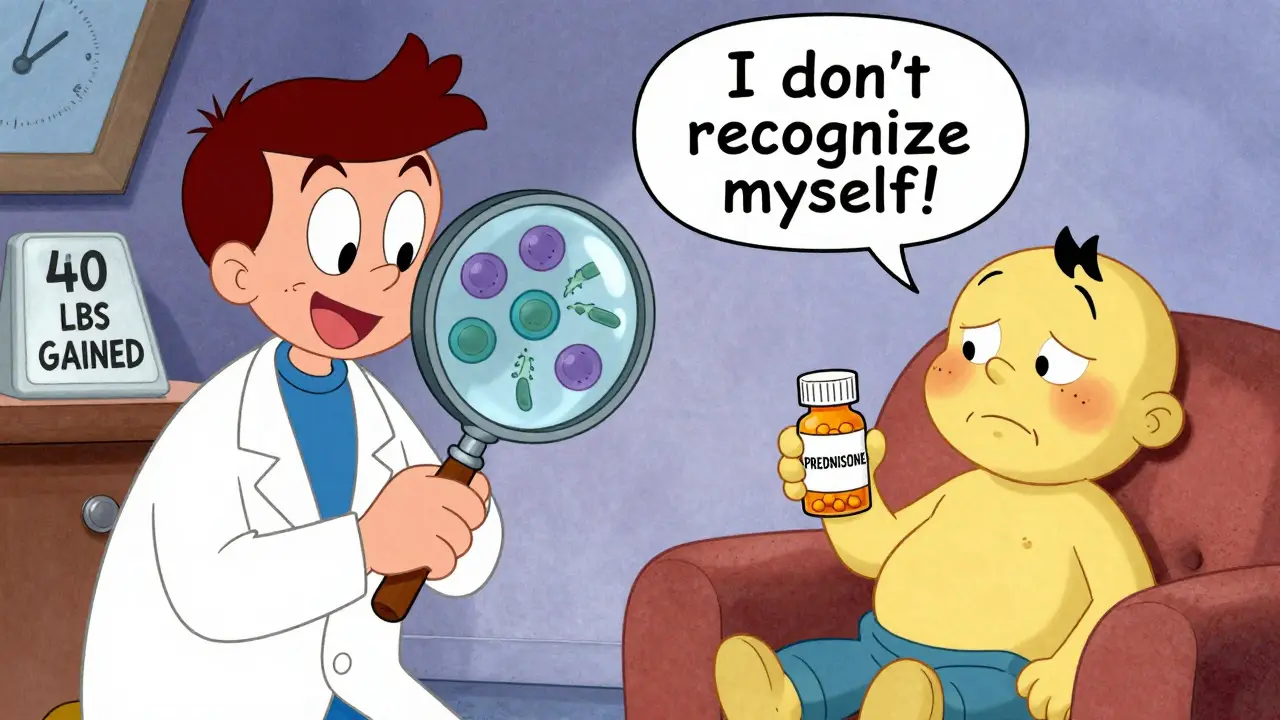
Prednisone isn’t harmless. Weight gain, insomnia, mood swings, bone thinning, diabetes, cataracts - these aren’t side effects. They’re expected. One patient on Reddit said, “I gained 40 pounds in six months. I didn’t recognize myself.” Another wrote, “I couldn’t sleep. I cried for no reason. I felt like I was losing my mind.”
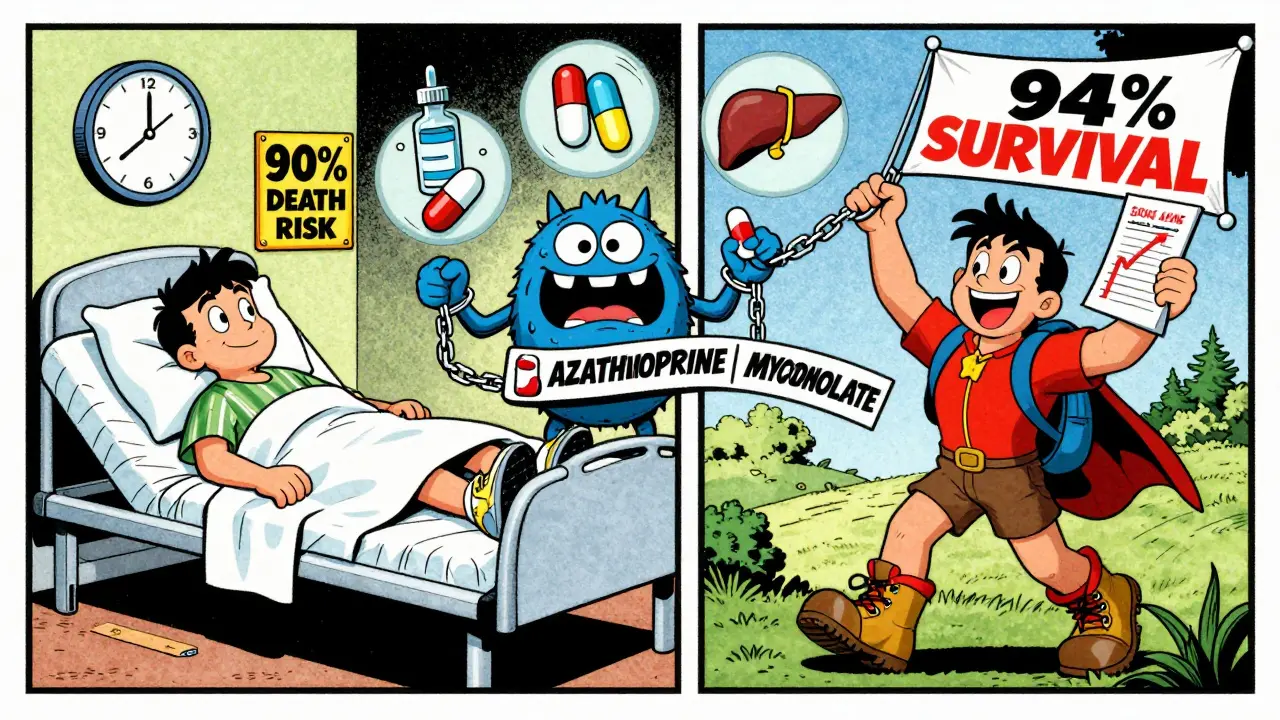
Azathioprine brings its own risks: nausea, low white blood cell counts, and a small chance of liver toxicity. About 22% of patients stop taking it because of side effects. That’s why alternatives exist. Mycophenolate mofetil works for 70-80% of those who can’t tolerate azathioprine. It’s not FDA-approved for AIH, but it’s widely used off-label with solid results.
Long-term immunosuppression means higher infection risk. Patients need vaccines - flu, pneumonia, shingles - before starting treatment. They must avoid raw meat, unpasteurized dairy, and sick people. Bone health matters too. Calcium and vitamin D supplements are standard. Some doctors recommend bisphosphonates if bone density drops.
What Happens Without Treatment
The numbers are terrifying. Without treatment, 90% of people with autoimmune hepatitis die within 10 years. With treatment? Survival jumps to 94%. That’s not a small difference. It’s the difference between a death sentence and a normal lifespan.
But even with treatment, outcomes vary. Patients who reach remission within 2 years have an 89% chance of surviving 10 years without a transplant. Those who take longer? Only 40%. Early diagnosis saves lives. That’s why routine blood work matters. A routine checkup might catch rising liver enzymes before symptoms appear.
Emerging Hope: What’s Next?
There’s no new FDA-approved drug for AIH since 2002. But the pipeline is active. Obeticholic acid, originally for PBC, got orphan drug status in Europe in 2022. In trials, it helped 45% of AIH patients achieve remission in 24 weeks - nearly double the placebo rate.
Biologics are coming. Rituximab, which targets B-cells, is in phase 3 trials. Vedolizumab, which blocks immune cells from entering the liver, is in phase 2. These aren’t guesses. They’re science. And they’re focused on the root problem: the immune system’s betrayal.
Future treatment might be personalized. Genetic markers like HLA-DRB1*03:01 and *04:01 are linked to disease severity and treatment response. In five to seven years, doctors may use these to pick the right drug for the right patient - reducing side effects and boosting success rates to 85-90%.
Living With Autoimmune Hepatitis
Patients don’t just need doctors. They need support. A 2022 survey of over 1,000 AIH patients found 71% worried constantly about liver damage. 54% struggled at work because of fatigue. 78% said tiredness was their worst symptom. It’s not just physical. It’s emotional.
One woman, Sarah K., shared her story on CaringBridge: “My ALT was 480. After six weeks on prednisone and azathioprine, it dropped to 32. I got my life back.” That’s the dream. But for Michael T., who wrote a Healthgrades review, it was a nightmare: “I’ve had seven infections in seven years. I feel like a prisoner to medication.”
Managing AIH isn’t about a cure. It’s about control. Regular blood tests. Medication discipline. Lifestyle adjustments. And hope - because with proper care, most people live full, long lives.
Is autoimmune hepatitis the same as viral hepatitis?
No. Viral hepatitis (like hepatitis B or C) is caused by an infection. Autoimmune hepatitis is caused by your immune system attacking your liver. Treatment is completely different: antivirals for viral hepatitis, immunosuppressants for autoimmune hepatitis. Mixing them up can be dangerous.
Can autoimmune hepatitis be cured?
There’s no cure yet. But with treatment, most patients achieve remission - meaning the immune attack stops, liver damage halts, and function returns to normal. Many live normal lifespans. Still, most need to stay on low-dose medication for life to prevent relapse.
Why are women more likely to get autoimmune hepatitis?
The exact reason isn’t known, but hormones likely play a role. Autoimmune diseases - like lupus, rheumatoid arthritis, and AIH - are far more common in women. Estrogen may influence immune cell behavior, making the body more prone to self-attack. The female-to-male ratio is 3.6:1 for Type 1 and 8:1 for Type 2.
How often do I need blood tests during treatment?
During the first few months, tests are done every 2 to 4 weeks to track liver enzymes and blood counts. Once stable, every 3 months is standard. Monitoring IgG levels is critical - they’re a better indicator of disease activity than enzymes alone. Skipping tests risks missing a flare before symptoms appear.
Can I drink alcohol if I have autoimmune hepatitis?
No. Alcohol adds direct stress to an already damaged liver. Even small amounts can speed up scarring and increase the risk of cirrhosis. Abstinence is required. This isn’t a suggestion - it’s a medical necessity.
What happens if I stop taking my medication?
Stopping medication almost always leads to relapse. In studies, over 80% of patients who quit treatment saw liver enzymes spike again within months. Relapses can be more severe than the original attack. Never stop without your doctor’s guidance - even if you feel fine.
Is liver transplant the only option for treatment failure?
For the 10% of patients who don’t respond to medication, transplant is the only proven life-saving option. AIH is the fourth leading reason for adult liver transplants in the U.S., accounting for 6.2% of all transplants. Post-transplant survival rates are high - over 85% at five years. But it’s major surgery with lifelong risks.
Can autoimmune hepatitis come back after a liver transplant?
Yes. In 15-20% of transplant patients, autoimmune hepatitis recurs in the new liver. That’s why immunosuppressants continue after transplant - not just to prevent rejection, but to keep the immune system from attacking the new organ. Close monitoring is essential.
