
Drug-Induced Kidney Risk Assessment Tool
This tool estimates your risk of drug-induced kidney injury based on key factors identified in the article. It's not a medical diagnosis but helps identify potential risks that should be discussed with your doctor.
Personal Risk Assessment
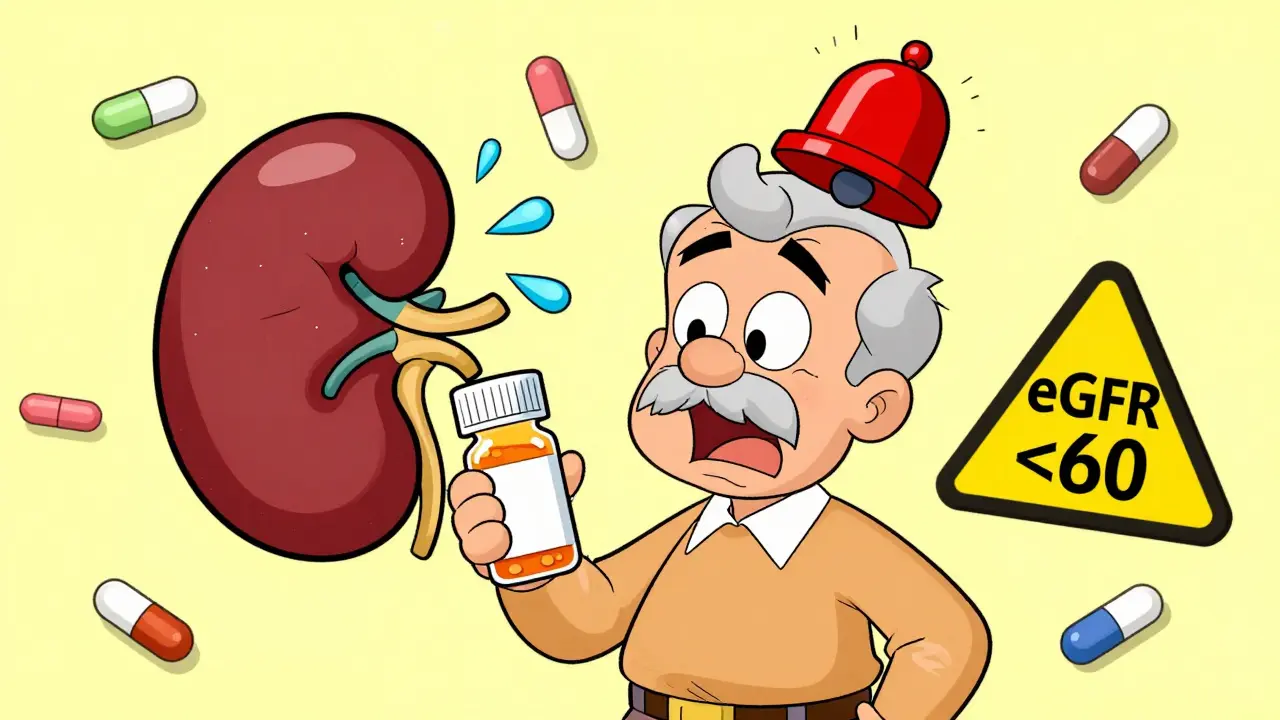
Every year, tens of thousands of people end up in the hospital with sudden kidney failure-not from diabetes, not from high blood pressure, but from a medication they were told was safe. It’s not rare. It’s not mysterious. And most of the time, it’s completely preventable. This isn’t about rare side effects. This is about common drugs-ibuprofen, antibiotics, contrast dyes-hitting kidneys that are already stressed, and pushing them over the edge. If you’re over 60, have diabetes, or take more than five medications daily, you’re at higher risk. And if no one checked your kidney function before you started taking them, you’re flying blind.
What Exactly Is Drug-Induced Kidney Failure?
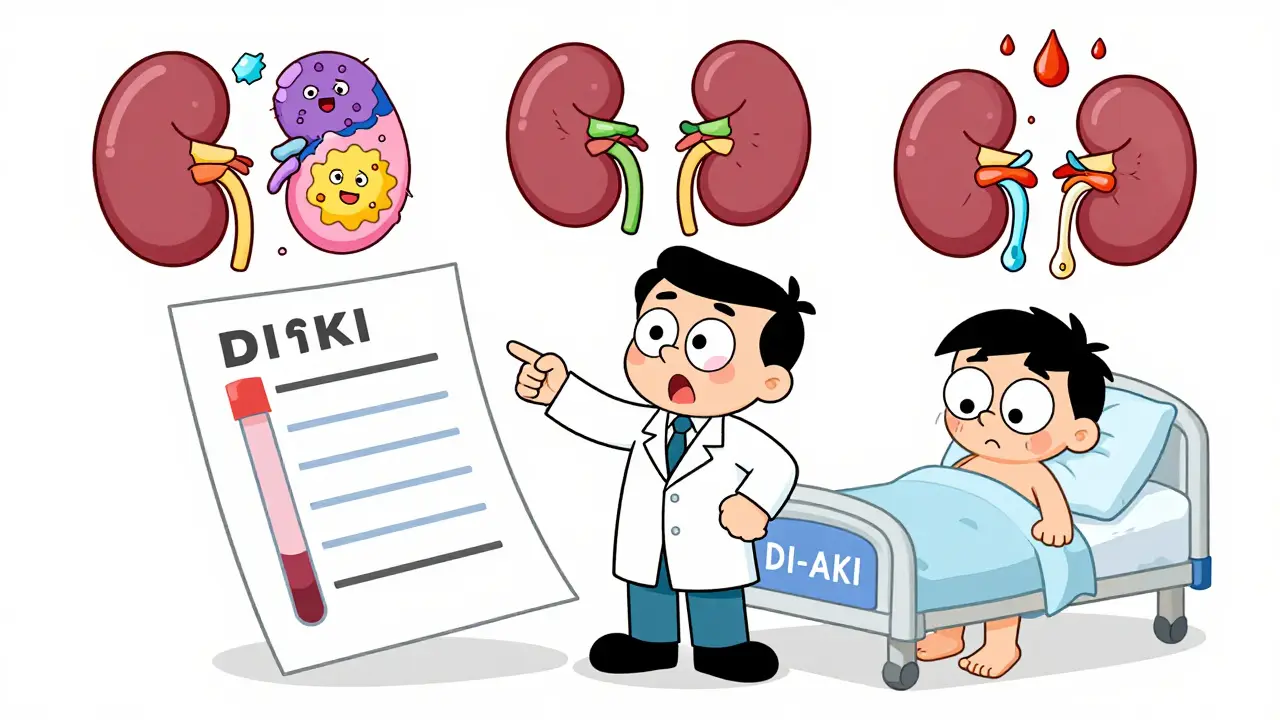
Doctors call it drug-induced acute kidney injury (DI-AKI). It’s not a slow decline. It’s a sudden drop in kidney function-sometimes within hours, always within days-after taking a medication. Your kidneys filter waste, balance fluids, and regulate blood pressure. When they’re damaged by a drug, they stop working fast. That’s when creatinine levels rise, urine output drops, and your body starts drowning in its own toxins.
According to the latest KDIGO guidelines (2024), AKI is diagnosed if your creatinine jumps by 0.3 mg/dL or more in 48 hours, or if you produce less than 0.5 mL of urine per kilogram of body weight over six hours. In simple terms: your blood test shows your kidneys aren’t cleaning your blood like they should. And in 20% of hospitalized patients, that’s because of a drug.
Three main ways drugs hurt the kidneys:
- Acute interstitial nephritis: Your immune system reacts to the drug, causing swelling in the kidney tissue. Common culprits: proton pump inhibitors (like omeprazole), penicillin, NSAIDs.
- Acute tubular necrosis: The kidney’s filtering tubes get poisoned. Think vancomycin, aminoglycosides, or contrast dye used in CT scans.
- Crystal-induced nephropathy: The drug forms crystals in your urine that block the tubules. Acyclovir, sulfonamides (like Bactrim), and some HIV drugs do this. It’s especially dangerous if you’re dehydrated.
Who’s Most at Risk?
You might think only the elderly are at risk. But it’s more nuanced. The real danger zone is anyone with pre-existing kidney stress. That means:
- eGFR below 60 mL/min/1.73m² (that’s Stage 2 or worse chronic kidney disease)
- Diabetes or high blood pressure
- Heart failure or liver disease
- Taking five or more medications daily (polypharmacy)
- Recently dehydrated or on diuretics
Here’s what the data shows: NSAIDs like ibuprofen or naproxen cause 3-5% of all AKI cases. In older adults with existing kidney issues, that risk jumps to 15-20%. A 2023 study of 2.1 million patients found that 15-20% of people with severe AKI died. Many of those deaths were tied to drugs that should never have been given in the first place.
One patient story from the American Kidney Fund says it all: JohnD_72 took ibuprofen for 10 days after dental surgery. He had Stage 3 CKD. His creatinine went from 1.8 to 4.2 in three days. He spent a week in the hospital. His doctor didn’t connect the dots until it was too late.
Red Flags You Can’t Ignore
DI-AKI doesn’t always scream for attention. But there are signs-if you know where to look.
- Sudden drop in urine output: Going from 1.5 liters a day to under 500 mL? That’s a red flag.
- Unexplained swelling: Ankles, legs, or face puffing up without reason.
- Fever, rash, or joint pain: Especially if they show up 7-14 days after starting a new drug. This points to interstitial nephritis.
- Unexplained fatigue or nausea: Often dismissed as ‘just aging’ or ‘flu,’ but could be toxin buildup.
- Abnormal blood test: Creatinine rising fast, potassium climbing, bicarbonate dropping.
And here’s the kicker: in 38% of AKI cases, doctors kept giving the nephrotoxic drug even after kidney damage was clear. That’s not negligence-it’s ignorance. And it’s fixable.
How to Prevent It Before It Happens
Here’s the good news: 60-70% of drug-induced kidney injuries are preventable. You don’t need fancy tech. You need three simple steps.
1. Check Your Kidney Function Before Starting High-Risk Drugs
Before you take NSAIDs, antibiotics, contrast dye, or any new medication, ask: What’s my eGFR? The MDRD or Cockcroft-Gault formulas give you a number. If it’s below 60, you’re in the danger zone. Many hospitals skip this step. Don’t let them. If you’re seeing a specialist, ask for your last creatinine result. If you don’t have one, get one.
2. Avoid NSAIDs If You Have Kidney Issues
NSAIDs are the #1 preventable cause. They block blood flow to the kidneys. For someone with CKD, that’s like turning off the water to a clogged pipe. The American Society of Nephrology says avoiding NSAIDs in patients with eGFR <60 reduces AKI risk by 47%. Swap ibuprofen for acetaminophen. It’s just as good for pain, and it doesn’t hurt your kidneys.
Case in point: MaryK_65 switched from naproxen to acetaminophen after her eGFR dropped to 52. Her kidney function stabilized in two weeks.
3. Stay Hydrated-But Not Always with Bicarbonate
If you’re getting contrast dye for a CT scan, hydration matters. But not all fluids are equal. Normal saline (0.9% sodium chloride) is the gold standard. Sodium bicarbonate? Studies show it doesn’t help. N-acetylcysteine? Doesn’t work. The best protection is drinking water or getting IV saline before and after the scan.
For high-risk patients (Mehran score ≥16), guidelines say give 1.0-1.5 mL/kg/hour of saline for 6-12 hours before and after the procedure. That’s not optional. That’s standard care.
What to Do If You’re Already on a Risky Drug
Maybe you’re on a medication that’s known to harm kidneys, and you’ve been taking it for months. Don’t panic. But don’t ignore it either.
- Check your eGFR-if it’s dropped by more than 25% in 3 months, talk to your doctor.
- Review all your meds. Are you on three different painkillers? A diuretic? An antibiotic? That’s a recipe for trouble.
- Ask about alternatives. Is there a safer antibiotic? A different blood pressure pill? A non-NSAID for arthritis?
- Get your urine tested. If you’re on sulfonamides (like Bactrim), ask if your urine pH is above 7.1. If not, you’re at risk for crystals.
For drugs like acyclovir or protease inhibitors, stopping them early can reverse damage. Waiting too long? That’s when fibrosis sets in-and then it’s permanent.
The New Tools That Are Making a Difference
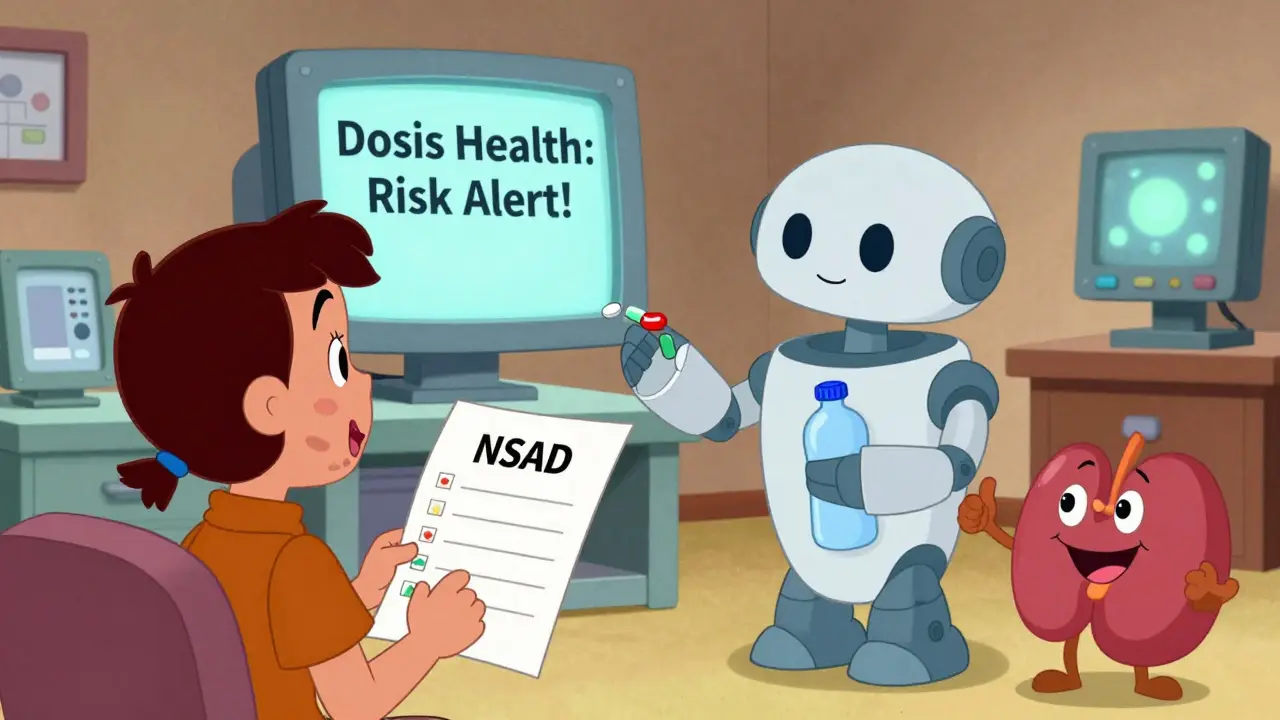
Hospitals are finally catching up. Electronic health records now come with built-in alerts that flag when a doctor tries to prescribe a nephrotoxic drug to someone with low eGFR. In one study of 286,000 patients, these alerts cut inappropriate dosing by 63%.
And now, AI is stepping in. In 2024, the FDA approved the first AI system-Dosis Health-designed specifically to predict and prevent drug-induced kidney injury. In a trial of over 15,000 patients, it reduced DI-AKI by 41%. It doesn’t replace doctors. It just gives them a nudge: “This patient’s creatinine rose last week. This drug is risky. Consider alternatives.”
These aren’t futuristic ideas. They’re being used now-in academic hospitals, VA centers, and some large community clinics. But they’re still rare in small practices. That’s why you need to be your own advocate.
Your Action Plan: 5 Steps to Protect Your Kidneys
You don’t need a degree in medicine to keep your kidneys safe. Here’s what to do:
- Know your eGFR. Get it checked at least once a year if you’re over 50, or if you have diabetes, high blood pressure, or heart disease.
- Never take NSAIDs without checking your kidney function. If your eGFR is below 60, use acetaminophen instead.
- Ask about every new prescription: “Is this safe for my kidneys?”
- Hydrate before and after contrast scans. Drink water. Get saline if you’re high-risk.
- Review all your meds every 6 months. Bring a list to your doctor. Cut the ones you don’t need. Ask about alternatives.
This isn’t about fear. It’s about awareness. Kidneys don’t scream until it’s too late. But if you pay attention, you can stop the damage before it starts.
Can over-the-counter painkillers really cause kidney failure?
Yes. NSAIDs like ibuprofen, naproxen, and aspirin are among the most common causes of drug-induced kidney injury. They reduce blood flow to the kidneys. In healthy people, that’s usually harmless. But if you have diabetes, high blood pressure, or already reduced kidney function (eGFR below 60), even short-term use can trigger acute kidney injury. A single week of daily ibuprofen has been linked to creatinine spikes in elderly patients with chronic kidney disease.
How do I know if a medication is nephrotoxic?
Common nephrotoxic drugs include NSAIDs, certain antibiotics (vancomycin, aminoglycosides), contrast dye, proton pump inhibitors (omeprazole), diuretics, and some HIV or chemotherapy drugs. The FDA requires black box warnings for many of these. Always ask your pharmacist or doctor: “Is this drug hard on the kidneys?” You can also check the prescribing information online-look for sections labeled “Renal Impairment” or “Warnings.”
If my creatinine is high, should I stop all my medications?
No. Stopping all medications can be dangerous. The goal is to identify which drugs are likely causing the problem and replace or adjust them. For example, if you’re on an NSAID and your creatinine rose, stopping it often leads to recovery. But if you’re on a blood pressure medication like an ACE inhibitor, your doctor might lower the dose instead of stopping it entirely. Always consult your doctor before making changes.
Can kidney damage from drugs be reversed?
Often, yes-if caught early. Many cases of drug-induced kidney injury improve within days to weeks after stopping the offending drug. Crystal-induced injury (like from sulfonamides) can fully reverse with hydration and urine alkalinization. Interstitial nephritis often responds to stopping the drug and sometimes corticosteroids. But if damage lasts more than a few weeks, scarring (fibrosis) can set in, leading to permanent loss of function. Early action is everything.
Is it safe to take herbal supplements if I have kidney problems?
Many herbal supplements are nephrotoxic and often overlooked. Aristolochic acid (in some Chinese herbs), licorice root, and high-dose vitamin C can all harm kidneys. St. John’s wort can interfere with kidney-cleared medications. There’s no regulation, so safety isn’t guaranteed. Always tell your doctor about every supplement you take-even “natural” ones.


Samyak Shertok
Oh wow, so now we’re blaming the drugs instead of the fact that humans are walking biological glitches? 🤦♂️ I take ibuprofen like it’s candy and my kidneys are probably just vibing in a spa. Maybe the real issue is that we think our bodies are invincible until they’re not. Then we write 2000-word essays on it. Classic.