
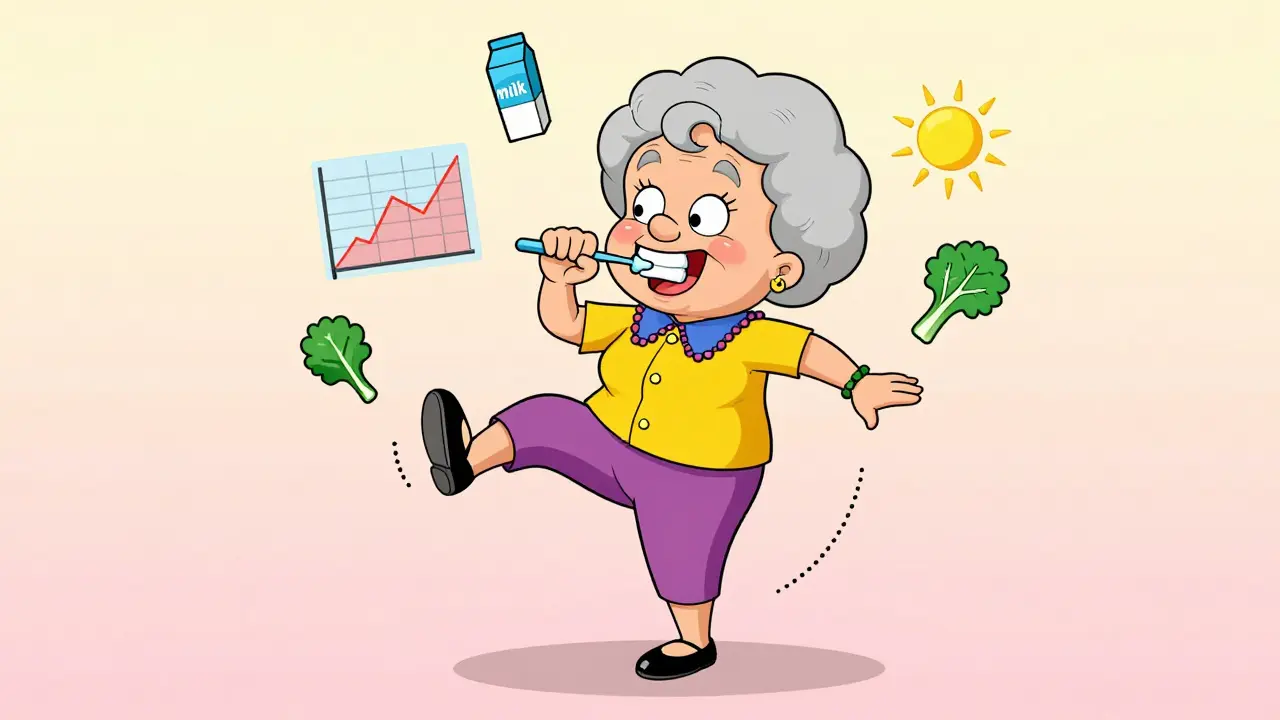
One in three women over 50 will break a bone because of weak bones. One in five men will too. And most of them didn’t see it coming. Osteoporosis doesn’t hurt until it’s too late - a fall, a stumble, even a sneeze can snap a rib or crush a spine. By the time you feel pain, the damage is done. But here’s the truth: you don’t have to wait for that moment. Bone density loss isn’t inevitable. Fractures aren’t fate. What you do now - today, this week, this year - can change your future.
Why Your Bones Are Weakening (And Why It’s Not Just About Age)
Your bones aren’t just static structures. They’re alive, constantly being broken down and rebuilt. Until about age 30, your body builds bone faster than it breaks it down. That’s when you hit peak bone mass. After that, it’s a slow drift downward - about 0.5% a year. But for women after menopause, that pace jumps to 2-3% a year for the first five years. Why? Estrogen drops. And estrogen is the brake that keeps bone loss in check.
It’s not just women. Men lose bone too, but slower. And it’s not just about getting older. If you had low bone mass as a teen, or didn’t get enough calcium or vitamin D growing up, your foundation was weak from the start. Studies show up to 80% of your lifetime bone health is set by age 30. That means what you did in your 20s matters now.
And then there’s the hidden stuff - medications like long-term steroids, conditions like rheumatoid arthritis or type 1 diabetes, even smoking or heavy drinking. These don’t just age you faster. They actively wreck your bone-building machinery.
The Real Risk Factors You Can’t Ignore
Some risks you can’t change. You can’t undo your gender, your genes, or your age. But you can understand them - and act smarter because of them.
- Age: After 65, your risk of breaking a bone jumps 4 times compared to someone under 50.
- Gender: Women are 4 times more likely than men to develop osteoporosis. Why? Lower peak bone mass and the estrogen drop.
- Family history: If a parent broke a hip, your risk goes up by 60-80%.
- Early menopause: Going through menopause before 45? Your risk doubles.
- Race: White and Asian women have higher risk than Black or Hispanic women.
But here’s the part people miss: a single fracture is the biggest warning sign. If you’ve already broken a bone from a minor fall - a wrist, a hip, a spine - your chance of breaking another one skyrockets. By 86% for a spine fracture. By 200% for a hip. Bone density scans don’t always catch this. But your history does.
What You’re Probably Doing Wrong (And How to Fix It)
Most people think osteoporosis prevention means popping calcium pills. It’s not that simple.
Calcium isn’t enough. You need 1,000-1,200 mg a day. But taking 1,200 mg all at once? Your body can only absorb about 500-600 mg at a time. Split it. Take 500 mg with breakfast, another 500 mg with dinner. And don’t take it with coffee or tea - they block absorption.
Vitamin D is the missing link. If your blood level is below 20 ng/mL (which affects 42% of adults), your fracture risk jumps 33%. You need 800-1,000 IU daily. If you’re deficient, you might need 2,000 IU for a few months to catch up. Sunlight helps, but in Perth, even in summer, many people still fall short. Testing your levels is the only way to know for sure.
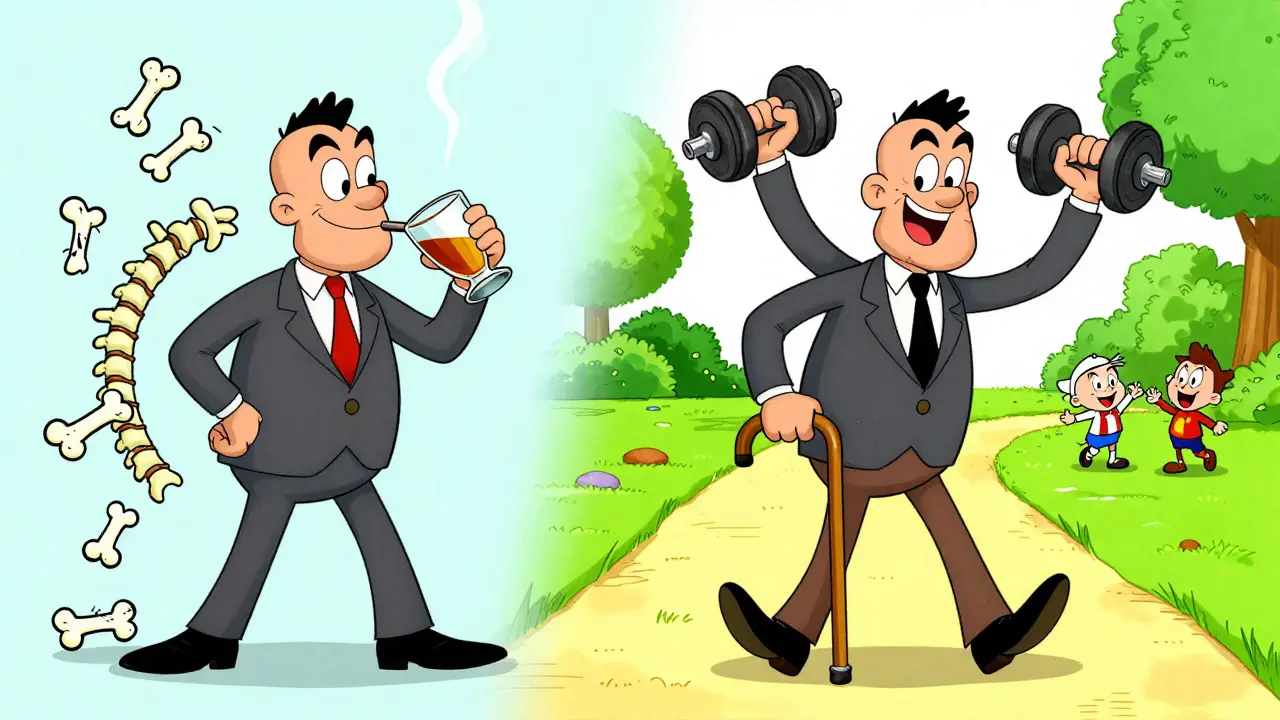
Smoking and alcohol? Smoking cuts calcium absorption and lowers estrogen. One pack a day? Your fracture risk goes up 55%. More than two drinks a day? Hip fracture risk jumps 41%. Cutting back isn’t just good for your liver - it’s critical for your skeleton.
And sedentary life? That’s a silent killer. If you sit most of the day, your bones get the message: ‘We don’t need to be strong.’ Weight-bearing exercise tells them the opposite. Walking, dancing, stair climbing, lifting weights - these aren’t just for fitness. They’re bone medicine.
The Only Exercise That Actually Builds Bone
Not all exercise is equal when it comes to bones. Swimming is great for your heart, but it won’t help your spine. Cycling? Same thing.
You need impact. You need resistance.
- Weight-bearing: Brisk walking, hiking, stair climbing, dancing. Aim for 30-45 minutes, 5 days a week.
- Resistance training: Lifting weights, using resistance bands, bodyweight exercises like squats and push-ups. Do this 2 days a week. Start light. Focus on form. Progress slowly.
Studies show people who stick with this for 6-12 months see measurable bone density gains. Even better - they fall less. Balance training (standing on one foot, heel-to-toe walks) cuts fall risk by 45%. That’s not just about strength. It’s about your brain telling your body where it is in space.
And if you’re nervous about falling? Join a class. Tai chi, yoga for seniors, or a supervised bone health program. You don’t have to do it alone.
When You Need a Bone Scan - And What the Numbers Really Mean
DXA scans are the gold standard. They’re quick - 15-20 minutes. Radiation? Less than a day of natural background exposure. And they’re covered by Medicare for women over 65 and high-risk men and women over 50.
The result? A T-score.
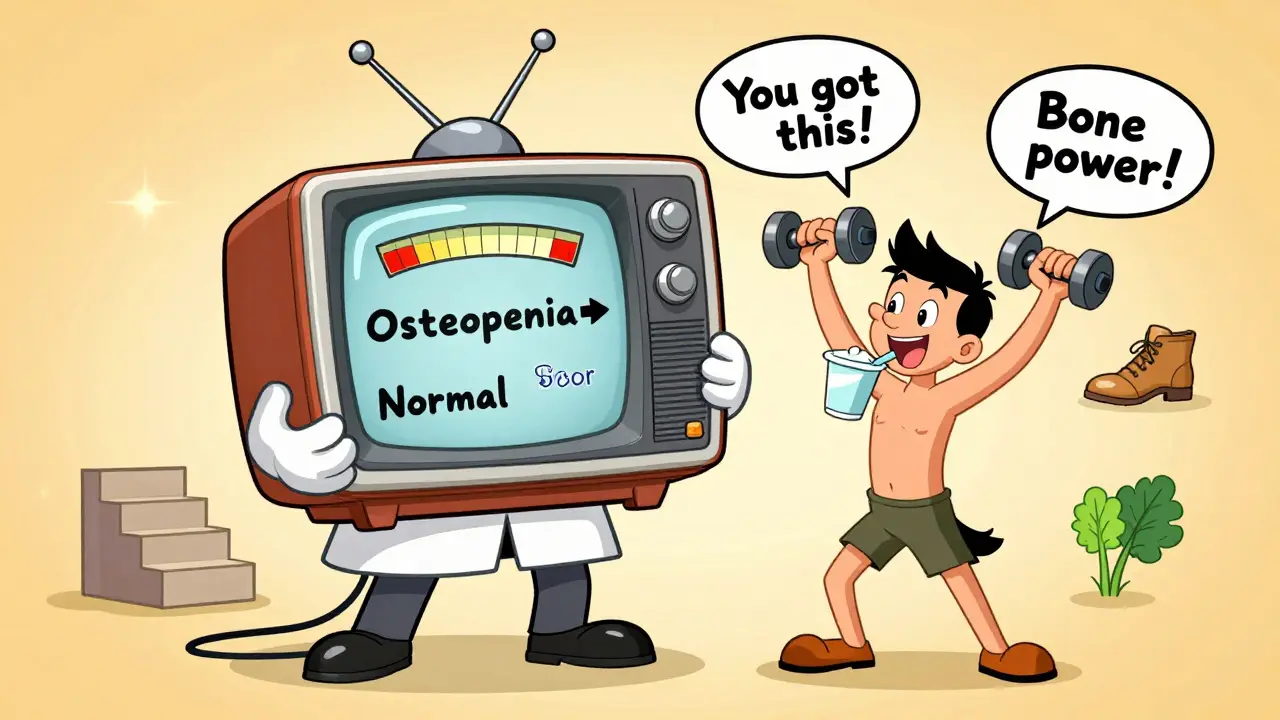
- Normal: -1.0 or higher
- Osteopenia: Between -1.0 and -2.5 - low bone mass, but not osteoporosis yet
- Osteoporosis: -2.5 or lower
But here’s the catch: 50% of people who break bones have T-scores in the osteopenia range. That’s why doctors now use FRAX - a tool that calculates your 10-year fracture risk using your age, sex, weight, history of fractures, steroid use, smoking, alcohol, and more. It doesn’t just look at density. It looks at your life.
If your FRAX score says you have a 20% or higher chance of a major fracture in 10 years, treatment is usually recommended - even if your T-score is only osteopenia.
Medications: When They Help - And When They Don’t
Not everyone needs pills. But if you’ve had a fracture, or your FRAX score is high, or you’re on long-term steroids, medication can be life-changing.
Bisphosphonates (like alendronate or risedronate) are common. They slow bone loss. But 38% of people stop taking them within a year because of stomach upset or jaw pain. If that’s you, talk to your doctor. There are other options - monthly pills, yearly infusions, or newer drugs like romosozumab that actually build new bone.
And yes, there are risks. Rarely, these drugs can cause jawbone problems or atypical thigh fractures. But the risk of breaking a hip or spine without treatment is far higher. Talk to your doctor about your personal risk - not just the numbers on a screen.
What You Can Do Right Now
You don’t need a diagnosis to start protecting your bones. Here’s your 7-day action plan:
- Day 1: Drink a glass of milk or eat a cup of yogurt with breakfast. Add a serving of leafy greens like kale or bok choy to lunch.
- Day 2: Take a 20-minute walk after dinner. No phone. Just your feet on the ground.
- Day 3: Call your doctor. Ask: ‘Should I get a bone density scan?’ Especially if you’re over 50 and have risk factors.
- Day 4: Check your vitamin D supplement. If you’re not taking one, start 1,000 IU daily. If you are, check the label - make sure it’s D3.
- Day 5: Remove one tripping hazard from your home - a loose rug, a cord across the floor, dim lighting in the hallway.
- Day 6: Do two minutes of balance exercises: stand on one foot while brushing your teeth. Switch sides.
- Day 7: Tell someone - your partner, a friend - what you’re doing. Accountability works.
This isn’t about perfection. It’s about progress. One step. One change. One day at a time.
It’s Not Too Late - But It Might Be Soon
Some people think, ‘I’m 70. What’s the point?’ But here’s what the data says: even at 70, starting weight-bearing exercise and getting enough calcium and vitamin D can reduce fracture risk by 30%. You don’t need perfect bones. You just need strong enough bones to keep standing - to keep walking, gardening, playing with your grandkids, living your life.
Osteoporosis isn’t a death sentence. It’s a wake-up call. And the best time to act was 20 years ago. The second best time? Today.
Can you reverse osteoporosis without medication?
You can’t fully reverse advanced osteoporosis without drugs, but you can stop it from getting worse - and even build back some density. Weight-bearing exercise, enough calcium and vitamin D, quitting smoking, and limiting alcohol can improve bone strength. Studies show people with osteopenia can regain up to 1-2% bone density per year with consistent lifestyle changes. For those with osteoporosis, these steps reduce fracture risk by 30-40%, even without medication.
Do I need a bone density scan if I’m under 65?
Yes - if you have risk factors. Even if you’re under 65, you should get tested if you’ve had a fracture from a minor fall, take steroids long-term, have rheumatoid arthritis, early menopause, a family history of hip fracture, or are very thin (BMI under 19). The USPSTF recommends testing for women over 65 and men over 70, but high-risk individuals should be screened earlier.
Is dairy the only good source of calcium?
No. While milk, yogurt, and cheese are rich in calcium, you can get enough from other sources: canned salmon with bones (180 mg per 3 oz), sardines, fortified plant milks (check labels), tofu made with calcium sulfate, kale, bok choy, broccoli, almonds, and tahini. One cup of cooked collard greens has more calcium than a glass of milk. The key is variety and consistency.
Can vitamin D supplements cause harm?
At recommended doses (800-2,000 IU daily), vitamin D is very safe. Toxicity is rare and usually only happens with doses over 10,000 IU daily for months. High doses can raise calcium levels in the blood, which may cause kidney stones or heart issues - but this is extremely uncommon with standard supplements. Always get your blood level checked if you’re taking high doses long-term.
What’s the best exercise for someone with osteoporosis?
The safest and most effective exercises are low-impact weight-bearing and resistance training: walking, using an elliptical machine, stair climbing, resistance bands, light dumbbells, and bodyweight moves like seated marches or wall push-ups. Avoid high-impact activities like jumping or running if you have severe osteoporosis. Always avoid forward bending and twisting motions - like toe touches or sit-ups - as they can fracture the spine. A physical therapist trained in bone health can design a safe program for you.
How long does it take to see results from bone-building habits?
Bone changes slowly. You won’t feel stronger overnight. But after 6 months of consistent exercise and proper nutrition, your body starts rebuilding. Bone density scans can show small gains after 12 months. The real win? You’ll feel more stable on your feet, less afraid to move, and more confident. Fall risk drops within months - even before bone density improves.
Are there foods that hurt bone health?
Yes. Too much salt pulls calcium out of your bones - aim for under 2,300 mg a day. Excess caffeine (more than 3 cups of coffee a day) may interfere with calcium absorption. Soda, especially colas, contains phosphoric acid and often replaces calcium-rich drinks. Alcohol, especially more than two drinks a day, directly harms bone-forming cells. And very low-calorie diets (under 1,200 calories) can trigger bone loss, even if you’re eating ‘healthy’ foods.
Can osteoporosis affect younger people?
Yes. While it’s rare, younger adults can develop osteoporosis due to medical conditions like celiac disease, Crohn’s, or eating disorders. Long-term steroid use, cancer treatments, or hormonal imbalances can also cause early bone loss. If you’re under 50 and have broken a bone from a minor fall, or have a history of these conditions, ask your doctor about a bone scan. Early detection is critical.


Glen Arreglo
Just finished reading this and honestly? I wish my doctor had told me this five years ago. I started taking vitamin D and doing bodyweight squats after my wrist fracture, and my last scan showed a 1.2% increase. Not magic, but real. Also, ditched the soda and started drinking milk with breakfast. Small stuff adds up.
And yes, walking without your phone? Game changer. You notice the uneven pavement. You feel your feet. Your body remembers how to balance.