
Why Medication Safety Matters More Than Ever
If you’re managing a chronic condition like diabetes, high blood pressure, or arthritis, you’re probably on more than one medication. Maybe even five or six. That’s not unusual - but it’s also not harmless. Every extra pill you take increases your risk of side effects, dangerous interactions, and mistakes. The medication safety of long-term use isn’t just about remembering to take your pills. It’s about staying in control, knowing what each drug does, and making sure nothing’s working against you.
According to the CDC, nearly 125,000 people die each year in the U.S. because they didn’t take their medications the right way. That’s not because they were careless - it’s because the system is complicated, and most people aren’t taught how to navigate it safely. The good news? Simple, practical steps can cut those risks dramatically.
Keep a Real-Time Medication List
Most medication errors happen during transitions - when you switch doctors, get discharged from the hospital, or start a new prescription. Why? Because no one has the full picture.
Start with a real-time list. Write down every medication you take: name, dose, how often, and why. Include over-the-counter pills, vitamins, and supplements. If you take aspirin daily for your heart, or fish oil for inflammation, list them too. Many people forget these because they think they’re "not real medicine." They’re not. They interact.
Keep this list in your wallet, phone notes, and share it with every provider you see - even the dentist. A 2023 study found that 67% of medication errors during care transitions happened because the patient’s current meds weren’t properly documented. Don’t be a statistic. Update the list every time you get a new prescription or stop one. Use a simple app like Medisafe or MyTherapy if paper feels outdated. But whatever you do - don’t rely on memory.
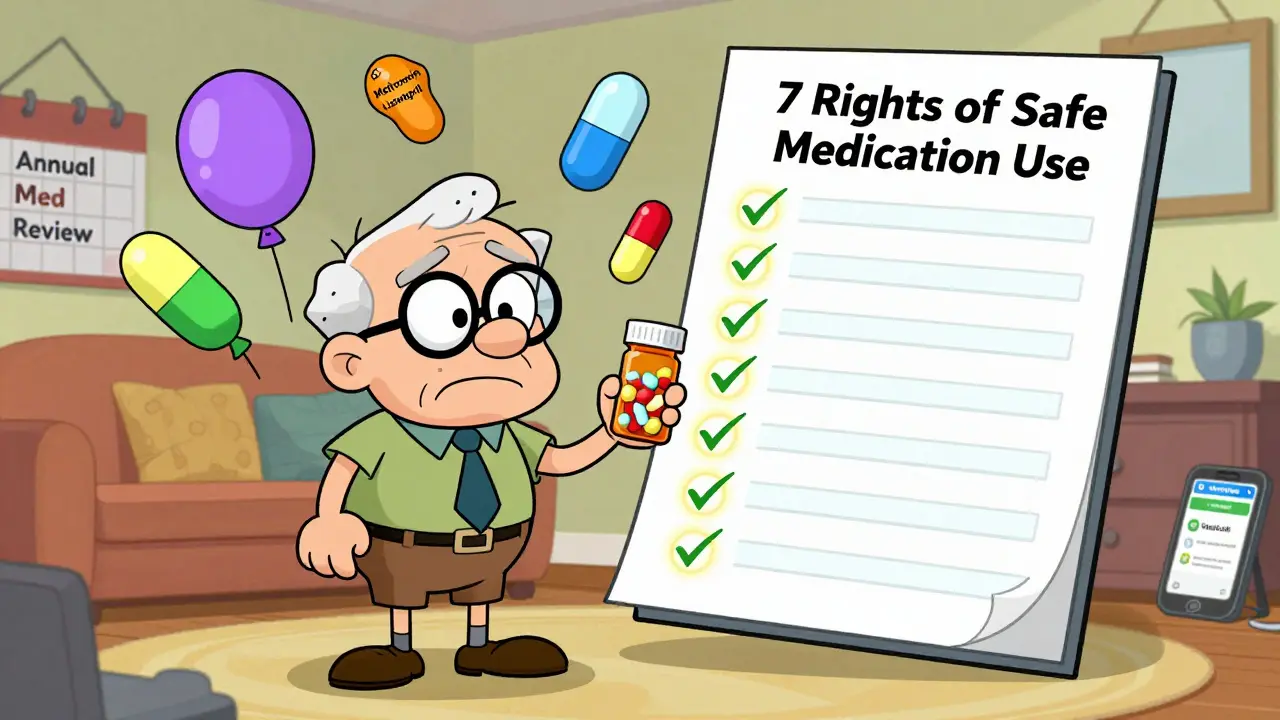
Know the "7 Rights" of Safe Medication Use
Healthcare professionals use the "7 Rights" to avoid mistakes. You should use them too. Before you take any pill, ask yourself:
- Right patient? Is this medicine really for me? (Don’t take a family member’s leftover pills.)
- Right drug? Does the label match your list?
- Right dose? Is it the same as your doctor prescribed? (A 50 mg tablet is not the same as two 25 mg pills.)
- Right time? Should I take it with food? At night? Before breakfast?
- Right route? Is it meant to be swallowed, sprayed, or applied to the skin?
- Right documentation? Did your pharmacist or doctor note this change?
- Right response? Are you feeling worse, not better? Any new dizziness, nausea, or rash?
This isn’t bureaucracy - it’s your personal safety checklist. Do it every single time. Even if you’ve taken the same pill for years. Your body changes. Your other meds change. So should your awareness.
Watch Out for Polypharmacy
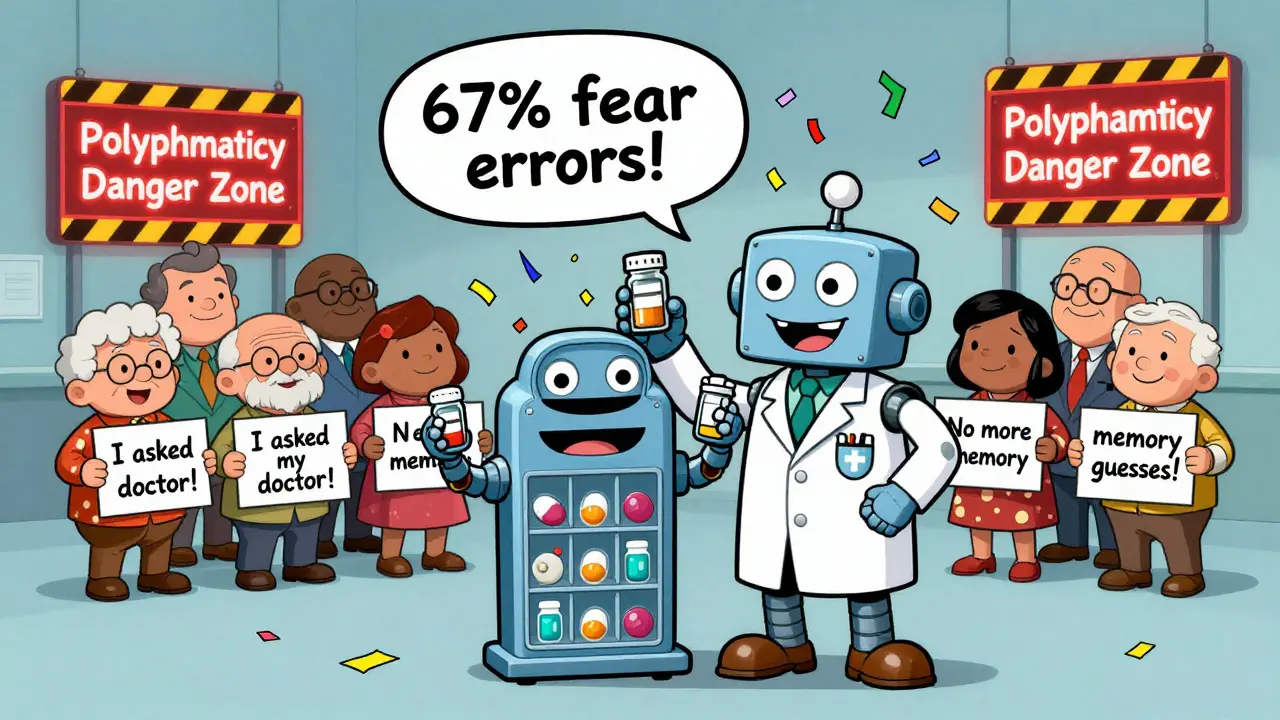
Polypharmacy isn’t a buzzword - it’s a real danger. It means taking five or more medications at once. And if you’re over 65, you’re statistically more likely to be in this group. About 91% of people in long-term care facilities take five or more daily pills.
Why is this risky? Each additional drug increases the chance of side effects, confusion, falls, kidney stress, and even early death. The American Academy of Family Physicians says polypharmacy is linked to reduced mobility, more ER visits, and longer hospital stays.
Here’s what to do: Every six months, ask your primary care doctor: "Can any of these meds be stopped?" Don’t assume everything is still needed. Some prescriptions were started years ago for a different issue. Others might be duplicates. A pharmacist-led review can cut your pill count by 20-30% without hurting your health. One study showed that after a full medication review, 89% of patients stuck to their regimen - up from 74% before.
Use Tools to Stay on Track
Forgetting a pill once in a while might seem harmless. But missing doses over weeks or months can undo all the benefits of your treatment. In diabetes, for example, skipping insulin even a few days can spike blood sugar and damage nerves, kidneys, and eyes.
Use tools that work for you:
- **Pill organizers** with days and times labeled - the ones with alarms are best.
- **Smart pill dispensers** that unlock only at the right time and send alerts to your phone.
- **Medication reminder apps** like Medisafe or MyTherapy that track refills and warn you about interactions.
- **Voice assistants** - ask Alexa or Google Assistant: "Remind me to take my metformin at 8 a.m."
Technology reduces medication errors by up to 55% in older adults, according to geriatric safety studies. You don’t need to be tech-savvy - just consistent. Set it up once, and let it work for you.
Don’t Ignore Side Effects - Track Them
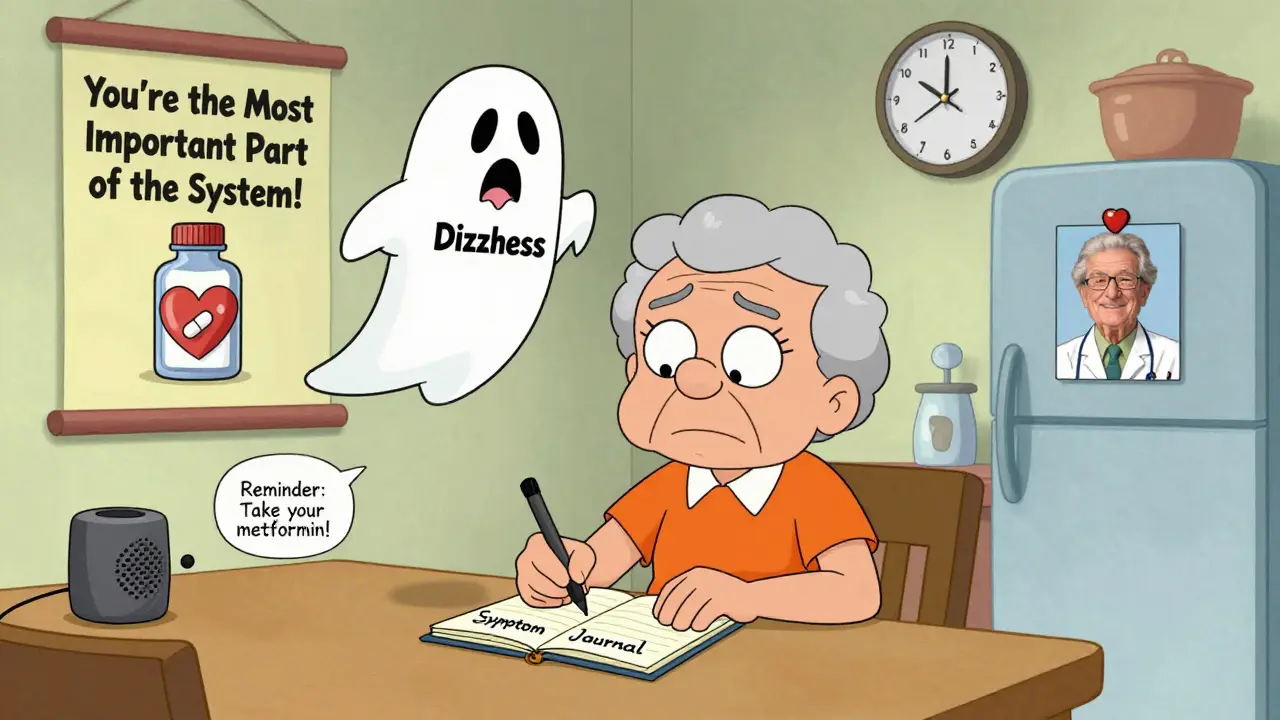
Feeling tired? Dizzy? Nauseous? Constipated? Many people assume these are just "part of aging" or "normal side effects." They’re not. They could be signs your meds are clashing or your body can’t handle the dose anymore.
Start a simple journal. Every week, note:
- What new symptoms appeared?
- When did they start? (After a new pill? After a dose change?)
- Did anything help? (Rest, food, water?)
Bring this to your next appointment. Don’t say, "I feel off." Say, "Since I started taking lisinopril, I’ve had a dry cough every night and felt lightheaded when standing. I’m worried it’s the medicine." That’s how you start a real conversation. Your doctor can adjust your dose, switch drugs, or add something to counter the side effect.
Ask Questions - Even If You Feel Silly
Too many people stay silent because they don’t want to bother their doctor. But your questions matter.
Here are five questions to ask at every appointment:
- "What is this medicine for?" (Not just "for high blood pressure" - what does it actually do in your body?)
- "What happens if I miss a dose?"
- "Are there cheaper or generic versions?" (Cost is a huge reason people skip meds.)
- "Could this interact with my other meds or supplements?"
- "Is there a non-drug option I could try?"
Doctors aren’t annoyed by these questions - they’re relieved. A CDC study found patients who asked questions had better adherence and fewer hospital visits. You’re not being difficult. You’re being smart.
Plan for the Long Haul
Chronic disease management isn’t a sprint - it’s a marathon. Your needs will change. Your body will change. Your meds might need to change too.
Build a long-term plan:
- **Annual medication review**: Schedule it like a physical.
- **Emergency plan**: Who knows your meds if you’re hospitalized? Give a copy to a trusted family member.
- **Refill reminders**: Set calendar alerts two weeks before you run out.
- **Cost management**: Talk to your pharmacist about patient assistance programs. Many drug makers offer free or low-cost options if you qualify.
Medication non-adherence costs the U.S. healthcare system $100-$300 billion a year. But the real cost is you - your health, your independence, your quality of life. You don’t have to manage this alone. Use the tools, ask the questions, and stay involved. Your life depends on it.
Can I stop taking a medication if I feel better?
No - not without talking to your doctor first. Feeling better doesn’t mean the condition is gone. For conditions like high blood pressure, diabetes, or thyroid disorders, medication controls the problem - it doesn’t cure it. Stopping suddenly can cause dangerous rebounds, like a spike in blood pressure or a diabetic crisis. Always ask before discontinuing any prescription.
What should I do if I take the wrong dose by accident?
Don’t panic. If you took too much, call Poison Control at 1-800-222-1222 immediately. If you took too little, don’t double up next time - just take your next scheduled dose as normal. Double dosing can be dangerous. Always check your medication guide or call your pharmacist for specific instructions. Keep the number for your pharmacy handy.
Are herbal supplements safe to take with my prescription meds?
Not always. St. John’s Wort can reduce the effect of blood thinners and antidepressants. Garlic and ginkgo can increase bleeding risk with aspirin or warfarin. Even common supplements like vitamin K can interfere with blood thinners. Always tell your doctor and pharmacist exactly what supplements you take - even if you think they’re "natural" and harmless.
How do I know if my meds are causing side effects?
Look for changes that started after you began or changed a medication. Common signs include dizziness, confusion, nausea, rash, swelling, unusual fatigue, or changes in urination. Keep a symptom journal and note the timing. If something new appears within a few days of starting a new pill, it’s likely connected. Don’t ignore it - bring it up at your next visit.
Is it okay to split pills or crush them to make them easier to swallow?
Only if your pharmacist says it’s safe. Some pills are designed to release slowly - crushing them can cause too much medicine to enter your system at once. Others have coatings to protect your stomach. Never split, crush, or open a pill without checking first. Ask your pharmacist for alternatives, like liquid versions or smaller tablets.
Final Thought: You’re the Most Important Part of the System
Doctors, pharmacists, and nurses all play a role - but you’re the one who takes the pills. You’re the one who notices the side effects. You’re the one who remembers to refill. Medication safety isn’t about following rules. It’s about taking ownership. Small habits - writing things down, asking questions, tracking changes - add up to big results. You’re not just managing a condition. You’re protecting your future.


Dan Padgett
Man, this hit different. I’ve been on six meds for my diabetes and hypertension for years, and no one ever told me to treat my supplements like real medicine. Fish oil? Vitamin D? Turns out they’re not just ‘healthy vibes’-they’re active players in the game. I started keeping a list on my phone after reading this, and holy hell, I found three duplicates my last doctor didn’t catch. Feels like I just got a free health upgrade.