
When your child wakes up with a rash, runny nose, or swollen eyes, it’s tempting to grab the antihistamine bottle from the cabinet. But giving the wrong dose-or the wrong type-can be dangerous. Not all antihistamines are made the same, especially for kids. What works for an adult might put a toddler at risk. The truth is, antihistamines aren’t just harmless sleep aids or quick fixes for allergies. They can cause serious side effects in children if used incorrectly.
Why Kids Need Different Doses
Children aren’t just small adults. Their bodies process medicine differently. A child’s liver and kidneys are still developing, and their blood-brain barrier is more permeable. This means drugs like diphenhydramine (the active ingredient in Benadryl) can cross into the brain more easily, causing drowsiness, confusion, or even seizures in young kids. That’s why the FDA warns against using diphenhydramine in children under 2 years unless a doctor says so.First-generation antihistamines-like diphenhydramine and chlorpheniramine-were designed decades ago. They work fast but come with a long list of side effects: dry mouth, blurred vision, fast heartbeat, and trouble urinating. Studies show up to 60% of children given diphenhydramine become overly drowsy. In some cases, this leads to dangerous breathing problems.
Second-generation antihistamines-like cetirizine (Zyrtec) and loratadine (Claritin)-were developed to avoid these issues. They don’t cross the blood-brain barrier as easily, so they’re less likely to cause drowsiness or confusion. That’s why pediatricians now recommend them as the first choice for kids.
Dosing by Age and Weight
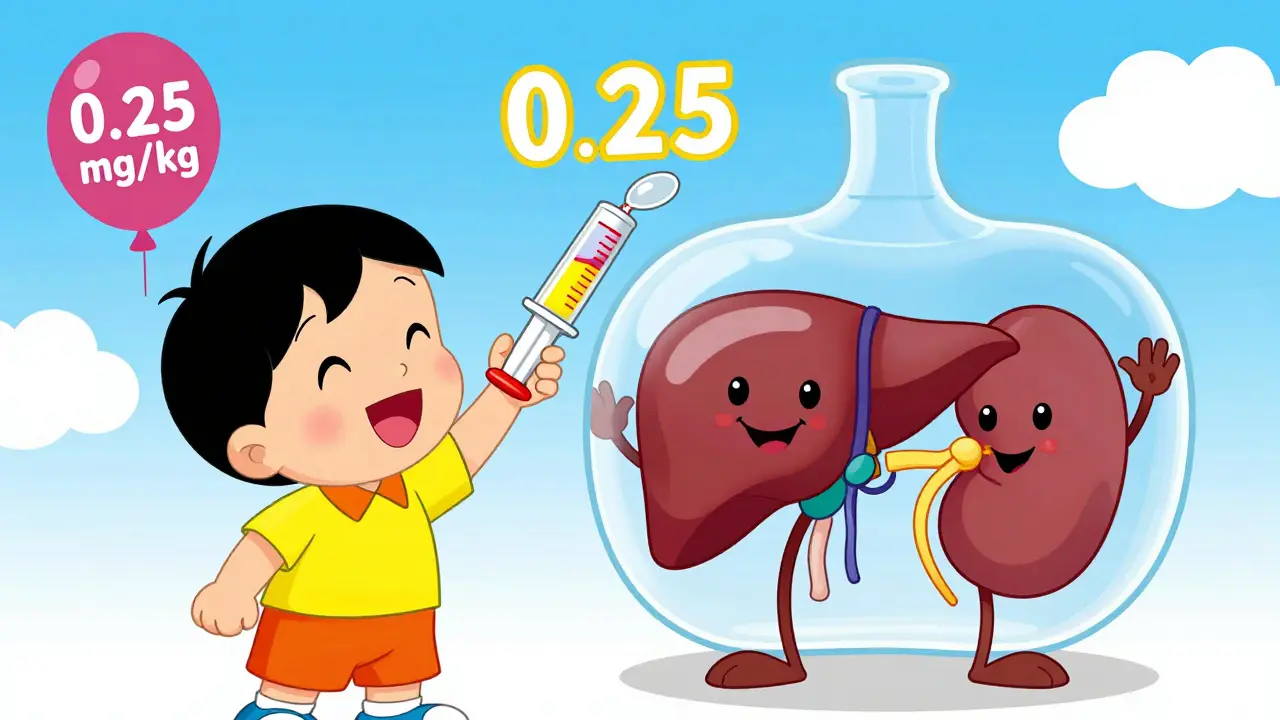
There’s no one-size-fits-all dose. It depends on the child’s age, weight, and the specific medicine. Here’s what current guidelines from Boston Children’s Hospital, Children’s Hospital Colorado, and the American Academy of Allergy, Asthma & Immunology say:- Infants 6-11 months: Cetirizine at 0.25 mg per kg per day (about 1-2 mg total). Some doctors start at 0.125 mg/kg for very young infants, especially if the allergy is mild. This is off-label but supported by research from Pediatric Allergy and Immunology (2020).
- Children 2-5 years: Cetirizine: 5 mg once daily (1 teaspoon of liquid). Loratadine: 5 mg once daily (½ teaspoon of liquid).
- Children 6-11 years: Cetirizine: 5-10 mg daily. Loratadine: 10 mg daily.
- Children 12 years and older: 10 mg of cetirizine or loratadine daily.
Diphenhydramine is weight-based and more complex:
- 38-49 lbs: 7.5 mL of liquid (12.5 mg) every 6 hours-no more than 6 doses in 24 hours.
- 50-60 lbs: 10 mL of liquid (12.5 mg) every 6 hours.
Never guess. Always check the label. Liquid formulations come in different strengths: some are 5 mg per 5 mL, others are 12.5 mg per 5 mL. Mixing them up can lead to overdose.
Always Use the Right Measuring Tool
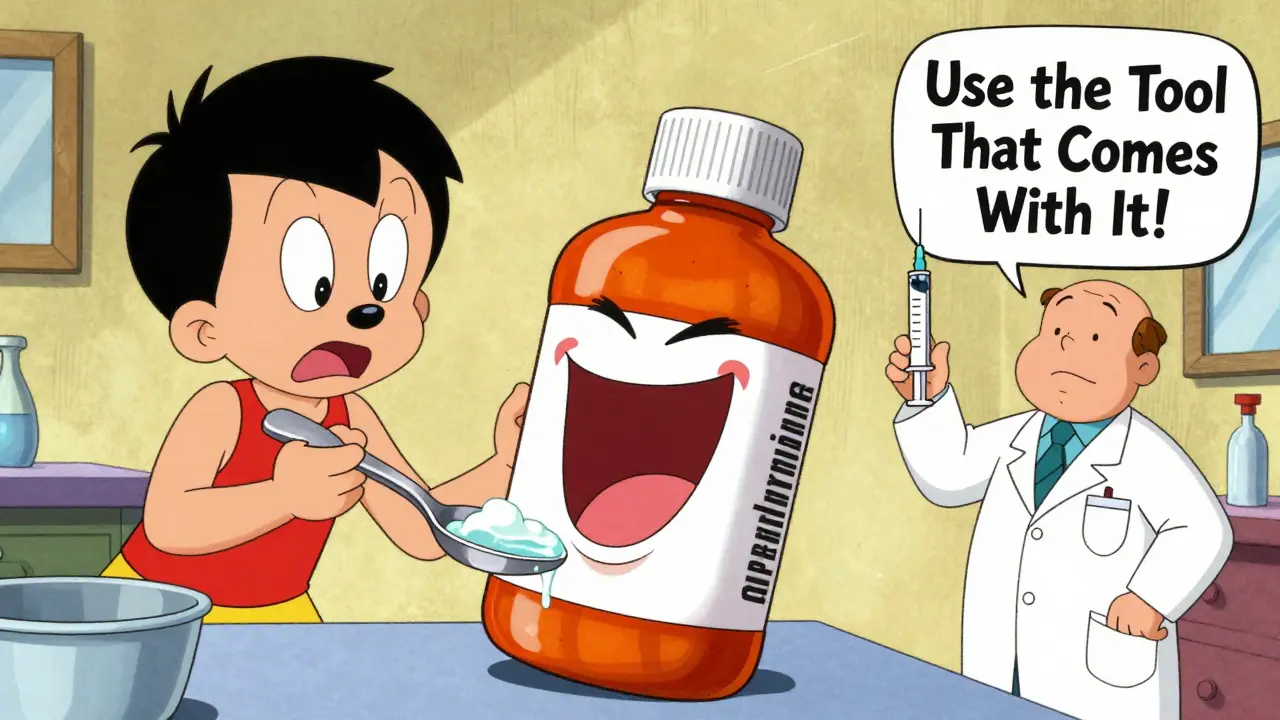
Kitchen spoons are not accurate. A teaspoon from your cupboard can hold anywhere from 3 mL to 7 mL. That’s a 50% difference. One study found parents using kitchen spoons gave 20-50% more or less than the correct dose.Every bottle of children’s antihistamine comes with a syringe, dropper, or measuring cup. Use it. Always. Even if you’ve used the same bottle before. Dosing errors are the number one reason kids end up in emergency rooms after taking antihistamines.
Why Cetirizine Is the New Standard
Cetirizine has become the go-to choice for pediatricians. Why? Because it works, and it’s safer.Compared to diphenhydramine:
- Drowsiness: 10-15% of kids on cetirizine vs. 50-60% on diphenhydramine.
- Duration: Cetirizine lasts 24 hours. Diphenhydramine wears off in 4-6 hours, meaning you have to dose again-often at night, which disrupts sleep and increases the chance of giving too much.
- Accuracy: Once-daily dosing reduces human error. With diphenhydramine, you’re giving medicine 4-6 times a day. One missed dose, one extra dose-it’s easy to mess up.
Dr. Eric Macy, a pediatric allergist, says: “I would recommend cetirizine over diphenhydramine for infants with hives.” He’s not alone. Over 94% of pediatric allergists now use second-generation antihistamines as first-line treatment, according to a 2023 survey by the American Academy of Allergy, Asthma & Immunology.
What About Loratadine?
Loratadine (Claritin) is even less likely to cause drowsiness than cetirizine. Studies show only 6.9% of children feel sleepy on loratadine, compared to 14.7% on cetirizine. So if your child gets drowsy on Zyrtec, switching to Claritin might help.But here’s the catch: loratadine takes longer to start working. It can take up to 2 hours to relieve symptoms. If your child is having a sudden allergic reaction-like swelling from a bee sting-cetirizine or diphenhydramine (under medical care) will work faster.
For chronic allergies like hay fever or pet dander, loratadine is ideal. For acute reactions, you might need something stronger.
What NOT to Do
- Don’t use adult pills for kids. A 10 mg loratadine tablet is too strong for a 3-year-old. Cutting it in half doesn’t guarantee accuracy.
- Don’t use multi-symptom formulas. Products like “Benadryl Allergy Plus Congestion” contain decongestants like pseudoephedrine. These are not approved for children under 6. They raise blood pressure and heart rate, which can be dangerous in small kids.
- Don’t give antihistamines to help kids sleep. The American College of Allergy, Asthma, and Immunology says this practice increases overdose risk by 300% in children under 2. Drowsiness from these drugs is a side effect-not a feature.
- Don’t assume chewables are all the same. Some children’s chewables are 5 mg, others are 10 mg. Always read the label.
When to Call a Doctor
Antihistamines are fine for mild allergies: sneezing, itchy eyes, minor hives. But if your child has:- Swelling of the lips, tongue, or throat
- Difficulty breathing
- Wheezing or turning blue
- Loss of consciousness
-that’s anaphylaxis. Call emergency services immediately. Antihistamines won’t stop this. Only epinephrine will.
Also call your pediatrician if:
- Your child is under 2 and you’re considering antihistamines.
- Your child has liver or kidney problems.
- They’re taking other medications (like seizure drugs or antidepressants).
- You’re unsure about the dose.
What’s Changing in 2026?
The FDA is still reviewing data on antihistamine use in infants under 6 months. A clinical trial (NCT04567821) is underway, and approval for cetirizine in this group could come by 2026. Until then, doctors use it off-label at very low doses-0.125 mg/kg-for severe cases.Meanwhile, more hospitals are updating their protocols. Boston Children’s revised its dosing chart in 2022. Children’s Hospital Colorado updated its guidelines for loratadine in 2023. The trend is clear: second-generation antihistamines are now the standard. Diphenhydramine is reserved for emergencies or when other options fail.
Final Takeaways
- For kids 6 months and older, cetirizine (Zyrtec) is the safest first choice.
- Loratadine (Claritin) is better if drowsiness is a concern.
- Diphenhydramine (Benadryl) should only be used under medical advice, especially under age 2.
- Always use the measuring tool that comes with the medicine.
- Never use antihistamines as sleep aids.
- When in doubt, call your pediatrician or poison control: 1-800-222-1222.
Medicine for kids isn’t about finding the fastest fix. It’s about finding the safest one. And when it comes to antihistamines, that means choosing the right drug, the right dose, and the right tool-and avoiding the old habits that put children at risk.
Can I give my 1-year-old Benadryl for allergies?
The FDA advises against giving diphenhydramine (Benadryl) to children under 2 years unless a doctor specifically prescribes it. For a 1-year-old with allergies, cetirizine (Zyrtec) is safer and approved for infants 6 months and older. Always check with your pediatrician before giving any antihistamine to a child under 2.
Is Zyrtec or Claritin better for my child?
Cetirizine (Zyrtec) works faster and is more effective for moderate to severe allergies. Loratadine (Claritin) causes less drowsiness and is better for daily use if your child is sensitive to sleepiness. For most children, Zyrtec is the first choice. If drowsiness becomes a problem, switch to Claritin.
How do I know if I’m giving the right dose?
Check the label for the concentration (e.g., 5 mg per 5 mL). Use only the measuring device that came with the medicine. Weigh your child if possible-dosing by weight is more accurate than age. If the label says 5 mg daily for a 3-year-old and your child weighs 25 lbs, that’s correct. If unsure, call your pharmacy or pediatrician.
Can I give my child an antihistamine every day?
Yes, second-generation antihistamines like cetirizine and loratadine are safe for daily use in children 2 years and older. They’re designed for long-term allergy control. But don’t use them daily without a doctor’s advice if your child is under 2. Also, if symptoms persist after 2 weeks, see a doctor-there may be another cause.
What are the signs of an antihistamine overdose in kids?
Signs include extreme drowsiness, confusion, fast or irregular heartbeat, flushed skin, dilated pupils, trouble urinating, dry mouth, and agitation. In severe cases, seizures or coma can occur. If you suspect an overdose, call poison control at 1-800-222-1222 or go to the ER immediately.
