
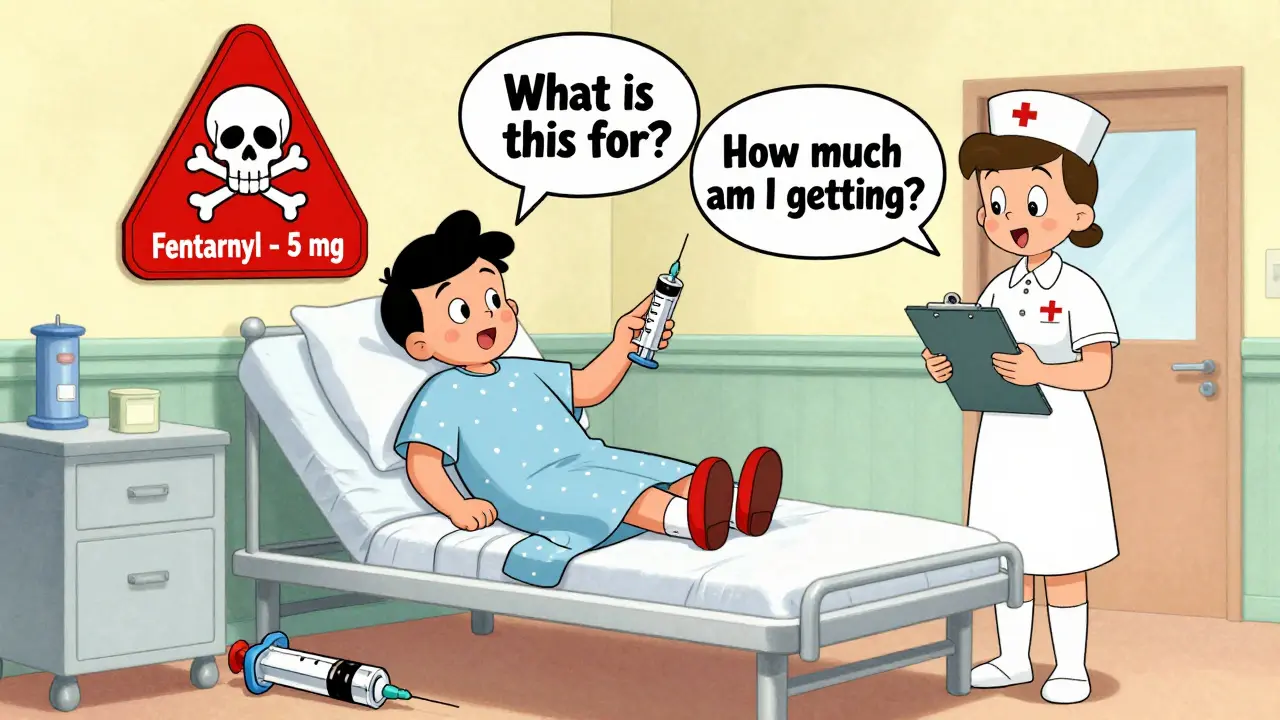
After surgery, you’re not out of the woods just because the procedure is over. The next few days - sometimes weeks - are when most medication mistakes happen. And those mistakes can be dangerous. You might get an extra dose of painkiller, mix up two similar-looking syringes, or end up with a drug that wasn’t meant for you. It’s not rare. In fact, 30% of all medication errors in hospitals happen during or right after surgery, according to the Joint Commission. But here’s the good news: most of these errors are preventable. You don’t need to be a doctor to help keep yourself safe. You just need to know what to watch for and how to speak up.
Know What Medications You’re Getting
Right after surgery, you’ll likely be given pain meds, anti-nausea drugs, antibiotics, or blood thinners. These are short-term - meant to last a few hours to a few days. But they’re powerful. Opioids like oxycodone or fentanyl can slow your breathing. Heparin can cause dangerous bleeding if given wrong. Even common drugs like insulin or epinephrine can kill if the dose is off. Don’t assume the nurse or doctor knows what you’re on. Tell them:- Any allergies you have
- Medications you take daily (even over-the-counter ones like aspirin or ibuprofen)
- Any past reactions to anesthesia or pain meds
- What is this for?
- How much am I getting?
- How often will I get it?
Watch the Label - Every Single Time
One of the biggest causes of mistakes? Look-alike, sound-alike drugs. You might think, “It’s just another pain pill.” But fentanyl and morphine aren’t interchangeable. One is 100 times stronger than the other. That’s not a typo - that’s life or death. Every time a nurse hands you a medication, check the label yourself. Look for:- The drug name (not just “pain medicine”)
- The exact dose (e.g., 5 mg, not “a shot”)
- The expiration time (especially if it’s been sitting on the bedside table)
Ask for a “Read-Back”
Verbal orders are common in surgery. A doctor says, “Give 2 mg of morphine,” and the nurse repeats it back. That’s called a “read-back.” It’s not optional - it’s a safety rule. If you hear a nurse or tech say, “I’ll give 5 mg of hydromorphone,” ask them to repeat it out loud. Then repeat it yourself: “So you’re giving 5 mg of hydromorphone for pain, right?” This simple step cuts verbal errors by 55%, according to the American College of Obstetricians and Gynecologists. And it works even when you’re groggy. You don’t need to be fully awake to catch a mistake like “5 mg” vs. “0.5 mg.”Never Let Medications Sit Unattended
A syringe sitting on a counter, a pill bottle left on the nightstand, a vial left open on a tray - these are all red flags. The CDC says: Never leave a medication unattended, even for 30 seconds. Why? Because someone else could grab it by accident. Or it could be contaminated. Or someone might confuse it with another drug. In one case reported by the ECRI Institute, a nurse accidentally gave a patient a vial of epinephrine meant for emergency use - because it was sitting next to saline on the table. The patient went into cardiac arrest. If you see a syringe or bottle sitting out, ask: “Is this for me? Is it labeled? When was it prepared?” If the answer is unclear, don’t take it.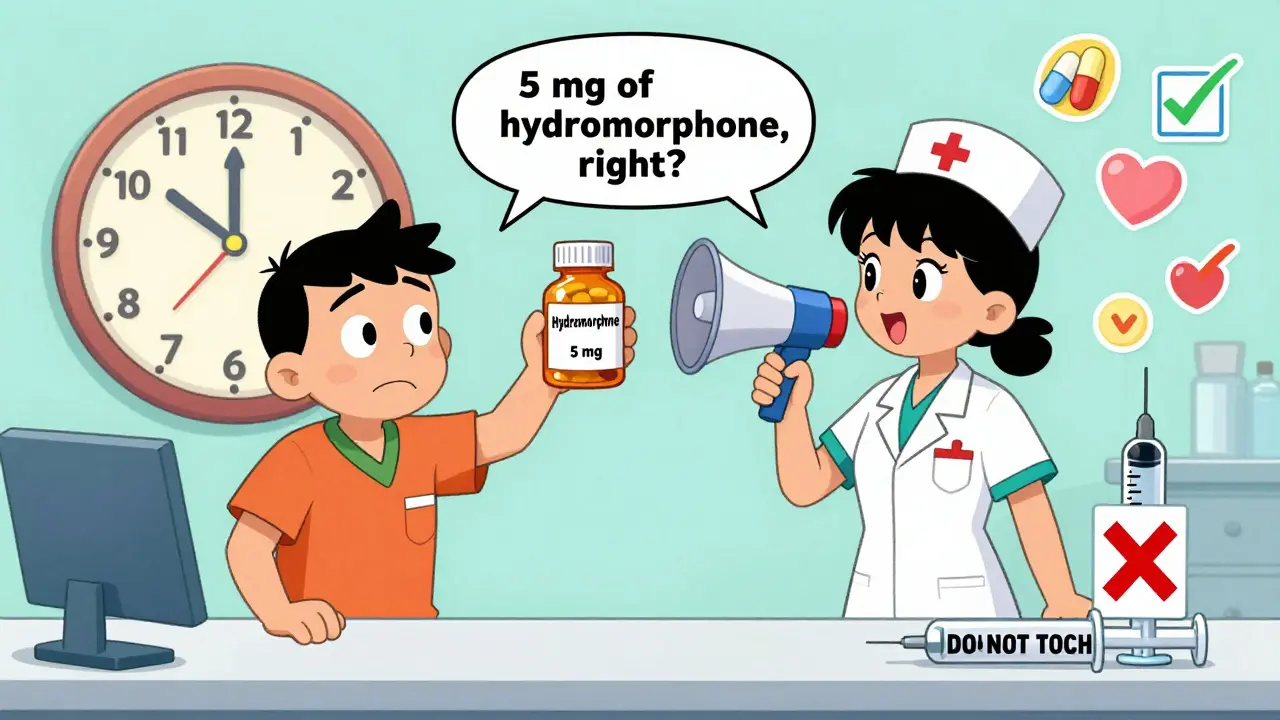
Understand How Opioids Are Used After Surgery
Painkillers like oxycodone, hydrocodone, and fentanyl are common after surgery. But they’re also the most misused. The CDC says over 80% of opioid-related deaths in the U.S. start with a prescription - often after surgery. Here’s how to stay safe:- Take only what’s prescribed. Don’t “get ahead” of the schedule.
- Never mix opioids with alcohol, sleep aids, or benzodiazepines - even if you think “it’s just one.”
- Keep pills locked up. Even your kids or guests could accidentally take them.
- Ask for non-opioid options first - acetaminophen, ibuprofen, or nerve blocks.
- How many pills you’re supposed to take each day
- What side effects to watch for (slowed breathing, extreme drowsiness, confusion)
- When to call your doctor (if you feel like you can’t wake up or breathe normally)
Know the Role of Your Care Team
You’re not alone in this. Your safety is a team effort. Here’s who does what:- Nurses - Verify every dose, check your name and birthdate, confirm the drug and dose before giving it.
- Pharmacists - Review all meds for interactions, especially if you’re on multiple drugs.
- Surgical Technologists - Make sure all meds on the sterile field are labeled and not confused with others.
- Surgeons - Should not be the ones handing you meds unless they’re trained in medication safety.
What to Do Before You Go Home
Discharge is when most errors happen. You’re tired. You’re in pain. You’re handed a bag of pills with no clear instructions. Before you leave:- Get a written list of all meds you’re taking - including name, dose, frequency, and reason.
- Ask: “Which ones do I stop? Which ones do I keep taking?”
- Confirm if you need refills - and how to get them.
- Ask for a follow-up appointment with your primary doctor or pharmacist within 7 days.
Common Mistakes - And How to Avoid Them
Here are the top 5 errors after surgery - and how you can stop them:- Wrong drug - “I thought that was my pain pill.” → Always check the label. Don’t guess.
- Wrong dose - “They said 5 mg, but it was 0.5 mg.” → Ask for the exact number. Write it down.
- Wrong time - “I took it early because I was in pain.” → Stick to the schedule. Don’t rush.
- Unlabeled meds - “It was just sitting there.” → Never take anything without a clear label.
- No follow-up - “I didn’t know who to call.” → Get contact info for your surgeon’s office or pharmacist before you leave.
What to Do If Something Feels Off
You might feel dizzy, nauseous, or unusually sleepy. Maybe your breathing feels slow. Or you see a syringe that’s not labeled. Don’t brush it off. Say this:- “I don’t feel right. Can we check my meds?”
- “That bottle doesn’t look right. Can you confirm what’s in it?”
- “I think I got this before. Is this supposed to be another dose?”


Konika Choudhury
After surgery they give you pills like candy and wonder why people die
India has the same problem but no one talks about it
My uncle got a wrong dose because the nurse was too busy scrolling TikTok
Stop pretending hospitals are safe
They’re not