
Why Managing Multiple Pharmacies and Prescribers Is a Safety Issue for Seniors
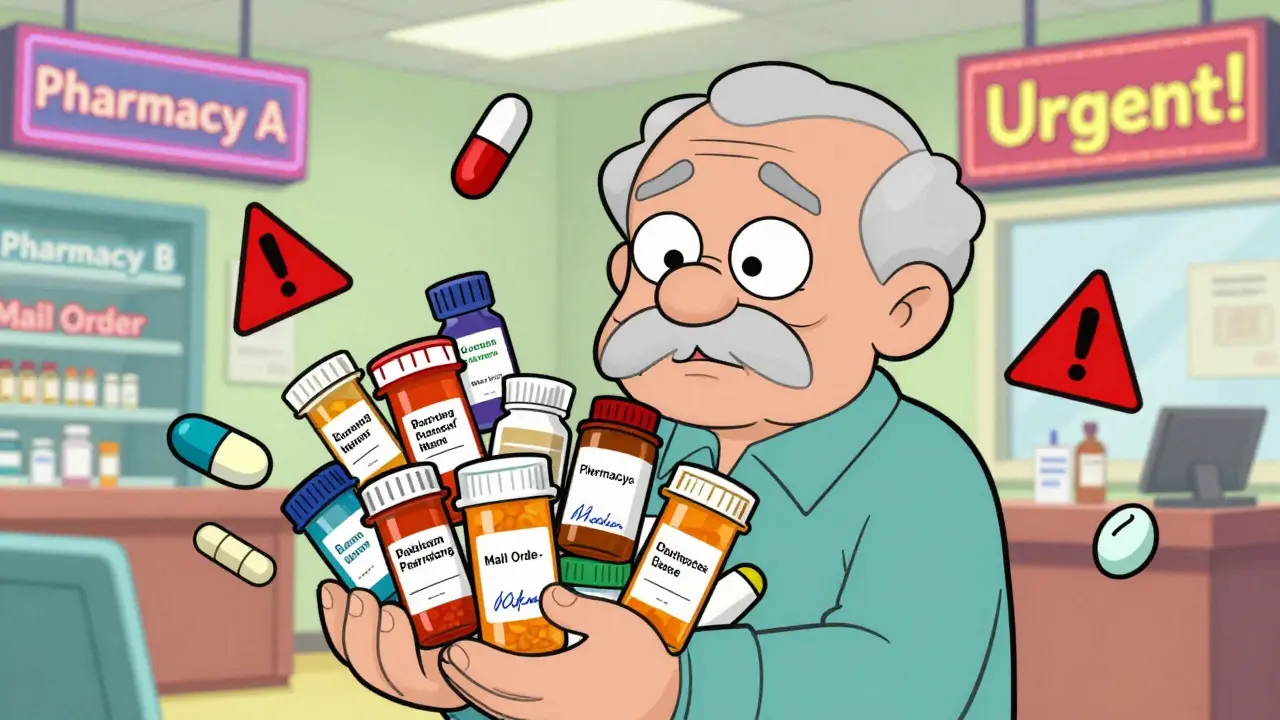
Seniors often take 5, 10, or even 15 different medications. They might see multiple doctors - a cardiologist, a neurologist, a pain specialist - each writing prescriptions. Those prescriptions get filled at different pharmacies: one down the street, another at the grocery store, maybe a mail-order service. Without a system to tie it all together, mistakes happen. A patient gets two blood thinners that shouldn’t be taken together. A refill is filled at a pharmacy that doesn’t know about a new allergy. A controlled substance is prescribed by one doctor and picked up at a different location, with no one noticing the pattern.
This isn’t rare. Studies show that 1 in 5 seniors on multiple medications experience a dangerous drug interaction. And when those prescriptions are spread across multiple pharmacies and prescribers, the risk jumps. The solution isn’t to limit care - it’s to organize it. Centralized pharmacy management systems are now the standard for chains and large independent groups. They’re not just for efficiency. They’re for survival.
How Centralized Systems Prevent Medication Errors
At the heart of safe multi-pharmacy management is a single, real-time drug database. Every pharmacy in the network uses the same names, strengths, and NDC codes for every medication. No more confusion between "hydrochlorothiazide" and "HCTZ." No more mix-ups because one pharmacy calls a drug by its brand name and another by its generic.
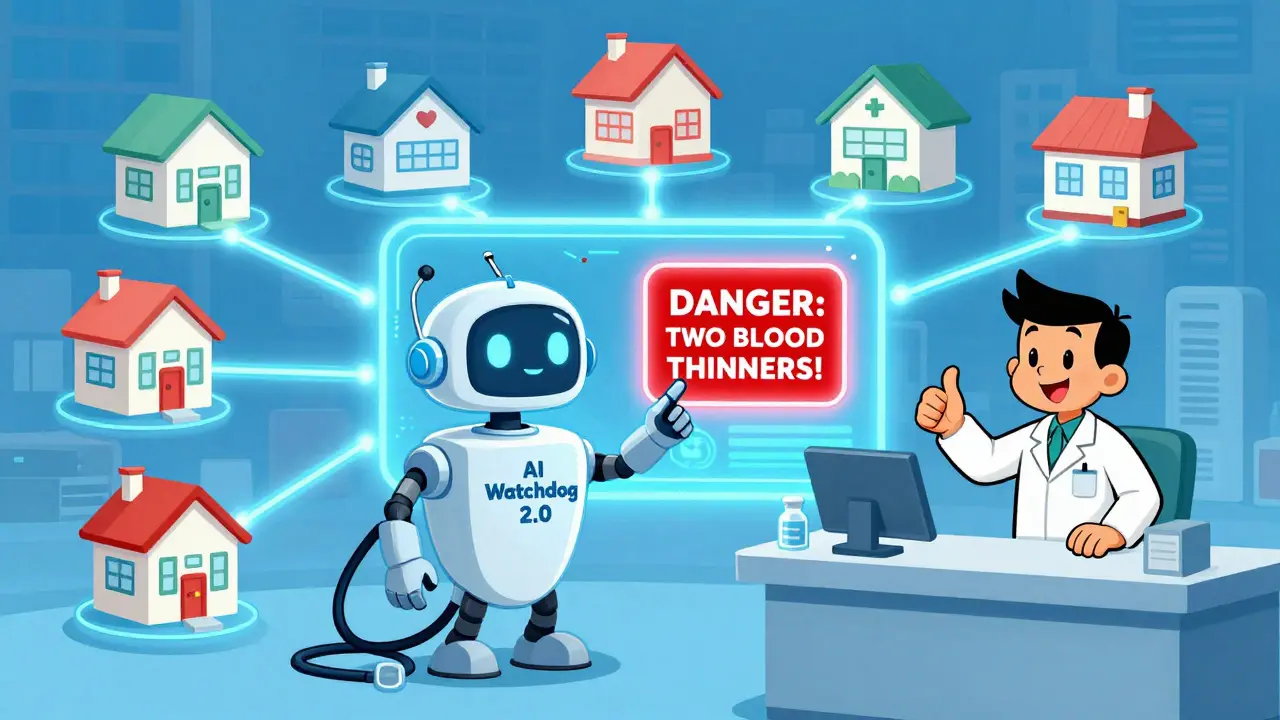
Systems like EnterpriseRx and PrimeRx sync this data daily across all locations. If a patient’s allergy to sulfa is entered at Pharmacy A, Pharmacy B, C, and D all see it instantly. If a new prescription is added by Dr. Lee at Clinic X, the system flags it against all other active meds from Dr. Patel and Dr. Wong - even if those were filled at different locations.
One major study found that chains using these systems reduced medication errors by 28%. That’s not a small number. It’s the difference between a senior falling at home from dizziness caused by a bad interaction and staying safe. The system doesn’t just store data - it watches for patterns. Datascan’s AI Watchdog 2.0, launched in early 2024, analyzes prescription trends across locations to spot potential diversion or overuse before it becomes a crisis.
Choosing the Right Software: EnterpriseRx, PrimeRx, and Others
Not all systems are built the same. If you manage multiple pharmacies, you need to match the tool to your needs.
- EnterpriseRx by McKesson leads in prescription processing speed and real-time patient profiles. It’s the go-to for chains with 10+ locations, especially those tied to hospital systems. Its integration with Epic EHR lets pharmacists see prescriber notes directly - cutting down on 18% of errors caused by poor communication.
- PrimeRx by PioneerRX wins for patient experience. Seniors can set a "preferred pickup location" across your entire chain. If they’re visiting family in another town, they can have their meds sent there without calling in. Its inventory system cuts stockouts by 35% in multi-location setups.
- DocStation is the best for clinical services. If you offer flu shots, diabetes counseling, or medication therapy management across locations, DocStation’s billing and scheduling tools help you turn those services into revenue. One chain saw a 63% increase in immunization income after switching.
- Datarithm focuses on inventory control. Its auto-recommendation engine tells you exactly when to transfer stock between stores or return expired meds to wholesalers. It cut inventory-related errors by 28% in one 2022 case study.
Pricing varies. PharmacyOne Chain Management starts at $299 per location/month. EnterpriseRx runs $450, but drops to $325 if you have 15+ stores. Don’t just pick the cheapest. Look at uptime - PrimeRx hits 99.98%, and RedSail’s average response time for prescription checks is just 47ms across 50 locations. Slow systems mean long waits. Long waits mean frustrated seniors and missed refills.
Security and Compliance: Protecting Patient Data Across Locations
Every time a prescription moves from one pharmacy to another, patient data travels. That data is protected by HIPAA. But compliance isn’t just paperwork. It’s encryption, access control, and monitoring.
All major systems use AES-256 encryption - the same standard banks use. But the real security win is in access. DocStation’s FIDO2 security keys require physical hardware tokens for central office staff to approve house accounts. That cut unauthorized access by 94%. No more shared passwords. No more clerks logging in from home on personal devices.
Also, CMS now requires multi-location pharmacies to track prescription errors across all sites to qualify for Medicare Part D reimbursement. Systems without centralized reporting fail this audit. You can’t just rely on spreadsheets or separate software. You need one system that logs every error, flags duplicates, and generates compliance reports automatically.
The Hub-and-Spoke Model: Central Control, Local Judgment
Some chains try to make every decision from the top. That’s dangerous. A pharmacist in a small town knows their patients better than any algorithm. The best systems use a "hub-and-spoke" model.
The "hub" - your central office - manages drug databases, pricing, inventory transfers, and regulatory reporting. The "spokes" - each local pharmacy - keep full control over clinical decisions. A pharmacist can still override a system alert if they know the patient’s history. That’s critical.
A 2023 University of California study found this model reduced medication errors by 38% compared to fully centralized systems where local pharmacists couldn’t override flags. Seniors need both consistency and human judgment. The system flags a possible interaction? Great. The pharmacist says, "But she’s been on this combo for five years and it’s fine"? That’s wisdom.
Implementation: What to Expect and How to Avoid Pitfalls
Switching to a centralized system isn’t plug-and-play. It takes time. Most chains need 8 to 12 weeks to fully migrate. Expect delays. Expect training.
Staff need 16 hours of training per technician and 24 hours per pharmacist. Chains that use vendor-certified trainers - not internal staff - see 12% higher adoption rates. Don’t try to train everyone yourself. The software is too complex.
The biggest risk? Data migration. About 27% of chains have prescription history errors during the switch. That means some meds don’t show up. Some allergies get lost. Always plan for manual verification. Expect to spend two weeks checking 15% of active patient records by hand. Don’t rush it.
One chain using PharmacyOne lost three weeks of flu shots because their migration ran behind. They didn’t have a backup process. Don’t make that mistake. Keep your old system running in parallel for at least two weeks after go-live.
What’s Coming: AI, Blockchain, and the Future of Safety
The next wave of safety tools is already here. Datascan’s AI Watchdog doesn’t just flag duplicates - it learns. It spots unusual refill patterns that might mean diversion. It’s 92.4% accurate in beta testing.
Blockchain pilots are testing prescription verification that can’t be altered. Outcomes.com’s trial cut fraud by 67% in multi-location chains. That’s huge for controlled substances like opioids and benzodiazepines - drugs many seniors are prescribed.
But there’s a looming challenge. By 2025, CMS will require all pharmacy systems to use FHIR API standards. That means 63% of current software will need $200,000+ in upgrades. If you’re on an older system, you’re not just falling behind - you’re at risk of losing Medicare contracts.
By 2027, the Pharmacy Quality Alliance predicts centralized systems will be mandatory for any chain with three or more locations. The writing’s on the wall. It’s not about being trendy. It’s about staying legal, safe, and able to serve seniors properly.
Final Checklist: Are You Managing Safely?
Ask yourself these questions:
- Do all pharmacies use the same drug names and codes?
- Can a pharmacist at one location instantly see all meds filled at any other location?
- Is there a system that automatically flags duplicate therapies or dangerous interactions across all prescribers?
- Are controlled substance prescriptions monitored for patterns across locations?
- Do you have real-time access to patient allergies and adverse reactions?
- Is your system certified for HIPAA and CMS compliance?
- Has your team been trained on the system - not just how to use it, but how to trust it?
If you answered "no" to any of these, you’re operating at risk. Seniors deserve better. Managing multiple pharmacies and prescribers isn’t about scaling up. It’s about scaling up safety.
Can I manage multiple pharmacies without expensive software?
Technically, yes - but it’s risky. Spreadsheets, phone calls, and handwritten notes don’t prevent errors. They delay them. Without a centralized system, you’re relying on staff memory and manual checks. Studies show medication errors jump by 17% when drug names aren’t standardized across locations. For seniors on multiple meds, that’s a dangerous gamble. The cost of one error - a hospital visit, a fall, a life lost - far exceeds the monthly software fee.
What if my pharmacies are in different states?
Modern pharmacy software handles multi-state operations without issue. Systems like EnterpriseRx and PrimeRx are built for it. They auto-adjust for state-specific regulations - like controlled substance limits, prescription validity periods, and refill rules. The central system keeps track of each location’s legal boundaries while still allowing seamless patient access across borders. You don’t need separate systems for each state. Just one system with the right configuration.
How do I get prescribers to use the system?
You don’t need prescribers to log in. You need them to send prescriptions electronically. Most EHR systems - like Epic, Cerner, and Athenahealth - connect directly to pharmacy platforms. If your software integrates with these, prescriptions come in clean, with full patient history. If a prescriber still faxes or calls in orders, ask them to switch. Offer training. Show them how it reduces calls from your pharmacy asking for clarification. Better communication means fewer errors for their patients.
Is cloud-based software safe for patient data?
Yes - if it’s from a reputable vendor. Cloud systems like EnterpriseRx and PrimeRx use AES-256 encryption, multi-factor authentication, and daily backups. They’re often more secure than on-site servers, which many small pharmacies can’t properly maintain. Look for vendors with HITRUST or SOC 2 certification. Ask for their security audit reports. Cloud doesn’t mean risky. It means scalable, reliable, and continuously updated.
What happens if the system goes down?
All major systems guarantee 99.9%+ uptime. RedSail Technologies reports 99.99% availability. But even then, have a backup plan. Keep printed medication lists for high-risk patients. Maintain a local, offline copy of current prescriptions. Train staff to manually check for interactions using printed drug guides. The system is your main tool, not your only tool. When it’s down, your clinical judgment becomes the safety net.


Donna Packard
This is exactly what my mom needed last year. I wish we'd known about this sooner. One wrong combo almost sent her to the ER.