
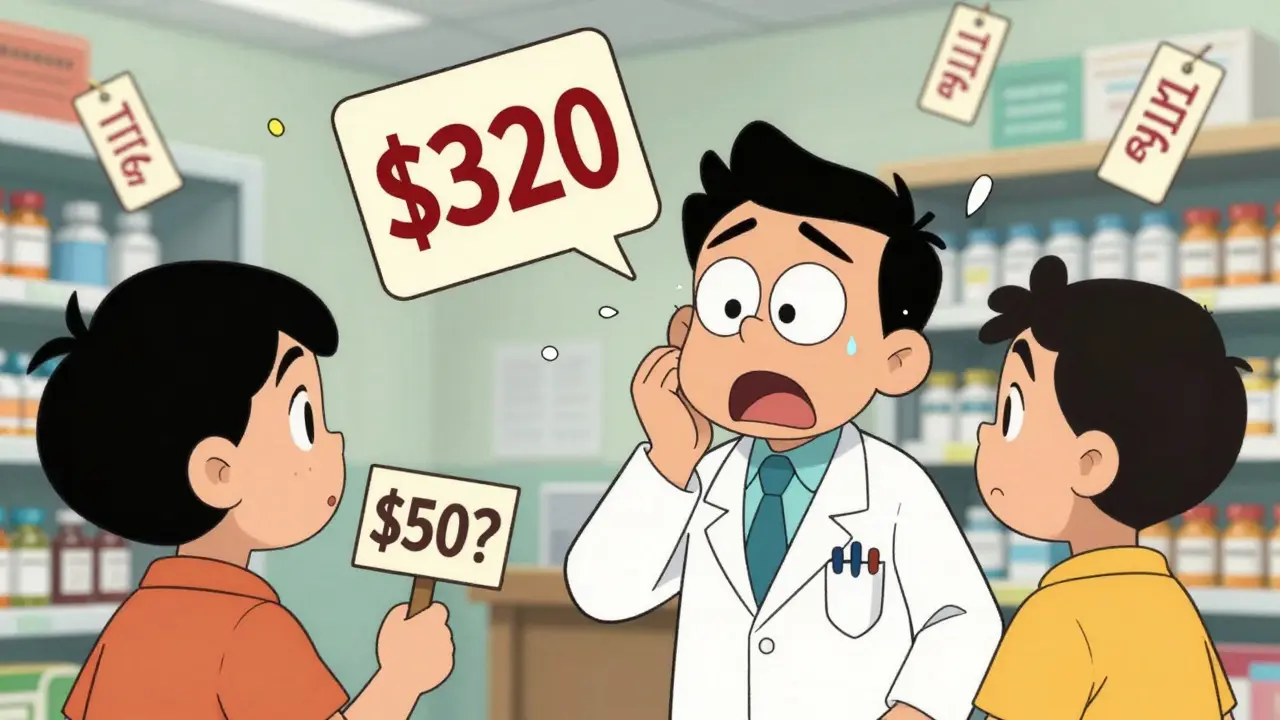
Most doctors don’t know how much the drugs they prescribe actually cost. Not even close.
It’s not that they’re careless. It’s that the system doesn’t give them the tools to know. A 2016 study of 254 doctors and medical students found that only 5.4% of them could guess the price of a generic drug within 25% of its actual cost. For brand-name drugs, it was barely better-13.7% got it right. Meanwhile, 77.5% of the time, doctors overestimated the cost of cheap generics. For expensive drugs, they underestimated by nearly three-quarters. That’s not a small mistake. That’s a systemic blind spot.
Why This Matters More Than You Think
When a doctor picks a medication, they’re not just choosing a treatment-they’re choosing a financial burden for their patient. Eighty-two percent of U.S. adults say drug prices are unreasonable. Nearly 3 in 10 skip doses or don’t fill prescriptions because they can’t afford them. And doctors? Most of them are prescribing in the dark.
Imagine you’re treating a diabetic patient. You write a script for insulin. You think it’s $50 a month. It’s actually $320. The patient skips doses. Their blood sugar spikes. They end up in the ER. You didn’t mean to harm them. You just didn’t know.
This isn’t about greed or negligence. It’s about information gaps. For decades, drug pricing has been a black box. Manufacturers set prices. Pharmacies charge different amounts. Insurance plans change copays daily. Patients get surprise bills. And doctors? They’re left guessing.
The Numbers Don’t Lie
Here’s what the data shows:
- Doctors overestimate low-cost drugs by 31% on average.
- They underestimate high-cost drugs by 74%.
- Only 30% of dispensing costs are estimated correctly.
- 84% of doctors can name at least one source for drug pricing-but most can’t access it during a 10-minute appointment.
- Medical students improve with training, but even senior residents only score 6 out of 10 on basic pricing knowledge.
And here’s the kicker: less than half of medical students understand that drug prices have almost nothing to do with research and development costs. Most people think a $500 pill costs $490 to develop and $10 to make. In reality, the R&D for many drugs is paid for by public funding, and the price is set based on what the market will bear.
What’s Being Done About It?
Some health systems are finally trying to fix this.
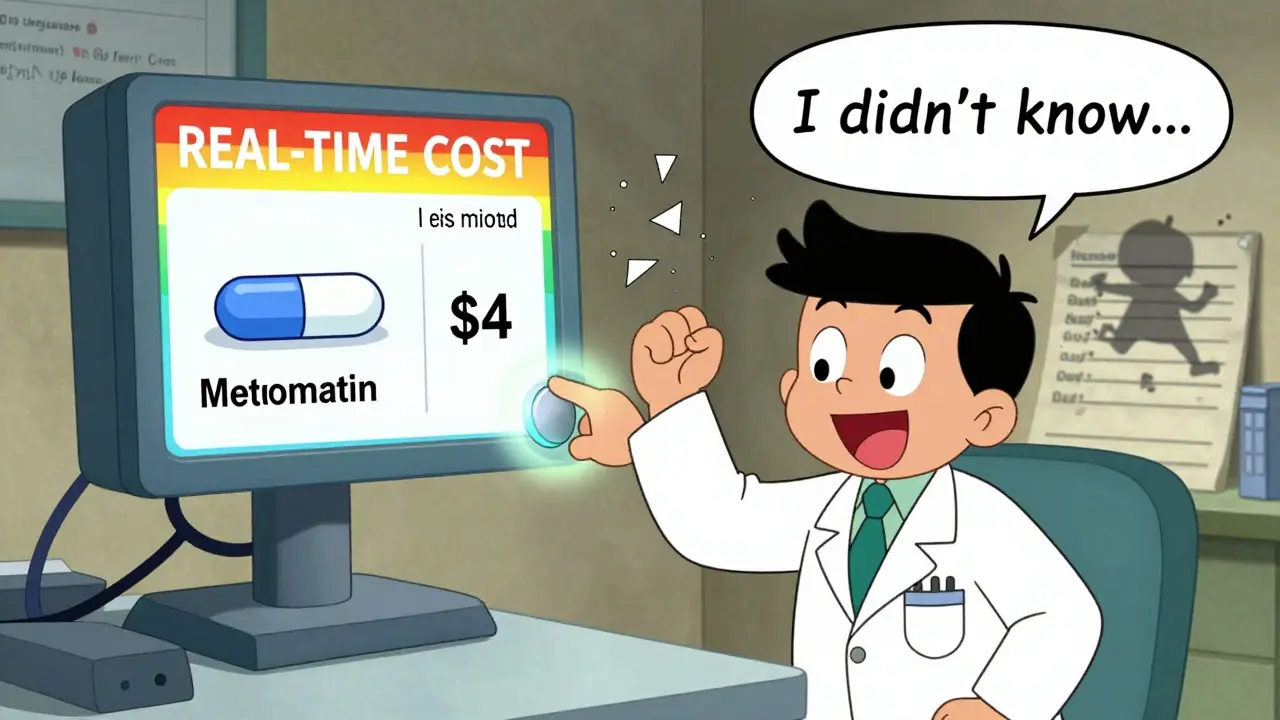
UCHealth, for example, built a real-time benefit tool (RTBT) into its electronic health record (EHR). When a doctor types in a drug name, the system shows the patient’s estimated out-of-pocket cost based on their insurance, pharmacy, and even copay assistance programs. The result? One in eight doctors changed their prescription. If the savings were over $20, that number jumped to one in six.
That’s not just a small tweak. That’s a behavioral shift. Doctors started choosing cheaper alternatives-generic metformin instead of a brand-name version, or a $4 generic statin instead of a $200 one. And patients? They filled their prescriptions more often.
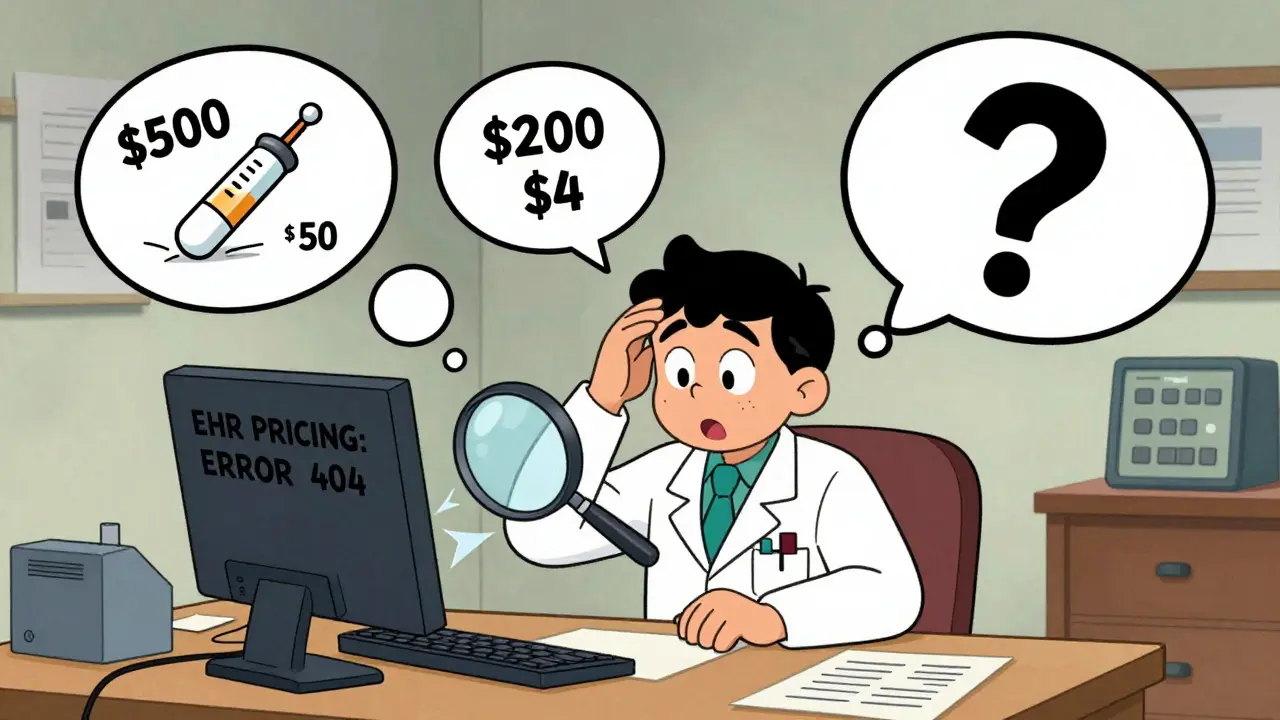
But here’s the problem: most EHRs don’t do this. As of late 2024, only 37% of U.S. health systems have any kind of real-time pricing tool. And even when they do, they’re often broken. One resident on Reddit complained that the system showed insurer prices but didn’t factor in their patient’s specific copay-so the alert said $15, but the patient paid $120.
Why Don’t More Systems Do This?
It’s expensive. UCHealth spent 18 months and $2.3 million building their tool. It’s complicated. Drug pricing is a mess. The same pill can cost $15 at Walmart and $320 at a specialty pharmacy. Insurance networks change daily. Prior authorizations vary by plan. There’s no national database.
And then there’s the learning curve. Doctors aren’t trained in pricing. Medical schools barely teach it. Only 44% of U.S. medical schools have any formal curriculum on drug costs. Most physicians learned pricing by trial and error-until now.
Younger doctors adapt faster. Those under 40 are 50% more likely to use cost tools than those over 55. Why? They grew up with apps that show prices in real time-for everything from Uber to groceries. They expect the same from their EHR.
The Bigger Picture: Value Over Price
Some experts argue that doctors shouldn’t focus on price at all-they should focus on value. Is this drug actually better than a cheaper one? Does it reduce hospitalizations? Improve quality of life?
That’s true. But here’s the catch: you can’t assess value if you don’t know the cost. A drug might be more effective-but if it costs $10,000 a month and the patient can’t afford it, it’s not value. It’s a dead end.
The 2022 Inflation Reduction Act changed the game. For the first time, Medicare can negotiate prices for top-selling drugs like insulin and Humira. And guess what? 80% of Americans, regardless of political party, support it.
But negotiation alone won’t fix this. If doctors still don’t know what drugs cost, they’ll keep prescribing expensive options-even when cheaper, equally effective ones exist.
What’s Next?
The future of prescribing isn’t just about better drugs. It’s about better information.
By 2027, 75% of U.S. health systems are expected to have advanced real-time pricing tools. That’s progress. But it’s not enough. We need:
- Standardized pricing data across all EHRs
- Integration of patient-specific copay estimates (not just insurer rates)
- Formal training in medical school on drug pricing and affordability
- Regulatory pressure to make price transparency mandatory
And we need to stop pretending this is just a patient problem. It’s a provider problem. A system problem. A moral problem.
Doctors want to help. But they’re being asked to make life-altering decisions without the most basic data. Imagine a pilot flying blind. That’s what this is.
It’s Not Just About Money
When a patient can’t afford their medication, it’s not just a financial issue. It’s a trust issue. They start to wonder: does my doctor care about me-or just the next bill?
Doctors who use cost-aware tools report higher patient satisfaction. Patients feel heard. They’re more likely to follow through. And doctors? They feel less guilty.
One primary care physician told a researcher: ‘I used to feel like I was handing out lottery tickets. Now I feel like I’m giving people a chance.’
That’s the goal. Not just lower costs. Better care.
Final Thought
Prescribing a drug is one of the most powerful decisions a clinician makes. It can save a life. Or it can break a family.
Knowing the price isn’t about being cheap. It’s about being competent. It’s about being human.
The tools exist. The data is there. The will is growing.
Now we just need to make it standard-before another patient skips a dose because their doctor didn’t know the cost.


kenneth pillet
Been a nurse for 18 years. Saw this daily. Docs think insulin is $40. It's $300. Patient skips doses. Comes back in crisis. No one's training them. No one's giving them the tools. It's not negligence-it's abandonment by the system.
And yeah, I've seen the RTBT tools work. One clinic cut ER visits by 30% just by switching to generic metformin. Simple. But nobody funds it.