
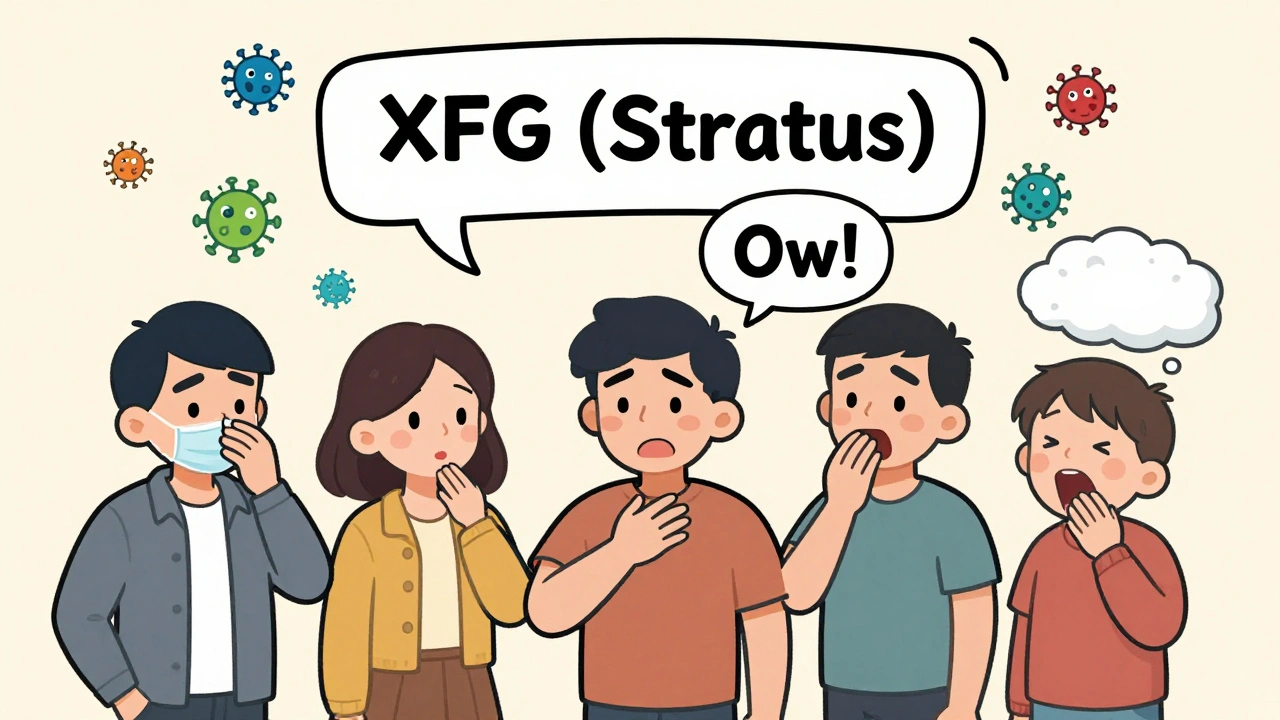
By late 2025, COVID-19 isn’t gone-it’s changed. The virus that shook the world is now part of the background noise of public health, like the flu. But that doesn’t mean it’s harmless. COVID-19 still lands people in hospitals, triggers long-term symptoms, and keeps evolving. Knowing what’s circulating, how vaccines work now, and what to do if you get sick can make all the difference.
What Symptoms Are You Actually Facing Today?
The early days of COVID-19 brought a very different set of symptoms: loss of taste or smell, sudden fever, and severe fatigue. Today, it looks more like a stubborn cold. The dominant variant as of October 2025 is XFG, also called Stratus. It accounts for 85% of cases nationwide, according to Nebraska Medicine. Its signature symptoms? Congestion, cough, sore throat, headache, fever, and muscle aches. Some people report GI issues like nausea or diarrhea, but those are less common than they were in 2020.Another variant, Nimbus, stands out for one sharp, stabbing pain in the throat-so intense it feels like a knife. That’s not just a sore throat. It’s a red flag for Nimbus, even if you’re vaccinated. You might not feel sick enough to stay home, but you can still spread it.
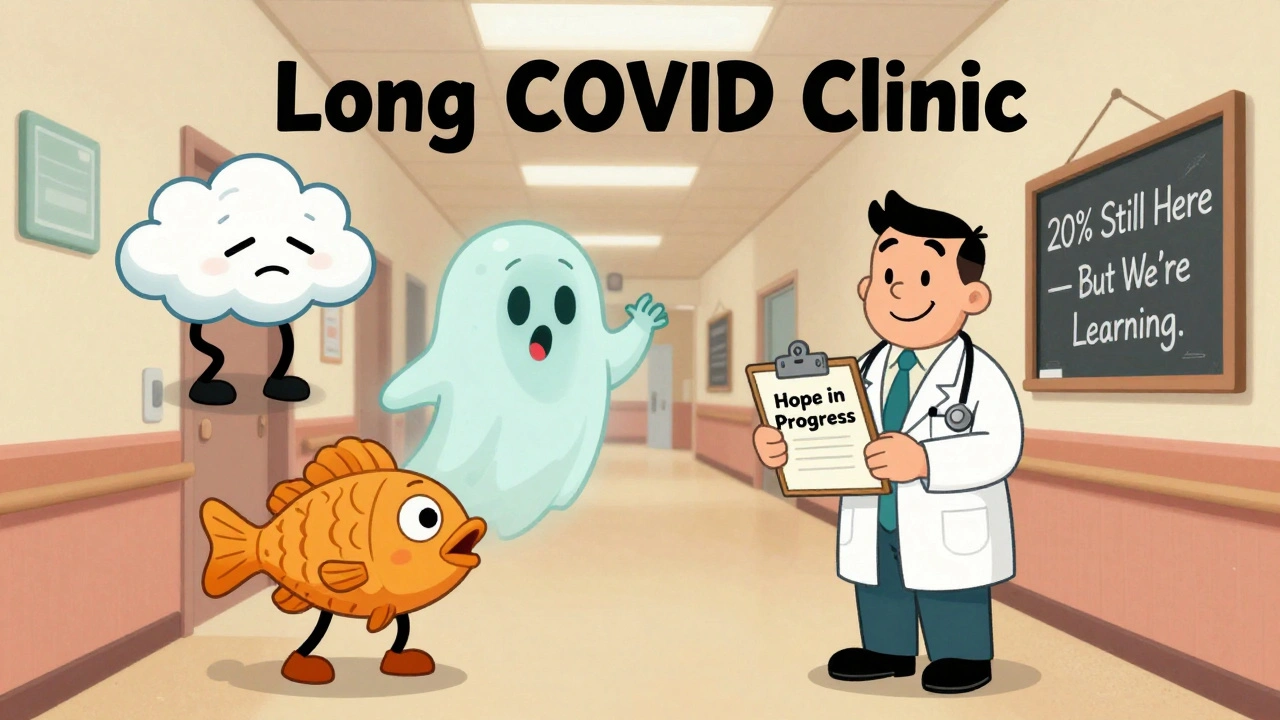
And here’s what no one talks about enough: long COVID. A June 2025 study in the Journal of Medical Virology found that 20% of people who had COVID-19 three years ago still deal with symptoms. Fatigue. Brain fog. Trouble breathing. Insomnia. Anxiety. These aren’t rare. They’re real. Hospitalized patients are at higher risk, but even mild cases can leave lasting effects.
Which Variants Are Running the Show in 2025?
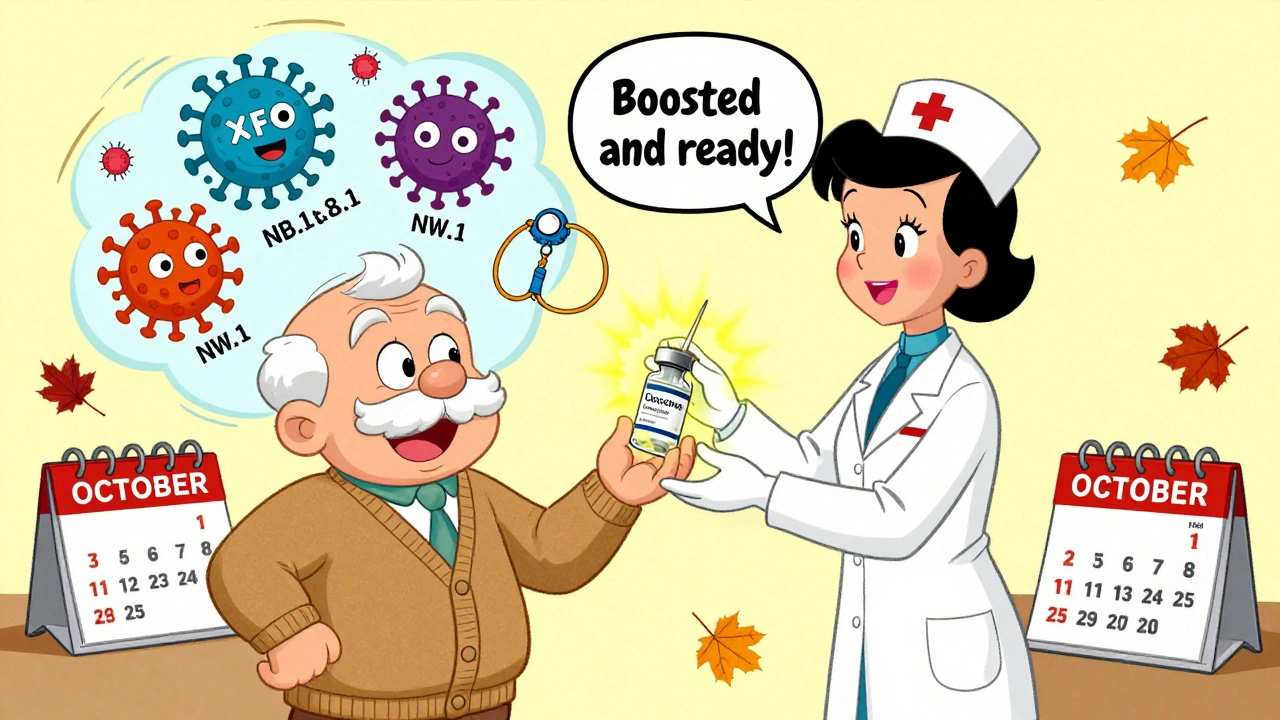
The original Omicron? Gone. The BA.5 variant? A relic. By late 2025, the virus has split into dozens of sublineages, but only a few are dominating. XFG (Stratus) leads the pack at 85%. Then there’s NB.1.8.1 at 7%, and NW.1 at 3%. These aren’t just names-they’re mutations that change how the virus behaves.Stratus is more contagious than earlier Omicron versions. It spreads faster in crowded places, especially indoors. But it’s less likely to cause severe lung damage than Delta or the original strain. That’s why many people think it’s "just a cold." But if you’re over 65, have diabetes, or are immunocompromised, it can still turn dangerous fast.
The CDC and WHO track these variants using genomic sequencing. Every positive test gets checked. That’s how we know XFG is everywhere. That’s also why vaccine updates happen so quickly. The virus doesn’t wait. Neither can we.
What Vaccines Are Working Right Now?
The vaccines you got in 2023? They’re outdated. The 2024-2025 shots were designed to target KP.2, a strain that spiked in early 2024. Pfizer and Moderna’s 2024-2025 vaccines are based on KP.2. Novavax’s version targets JN.1, a different but closely related variant. Here’s the key: Novavax’s vaccine still works well against KP.2 and KP.3, even though it wasn’t made for them. That’s because of cross-neutralizing antibodies-your immune system recognizes similar parts of the virus, even if it’s not an exact match.As of October 2025, the CDC recommends everyone 6 months and older get an updated shot every year. The best time? Early fall. Get it before winter hits. Don’t wait until you’re exposed. The vaccine’s strongest protection lasts about three months. After that, it still helps, but less so.
What if you just had COVID? Wait at least three months after symptoms or a positive test before getting the next shot. That gives your body time to build natural immunity, and the vaccine then boosts it without overloading you.
Side effects? Most people report nothing. Of 1,245 people surveyed in June 2025, 87% had mild or no side effects. The most common? Sore arm (28%), fatigue (32%), headache (19%). None of these last more than two days. If you’re worried about safety, remember: over 72% of Americans have had at least one dose. That’s 240 million people. The safety record is solid.
Treatment Options: What Actually Helps?
If you test positive, here’s what works-and what doesn’t.Antivirals: Paxlovid (nirmatrelvir/ritonavir) is still the gold standard for high-risk patients. It cuts hospitalization risk by nearly 90% if taken within five days of symptoms. But it’s not for everyone. It interacts with many common medications, like statins and blood thinners. Talk to your doctor before taking it.
Monoclonal antibodies: These used to be a big deal. Now? Most are useless against current variants. The last one that still works, bebtelovimab, was pulled from the market in 2023. The FDA approved a new one in June 2025-clesrovimab-but it’s only for RSV, not COVID-19. So no monoclonals are currently recommended for COVID-19 treatment.
Supportive care: Rest. Hydrate. Take acetaminophen or ibuprofen for fever and pain. Use a humidifier. Nasal saline sprays help with congestion. These aren’t glamorous, but they work. And they’re safe.
Antibiotics? No. COVID is viral. Antibiotics kill bacteria. Taking them won’t help and could make you sick later by killing good gut bacteria.
Supplements like vitamin D, zinc, or vitamin C? They won’t cure you. Some people swear by them, but no study shows they reduce hospitalization or speed recovery. Don’t waste your money.
Who Needs to Be Extra Careful?
Not everyone is at the same risk. You’re in the high-risk group if you:- Are 65 or older
- Have heart disease, lung disease, or diabetes
- Are on immunosuppressants (after transplant, chemotherapy, or for autoimmune conditions)
- Are pregnant
- Have obesity (BMI over 30)
If you’re in this group, get your updated shot. Wear a high-quality mask (N95 or KN95) in crowded indoor spaces. Avoid nonessential travel during surges. Talk to your doctor about having a plan ready-if you test positive, you shouldn’t wait to start treatment.
Even if you’re healthy, you can still pass the virus to someone who can’t fight it. That’s why masking in hospitals, nursing homes, and on public transit still matters.
Why Do People Still Get Sick After Vaccination?
This is the biggest misunderstanding. Vaccines don’t promise you won’t get infected. They promise you won’t end up in the hospital. And they mostly deliver.Reddit user u/VariantWatcher99 caught Stratus in April 2025, even though they were boosted in October 2024. They had seven days of congestion and muscle aches. Their unvaccinated neighbor? Needed oxygen. That’s the difference.
A study from Ohio State University Health found vaccinated people recover faster-5 to 10 days on average-compared to unvaccinated people who often take two weeks or more. And they’re far less likely to develop long COVID.
Think of the vaccine like a seatbelt. It doesn’t stop the crash. But it keeps you alive when it happens.
What’s Next for COVID-19?
The FDA has already approved the 2025-2026 vaccine formula, based on variants that spiked in spring and summer 2025. The goal? Match the vaccine to what’s circulating as closely as possible. Experts now predict 85-90% alignment between the vaccine and dominant strains-far better than the 40-60% match we had in 2021.Dr. Anthony Fauci predicted in July 2025 that SARS-CoV-2 will behave like the flu: seasonal, predictable, and manageable with annual shots. That’s the new normal.
And long COVID? It’s no longer an afterthought. Hospitals are starting to create dedicated clinics for it. Doctors are learning how to treat fatigue, brain fog, and heart palpitations that linger for years. Research is accelerating. Hope is growing.
The pandemic phase is over. But the disease isn’t. Staying informed, staying vaccinated, and staying cautious when needed-that’s how we live with it now.
What are the most common COVID-19 symptoms in late 2025?
The most common symptoms today are congestion, cough, sore throat, headache, fever, and muscle aches. The dominant variant, XFG (Stratus), causes these symptoms in most cases. A sharp, stabbing throat pain is a hallmark of the Nimbus variant. Loss of taste or smell is rare now.
Which COVID-19 vaccine should I get in 2025?
Get the updated 2024-2025 vaccine from Pfizer or Moderna-they target KP.2. Novavax’s version targets JN.1 but still protects well against KP.2 and other variants. All are effective at preventing hospitalization. Choose based on availability and your doctor’s advice. You don’t need to wait for a specific brand.
Do I need a booster if I had COVID recently?
Yes, but wait at least three months after your infection. Your body builds natural immunity after a positive test, and getting the vaccine too soon may reduce its effectiveness. Waiting gives you the best immune response from both infection and vaccination.
Is Paxlovid still effective against current variants?
Yes. Paxlovid remains highly effective at preventing severe illness if taken within five days of symptoms. It’s recommended for high-risk individuals. However, it interacts with many medications, so always consult your doctor before starting it.
How long does vaccine protection last?
Strong protection against severe disease lasts about three months after vaccination. After that, protection weakens but doesn’t disappear. You’re still less likely to be hospitalized than someone unvaccinated. That’s why annual shots are recommended-like the flu vaccine.
Can you get long COVID after a mild infection?
Yes. Studies show 20% of people who had COVID-19-regardless of how mild their initial illness-still have symptoms after three years. Fatigue, brain fog, shortness of breath, and anxiety are the most common. Even young, healthy people can develop long COVID.
Should I still wear a mask in public?
If you’re at high risk, or if you’re around people who are, yes. Wear an N95 or KN95 mask in crowded indoor spaces like hospitals, public transit, or nursing homes. It’s not about fear-it’s about protecting others. Masking is still one of the most effective tools to reduce transmission.
Are there new treatments on the horizon?
Research is focused on next-gen antivirals and broad-spectrum treatments that work against multiple variants. Monoclonal antibodies are mostly obsolete now because the virus mutates too fast. The future lies in oral antivirals that are easier to take, cheaper, and work against a wider range of strains. Clinical trials are ongoing, but nothing has been approved yet.
What to Do Next
If you haven’t gotten your 2024-2025 vaccine yet, get it. It’s still effective. If you’re over 65 or have a chronic condition, talk to your doctor about your risk level. If you’ve had COVID recently, wait three months before your next shot. If you’re feeling sick, test early. Don’t wait for symptoms to get worse.COVID-19 isn’t going away. But we’re better prepared than ever. Vaccines work. Treatments exist. We know how to protect ourselves. The key now isn’t panic-it’s smart, consistent action.


Taya Rtichsheva
so like... covid's just a cold now? cool cool i'll just sneeze on my boss and call it a day 😅