
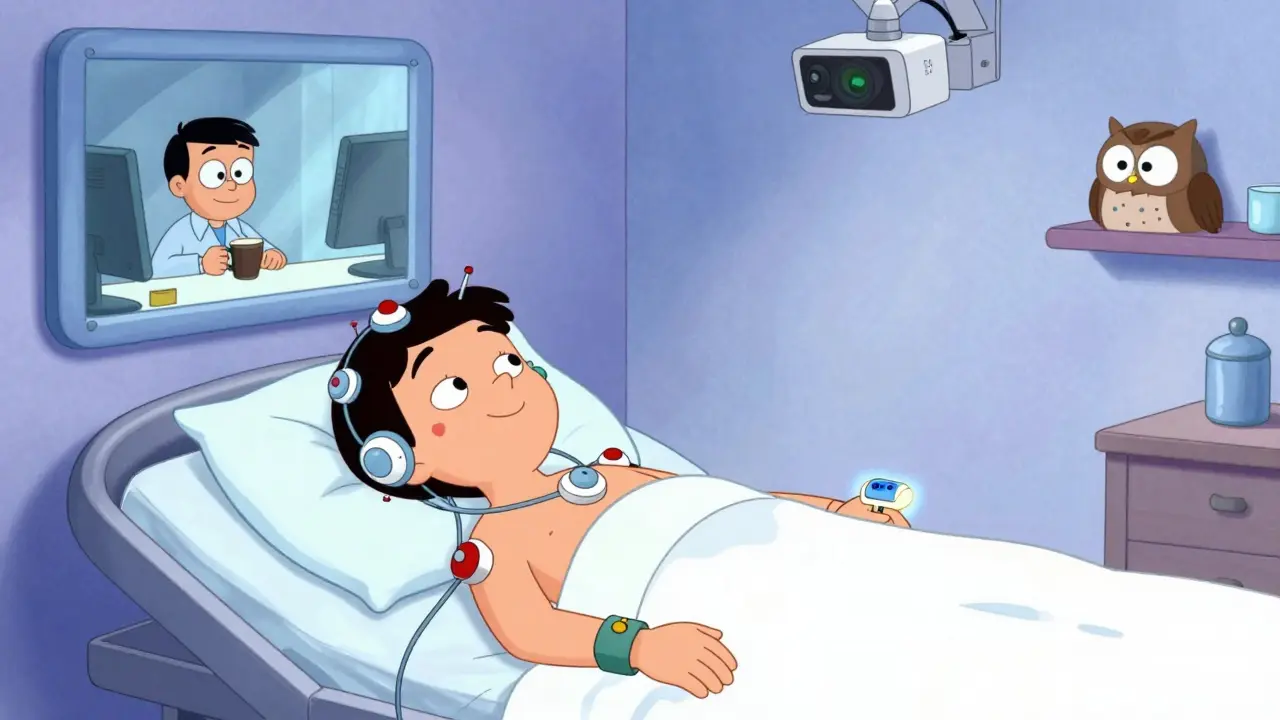
Imagine lying in bed, trying to fall asleep, but you’re wired up like a robot with sensors on your scalp, chin, chest, and legs. It sounds strange, maybe even a little scary. But for hundreds of thousands of people each year, this is how they find out why they’re exhausted all day, snore loudly, or wake up gasping for air. That procedure? It’s called polysomnography - the gold standard sleep study used to uncover what’s really happening when you’re asleep.
What Exactly Is Polysomnography?
Polysomnography, often just called a sleep study, isn’t just about checking if you snore. It’s a full-night, multi-parameter monitoring test that records your brain waves, eye movements, muscle activity, heart rhythm, breathing patterns, and oxygen levels - all at once. The word itself breaks down to ‘poly’ (many), ‘somno’ (sleep), and ‘graphy’ (recording). So, it’s literally a recording of many things happening during your sleep. This isn’t a home test you can do with a smartwatch. Polysomnography requires a controlled environment - a quiet, dark room in a sleep center or hospital - with a certified sleep technologist watching your data in real time from an adjacent room. The goal? To map out your entire sleep cycle and catch any disruptions that might be hiding in plain sight. Unlike home sleep apnea tests that only track breathing and oxygen, polysomnography captures sleep architecture. That means it tells you how long you spent in each stage of sleep: light sleep, deep sleep, and REM sleep. It can spot if you’re skipping deep sleep entirely, or jumping straight into REM - a red flag for narcolepsy. It can detect leg jerks, abnormal movements, or even episodes where you scream or get out of bed without remembering it. These are things home tests simply can’t catch.How the Test Works: What’s Attached to You?
You’re not getting surgery. No needles. No pain. But you will feel a few sticky patches and belts. Around 22 sensors are placed on your body, each with a specific job:- EEG electrodes on your scalp track brain waves to determine if you’re in light, deep, or REM sleep.
- EOG sensors near your eyes record eye movements - rapid ones mean you’re dreaming in REM sleep.
- EMG sensors on your chin and legs detect muscle tone. If your leg muscles twitch every 20 seconds, it could be periodic limb movement disorder.
- ECG leads on your chest monitor your heart rate and rhythm. Irregular beats during sleep can signal underlying issues.
- Chest and abdominal belts measure how hard you’re trying to breathe. Are you straining but not getting air? That’s obstructive sleep apnea. Are you not trying at all? That’s central sleep apnea.
- Nasal airflow sensors and thermistors detect whether air is moving through your nose and mouth.
- Pulse oximeter on your finger tracks blood oxygen levels. If your oxygen drops below 90% repeatedly, your brain wakes you up - even if you don’t remember it.
- Body position sensor tells if you sleep on your back, which often makes apnea worse.
- Audio and video recording captures snoring, gasps, talking, or even sleepwalking.
What Happens During the Night?
You arrive at the sleep center 1-2 hours before your usual bedtime. You’re encouraged to follow your normal routine - no naps, no caffeine after noon. You can bring your own pillow, pajamas, or even a book to read before lights out. Once the sensors are on, you’re left alone to sleep. The technologist monitors everything from another room. If a sensor comes loose, they’ll quietly come in and fix it. If you need to use the bathroom, they’ll unhook one or two leads - no big deal. You’re not trapped. You’re not alone. Most people sleep enough for a diagnosis, even if it’s not perfect. About 85% of patients get usable data on the first try. Some take a night or two to adjust, which is normal. The lab isn’t your bedroom - it’s a hospital room with a camera and wires. But it’s designed to feel as homey as possible. No fluorescent lights. No beeping machines. Just quiet.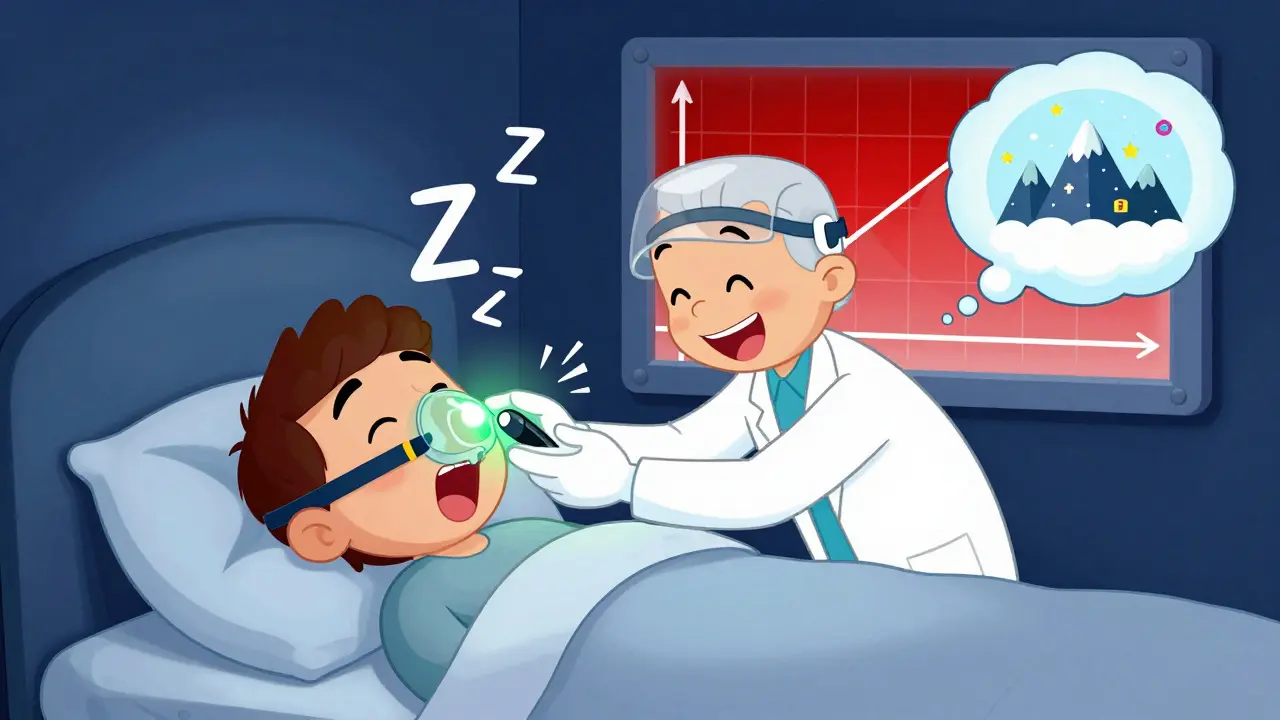
How Are Results Analyzed?
After the study, the raw data - often over 1,000 pages of numbers and waveforms - goes to a board-certified sleep physician. They don’t just glance at it. They spend 2-3 hours reviewing every minute of your sleep. They look for:- How many times you stopped breathing per hour (the Apnea-Hypopnea Index, or AHI). Over 5 events/hour is abnormal. Over 30 is severe.
- How long your oxygen levels dropped below normal.
- How much time you spent in each sleep stage. Did you skip deep sleep? Did you enter REM too early?
- Any abnormal movements - leg jerks, head movements, or behaviors like sleepwalking.
- Heart rhythm changes tied to breathing pauses.
- If you have breathing pauses with chest movement - that’s obstructive sleep apnea. Your airway is blocked, but your body is still trying to breathe.
- If you have pauses with no chest movement - that’s central sleep apnea. Your brain isn’t sending the signal to breathe.
- If you fall asleep in under 5 minutes during daytime naps after the study - that’s a sign of narcolepsy.
- If you kick your legs every 20-40 seconds - that’s periodic limb movement disorder.
- If you scream, punch, or get out of bed during REM sleep - that’s REM sleep behavior disorder.
Polysomnography vs. Home Sleep Tests
You might wonder: Why not just use a home test? They’re cheaper, easier, and you sleep in your own bed. Here’s the catch: home tests only measure 3-4 things - airflow, oxygen, breathing effort, and heart rate. They can’t tell if you’re in REM sleep. They can’t detect narcolepsy. They can’t catch sleepwalking. They can’t distinguish between obstructive and central apnea. About 15-20% of home tests fail - the device falls off, you don’t wear it long enough, or the data is too messy to read. In-lab polysomnography fails less than 5% of the time. Insurance companies know this. Medicare and most private insurers cover polysomnography when you have symptoms like loud snoring, witnessed apneas, or daytime fatigue - especially if a home test was inconclusive. For anything beyond simple sleep apnea - narcolepsy, parasomnias, unexplained insomnia - polysomnography is the only option.Split-Night Studies: Diagnosis and Treatment in One Night
If you’re clearly suffering from moderate to severe sleep apnea early in the night, the sleep doctor might decide to do a split-night study. The first half is diagnostic - same as a regular study. If your apnea is bad enough (usually over 30 events per hour), they’ll wake you up around 2 or 3 a.m., fit you with a CPAP mask, and adjust the pressure while you sleep. This saves you from coming back for a second test. About 35% of polysomnography studies now include CPAP titration. It’s efficient. It’s common. And for many people, it means starting treatment the very next day.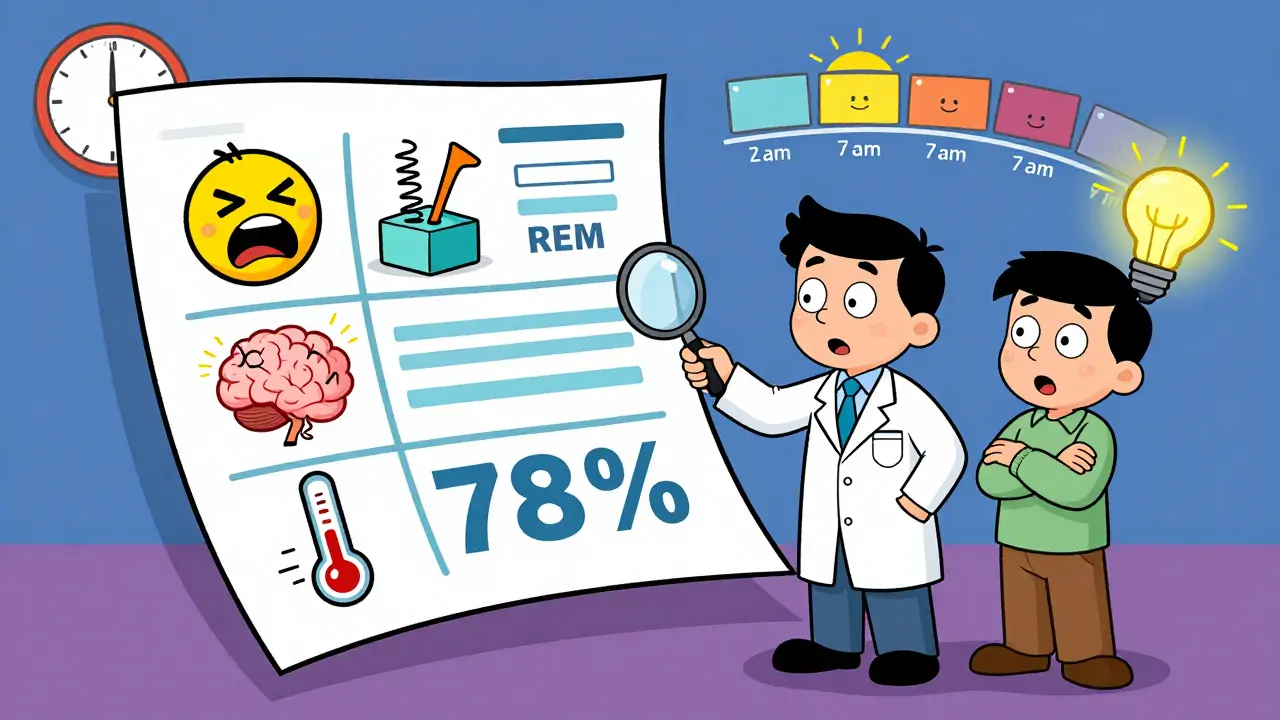
What Happens After the Test?
You’ll get your results in 1-2 weeks. The sleep doctor will explain them in person or over a phone call. If you have sleep apnea, you’ll likely be prescribed CPAP therapy. If you have narcolepsy, you might start on stimulants or sodium oxybate. For leg movements, medication or iron supplements might help. For REM behavior disorder, safety measures like padding the floor or sleeping separately may be recommended. You won’t just get a diagnosis - you’ll get a plan. And for most people, that plan works. Within weeks, people report feeling less tired, more focused, and less irritable. Their partners sleep better too.Who Needs This Test?
Polysomnography isn’t for everyone. But if you have:- Loud, chronic snoring
- Witnessed breathing pauses during sleep
- Daytime sleepiness that doesn’t go away
- Unexplained insomnia
- Leg jerks or movements that wake you or your partner
- Waking up gasping or choking
- Sleepwalking, night terrors, or acting out dreams
- High blood pressure that won’t respond to medication
What About Comfort and Anxiety?
It’s normal to feel nervous. “What if I can’t sleep?” “Will the wires hurt?” “Will they watch me the whole time?” The truth? Most people sleep better than they expect. The technologists are trained to help you relax. They’ll explain each sensor. They’ll answer questions. They’ll check in. You’re not a lab rat - you’re a patient. And the payoff? If you have sleep apnea, you’re cutting your risk of stroke, heart attack, and diabetes. If you have narcolepsy, you’re getting treatment that can change your life. If you have restless legs, you’re finally sleeping through the night. The discomfort of the test lasts one night. The relief lasts years.Is polysomnography painful?
No, polysomnography is not painful. Sensors are attached with adhesive or elastic bands - no needles, no injections. You might feel slight pressure from the chest belt or a sticky patch on your skin, but most people say it’s no worse than wearing a sports heart monitor. The biggest challenge is adjusting to sleeping with equipment on, not the pain.
Can I use the bathroom during the study?
Yes. The sleep technologist can quickly disconnect one or two leads so you can get up and use the bathroom. You won’t be stuck in bed. This happens often - especially for people who normally wake up at night.
Do I need to sleep all night for the test to work?
You don’t need a full 8 hours. Most sleep studies can be diagnosed with as little as 2-3 hours of sleep, especially if you have clear signs of apnea or abnormal movements. The goal is to capture at least one full sleep cycle, including REM sleep. Most people get enough, even if they’re not sleeping like they do at home.
How long does it take to get results?
Results usually take 1-2 weeks. The raw data is complex - over 1,000 pages - and must be reviewed by a board-certified sleep physician. They analyze every minute of your sleep, looking for patterns. Once the report is ready, your doctor will schedule a follow-up to explain it.
Is polysomnography covered by insurance?
Yes, in most cases. Medicare covers 80% of the cost if your doctor documents symptoms like snoring, witnessed apneas, or excessive daytime sleepiness. Most private insurers require prior authorization, but they typically cover it for suspected sleep apnea, narcolepsy, or other serious sleep disorders. Home sleep tests are cheaper but often not enough - insurers usually require an in-lab study for a definitive diagnosis.
Can polysomnography diagnose insomnia?
Yes, but not directly. Polysomnography doesn’t diagnose psychological insomnia. But it can rule out other causes - like sleep apnea, restless legs, or circadian rhythm disorders - that mimic insomnia. If your sleep study shows you’re sleeping normally but still feel tired, your doctor may refer you to a behavioral sleep specialist.
Are there alternatives to in-lab polysomnography?
Home sleep apnea tests (HSAT) are an alternative - but only for people with a high likelihood of moderate to severe obstructive sleep apnea and no other sleep disorders. HSATs miss up to 20% of cases and can’t diagnose narcolepsy, parasomnias, or central sleep apnea. For complex cases, in-lab polysomnography remains the only reliable option.
What should I do before the test?
Avoid caffeine after noon on the day of the test. Don’t nap in the afternoon. Stick to your normal sleep schedule for at least 3 days before. Don’t use lotions or oils on your skin - they interfere with sensor adhesion. Bring comfortable pajamas, toiletries, and anything that helps you sleep - like your own pillow or a book.


swati Thounaojam
I was nervous about the wires, but honestly? It felt like a spa night with extra sensors.