
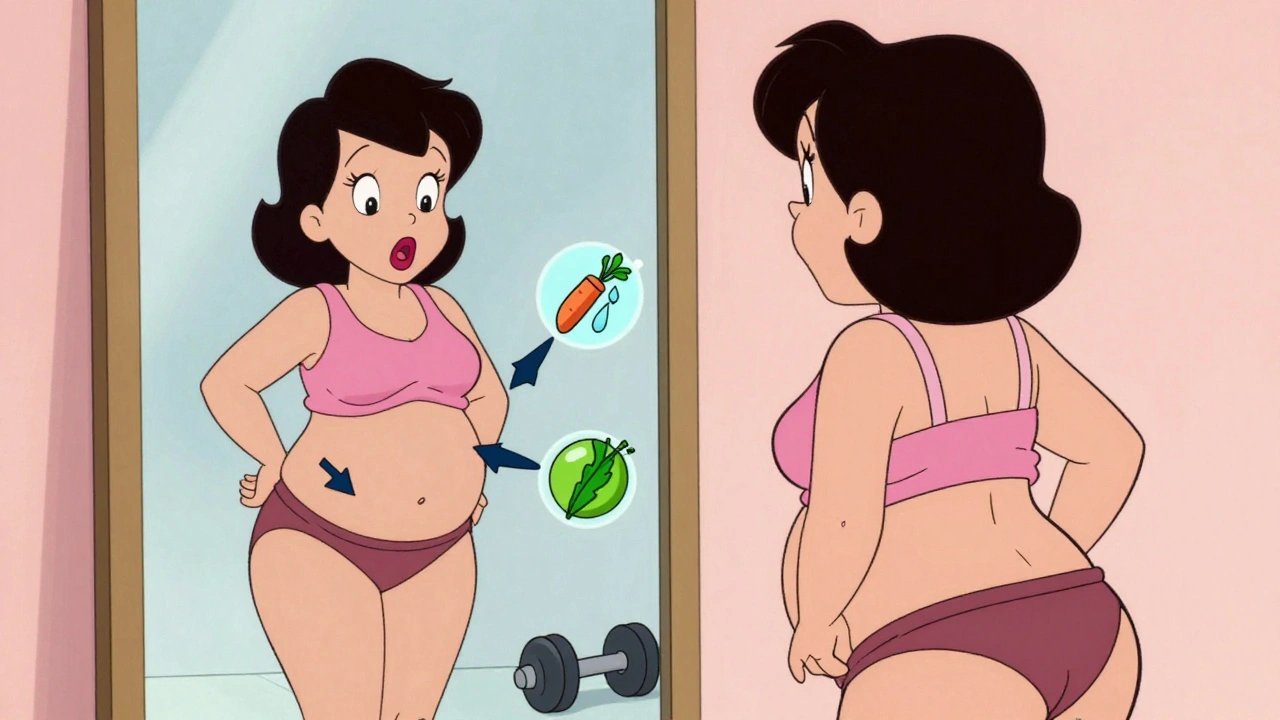
Women in their 40s and 50s often wake up one day to find their jeans don’t zip anymore-even though they haven’t changed what they eat or how much they move. It’s not laziness. It’s not a lack of willpower. It’s biology. Menopause weight gain isn’t just about eating too much sugar or skipping the gym. It’s a complex shift in hormones, muscle, and metabolism that rewires how your body stores fat-and where.
Why Your Body Changes During Menopause
Before menopause, estrogen keeps fat stored in your hips, thighs, and buttocks. That’s why many women naturally carry weight in those areas. But as estrogen drops-by 60 to 70% during the transition-your body doesn’t just lose a hormone. It rewires its fat storage system. Postmenopausal women start storing fat differently. Instead of subcutaneous fat under the skin, fat moves deep inside the abdomen as visceral fat. This isn’t just cosmetic. Visceral fat is metabolically active. It releases inflammatory chemicals that raise insulin resistance, increase blood pressure, and raise your risk of heart disease. Studies show postmenopausal women are nearly five times more likely to develop abdominal obesity than they were before menopause. This shift happens even if you eat the same amount. Research from the Study of Women’s Health Across the Nation (SWAN) tracked over 3,300 women for more than 20 years. They found that women gained about 1.5 kilograms (3.3 pounds) per year during perimenopause-even when their calorie intake and activity levels stayed the same. After menopause, the pace slows to about 0.68 kilograms (1.5 pounds) per year. But the damage is already done: fat has moved to your midsection.The Hormonal Rollercoaster
Estrogen isn’t the only player. As estrogen falls, testosterone becomes relatively higher. That sounds like a good thing-until you realize it’s pushing fat toward your belly. At the same time, leptin, the hormone that tells your brain you’re full, drops by 20-30%. Meanwhile, ghrelin, the hunger hormone, spikes by 15-25% because hot flashes and night sweats wreck your sleep. Poor sleep doesn’t just make you tired. It triggers cravings. Your brain starts chasing quick energy-sugary snacks, refined carbs, caffeine. You eat more, even if you don’t feel hungry. And because your metabolism slows down, those extra calories turn into fat instead of fuel. Your resting metabolic rate drops by 2-3% every decade after 30. Menopause adds another 1-2% annual decline because you’re losing muscle. And muscle burns calories-even when you’re sitting. Lose 3-8% of your muscle mass per decade, and your body becomes a fat-storing machine.Why Diets That Worked Before Now Fail
Many women say: “I lost 15 pounds in my 30s on the same diet. Why won’t it work now?” Because your body isn’t the same. Your hormones have changed. Your muscle mass is lower. Your metabolism is slower. A calorie isn’t just a calorie anymore. What matters is what you’re eating and how your body uses it. A 2023 survey by University Hospitals found that 67% of women reported their old diets stopped working during perimenopause. Reddit users in r/menopause share the same frustration: “I’ve run 5Ks for 20 years. Now I gain weight just from eating salad.” The problem isn’t the food. It’s the mismatch between your old strategy and your new biology.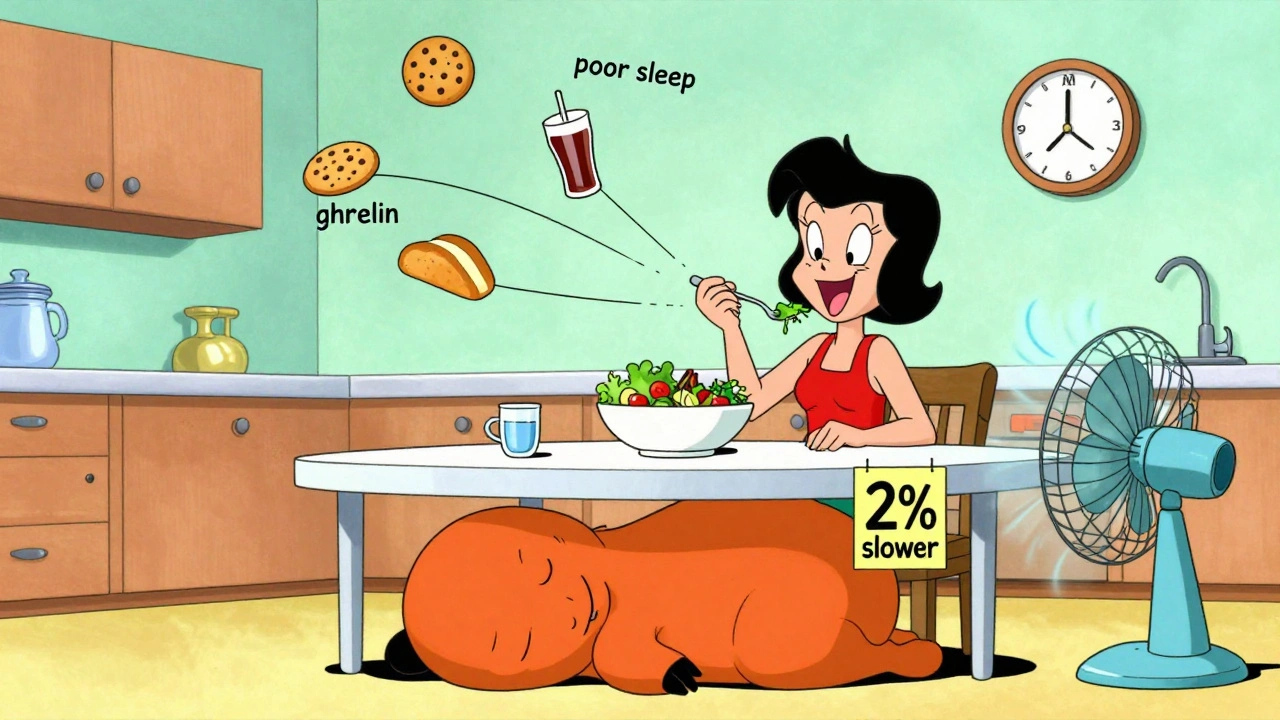
What Actually Works: Muscle, Protein, and Movement
The good news? You can fight back. But you need a new plan. Strength training is non-negotiable. Lifting weights or doing resistance exercises 2-3 times a week builds muscle. And muscle burns calories at rest. A 2022 clinical trial showed that women who did strength training 3 times a week for six months gained 1.8-2.3 kg of lean muscle and lost 8-12% of abdominal fat-even without cutting calories. Protein is your new best friend. After 40, your body becomes resistant to building muscle from food. You need more. Aim for 25-30 grams of protein per meal. That’s about 3 eggs, a chicken breast, or a scoop of whey protein. The British Menopause Society recommends 1.2-1.6 grams of protein per kilogram of body weight daily. If you weigh 70 kg (154 lbs), that’s 84-112 grams of protein a day. Move more, but not just for calories. Walking helps, but it won’t reverse muscle loss. Add high-intensity interval training (HIIT) 1-2 times a week. Short bursts of effort-like 30 seconds of sprinting followed by 90 seconds of walking-boost metabolism for hours after you finish. It also improves insulin sensitivity, which helps stop fat storage. Sleep isn’t optional-it’s medicine. Aim for 7-8 hours. Better sleep lowers ghrelin, raises leptin, and reduces cravings. If hot flashes keep you up, try cooling pajamas, a fan, or speaking with your doctor about low-dose hormone therapy. Sleep is the foundation of every other strategy.The Real Risk: It’s Not Just Weight-It’s Health
Menopause weight gain isn’t just about looking different. It’s about living longer. Visceral fat increases your risk of metabolic syndrome by 3.2 times. That means higher blood sugar, high blood pressure, bad cholesterol, and insulin resistance-all warning signs for heart disease and type 2 diabetes. Dr. Mary Jane Minkin from Yale says the shift to abdominal fat raises cardiovascular risk by 25-30%, even if your overall weight is normal. This isn’t vanity. It’s survival.What’s Changing in Medicine
Doctors are finally catching up. The North American Menopause Society now recommends measuring waist circumference at every checkup. If it’s over 88 cm (35 inches), you’re at higher risk. In January 2023, Mayo Clinic started offering a menopause-specific metabolic test that checks 17 hormonal and blood markers to create a personalized plan. The NIH is funding a $12.5 million study called EMPOWER to see if early hormone therapy can prevent fat redistribution. Even the FDA approved bimagrumab for Phase 3 trials in September 2023-a drug that increases muscle mass by 5-7% and cuts fat by 8-10% in just 24 weeks. It’s not available yet, but it shows where the field is headed: personalized, biology-driven care.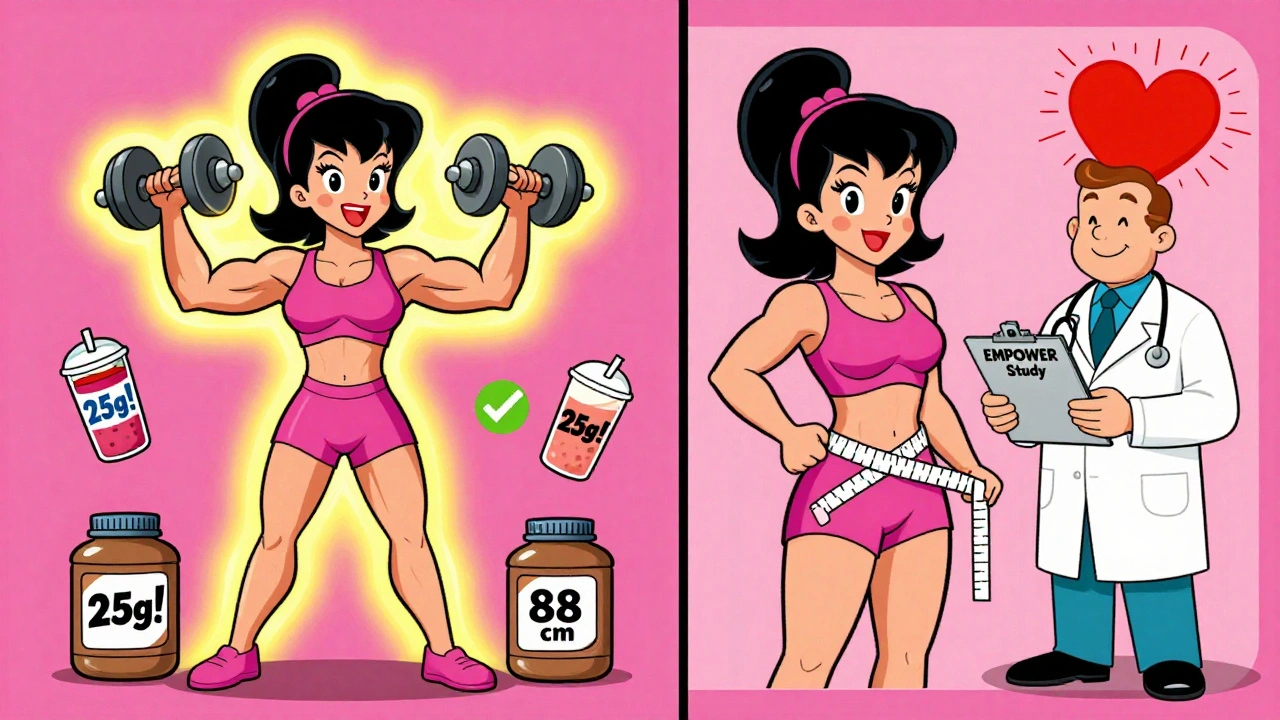
What to Do Right Now
You don’t need to wait for a drug or a miracle. Start today:- Do resistance training 3 times a week-bodyweight squats, dumbbells, resistance bands. Even 20 minutes helps.
- Hit 25-30 grams of protein at every meal. Breakfast isn’t just cereal. Try eggs, Greek yogurt, tofu, or a protein shake.
- Add 1-2 short HIIT sessions a week. No gym needed. Just 5 rounds of 30 seconds of jumping jacks or stair climbs, followed by 90 seconds of rest.
- Protect your sleep. Cool room. No screens 1 hour before bed. Consider magnesium or melatonin if hot flashes disrupt you.
- Measure your waist. Write it down. Track it monthly. It’s a better indicator of health than the scale.


Kyle Flores
Been there. Lost 10 lbs in my 30s doing keto. Now I eat the same way and gain weight just from looking at bread. My doctor said it’s not me-it’s my estrogen. Felt like a weight lifted off my shoulders. Not lazy. Not failing. Just biology.