
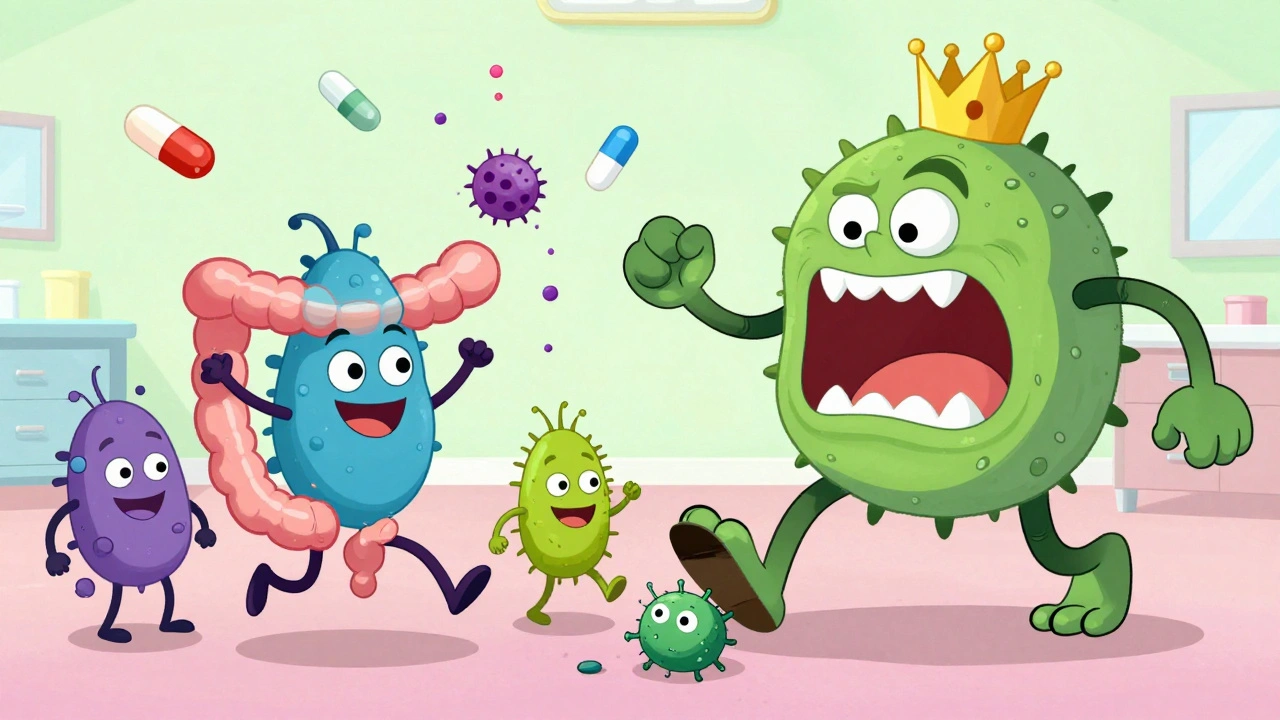
When antibiotics go wrong, they don’t just kill bad bacteria-they wipe out the good ones too. And when that happens in your gut, C. diff colitis can follow. It’s not just a bad stomach bug. It’s a serious, sometimes deadly infection that starts with diarrhea but can spiral into colon perforation, sepsis, or even death. Every year in the U.S. alone, over half a million people get it. And for many, it doesn’t go away after one round of treatment. It comes back. Again. And again.
How Antibiotics Trigger C. diff
C. difficile, or C. diff, is a bacteria that lives quietly in some people’s guts without causing harm. But when you take antibiotics-especially broad-spectrum ones-it wipes out the friendly bacteria that normally keep C. diff in check. Suddenly, C. diff multiplies like crazy and starts pumping out toxins that destroy the lining of your colon. That’s when the diarrhea, cramps, fever, and nausea kick in. Not all antibiotics carry the same risk. Some are far more dangerous than others. Studies show that clindamycin, later-generation cephalosporins like ceftriaxone, and fluoroquinolones like ciprofloxacin are the worst offenders. But one of the biggest surprises? Piperacillin-tazobactam, a common hospital antibiotic, carries the highest risk of all-nearly double the chance of triggering C. diff compared to other drugs. The timing matters too. The risk doesn’t just spike right after you start antibiotics. It creeps up. Each extra day on antibiotics increases your risk by 8%. And after 14 days, the danger shoots up again. That’s why doctors are now told to review antibiotic prescriptions within 48 to 72 hours. If you’re on an antibiotic for more than two weeks, ask: Is this still necessary?Who’s Most at Risk?
Older adults, especially those over 65, are most vulnerable. But it’s not just hospitals anymore. About half of all C. diff cases now happen in the community-people who never set foot in a hospital. These are folks who took antibiotics for a sinus infection, a urinary tract infection, or even a dental procedure. One study found that nearly 50% of people who got C. diff had taken an antibiotic within the last 30 days. There’s another hidden group: asymptomatic carriers. These are people who have C. diff in their gut but show no symptoms. They’re not sick, but they can spread it to others. And if they take antibiotics, their risk of developing full-blown colitis skyrockets-by nearly 28 times. The scary part? Doctors don’t test for this. You could be carrying it and never know.Standard Treatments Often Fail
The go-to treatments for C. diff are antibiotics: vancomycin or fidaxomicin. Vancomycin works for many, but it’s not perfect. About 20-30% of patients get it back within weeks. And each recurrence makes the next one more likely. After two recurrences, your chances of a third jump to 60%. After three, it’s over 80%. Fidaxomicin is better. It’s more expensive-around $4,000 for a 10-day course-but it has a higher sustained cure rate than vancomycin. Still, even fidaxomicin doesn’t fix the root problem: your gut microbiome is destroyed. You’re treating the infection, not restoring the ecosystem that should’ve kept it away in the first place. That’s where the real breakthrough comes in.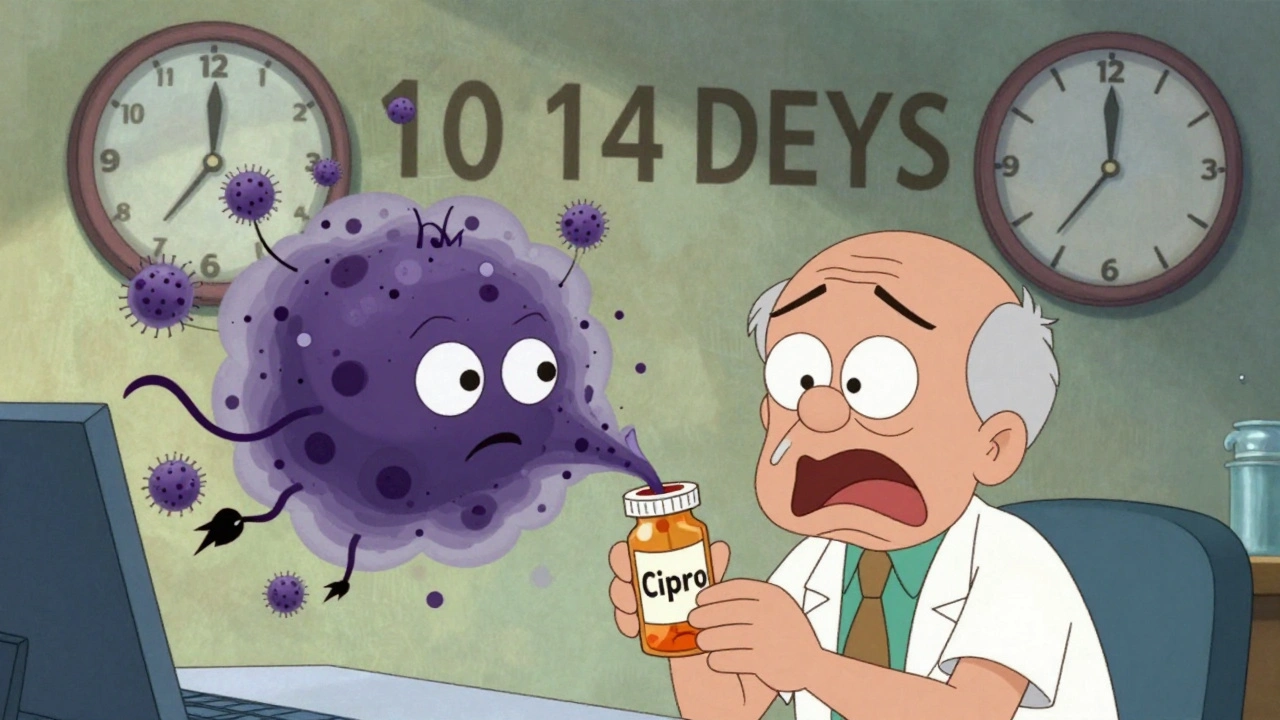
Fecal Transplant: The Gut’s Reset Button
Fecal microbiota transplantation (FMT)-or fecal transplant-is exactly what it sounds like: transferring healthy gut bacteria from a donor’s stool into a patient’s colon. It sounds bizarre, but it’s one of the most effective treatments in modern medicine. Back in 2013, a landmark study in the New England Journal of Medicine compared FMT to standard vancomycin treatment for recurrent C. diff. The results were shocking. FMT cured 94% of patients after just one or two treatments. Vancomycin? Only 31%. That’s not a slight edge. That’s a revolution. Today, FMT has a success rate of 85-90% for people with three or more recurrences. The American Gastroenterological Association now recommends it as a standard option after two failures. And it’s not just experimental anymore. In 2022 and 2023, the FDA approved two standardized FMT products-Rebyota and Vowst-that come as oral capsules. No colonoscopy. No messy enemas. Just a pill. Delivery methods vary. About 65% of procedures use colonoscopy. 20% use enemas. And 15% use capsules. The capsules are growing fast because they’re easier, cheaper, and less invasive. A single FMT costs between $1,500 and $3,000 in the U.S.-far less than the $11,000 average cost of a hospital stay for a recurrent infection.Why FMT Works When Antibiotics Don’t
Antibiotics attack bacteria. FMT rebuilds the community. Think of your gut like a forest. Antibiotics are like a wildfire-everything burns. FMT is like replanting the forest with native trees, fungi, and microbes that naturally resist invasive species like C. diff. The donor’s stool contains hundreds of bacterial strains, viruses, and fungi that help restore balance. It’s not just about adding good bacteria-it’s about restoring the entire ecosystem. That’s why FMT works even when antibiotics fail. You’re not just killing C. diff. You’re giving your gut the tools to keep it from coming back.What About Probiotics?
You’ve probably heard that probiotics can help. Some people swear by kefir or yogurt. But the science doesn’t back it up. The Infectious Diseases Society of America says there’s no strong evidence that probiotics prevent C. diff-and in some cases, they might even harm immunocompromised patients by causing bloodstream infections. One small study suggested that combining tapered antibiotic withdrawal with kefir might help. But it’s not reliable. Probiotics are not regulated like drugs. The strains, doses, and quality vary wildly. FMT, by contrast, uses rigorously screened donor material. It’s not a supplement. It’s a medical procedure.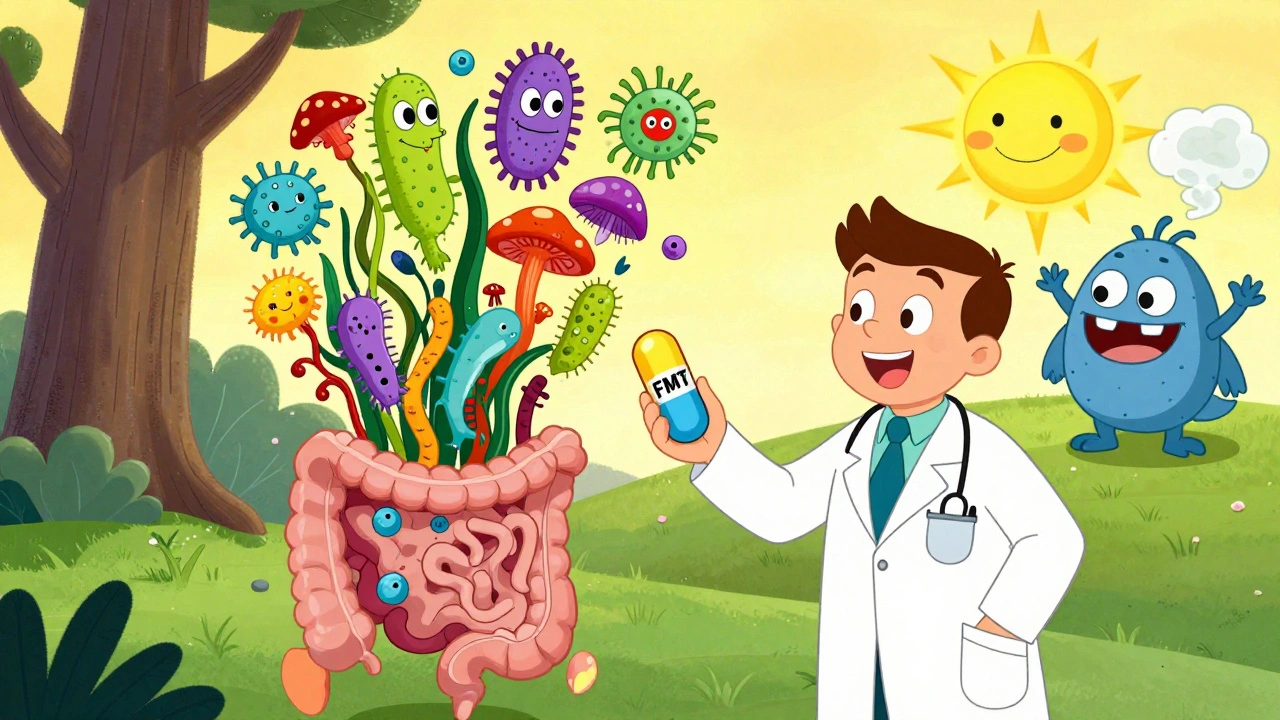
What’s Next?
The future of C. diff treatment is moving away from poop and toward precision. Researchers are developing targeted microbiome therapies like SER-109, an oral drug made from purified bacterial spores. In trials, it cured 88% of patients with recurrent C. diff-nearly matching FMT’s success, without the stigma. The CDC now calls C. diff an “urgent threat.” Hospitals are improving antibiotic stewardship. More clinics are offering FMT. And public awareness is growing. But the biggest challenge remains: stopping the infection before it starts. The best defense? Avoid unnecessary antibiotics. If you’re prescribed one, ask: Is this truly needed? Can it be shorter? Is there a narrower-spectrum option? And if you’ve had C. diff before? Talk to your doctor about FMT before the next recurrence hits.Real Stories, Real Outcomes
One patient in Perth, a 72-year-old retired nurse, had four C. diff infections over three years. Each time, vancomycin worked-for a while. Then it came back. She was terrified to leave the house. After her fourth episode, her gastroenterologist suggested FMT. She got it via capsule. Within days, her symptoms vanished. Six months later, she’s still infection-free. “It didn’t feel like medicine,” she said. “It felt like my body finally got its balance back.”When to Seek Help
If you’ve recently taken antibiotics and now have:- Watery diarrhea three or more times a day for more than two days
- Severe abdominal cramping
- Fever or nausea
- Loss of appetite
Can C. diff go away on its own without treatment?
In some mild cases, especially in younger, healthy people, stopping the triggering antibiotic may be enough for the body to recover on its own. But this is rare. Most people need treatment because C. diff produces powerful toxins that cause ongoing damage. Waiting can lead to complications like dehydration, kidney failure, or colon rupture. Don’t assume it will clear up by itself.
Is fecal transplant safe?
Yes, when done properly. Donors are screened for over 40 infectious diseases, including HIV, hepatitis, and drug-resistant bacteria. The FDA requires strict testing and documentation. While there are risks-like potential transmission of unknown pathogens or long-term microbiome changes-the benefits for recurrent C. diff far outweigh them. Since 2013, tens of thousands of FMT procedures have been performed with very low rates of serious side effects.
Can I get C. diff from someone else?
Yes, but not the way you might think. C. diff spreads through spores found in feces. These spores can live on surfaces for months. If someone with C. diff doesn’t wash their hands properly, they can contaminate doorknobs, toilets, or medical equipment. You get infected by touching something contaminated and then touching your mouth. That’s why handwashing with soap and water (not just hand sanitizer) is critical in hospitals and homes.
Are there alternatives to fecal transplant?
Yes, but they’re not as effective. Bezlotoxumab, a monoclonal antibody that neutralizes one of C. diff’s toxins, reduces recurrence by about 10% when given with antibiotics. It’s expensive-around $3,700 per dose-and only used in high-risk cases. New oral drugs like SER-109 show promise and are approved in some countries. But for now, FMT remains the gold standard for recurrent infections.
How do I prevent C. diff from coming back?
Avoid antibiotics unless absolutely necessary. If you need them, ask for the narrowest-spectrum option and the shortest course possible. Wash your hands with soap and water, especially after using the bathroom or before eating. Avoid probiotics as a preventive-they’re not proven and may be risky. If you’ve had recurrent C. diff, talk to your doctor about FMT as a long-term solution, not just a last resort.


Ignacio Pacheco
So let me get this straight-we’re now prescribing poop pills instead of antibiotics? Next they’ll sell fermented dirt as a probiotic on Amazon.