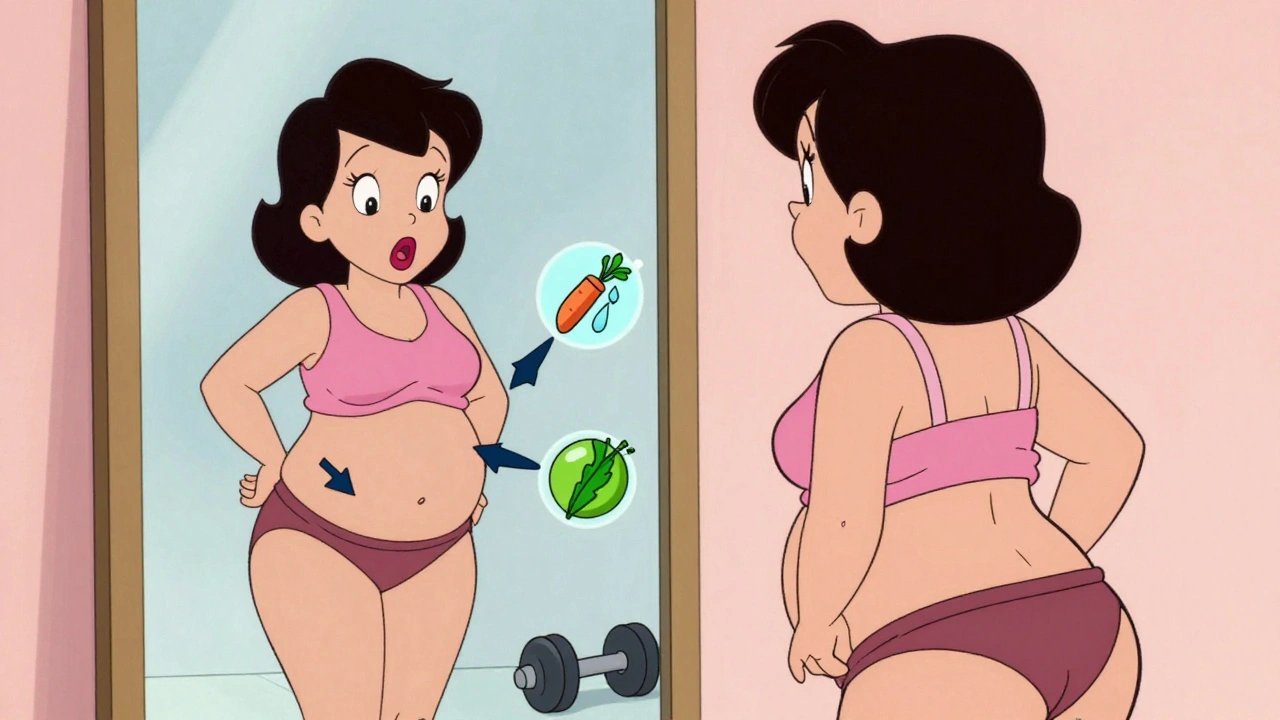
Hormonal Weight Gain: What Causes It and How to Fight Back
When you gain weight despite eating less and working out more, it’s often not laziness—it’s hormonal weight gain, a condition where imbalances in body chemicals like insulin, cortisol, or thyroid hormones disrupt fat storage and appetite control. Also known as metabolic weight gain, it’s why some people struggle to lose weight even when they do everything "right"—because their hormones are working against them.
One of the biggest players is insulin resistance, a state where cells stop responding properly to insulin, causing blood sugar to rise and fat to be stored instead of burned. This is the hidden driver behind prediabetes and is closely linked to belly fat, fatigue, and cravings—topics covered in posts about reversing prediabetes and GLP-1 agonists like Ozempic. Then there’s cortisol, the stress hormone that spikes during chronic stress, sleep loss, or overtraining, pushing fat into the abdomen and increasing appetite for sugary, fatty foods. And let’s not forget thyroid function, a slow thyroid can drop your metabolism so low that even a small calorie surplus leads to weight gain. These aren’t just buzzwords—they’re measurable, treatable conditions.
Many people don’t realize that medications can also trigger hormonal weight gain. SSRIs, for example, can increase appetite and slow metabolism, while long-term steroid use floods the body with cortisol-like effects. Even birth control and menopause shift estrogen and progesterone levels, changing how fat is distributed. And here’s the twist: the very drugs meant to fix metabolic issues—like GLP-1 agonists—are now being used to reverse this kind of weight gain. That’s why posts on Ozempic, prediabetes diets, and drug interactions aren’t just about pills—they’re about fixing the root cause behind stubborn weight.
If you’ve tried every diet and still can’t lose the weight, your hormones might be the missing piece. You don’t need to starve yourself or run marathons. You need to understand what’s happening inside your body—and that’s exactly what the articles below break down in plain language. From how cortisol messes with your sleep and cravings, to how thyroid tests are really read, to why some meds make weight loss nearly impossible—this collection gives you the facts, not the fluff.
Menopause weight gain isn't about overeating-it's hormonal shifts, muscle loss, and slower metabolism. Learn how estrogen drop, belly fat, and protein intake affect your body and what actually works to regain control.