Tobacco Smoke: Health Risks, Chemicals, and What You Need to Know
When you light up a cigarette, you’re not just inhaling tobacco smoke, a toxic mix of over 7,000 chemicals released when tobacco burns. Also known as cigarette smoke, it’s one of the most studied and deadly environmental hazards in modern history. This isn’t just about coughing or stained teeth. Tobacco smoke contains at least 70 known cancer-causing agents, including formaldehyde, benzene, and arsenic. It doesn’t matter if you’re smoking or just breathing near someone who is — the effects are just as real.
secondhand smoke, the smoke exhaled by smokers and the smoke rising from the burning end of a cigarette. Also known as passive smoke, it’s just as dangerous as direct smoking — and often worse for children and non-smokers who can’t control their exposure. Kids exposed to it are more likely to get pneumonia, ear infections, and asthma attacks. Pregnant women exposed to it face higher risks of preterm birth and low birth weight. Even brief exposure can damage blood vessels and raise blood pressure. There’s no safe level. The CDC says secondhand smoke causes more than 41,000 deaths in non-smokers every year in the U.S. alone.
nicotine, the addictive drug in tobacco that keeps people smoking despite knowing the risks. Also known as tobacco alkaloid, it’s not the main cause of cancer — but it’s why quitting is so hard. Nicotine floods the brain with dopamine, creating a cycle of craving and relief. Over time, your body needs more just to feel normal. That’s why even people who quit smoking for years still feel urges. And nicotine doesn’t just stay in the lungs — it affects your heart, your brain, and even your sleep. It’s why withdrawal symptoms like irritability, anxiety, and trouble concentrating can last for weeks.
Tobacco smoke doesn’t just cause lung cancer. It’s linked to heart disease, stroke, chronic bronchitis, emphysema, and even type 2 diabetes. It weakens your immune system, making infections harder to fight. It speeds up aging — not just on your skin, but in your bones, your eyes, and your teeth. And it doesn’t disappear after you put the cigarette out. The residue, called thirdhand smoke, clings to clothes, furniture, and carpets, releasing toxins for hours or even days.
There’s no magic pill or quick fix to undo the damage. But understanding what’s in tobacco smoke — and how it moves through your body — is the first step to protecting yourself or someone you care about. Whether you’re trying to quit, shielding your kids from exposure, or just wondering why your doctor keeps bringing it up, the facts don’t lie. The science is clear. And the guides below break it down in plain terms: what the chemicals do, how they affect different organs, what the real risks are, and what you can actually do about it.
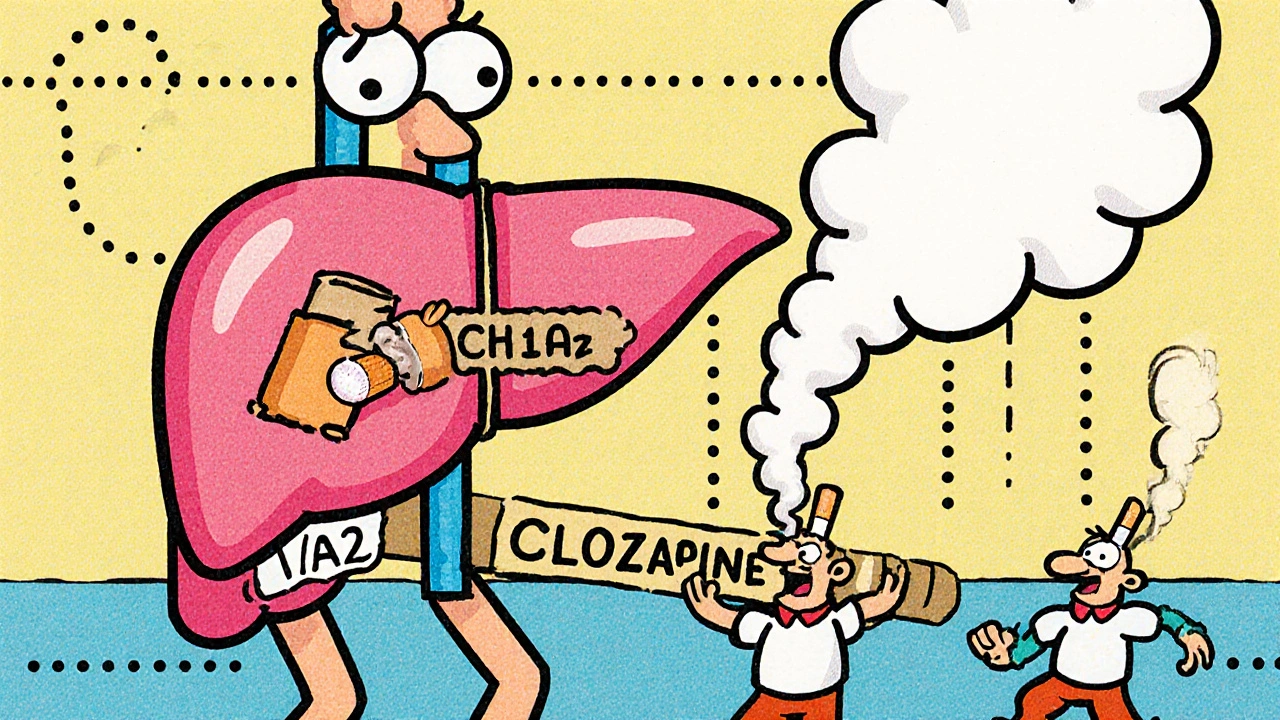
Smoking can reduce clozapine levels by up to 50%, risking relapse or toxicity. Learn how CYP1A2 enzyme induction works, why dose adjustments are critical, and what to ask your doctor if you smoke or quit.