SSRIs: What They Are, How They Work, and What You Need to Know
When you hear SSRIs, Selective Serotonin Reuptake Inhibitors are a class of antidepressants that increase serotonin levels in the brain to improve mood and reduce anxiety. Also known as antidepressants, they’re among the most prescribed medications for depression, OCD, and anxiety disorders in the U.S. Unlike older antidepressants, SSRIs don’t cause severe dry mouth or dizziness in most people—which is why doctors reach for them first.
They work by blocking serotonin from being reabsorbed too quickly by nerve cells. More serotonin stays available in the spaces between neurons, helping signals that control mood, sleep, and appetite flow better. This isn’t magic—it’s chemistry. But it takes time. Most people don’t feel better until 4 to 6 weeks in. If you stop after a week because "it’s not working," you’re not alone—but you’re also missing the point.
Not all SSRIs are the same. Sertraline, a common SSRI often used for depression and PTSD is cheaper and gentler on the stomach. Fluoxetine, known as Prozac, has a long half-life, making it useful for people who miss doses. Paroxetine, another SSRI, is effective for anxiety but tends to cause more weight gain and drowsiness. Side effects like nausea, insomnia, or sexual dysfunction are real—but they often fade. If they don’t, switching to another SSRI can make a huge difference.
SSRIs aren’t for everyone. People with bipolar disorder can trigger mania if they take them without a mood stabilizer. Mixing SSRIs with certain pain meds, migraine drugs, or even St. John’s Wort can lead to serotonin syndrome—a rare but dangerous condition. And while they’re not addictive, quitting cold turkey can cause brain zaps, dizziness, or flu-like symptoms. Tapering off under a doctor’s care is non-negotiable.
You’ll find posts here that dig into how SSRIs interact with other meds, why some people feel worse before they feel better, and what to do when they stop working. There’s also real talk about weight gain, libido changes, and how long it actually takes to feel normal again. These aren’t theory pieces—they’re based on what patients actually experience in clinics, pharmacies, and at home.
If you’re on an SSRI, thinking about starting one, or just confused by all the noise online, this collection cuts through the hype. No fluff. No marketing. Just what you need to know to make sense of your treatment—and talk smarter with your doctor.
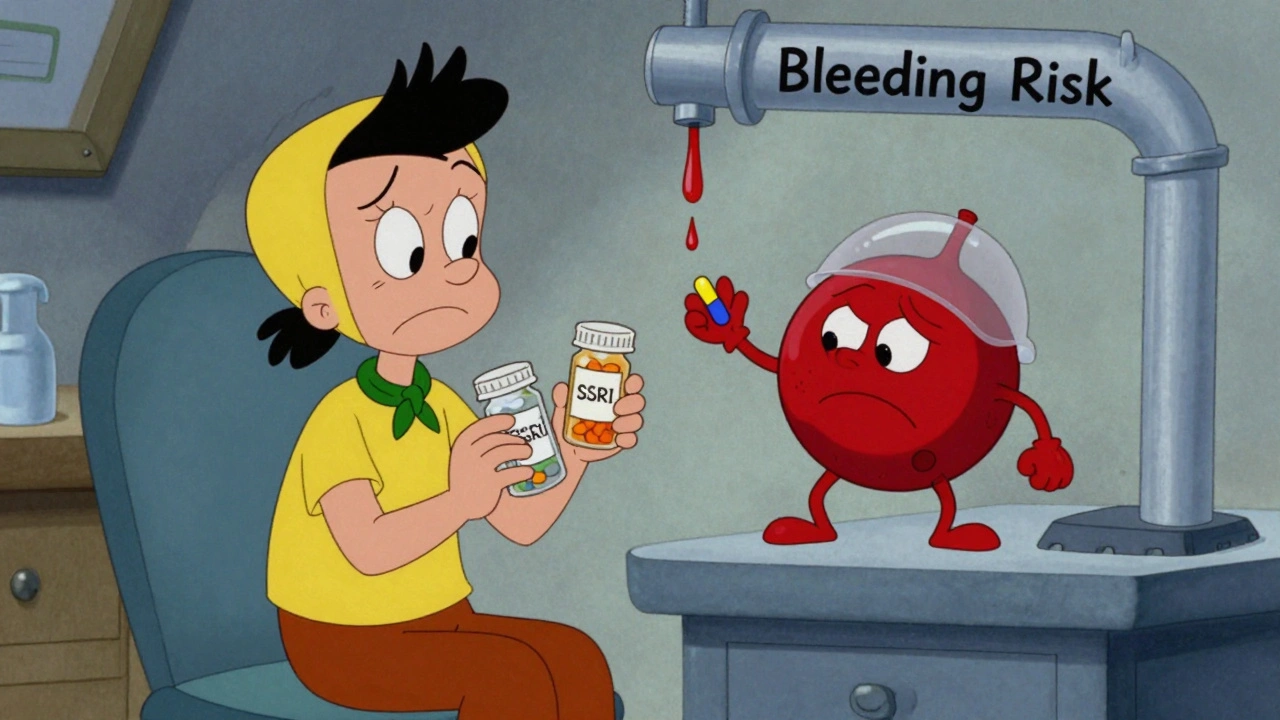
Combining SSRIs with anticoagulants increases bleeding risk by 33%, especially in the first 30 days. Learn why, where bleeding occurs, which drugs are riskiest, and how to stay safe.