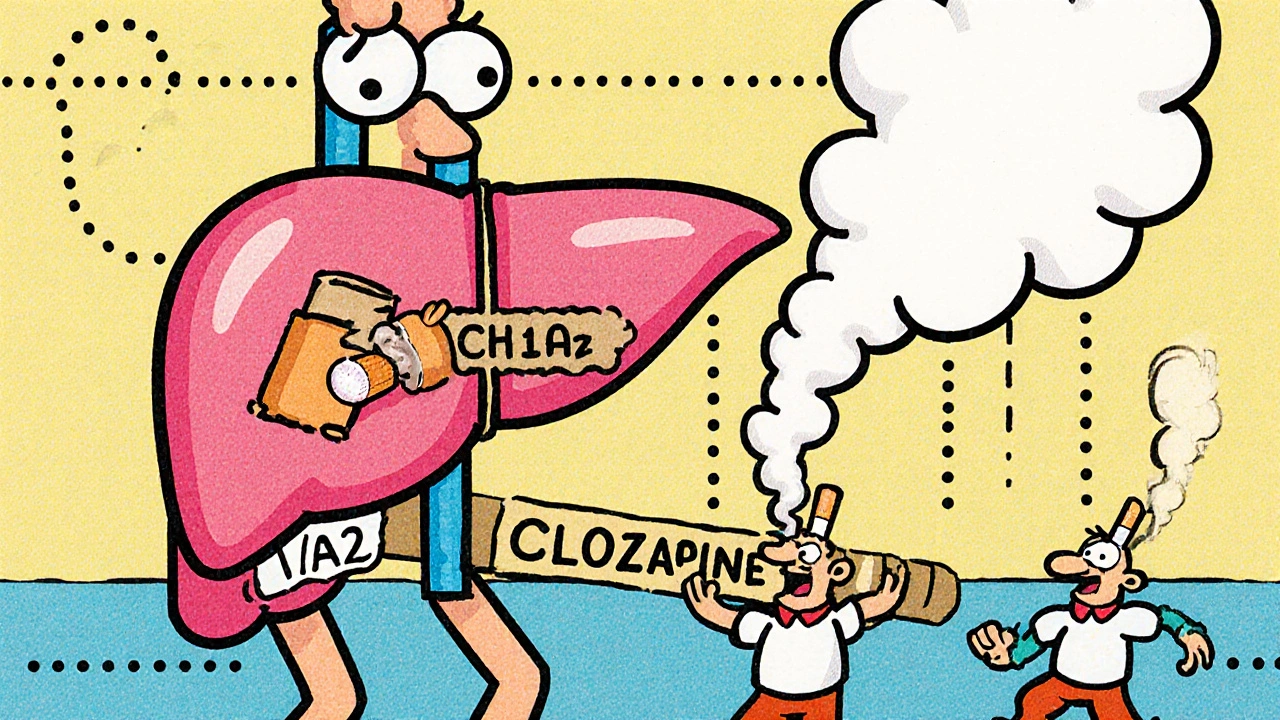
Smoking and Medication: How Cigarettes Interfere with Your Drugs
When you smoke, you’re not just harming your lungs—you’re changing how your body handles smoking and medication, the dangerous and often overlooked interaction between tobacco use and prescription or over-the-counter drugs. Also known as tobacco-drug interactions, this combo can turn a safe treatment into a risky one. Many people don’t realize that nicotine and the 7,000 chemicals in cigarette smoke don’t just cause cancer—they actively mess with liver enzymes that break down drugs. This means your blood pressure pills, antidepressants, painkillers, and even birth control might not work the way they should.
Nicotine, the main addictive substance in tobacco speeds up how fast your body clears out certain medications. For example, if you’re on clozapine for schizophrenia or olanzapine for bipolar disorder, smoking can drop drug levels so low that your symptoms come back. The same thing happens with caffeine, theophylline for asthma, and even some chemotherapy drugs. On the flip side, quitting smoking suddenly can make those same drugs build up to toxic levels. That’s why doctors need to know if you smoke—or if you’ve just quit.
Medication effectiveness, how well a drug works in your body isn’t just about dosage. It’s about your lifestyle. Smoking also makes you more likely to develop lung infections, heart disease, and poor circulation—all of which change how your body responds to treatment. If you’re on blood thinners like warfarin, smoking can make your INR levels unpredictable. If you’re using nicotine patches or gum to quit, those still count as nicotine exposure and can affect your meds too.
And it’s not just about the drugs you take. Smoking makes side effects worse. If you’re on statins for cholesterol, you’re already at risk for muscle pain. Smoking adds to that. If you’re taking antibiotics for an infection, your body fights slower when you smoke. Even over-the-counter pain relievers like acetaminophen can become less effective—or more toxic—when combined with regular cigarette use.
What you’ll find below are real, practical guides on how smoking changes the way your body handles specific medications. From heart drugs to mental health meds, from painkillers to antibiotics, these posts break down exactly what happens when tobacco meets treatment. You’ll see which drugs are most affected, what symptoms to watch for, and how to talk to your doctor about quitting without putting your health at risk. This isn’t theory—it’s what’s happening in clinics right now, to real people just like you.
Smoking can reduce clozapine levels by up to 50%, risking relapse or toxicity. Learn how CYP1A2 enzyme induction works, why dose adjustments are critical, and what to ask your doctor if you smoke or quit.