
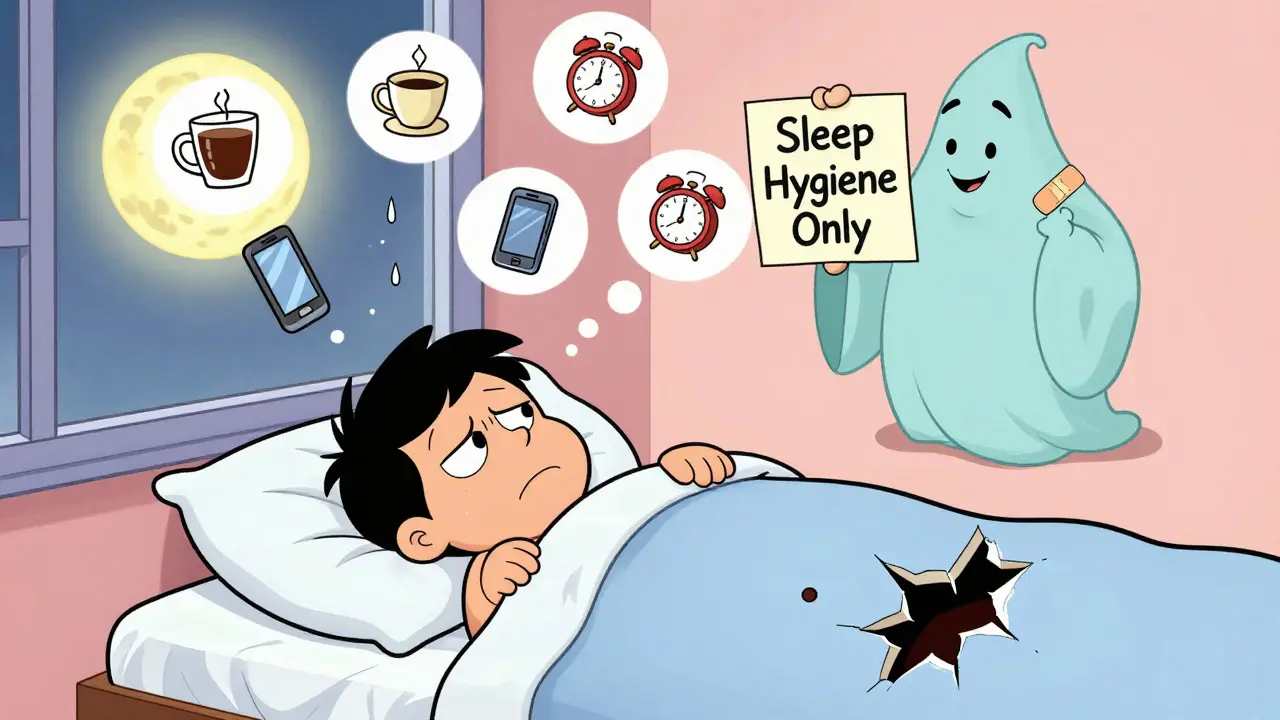
For years, people with chronic insomnia were told to just sleep hygiene-no caffeine after noon, keep your room dark, avoid screens before bed. Sounds simple, right? But if you’ve been lying awake for three months or longer, night after night, you know this advice doesn’t fix anything. It’s like telling someone with a broken leg to walk more carefully. The problem isn’t that you’re not trying hard enough. It’s that sleep hygiene doesn’t address the real engine driving your insomnia.
What Chronic Insomnia Really Means
Chronic insomnia isn’t just bad nights. It’s defined by the American Academy of Sleep Medicine as trouble falling asleep, staying asleep, or waking up feeling unrefreshed-happening at least three nights a week for three months or more. This isn’t stress-induced tossing and turning. This is your brain and body stuck in a loop that won’t break, even when life gets calm. You might not even be stressed anymore, but your brain still thinks bedtime = danger.
Why does this happen? The three-factor model explains it: you’re born with a predisposition (maybe you’re a light sleeper), something triggers it (a job loss, illness, or even a bad week of travel), and then behaviors and thoughts keep it going. That’s where sleep hygiene falls short. It only touches the surface. It doesn’t rewire the fear, the anxiety, or the false beliefs your brain has built around sleep.
Why Sleep Hygiene Isn’t Enough
Sleep hygiene rules-cool room, no alcohol, no screens-are helpful. But they’re not treatment. A 2023 review from Kaiser Permanente found that sleep hygiene alone improves sleep for maybe 20% of people with chronic insomnia. For the rest? It’s like putting a bandage on a bullet wound.
Dr. Jack D. Edinger, one of the leading researchers in the field, says it bluntly: “Sleep hygiene education alone is minimally effective for chronic insomnia and should not be offered as standalone treatment.” The American Academy of Sleep Medicine agrees-sleep hygiene has only moderate evidence. Meanwhile, CBT-I has a strong recommendation based on high-quality data.
Here’s the problem: most doctors still hand out sleep hygiene pamphlets. They’re easy to give. CBT-I requires training, time, and sometimes insurance approval. But if you’ve tried the basics and still can’t sleep, you’re not failing-you’re just being given the wrong tool.
What Is CBT-I, Really?
Cognitive Behavioral Therapy for Insomnia (CBT-I) isn’t talk therapy. It’s a structured, science-backed program that changes how you think about sleep and how you behave around it. It’s typically delivered over 6-8 weekly sessions, though some digital programs work in as few as two. The goal? To break the cycle that keeps you awake-not by forcing sleep, but by removing the barriers to it.
Here’s what CBT-I actually includes:
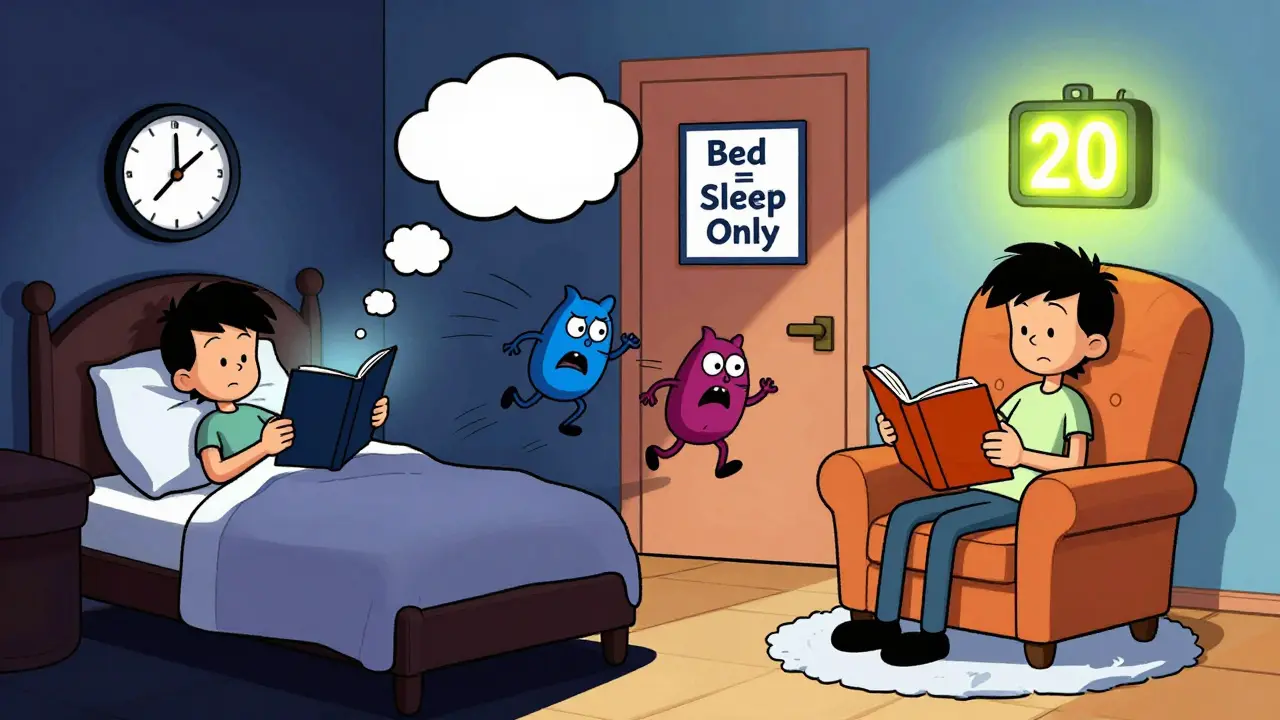
- Stimulus Control: Your bed is for sleep and sex only. No reading, no scrolling, no worrying. If you’re not asleep in 15-20 minutes, you get up. Go sit in another room, do something quiet, and only return when sleepy. This rebuilds the mental link between bed and sleep.
- Sleep Restriction: You’re spending too much time in bed awake. So you cut back. If you’re only sleeping 5 hours a night, you’re only allowed to be in bed for 5 hours. That means going to bed later and waking up earlier. It’s brutal at first-you’ll feel exhausted. But within weeks, your sleep drive builds up. Efficiency improves. You start falling asleep faster and staying asleep longer.
- Cognitive Restructuring: You believe you need 8 hours to function. You think if you don’t sleep, you’ll fail at work. You’re terrified of another bad night. CBT-I helps you challenge these thoughts. Studies show 65% of people reduce their sleep anxiety after this part. You learn: “I can still function on 6 hours. My body will recover.”
- Relaxation Training: Not just deep breathing. It’s progressive muscle relaxation, diaphragmatic breathing, and mindfulness techniques proven to lower nighttime arousal.
- Sleep Hygiene: Yes, it’s included-but only as a small piece, not the main event.
The Numbers Don’t Lie
CBT-I works-and it lasts. A 2020 meta-analysis in Sleep Medicine Reviews found CBT-I reduces the time it takes to fall asleep by 18.2 minutes and cuts nighttime wakefulness by 27.4 minutes. Compare that to sleeping pills: they help for a few weeks, then stop working. And you risk dependence.
One Reddit user wrote: “After 8 weeks of CBT-I, my sleep efficiency jumped from 68% to 89%. I fall asleep in 15 minutes now, not 2 hours.” Another said: “The first two weeks of sleep restriction were hell. I hated it. But after that? I slept like a baby.”
And it’s not just anecdotal. In a 2021 JAMA Internal Medicine trial, digital CBT-I programs like Sleepio and SHUTi led to 50-60% remission rates. Control groups? Only 15-20%. Even better-CBT-I’s effects stick. A year later, people who did CBT-I are still sleeping better. People who took pills? Back to square one.
Real Challenges-And How to Push Through
CBT-I isn’t magic. It’s hard. The first few weeks feel worse than before. Sleep restriction makes you exhausted. Stimulus control feels unnatural. You’ll want to quit.
Here’s what people struggle with-and how to handle it:
- “I can’t get up after 20 minutes.” Keep a book or a low-light lamp in another room. Do something boring-no screens, no phone. The goal is to break the association between bed and frustration.
- “I’m too tired to do this.” You will be. That’s the point. Sleep restriction works because you’re building pressure to sleep. Push through the first two weeks. It gets easier.
- “I can’t stick to a wake-up time on weekends.” This kills progress. 68% of beginners fail here. Set your alarm for the same time every day-even Sunday. Your body needs consistency more than you think.
- “My insurance won’t cover enough sessions.” Many programs now offer digital CBT-I. Apps like Somryst are FDA-cleared and covered by some insurers. Check with your provider. Even self-guided programs with a therapist check-in can work.
Digital CBT-I Is a Game Changer
There’s a shortage of CBT-I therapists-only 0.5 certified providers per 100,000 people in the U.S. In rural areas, it’s worse. But digital tools are filling the gap.
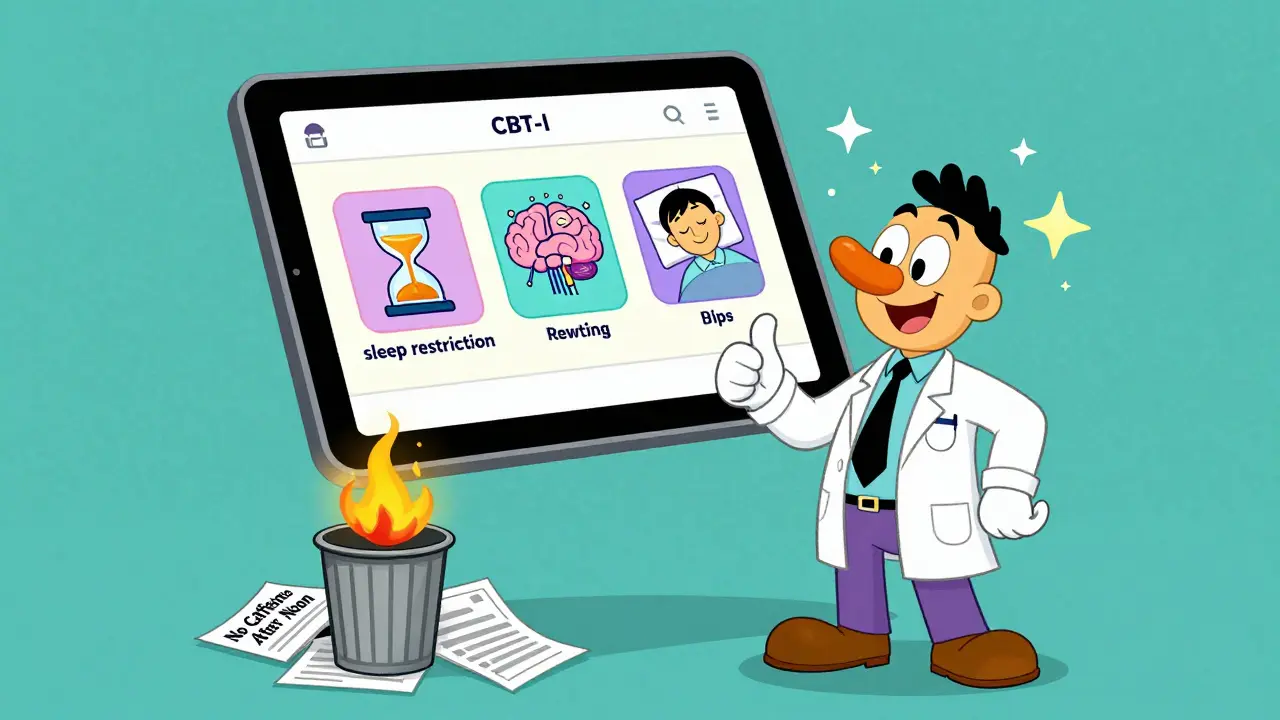
Apps like Sleepio, SHUTi, and Somryst deliver full CBT-I protocols through videos, daily exercises, and automated feedback. Somryst, approved by the FDA in 2021, showed 55.4% remission rates in clinical trials. Fitbit’s 2022 Sleep Profile even integrates sleep restriction logic, using your data to suggest optimal bedtimes.
And the market is growing. The digital CBT-I industry is projected to hit $1.2 billion by 2027. More employers are offering it through workplace wellness programs-37% of Fortune 500 companies now do.
Who Benefits the Most?
CBT-I works for everyone with chronic insomnia. Older adults? Yes. Perimenopausal women? Yes. People with anxiety? Yes. Dr. Daniel Buysse from the University of Pittsburgh found effect sizes of 1.0-1.3 on the Insomnia Severity Index-large, clinically meaningful improvements across all groups.
Even people who’ve been struggling for decades see results. One 72-year-old woman in a 2023 study went from 4 hours of sleep to 7.5 hours after CBT-I. She hadn’t slept well in 15 years.
What Comes Next?
The future is personalization. AI-driven CBT-I apps are now in Phase 3 trials, adjusting protocols based on your sleep data in real time. Dr. Andrew Krystal predicts CBT-I will become the standard of care for 90% of chronic insomnia cases within the next decade.
Right now, you have two choices: keep trying the same tired advice and hoping for change-or start CBT-I. It’s not easy. But it’s the only treatment proven to fix chronic insomnia for good.
How to Get Started
Here’s your next step:
- Track your sleep for 7-14 days using a simple journal or app. Note bedtime, wake time, and how long you were awake.
- Calculate your average sleep time. If you’re sleeping 5.5 hours, that’s your starting bed window.
- Set a fixed wake-up time-no exceptions.
- Only go to bed when sleepy. If you’re not asleep in 20 minutes, get up.
- Eliminate caffeine after 2 PM. No alcohol within 4 hours of bed.
- Find a digital CBT-I program (Sleepio, SHUTi, Somryst) or ask your doctor for a referral.
You don’t need to be perfect. You just need to be consistent. The first two weeks are the hardest. But after that? You might finally start sleeping again.
Is sleep hygiene useless for chronic insomnia?
No, but it’s not enough on its own. Sleep hygiene-like keeping your room cool, dark, and quiet-helps create the right environment. But if you’ve had insomnia for months or years, your brain has developed habits and fears that keep you awake. CBT-I targets those deeper issues. Experts agree: sleep hygiene alone fixes sleep for only about 20% of people with chronic insomnia. It should be part of a larger plan, not the whole plan.
How long does CBT-I take to work?
You’ll start noticing changes in 2-4 weeks, but full results take 6-8 weeks. The hardest part is usually the first two weeks of sleep restriction-you’ll feel tired, maybe even worse than before. But that’s normal. Your body is rebuilding its sleep drive. Most people report major improvements by week 6, and the benefits last long after treatment ends.
Can I do CBT-I on my own without a therapist?
Yes. Several digital CBT-I programs are FDA-cleared and backed by clinical trials. Apps like Sleepio, SHUTi, and Somryst guide you through each component step by step. Studies show these programs achieve 50-60% remission rates-similar to in-person therapy. If you’re disciplined and consistent, you can succeed without a therapist. But if you’re struggling with anxiety or depression, working with a professional is recommended.
Do sleeping pills work better than CBT-I?
Not in the long run. Pills like zolpidem or eszopiclone help you fall asleep faster for the first few weeks. But after 4-6 weeks, their effect fades, and you risk dependence, tolerance, or side effects like dizziness or memory issues. CBT-I doesn’t just help you sleep-it rewires your brain’s relationship with sleep. Studies show CBT-I’s benefits last for a year or more after treatment ends. Pills? The moment you stop, insomnia comes back.
Is CBT-I covered by insurance?
Sometimes. In the U.S., coverage varies. Some insurers cover in-person CBT-I if you see a certified provider. Digital programs like Somryst are FDA-cleared and increasingly covered. Check with your plan. If not covered, many programs offer sliding-scale fees or payment plans. In Australia, some private health insurers cover CBT-I under mental health rebates. Ask your GP for a Mental Health Treatment Plan to access Medicare rebates for sessions with a clinical psychologist.
What if I’m too anxious to try sleep restriction?
That’s common. Sleep restriction feels scary because you’re intentionally limiting sleep. But remember: you’re not depriving yourself-you’re resetting your system. Start with a small reduction. If you’re sleeping 5 hours, don’t cut to 4.5 right away. Wait a week. Use relaxation techniques before bed. Journal your worries earlier in the day so they don’t pile up at night. And know this: the anxiety peaks in the first week and drops fast after that. Most people say the fear was worse than the reality.
Can CBT-I help with insomnia caused by chronic pain or menopause?
Yes. CBT-I works even when insomnia is linked to other conditions. For chronic pain, it helps reduce the emotional stress around sleep, which often worsens pain perception. For perimenopausal women, the American Academy of Sleep Medicine recommends CBT-I over hormone therapy because it’s safer and more effective long-term. The core problem isn’t the pain or the hormones-it’s how your brain responds to them. CBT-I changes that response.
