Anticoagulants: What They Are, How They Work, and What You Need to Know
When your blood starts clotting where it shouldn’t—like in your heart, lungs, or legs—you need anticoagulants, medications that slow down the blood’s ability to form clots. Also known as blood thinners, they don’t actually thin your blood—they just keep it from turning into dangerous clots that can cause strokes, heart attacks, or pulmonary embolisms. These drugs are life-saving for people with atrial fibrillation, deep vein thrombosis, or artificial heart valves, but they’re not harmless. Even a small mistake in dosing or mixing them with other meds can lead to serious bleeding or heart rhythm problems.
Anticoagulants don’t work the same way. Some, like warfarin, need regular blood tests to check if you’re in the right zone. Others, like rivaroxaban or apixaban, don’t need monitoring but still interact with common drugs—like NSAIDs, pain relievers that can increase bleeding risk when taken with anticoagulants—or even supplements like Coenzyme Q10, a supplement that may reduce the effectiveness of warfarin. Then there’s methadone, a pain and addiction treatment that can prolong the QT interval, making heart rhythm issues more likely when combined with certain anticoagulants. These aren’t theoretical risks. Real patients end up in the ER because they didn’t know their daily painkiller or vitamin could turn a safe dose into a dangerous one.
It’s not just about the drug itself—it’s about your body, your other meds, and your habits. Smoking can change how your liver processes some anticoagulants. Kidney disease means you need lower doses. Aging slows how your body clears these drugs, making side effects more likely. Even something as simple as switching generic brands can confuse you if the pills look different, and you start doubting if you’re taking the right one. That’s why knowing what’s in your medicine cabinet matters just as much as knowing your diagnosis.
Below, you’ll find real-world guides on how anticoagulants interact with other treatments—from antibiotics that wreck your gut and trigger clots, to pain meds that turn a minor bleed into a crisis. You’ll see how heart rhythm risks show up in ECGs, why some people need to avoid certain supplements, and how to spot dangerous combinations before they hurt you. No fluff. Just what you need to stay safe while taking these powerful drugs.
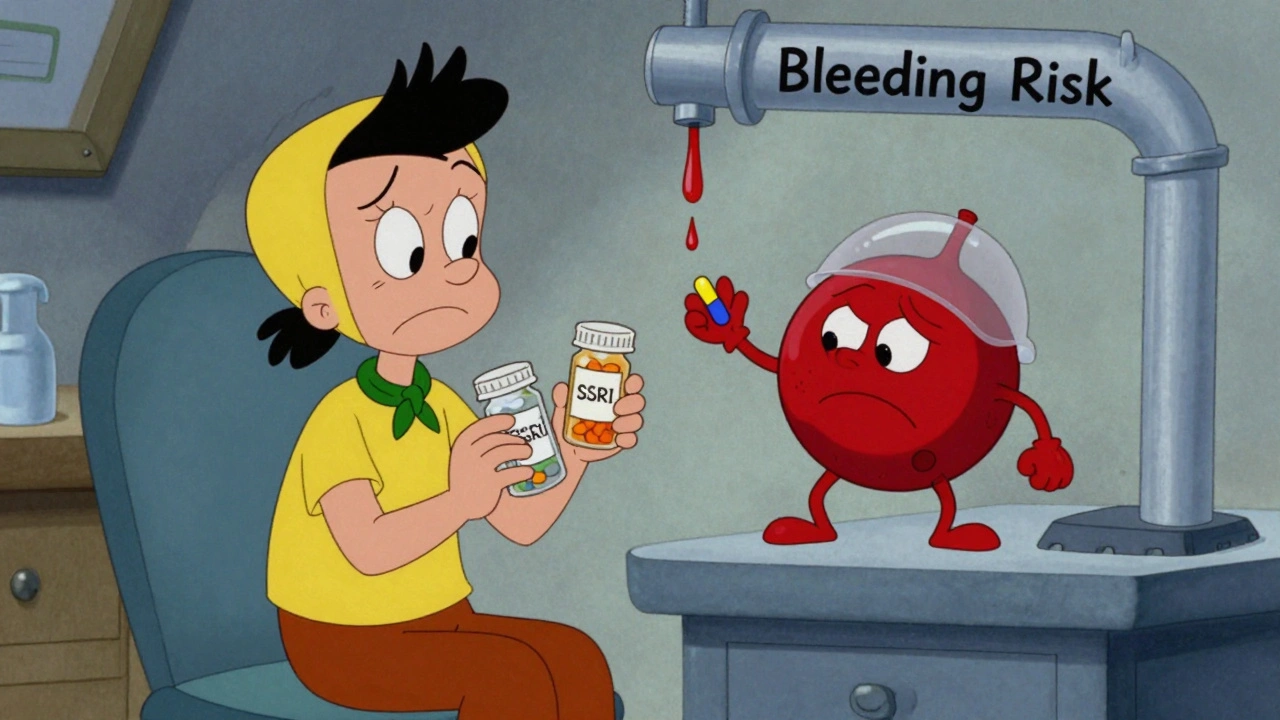
Combining SSRIs with anticoagulants increases bleeding risk by 33%, especially in the first 30 days. Learn why, where bleeding occurs, which drugs are riskiest, and how to stay safe.