ANDA Approval: What It Means for Generic Drugs and Your Wallet
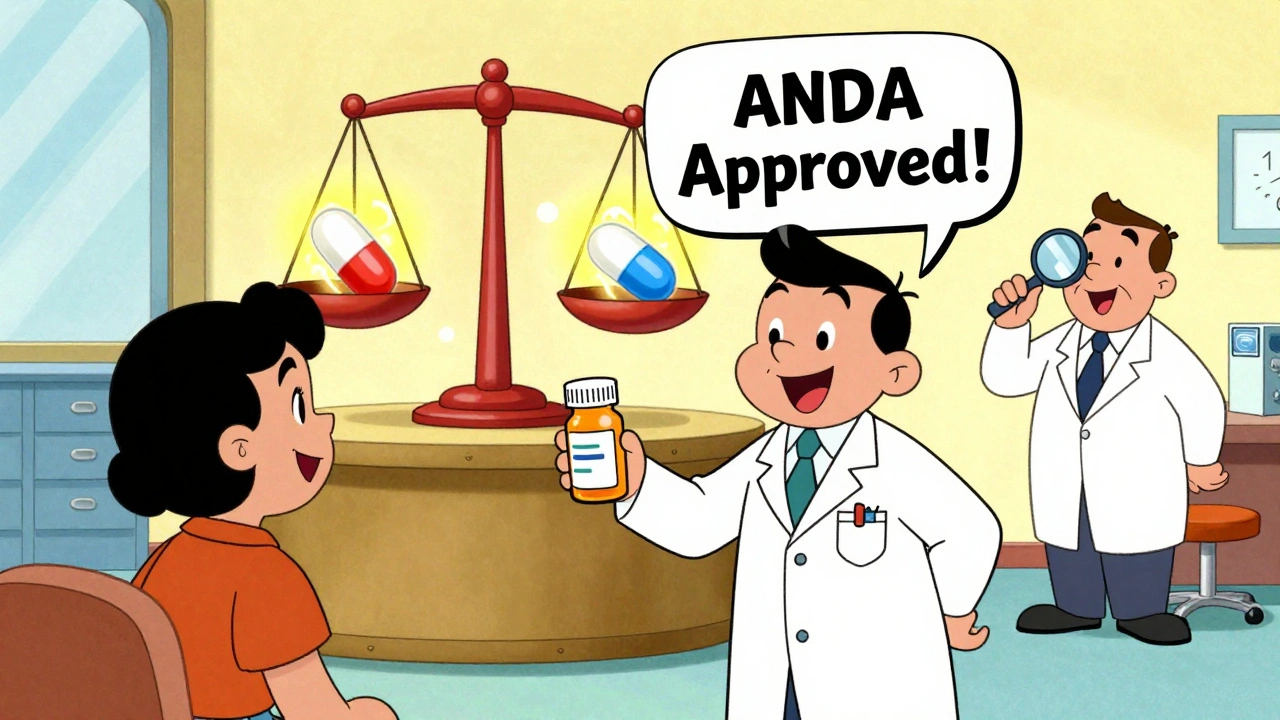
When you pick up a generic pill at the pharmacy, it’s not just a cheaper version—it’s a drug that passed ANDA approval, a rigorous process by the U.S. Food and Drug Administration that proves a generic drug works the same as its brand-name counterpart. Also known as Abbreviated New Drug Application, this system is the backbone of affordable medicine in the U.S. Without it, most people couldn’t afford their daily prescriptions. The FDA doesn’t require new clinical trials for generics—instead, they demand proof of bioequivalence, the scientific standard that shows the generic delivers the same amount of active ingredient into your bloodstream at the same rate as the brand name. That’s why a 30-day supply of generic lisinopril costs $4 instead of $150.
But getting that approval isn’t easy. Companies must prove their manufacturing process is consistent, their pills contain the exact same active ingredient, and they break down the same way in your body. The FDA checks every step—from the chemical source of the active pharmaceutical ingredient (API), the core component that makes the drug work, often made overseas in just a few factories, to how the pill is pressed, coated, and packaged. That’s why shortages happen: if one factory in India or China has a quality issue, thousands of generic drug batches get pulled. And because generic makers operate on razor-thin margins, they can’t always afford backup suppliers.
What you get with ANDA-approved drugs isn’t a compromise—it’s the same medicine, same effect, same safety profile. The only differences? The color, shape, or inactive ingredients like fillers. Those don’t affect how the drug works. But they do make it look different, which is why people sometimes think their generic isn’t working. It’s not the drug—it’s the pill’s appearance. That’s why generic manufacturers, companies like Teva, Mylan, and Sandoz that produce FDA-approved copies of brand-name drugs must clearly label their products. You can even check pill images online to confirm you’re getting what you expect.
Behind every generic drug you take is a system designed to save billions. In 2024 alone, generics saved the U.S. healthcare system over $480 billion. That money goes back into patient care, lower insurance premiums, and more access to treatment. But that system is fragile. If the FDA slows down reviews, if overseas supply chains break, or if pricing pushes manufacturers out of business, the whole chain risks collapse. That’s why understanding ANDA approval isn’t just about drug names—it’s about knowing how your access to affordable medicine is protected, and what could threaten it.
Below, you’ll find real-world examples of how this system affects everything from your blood pressure pills to your allergy meds. You’ll see how generics compare, why some look different, and what happens when things go wrong. This isn’t theory—it’s what’s in your medicine cabinet.
Learn how the FDA authorizes generic drugs under the Hatch-Waxman Act, the science behind bioequivalence, the approval timeline, and why generics are safe, effective, and up to 85% cheaper than brand-name drugs.