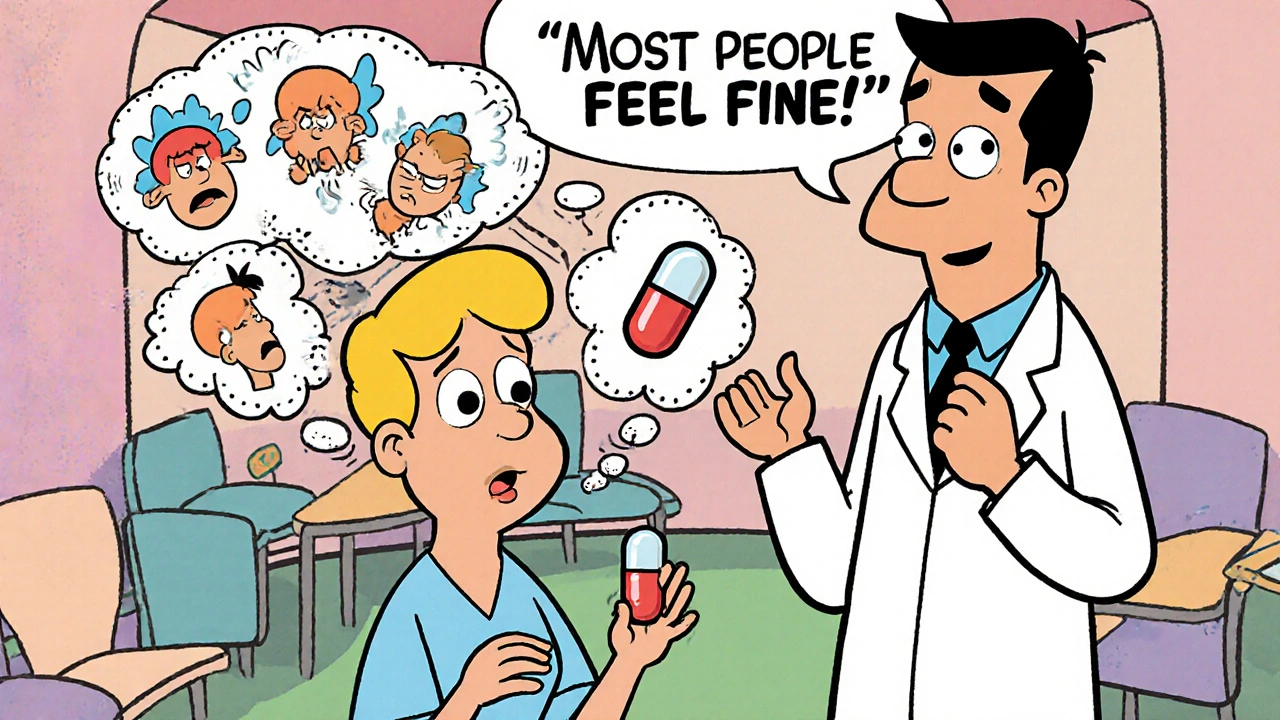
When you believe a medicine will give you nausea, dizziness, or fatigue—nocebo effect, the phenomenon where negative expectations cause real physical symptoms, even without an active drug—your body often delivers. It’s not in your head. It’s in your biology. Studies show people given sugar pills report side effects like headaches, stomach pain, and even heart palpitations, simply because they were told those side effects were possible. The nocebo effect, the harmful counterpart to the placebo effect, where belief in harm triggers real physiological responses is just as powerful, and just as real, as the good kind.
This isn’t just about pills. It shows up in how people react to warnings on drug labels, how they interpret symptoms after watching YouTube videos about side effects, or even how they feel after hearing a doctor say, "This might hurt." The placebo effect, the positive response to inert treatments due to belief in their benefit gets all the attention, but the nocebo effect is quietly shaping treatment outcomes every day. It’s why some patients stop taking blood pressure meds because they "feel worse"—even though their labs show improvement. It’s why people avoid statins after reading online horror stories, even when their risk of heart attack is high. And it’s why doctors who skip explaining risks honestly often end up with more side effect reports than those who talk openly.
What’s happening in your brain? When you expect harm, your nervous system releases stress chemicals like cortisol and adrenaline. These don’t just make you anxious—they can raise blood pressure, slow digestion, trigger inflammation, and even alter how your liver processes drugs. That’s not imagination. That’s physiology. The patient psychology, the mental and emotional factors that influence how people respond to treatment and health information behind this isn’t weak-mindedness—it’s a hardwired survival mechanism gone wrong in modern medicine. Social media amplifies it. A single TikTok video showing someone vomiting after taking a new pill can trigger the same reaction in thousands who’ve never even tried it.
But here’s the good part: you can fight it. Knowing about the nocebo effect doesn’t make it go away—but understanding it helps you question whether your symptoms are from the drug, or from your fear of it. Doctors who frame side effects as "possible but uncommon" and focus on benefits reduce nocebo responses. Patients who track real symptoms vs. imagined ones, and who talk openly with their providers, often find their side effects fade. This collection of posts dives into exactly how expectations shape health—from how drug labels influence your body’s reaction, to why misinformation online can turn a harmless pill into a nightmare. You’ll see how this plays out with pain meds, antidepressants, even antibiotics. And you’ll learn how to tell the difference between real side effects and the ones your mind created.
Placebo and nocebo effects shape how patients experience medication side effects - even when no active drug is present. Studies show nocebo effects are stronger, longer-lasting, and responsible for up to 76% of reported side effects in trials.