CYP1A2: What It Is, How It Affects Your Medications, and Why It Matters
When you take a pill, your body doesn’t just absorb it—it CYP1A2, a liver enzyme responsible for breaking down over 90 common medications. Also known as cytochrome P450 1A2, it’s one of the most important players in how your body processes drugs. If CYP1A2 works too fast, your medicine might not stick around long enough to help. If it’s too slow, the drug can build up and cause side effects. This isn’t theoretical—it’s why some people get sick on normal doses while others need way more to feel anything.
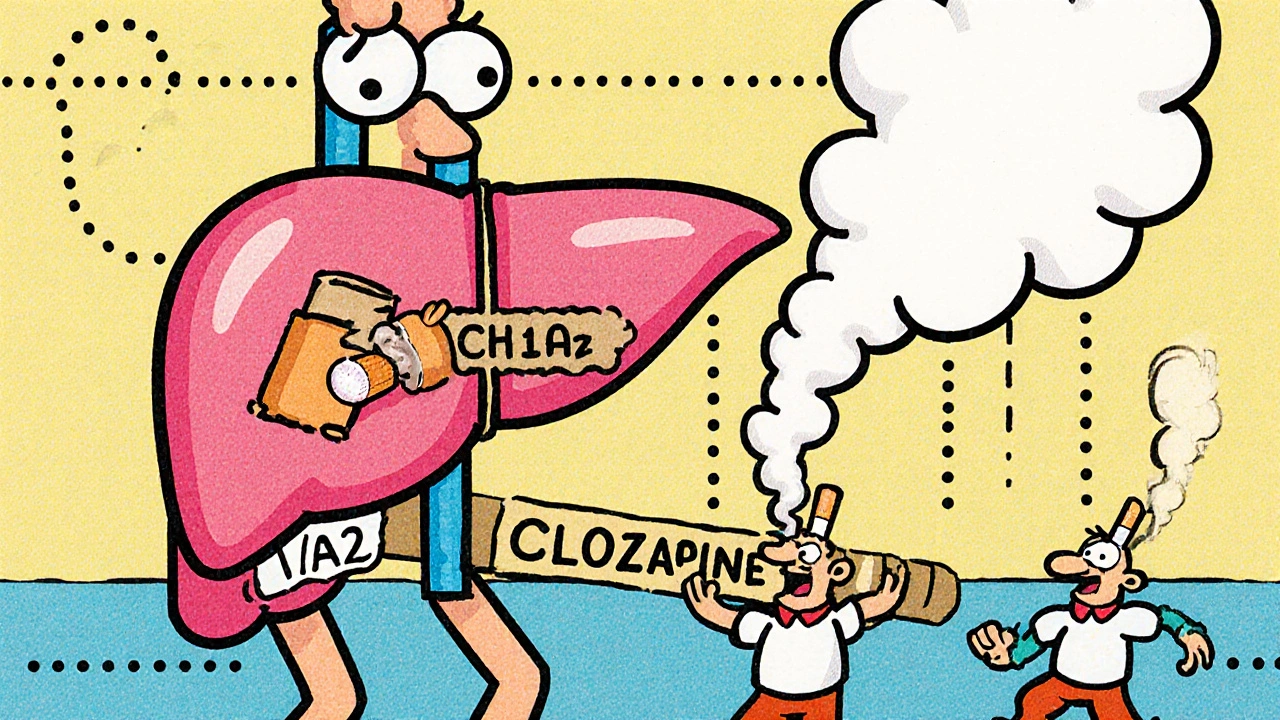
CYP1A2 doesn’t work alone. It’s influenced by things you do every day. Caffeine, a common substance metabolized by CYP1A2 is a good example: if your enzyme is extra active, you might need more coffee to feel awake. If it’s sluggish, even one cup could keep you up all night. Smoking, a known inducer of CYP1A2 activity speeds up this enzyme, which means smokers often need higher doses of certain drugs like clozapine or olanzapine. Even grapefruit juice, a substance known to interfere with liver enzymes can throw off the balance, though it mostly affects other enzymes like CYP3A4. The point? Your lifestyle changes how your meds work—sometimes dramatically.
This enzyme handles antidepressants, antipsychotics, painkillers like acetaminophen, and even some asthma drugs. If you’re on any of these, CYP1A2 is quietly deciding whether you get relief or side effects. That’s why doctors sometimes check your genetics or adjust doses based on what you smoke, drink, or eat. It’s not about being "good" or "bad" at metabolizing—it’s about biology meeting behavior. And if you’ve ever been told your medication "didn’t work" even though you took it right, CYP1A2 might be the hidden reason.
What you’ll find below are real-world guides that connect directly to this enzyme. Articles on drug interactions, medication safety for aging bodies, and how certain drugs affect heart rhythms all tie back to how CYP1A2 behaves in different people. You’ll see how caffeine, smoking, and even certain foods change drug levels. You’ll learn why some meds need extra monitoring, and why one person’s safe dose is another person’s overdose. This isn’t just science—it’s personal. And if you’re taking any of the drugs listed in these posts, understanding CYP1A2 could help you stay safe and get better results.
Smoking can reduce clozapine levels by up to 50%, risking relapse or toxicity. Learn how CYP1A2 enzyme induction works, why dose adjustments are critical, and what to ask your doctor if you smoke or quit.