
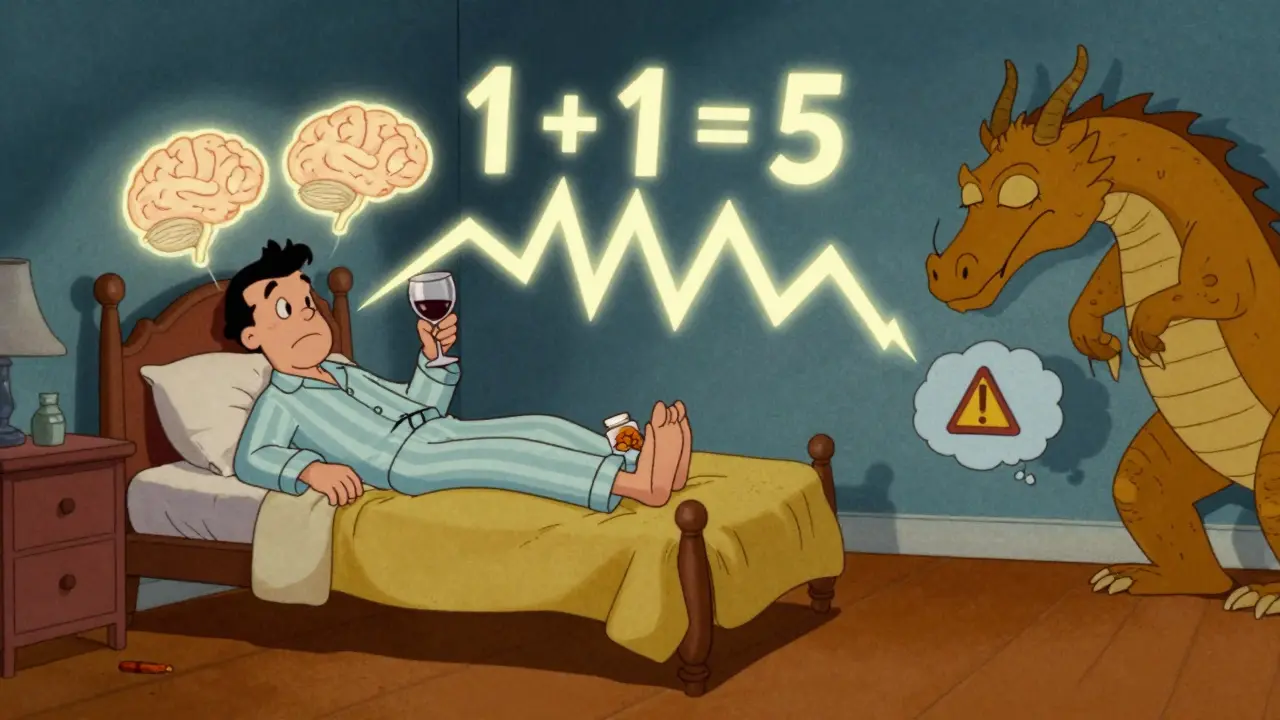
Combining alcohol with sleep medications isn’t just a bad idea-it’s a silent killer. Millions of people take prescription or over-the-counter sleep aids every night, and many of them have a drink or two before bed. They think it helps them relax. In reality, they’re playing Russian roulette with their breathing, their memory, and sometimes their lives.
Why This Combination Is So Dangerous
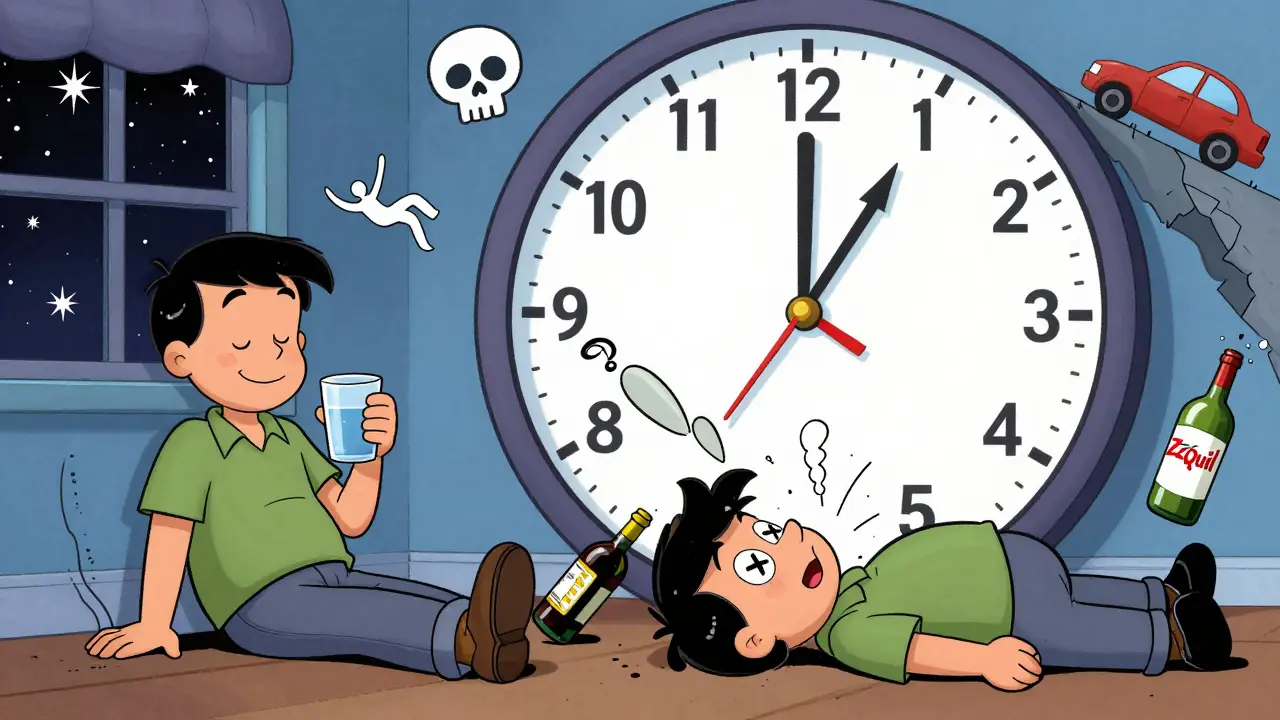
Alcohol and sleep medications don’t just add up-they multiply. Both are central nervous system depressants. That means they slow down your brain, your heart, and your breathing. When you mix them, the effect isn’t 1 + 1 = 2. It’s more like 1 + 1 = 5. This happens because both substances work on the same brain receptors, especially GABA, which controls relaxation and sedation. Alcohol makes sleep meds work harder, longer, and more unpredictably.Take zolpidem (Ambien), one of the most commonly prescribed sleep pills. A single drink-just one standard glass of wine or beer-can extend its half-life from 2.5 hours to over 6 hours. That means you’re sedated for nearly three times longer than expected. Your body can’t process it fast enough. Your brain stays locked in deep sedation, and your breathing slows dangerously.
Studies show that when alcohol and sleep meds mix, oxygen levels in the blood can drop below 85%. Normal is above 92%. At 84%, your organs start to suffer. In extreme cases, this leads to respiratory failure. Emergency rooms across the U.S. saw a 27% spike in alcohol-sedative interactions between 2018 and 2022. Most of those cases were people aged 35 to 54-people who thought they were just being casual.
Which Sleep Medications Are the Most Dangerous?
Not all sleep aids are created equal when mixed with alcohol. Here’s how the main types stack up:| Medication Type | Examples | Alcohol Interaction Risk | Key Danger |
|---|---|---|---|
| Z-drugs (Nonbenzodiazepines) | Ambien (zolpidem), Lunesta (eszopiclone), Sonata (zaleplon) | Extreme | Severe respiratory depression, sleep-driving, memory loss |
| Benzodiazepines | Ativan (lorazepam), Klonopin (clonazepam), Restoril (temazepam) | High | Increased fall risk, confusion, prolonged sedation |
| OTC Antihistamines | ZzzQuil (diphenhydramine), Unisom (doxylamine) | Very High (for seniors) | 300% higher fall risk, delirium, hospitalization |
| Melatonin | Natrol, Nature Made | Low | Next-day drowsiness only |
Z-drugs like Ambien are the worst offenders. Even at low alcohol levels-just 0.02% blood alcohol concentration (about half a drink)-they cause extreme drowsiness and impaired coordination. In driving simulators, people who took Ambien and had one drink were 2.7 times more impaired than when drinking alone. That’s worse than being legally drunk.
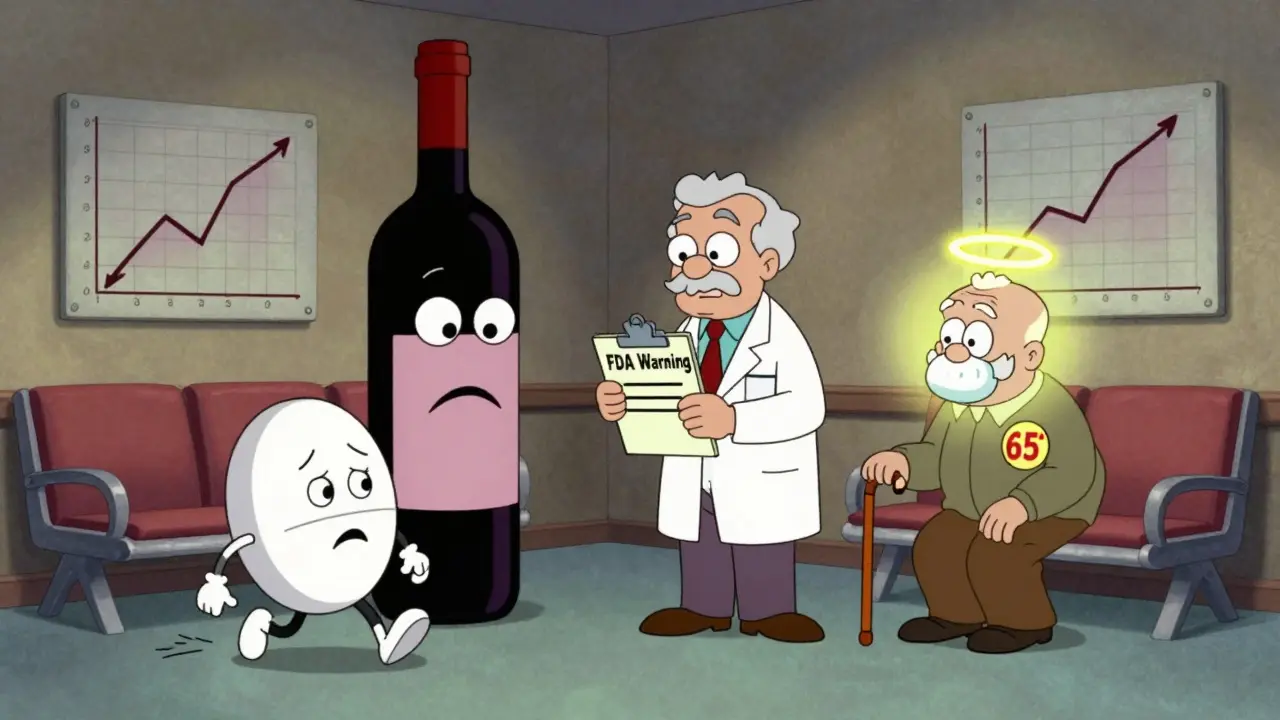
OTC sleep aids like ZzzQuil might seem harmless because they’re sold without a prescription. But for people over 65, mixing them with alcohol triples the risk of falling. Emergency data shows hip fractures from these combinations jumped from 12.7 to 51.3 per 100,000 older adults in just a few years. Many of those patients wake up confused, disoriented, and with no memory of what happened.
What Happens When You Mix Them?
The effects aren’t just theoretical. Real people are living through this.One Reddit user, u/SleepWalker99, described waking up two miles from home with no memory of driving there-after taking half an Ambien and two glasses of wine. That’s not an isolated story. Clinical trials show that combining alcohol with Z-drugs increases the chance of sleep-driving, sleep-eating, or even sleep-sex by more than 15 times. These aren’t dreams. They’re real actions your brain performs while you’re unconscious.
Emergency rooms report that 62% of people who mix alcohol with sleep meds have no memory of events that followed. That’s not just forgetfulness-it’s temporary amnesia caused by the drugs shutting down parts of the brain responsible for forming memories.
And it’s not just about accidents. In autopsy studies of fatal overdoses involving Ambien and alcohol, the median blood alcohol level was 0.051%-well under the legal driving limit of 0.08%. These weren’t binge drinkers. These were people who had one drink, took their pill, and went to bed. They didn’t realize how little it takes to cross the line into danger.
Why Older Adults Are at Even Greater Risk
As we age, our liver slows down. It takes longer to break down both alcohol and sleep medications. For someone over 65, the half-life of these substances can increase by 40-60%. That means even a small amount sticks around much longer, building up in the system.The American Geriatrics Society updated its guidelines in 2022 to say this: Never use diphenhydramine or doxylamine if you drink alcohol, especially if you’re over 65. Why? Because the combination increases the risk of delirium by 400%. Delirium isn’t just being confused-it’s a medical emergency that can lead to long-term cognitive decline, hospitalization, or death.
And it’s not just OTC pills. Even prescription benzodiazepines like Restoril are riskier in older adults. A 70-year-old taking temazepam and having one beer at dinner is more likely to fall, break a hip, and end up in surgery than a 40-year-old doing the same thing.
What About Melatonin?
Melatonin is different. It’s a hormone your body naturally makes to signal sleep. Unlike Z-drugs or antihistamines, it doesn’t depress your central nervous system. Studies show it doesn’t cause respiratory depression or dangerous sedation when mixed with alcohol.That said, it’s not harmless. Combining melatonin with alcohol can make you feel groggy the next day-up to 35% more than usual. If you’re planning to drive or operate machinery, that’s still a problem. But it won’t stop your breathing. For people who want a gentler sleep aid and drink occasionally, melatonin is the safest option on the market.
How to Stay Safe
If you’re taking any sleep medication, here’s what you need to do:- Avoid alcohol completely. The FDA and American Academy of Sleep Medicine say: No amount is safe. Even one drink can trigger a dangerous reaction.
- Wait at least 6 hours after drinking before taking a Z-drug. For benzodiazepines, wait 12 hours. This isn’t a suggestion-it’s based on how long your liver needs to clear alcohol from your system.
- Read the label. Since 2023, all prescription sleep meds in the U.S. must include a bold, 14-point warning: Do not consume alcohol while taking this medication. If you didn’t see it, ask your pharmacist.
- Ask your doctor about alternatives. Newer sleep drugs like Dayvigo (lemborexant) were designed to avoid these interactions. They increase their half-life by only 15% with alcohol, compared to 150-200% for Ambien.
- For seniors: skip OTC sleep aids entirely. There are safer, non-drug ways to improve sleep-like light therapy, sleep restriction, and cognitive behavioral therapy for insomnia (CBT-I).
Why So Many People Still Do It
You’d think this would be common knowledge. But here’s the truth: 68% of people prescribed sleep meds say they were never properly warned about alcohol risks. Doctors assume patients know. Patients assume it’s okay if they only have one drink. Pharmacists are required to warn people now-but only 87% actually do it consistently.The problem is cultural. We’ve normalized drinking to sleep. Movies show characters pouring a glass of wine and popping a pill. Ads for sleep aids make it look like a simple fix. But real life doesn’t work that way. The science is clear: this combo kills.
Polysubstance overdose deaths involving alcohol and sleep meds have more than doubled since 2015. Now, they make up 18% of all prescription drug overdose deaths. That’s not a small number. That’s a public health crisis.
The Future Is Changing
The pharmaceutical industry is starting to respond. Seven of the 12 new sleep drugs currently in clinical trials don’t work on GABA receptors at all. Instead, they target orexin, a brain chemical that regulates wakefulness. These drugs don’t sedate-you just fall asleep more naturally. And they don’t interact dangerously with alcohol.The National Institutes of Health just launched a $4.7 million research project to find biomarkers that can predict who’s most at risk for these interactions. The goal? To one day test a patient’s blood or saliva and say: “You’re genetically more sensitive to this combo. Don’t even try it.”
But until then, the safest choice is simple: don’t mix them. Not one drink. Not one pill. Not tonight. Not ever.
Your brain doesn’t need help falling asleep. It needs space to do it on its own. Alcohol and sleep meds don’t fix insomnia-they bury it under layers of sedation that could cost you your life.
Can I have one glass of wine with my sleep medication?
No. Even one standard drink (14g alcohol) can dangerously amplify the effects of prescription sleep medications like Ambien or Lunesta. Studies show this combination can slow breathing to dangerous levels, cause memory loss, and trigger sleepwalking or sleep-driving. The FDA and American Academy of Sleep Medicine state that no amount of alcohol is safe with these drugs.
Is melatonin safe to take with alcohol?
Melatonin is the safest sleep aid to use with alcohol because it doesn’t depress the central nervous system. However, combining it with alcohol can increase next-day drowsiness by up to 35%, which may affect your alertness. It won’t cause respiratory depression or memory blackouts like Ambien or antihistamines do.
What should I do if I already mixed alcohol with my sleep med?
If you’ve taken alcohol with a sleep medication and feel extremely drowsy, confused, or have trouble breathing, seek emergency help immediately. If you’re not in distress, stay awake in a safe place, avoid driving or operating machinery, and monitor yourself for the next 6-12 hours. Call your doctor or pharmacist to discuss what to do next. Do not take another dose.
Are over-the-counter sleep aids safer than prescription ones?
No. OTC sleep aids like ZzzQuil and Unisom contain antihistamines (diphenhydramine or doxylamine), which are just as dangerous-and often more dangerous for older adults. Mixing them with alcohol increases fall risk by 300% and delirium risk by 400% in people over 65. They’re not safer; they’re just less regulated.
What are safer alternatives to sleep meds?
Cognitive Behavioral Therapy for Insomnia (CBT-I) is the gold standard for long-term sleep improvement and has no interaction risks. Other options include sleep restriction therapy, light therapy, and maintaining a consistent bedtime routine. Newer prescription drugs like Dayvigo (lemborexant) also have much lower interaction risks with alcohol compared to traditional sleep aids.
Why do doctors still prescribe these drugs if they’re so dangerous?
Sleep medications are prescribed because they work quickly for short-term insomnia. The problem isn’t the drugs themselves-it’s how they’re used. Many patients take them long-term without addressing the root cause of their insomnia. The American Medical Association now recommends prioritizing non-drug treatments like CBT-I, especially for people who drink alcohol. Doctors are slowly shifting toward this approach, but education gaps remain widespread.
If you’re struggling with sleep and drink alcohol, talk to your doctor about safer options. Your brain deserves better than a chemical haze. And your life? It’s worth more than one glass of wine.


Stewart Smith
Just had a glass of wine and took my melatonin. Felt like a sleepy cloud. No weird dreams, no memory gaps. Just... quiet. Guess I'm doing something right.