Clozapine: What It Is, Who It Helps, and What You Need to Know
When other antipsychotics fail, clozapine, a potent second-generation antipsychotic used primarily for treatment-resistant schizophrenia. Also known as Clozaril, it’s often the last option—but also the most effective for people who haven’t responded to any other medication. Unlike typical antipsychotics, clozapine works on multiple brain receptors, which is why it can calm severe hallucinations and delusions when nothing else can. But it’s not a simple pill to take. It comes with serious, potentially life-threatening risks that demand constant medical oversight.
One of the biggest dangers is agranulocytosis, a dangerous drop in white blood cells that leaves the body defenseless against infections. This isn’t rare—it happens in about 1% of people taking clozapine, and it can kill if not caught early. That’s why every patient on clozapine must get weekly blood tests for the first six months, then every two weeks after that. No exceptions. Another major concern is QT prolongation, a heart rhythm disturbance that can trigger sudden cardiac arrest. People with heart conditions, those taking other drugs that affect the heart, or those with a family history of sudden death need extra ECG monitoring. These aren’t side effects you can ignore—they’re red flags that require action.
Clozapine doesn’t just affect your blood or heart. It can cause weight gain, extreme drowsiness, drooling, constipation, and even seizures. But for many, the trade-off is worth it. If you’ve tried five or more antipsychotics and still hear voices or feel paranoid, clozapine might be the only thing that brings you real relief. It’s not a first-line drug because it’s risky—it’s a last-line drug because it works when nothing else does. The people who benefit most are those who’ve been stuck in a cycle of hospitalizations, failed treatments, and worsening symptoms. For them, clozapine isn’t just a medication—it’s a lifeline.
What you’ll find in the posts below are real-world insights into how clozapine fits into broader medication safety. You’ll read about how it’s monitored alongside other high-risk drugs like methadone, why agranulocytosis can be triggered by other medications too, and how to spot the early signs of trouble before it’s too late. These aren’t theoretical discussions—they’re guides written for people who need to stay alive while taking this powerful drug.
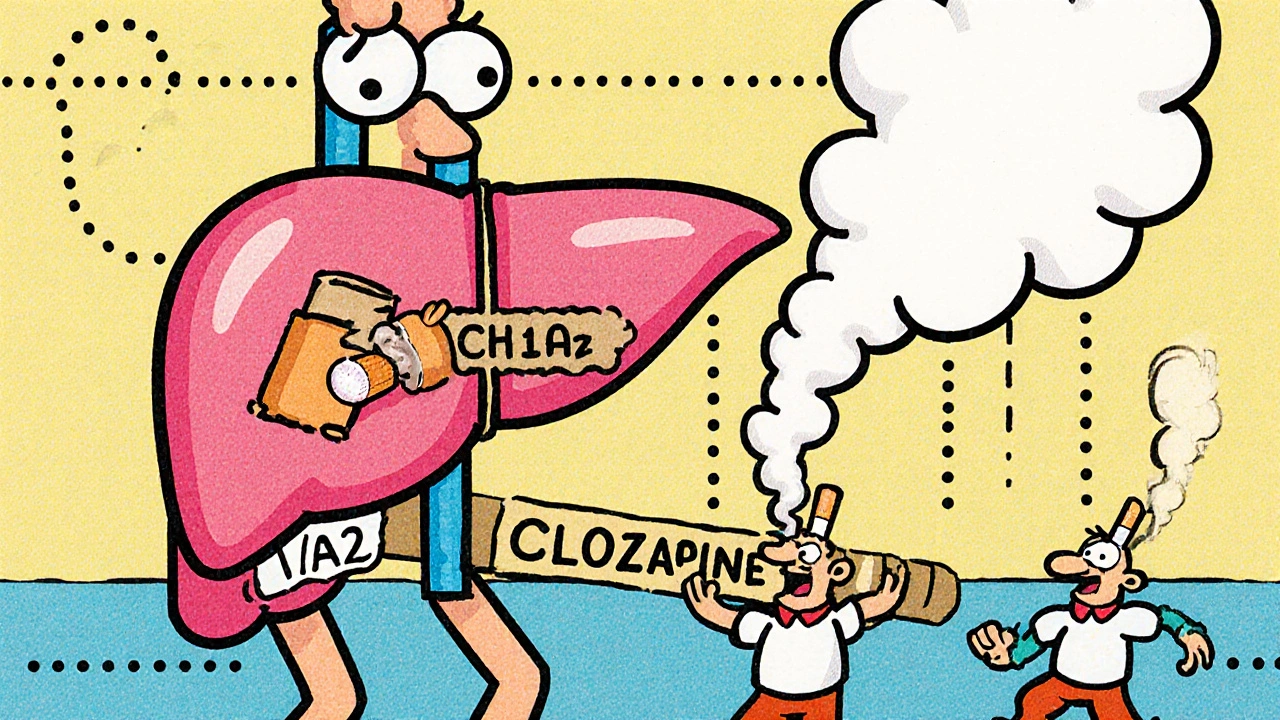
Smoking can reduce clozapine levels by up to 50%, risking relapse or toxicity. Learn how CYP1A2 enzyme induction works, why dose adjustments are critical, and what to ask your doctor if you smoke or quit.