Hypotension: Causes, Risks, and Medications That Affect Low Blood Pressure
When your blood pressure drops too low, your body doesn’t get the oxygen it needs—leading to dizziness, blurry vision, or even passing out. This condition, known as hypotension, a medical condition where blood pressure falls below 90/60 mm Hg, often causing inadequate blood flow to vital organs. Also known as low blood pressure, it’s not always dangerous, but when it happens suddenly or with symptoms, it’s a red flag. Many people assume low blood pressure is good, but that’s not true if your body can’t keep up. Hypotension becomes a problem when it’s caused by something deeper—like dehydration, heart issues, or the very medications meant to treat high blood pressure.
One of the most common triggers? blood pressure meds, drugs like ACE inhibitors, beta-blockers, and ARBs that lower pressure to protect the heart and kidneys. But when they lower it too much, you’re left feeling weak or lightheaded, especially when standing up. That’s called orthostatic hypotension, a sudden drop in blood pressure upon standing, often caused by medication side effects or aging. It’s not rare—up to 30% of older adults on blood pressure meds experience it. And it’s not just about age. Drugs like SSRIs, diuretics, and even some ED medications can pull pressure down too far. Even something as simple as skipping a meal or being in a hot shower can tip the balance.
What makes hypotension tricky is that it often hides behind other conditions. A person with diabetes might feel faint because of nerve damage, not the meds. Someone on antibiotics for C. diff might be dehydrated and low on electrolytes. And if you’re taking Coenzyme Q10 or other supplements, they might be quietly lowering your pressure even more. It’s not just about the number—it’s about how you feel, what you’re taking, and what’s going on in your body behind the scenes.
Below, you’ll find real-world insights from people who’ve dealt with this—how certain drugs interact, why some treatments backfire, and what steps actually help. Whether you’re managing your own low pressure or helping someone else, these posts cut through the noise and show you what works—and what doesn’t—based on real data and patient experiences.
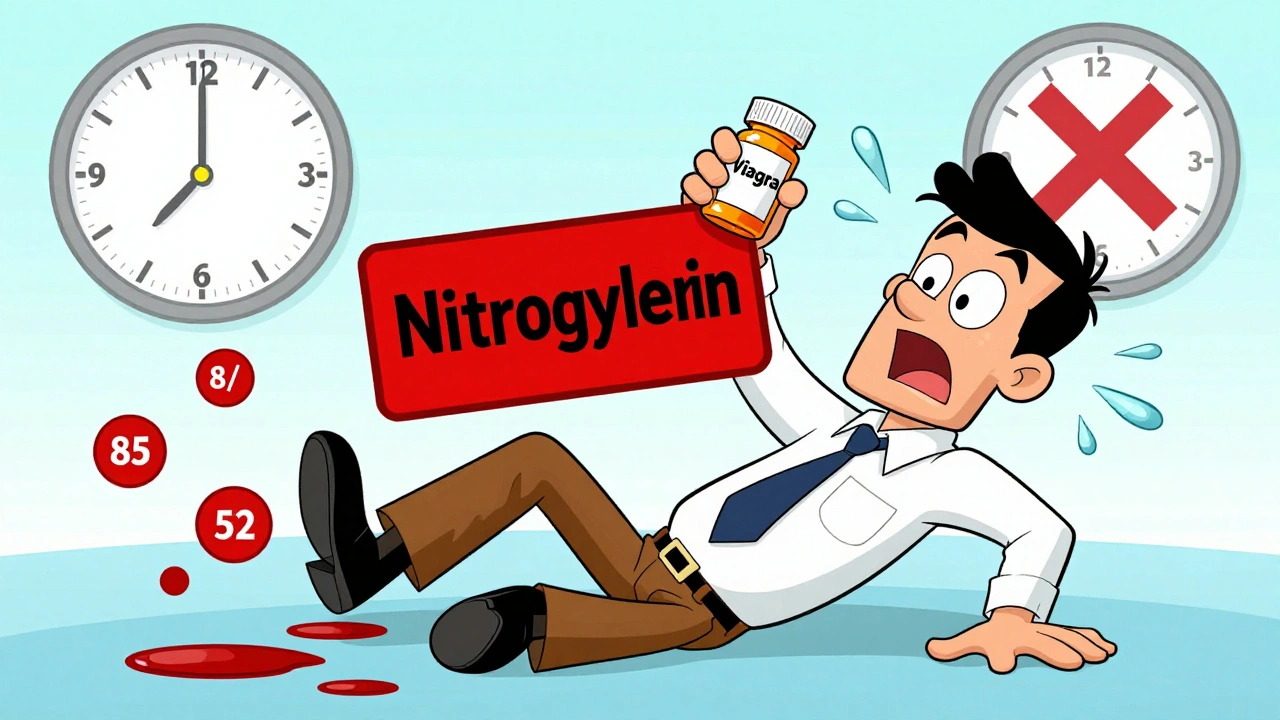
PDE5 inhibitors like Viagra and Cialis can cause life-threatening low blood pressure when mixed with nitrates. Learn how the interaction works, how long to wait between doses, and what to do in an emergency.